
Ke Ji Ri Bao

Search documents
数智化勘查创新解锁“沉睡”十年矿山
Ke Ji Ri Bao· 2025-12-11 11:34
Core Viewpoint - The project team from China Aluminum International Engineering Corporation has achieved a significant technical breakthrough in a hydrological geological survey project for a large lead-zinc mine in Baoshan, Yunnan, which has been stalled for over a decade due to complex hydrological conditions [1][5]. Group 1: Project Overview - The mine has a resource reserve of 1.02 million tons of lead and zinc, indicating high development value [5]. - Previous assessments indicated high water inflow and strong water-conducting faults, leading to a complex hydrological situation that hindered development [5]. - The cost for water prevention and control engineering was estimated at 200 million yuan, which contributed to the long-term suspension of safety facility construction and mining design [5]. Group 2: Technical Innovations - The team developed an innovative "integrated air-ground, pumping verification, and three-dimensional simulation" exploration technology system, which downgraded the hydrological conditions from "complex" to "moderate" [1][10]. - High-precision hydrological geological mapping was conducted to clarify underground water circulation patterns, utilizing advanced geophysical techniques to accurately depict the distribution of underground water-bearing structures [5][7]. - A large-scale group well pumping test was implemented, with dynamic monitoring using high-precision sensors, improving data collection accuracy by over 50% compared to traditional methods [5][7]. Group 3: Results and Implications - The new exploration conclusions overturned previous judgments, indicating weak water-conducting faults and minimal hydraulic connection between surface and groundwater, significantly reducing hydrological risks [10]. - This breakthrough allows for the resumption of safety facilities and mining design, effectively resolving the decade-long "water prison" dilemma [10]. - The innovative approach not only clears obstacles for the mine's development but also provides a replicable model for data-driven decision-making in the mining sector, revitalizing dormant mineral resources [10].


钢铁科技合作让中塞友谊历久弥坚
Ke Ji Ri Bao· 2025-12-11 08:48
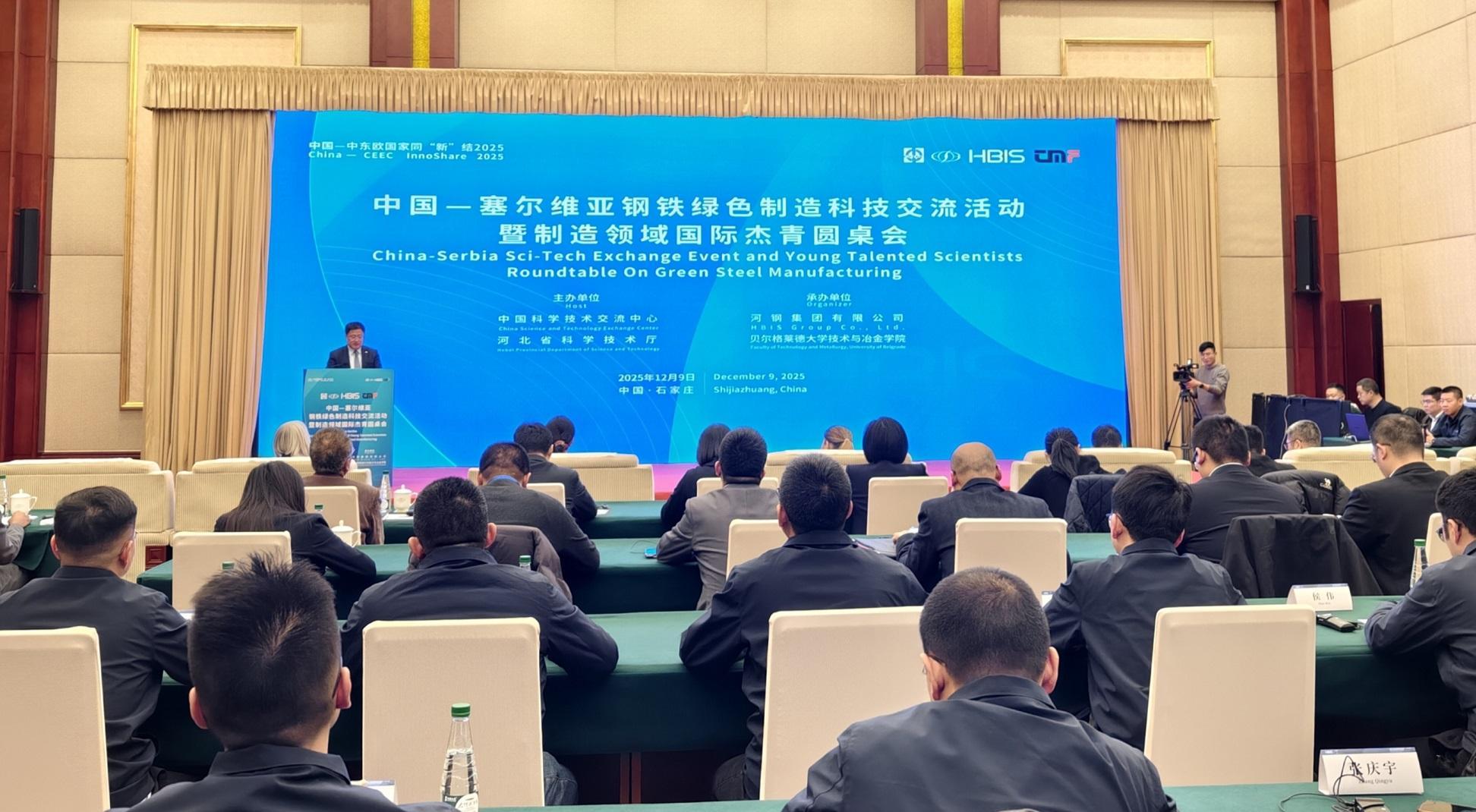
Group 1 - The partnership between China and Serbia is described as strong and resilient, akin to steel, emphasizing the enduring friendship between the two nations [1] - A technology exchange event focused on green steel manufacturing was held in Shijiazhuang, Hebei, highlighting the collaborative opportunities in technology and industry development between China and Serbia [3] - China is now the largest source of foreign direct investment in Serbia, with major Serbian export companies being Chinese investments, including Hebei Iron and Steel's Serbian operations [3] Group 2 - The event attracted over 100 representatives from various sectors across China and Central and Eastern European countries, indicating a broad interest in international cooperation in technology and innovation [4] - The Hebei Provincial Science and Technology Department emphasizes the importance of optimizing the innovation environment and fostering international scientific exchanges to support high-quality development along the Belt and Road [4] - The Vice President of Hebei Iron and Steel highlighted the need for international collaboration and knowledge sharing to advance green and low-carbon steel development [5]
铜价大涨、库存告急?理性看待“新石油”供需变局
Ke Ji Ri Bao· 2025-12-11 07:31
Group 1 - Recent international copper prices have reached historical highs, with LME copper futures up over 30% year-to-date, raising concerns about a potential "copper shortage" as global copper inventories fall below 100,000 tons [1] - Copper is deemed "irreplaceable" during the industrial transformation, being essential for clean energy, digital economy, and high-end manufacturing, with significant demand in sectors like electric vehicles and smart grids [2][3] - The global copper supply is under pressure due to the aging of high-quality mines and increasing extraction difficulties, with the average copper grade declining from 1.3% in 2005 to 0.65% currently [4] Group 2 - Strategic emerging industries are projected to drive copper consumption growth, with an expected consumption of 15.4 million tons in China by 2025, a 3% increase, particularly in sectors like new energy vehicles and AI [5] - Technological innovations are being pursued to stabilize copper production, including advancements in resource extraction and recycling, with companies like China Copper focusing on integrating technology across the entire supply chain [6][7]
守护人民健康,脑机接口技术向“实”而行
Ke Ji Ri Bao· 2025-12-11 07:30
12月4日清晨,在天津大学脑机海河实验室与天津市环湖医院合作的全国首个脑机接口综合临床试验病 区里,一台搭载脑机接口技术的监测设备上,实时显示着患者颅内压力变化。而在过去,要想获取这样 的数据,往往意味着需要进行一次开颅手术。 在这里,脑机接口已不是科幻作品里的"黑科技",而是融入日常诊疗的关键工具。从实验室到临床病 房,从基础研究到产业推进,天津大学脑机海河实验室团队将脑机接口技术以一种温润而坚定的方式守 护着人民的健康。该校医学部副主任、脑机海河实验室副主任刘秀云教授说:"试验病区引入脑机接口 和智能医学技术,让医工融合科技真正落到了医疗服务场景中。" 在试验病区,一位因脑卒中失去握笔能力的患者正在经历一场"意念驱动"的尝试。他头戴脑电极帽,背 负轻巧的主控模块"背包",通过佩戴在腕部的"第六指"努力抓起桌上的水瓶。几次尝试后,当瓶子终于 离开桌面,这位患者的眼眶湿润了。 这枚"第六指"正是天津大学脑机海河实验室团队研发的"神工—灵犀指",依托非侵入式脑机接口技术采 集脑电,让患者采用"第六指"运动想象范式,以意念控制外部假体,同时刺激受损神经系统,进行康复 训练。一旁记录数据的博士后王壮,全程参与了从概 ...
60余名工程硕博士生以实践成果获得学位——“小切口”改革撬动分类评价“大杠杆”
Ke Ji Ri Bao· 2025-12-11 07:30
Core Viewpoint - Tsinghua University has introduced a new model for awarding engineering doctoral degrees based on practical achievements, exemplified by Nie Hailiang, who successfully obtained his degree without a traditional dissertation, highlighting a significant shift in engineering education and evaluation standards in China [1][2]. Group 1: Educational Reform - The reform aims to cultivate a large number of outstanding engineers as part of China's strategic talent development, with over 26,000 engineering master's and doctoral students being jointly recruited and trained by universities and enterprises [2]. - The evaluation reform emphasizes solving real engineering problems as a primary criterion for degree assessment, allowing for practical achievements to replace traditional theses [2][3]. - Tsinghua University is actively implementing a new evaluation mechanism that focuses on practical innovation capabilities, aligning research with national strategic needs and industry challenges [3]. Group 2: Industry Participation - The involvement of enterprises is crucial at various stages of the degree application process, including project selection, resource provision during research, and evaluation of practical outcomes [4]. - Enterprises are expected to play a core role in assessing the practical achievements that serve as the basis for degree applications, ensuring alignment with industry needs [4]. - A continuous optimization mechanism for talent cultivation is proposed, emphasizing the importance of enterprise participation to achieve a win-win situation for companies, universities, and students [4].
“狙击”非二氧化碳温室气体,中国在行动
Ke Ji Ri Bao· 2025-12-11 06:39
Core Viewpoint - The reduction of methane and nitrous oxide emissions is crucial for mitigating global warming, as methane has a warming effect over 80 times that of carbon dioxide in the first 20 years, and nitrous oxide is 273 times more potent over a century [1][2]. Group 1: Non-CO2 Greenhouse Gases - Non-CO2 greenhouse gas emissions have become a new focus in climate change and environmental governance, encompassing gases such as methane, nitrous oxide, and hydrofluorocarbons [1]. - In China, non-CO2 greenhouse gas emissions account for 21% of total greenhouse gas emissions, with agriculture contributing approximately 40% of methane and 45% of nitrous oxide emissions [2]. Group 2: Agricultural Emission Reduction Efforts - China is actively promoting the reduction of methane and nitrous oxide emissions in agriculture, with significant progress reported [3]. - The "Methane Emission Control Action Plan" outlines measures for controlling methane emissions from rice paddies and utilizing livestock manure [3]. - New water-saving planting techniques have achieved an average methane reduction rate of 97% and a comprehensive greenhouse gas reduction of 92% [3]. Group 3: Livestock and Fertilizer Management - Methane emissions in livestock primarily stem from enteric fermentation and manure management, with resource utilization rates for livestock waste in regions like Hebei reaching 84% [4]. - Nitrogen fertilizer usage is a major source of nitrous oxide emissions, with innovative practices in various regions reducing fertilizer application while increasing crop yields [5][6]. Group 4: Collaborative Efforts and Technological Innovations - Effective reduction of agricultural emissions requires cross-departmental collaboration and a comprehensive industry chain approach, balancing food security with climate goals [7]. - The optimization of energy structures and process upgrades in nitrogen fertilizer production, along with the promotion of new fertilizers and precision fertilization techniques, are key strategies for reducing nitrous oxide emissions [7].
国内首个全自主无人化人形机器人导览方案发布 多机协同赋能多元场景
Ke Ji Ri Bao· 2025-12-11 06:14
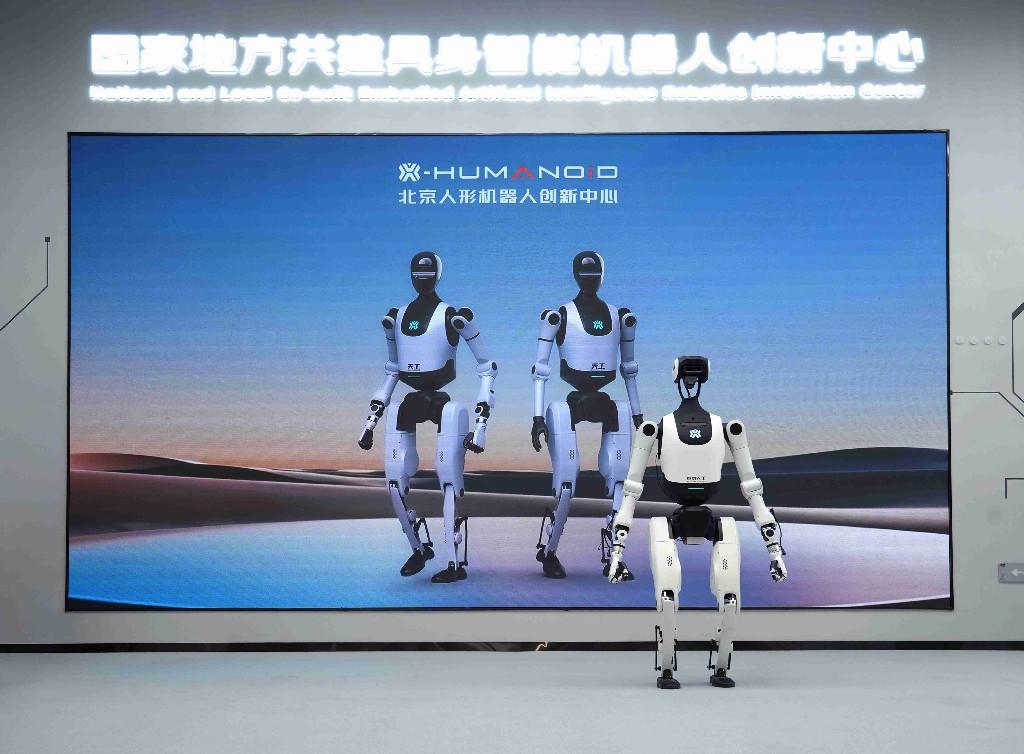
Core Insights - The article highlights the launch of China's first fully autonomous humanoid robot tour guide solution, named "Wisdom Opens Things," which integrates multiple key capabilities for large-scale deployment in various scenarios [1][3]. Group 1: Solution Features - The solution focuses on four core capabilities: fully autonomous guiding, human-like interaction, multi-robot scheduling, and global IoT integration, making it adaptable for exhibition tours, shopping mall guidance, business presentations, and cultural tourism services [3]. - The core advantage lies in its open interface design, compatible with mainstream protocols like MQTT and TCP/IP, allowing the guiding robots to autonomously and accurately control all IoT devices in the environment without human intervention [3]. Group 2: Performance and Impact - In practical applications, the solution demonstrates high responsiveness, with the platform triggering linked commands to control lighting, video updates, and scene demonstrations with a response delay of under 50 milliseconds, providing a smooth and immersive service experience [5]. - This launch not only showcases technological breakthroughs in the humanoid robot field in Beijing but also fills a market gap for fully autonomous services in such scenarios [5].

800公斤级,首飞成功!
Ke Ji Ri Bao· 2025-12-11 02:18
其核心亮点在于拥有一个可快速拆卸的多功能货舱,使无人机能灵活地在"腹内带货"与"外部吊挂"两种 运输模式间切换。其最大任务载重量达300公斤,既可以向高山基站运输设备、在复杂地形进行工程作 业,还能承担景区物资保障、应急物资投送等任务。 12月10日下午,景德镇高新机场跑道一侧,一架造型独特、线条硬朗的飞行器静静伫立。它并非传统意 义上的直升机或飞机,而是由中国航空工业集团自主研制的首款800公斤级重载电动垂直起降飞行器 (eVTOL)AR-E800。 AR-E800首飞任务圆满成功,标志着我国在低空物流领域迎来了一款全新的、智能化的重载运输平台。 (文章来源:科技日报) ...
铜价大涨、库存告急? 理性看待“新石油”供需变局
Ke Ji Ri Bao· 2025-12-11 01:55
"铜等新资源矿产,是当代的'软黄金',在新能源汽车、半导体芯片、国防科技等领域,不可替代、不 可或缺。"长期从事铜等战略性矿产找矿研究的中国工程院院士唐菊兴说。 近期,国际铜价持续刷新历史高位,伦敦金属交易所(LME)铜期货价格年内累计涨幅超30%。与此同 时,全球铜库存告急,LME可用库存一度跌破10万吨关键水平,引发市场对"铜荒"的担忧。 被称为"新石油"的铜,价格缘何大涨?其战略价值几何?供需矛盾如何缓解?围绕这些热点,科技日报记 者采访了相关专家。 第一问:产业转型期缘何铜"不可替代"? 铜的重要性,源于其独特的物理特性与全球产业变革的深度绑定,并成为清洁能源、数字经济、高端制 造领域的刚需资源。 实际上,全球铜矿资源丰富,但分布极不均衡。 "全球约有558座运营铜矿山,2025年总产能约2930万吨;2024年全球铜矿含铜产量达到2291万吨,同比 增长2.3%。"中国有色金属工业协会副秘书长兼重金属部主任段绍甫介绍,2025年1至9月,全球铜矿产 量继续增长,部分新建项目逐步进入产能释放期。 但与此同时,全球多数优质矿山服务年限超过50年,资源禀赋、开采难度不断提升。全球铜矿品位由 2005年的1 ...
智能矿山重型装备全国重点实验室新址落成
Ke Ji Ri Bao· 2025-12-11 01:55
Core Insights - The new site of the National Key Laboratory for Intelligent Mining Heavy Equipment, jointly established by CITIC Heavy Industries, Zhengzhou University, and Henan University of Science and Technology, has been completed and put into use [1] Investment and Infrastructure - The total investment for the first phase of infrastructure and experimental platform construction is 272 million yuan, with over 120 new experimental instruments and equipment added [1] - The laboratory has upgraded five major experimental platforms, including metrology and testing laboratory, materials laboratory, large mineral grinding machine R&D platform, crushing and screening platform, and virtual testing and verification system [1] Technological Development - The laboratory has established a comprehensive technical support system that covers the entire chain from basic testing to complete machine R&D, achieving a leading level in domestic R&D capabilities [1] - It has formed ten core technologies and ten key equipment with independent intellectual property rights as part of the national science and technology innovation system [1] Future Focus - The laboratory will continue to focus on cutting-edge technologies, upgrade experimental platforms, and strengthen research in areas such as high-power variable frequency and permanent magnet variable frequency control technology, ultra-large mineral grinding machine ring motor technology, intelligent systems, large efficient ultra-fine grinding technology, deep mineral resource extraction, and deep-sea intelligent mining operations [1]