
Ren Min Ri Bao Hai Wai Ban

Search documents
解民生难题 促共同富裕
Ren Min Ri Bao Hai Wai Ban· 2025-11-08 12:06
Core Viewpoint - The article emphasizes that achieving the people's aspiration for a better life is the starting point and goal of Chinese-style modernization, with a focus on improving and safeguarding people's livelihoods [1] Summary by Relevant Sections - The "14th Five-Year Plan" has established solid achievements in safeguarding people's livelihoods, including maintaining urban employment growth at over 12 million annually and ensuring that residents' income growth is in sync with economic growth [1] - The article highlights the importance of a comprehensive, foundational, and safety-net approach to social welfare, with over 95% coverage in nine-year compulsory education, basic pension insurance, and basic medical insurance [1] - As China moves towards the "15th Five-Year Plan," there is a call to accelerate the filling of gaps in social welfare and continuously transform the results of reform and development into improved quality of life for the people [1]
寻根山水话乡情
Ren Min Ri Bao Hai Wai Ban· 2025-11-08 02:24
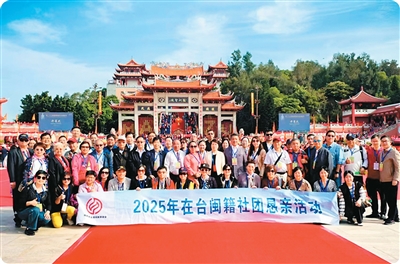
Group 1 - The event titled "Seeking Roots in Fujian Mountains and Waters: Discussing Hometown Feelings" was held in Fujian, focusing on strengthening ties between Taiwan and Fujian through cultural exchanges and discussions on shared heritage [1][2] - Approximately 50 guests from over 40 Taiwanese organizations participated in the event, visiting cities such as Xiamen, Zhangzhou, Quanzhou, and Putian [1][3] - The event included performances and discussions centered around Mazu culture, emphasizing the emotional connections and cultural heritage shared between the two regions [1][2] Group 2 - The event was guided by the National Taiwan Federation and co-hosted by the Fujian Overseas Friendship Association and the Fujian Taiwan Federation, marking its third successful iteration as a significant platform for cross-strait exchanges [3] - Participants engaged in cultural activities, including the 27th Mazu Cultural Tourism Festival, highlighting the historical significance and shared beliefs surrounding Mazu [2][3] - Fujian officials expressed a commitment to fostering mutual benefits and deeper connections between Taiwan and Fujian, encouraging more Taiwanese compatriots to visit and collaborate [2][5]

零关税,非洲国家热情拥抱进博(听在华外企说·我在这里,看见向上的中国)
Ren Min Ri Bao Hai Wai Ban· 2025-11-07 22:00
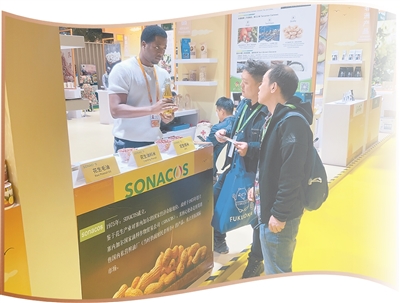
Core Insights - The eighth China International Import Expo (CIIE) marks the first event after China expanded its zero-tariff policy to 53 African countries, resulting in an 80% increase in African exhibitors compared to the previous year [8][15][16] - The expo showcases a variety of African products, including coffee, honey, and avocados, highlighting the growing interest and market potential for African goods in China [10][12][14] Group 1: African Exhibitors and Products - South African exhibitor Nicholas De Vries expressed optimism about finding new markets in China, noting that Shanghai's population is about one-third of South Africa's total population [8][10] - Senegalese exhibitor Cheikh aims to promote peanut products at the expo, having already engaged with several potential clients [10][12] - Kenyan avocados, known for their high quality, have been successfully exported to China since 2022, marking Kenya as the first African country to export fresh avocados to the Chinese market [10][12] Group 2: Trade Opportunities and Market Expansion - The "African Goodies" brand was launched at the fourth China-Africa Economic and Trade Expo, receiving positive consumer feedback and showcasing products from multiple African countries [11][12] - The expo serves as a platform for African SMEs to enter the Chinese market, with initiatives to reduce channel construction costs and facilitate trade [11][12] - The zero-tariff policy is expected to encourage African countries to produce more goods for export to China, enhancing economic cooperation and mutual benefits [15][16] Group 3: Economic Impact and Future Prospects - China has maintained its position as Africa's largest trading partner for 16 consecutive years, with trade expected to exceed 2 trillion yuan in 2024 [15][16] - The zero-tariff policy is seen as a significant opportunity for African nations to boost their economies and improve local living standards through increased exports [15][16] - The expo not only fosters economic ties but also promotes cultural exchange and mutual understanding between China and Africa [15][16]
今年中国进出口连续9个月保持增长
Ren Min Ri Bao Hai Wai Ban· 2025-11-07 22:00
Core Insights - In the first ten months of the year, China's total goods trade import and export value reached 37.31 trillion yuan, a year-on-year increase of 3.6%, with a slight decrease in growth rate compared to the previous nine months [1][2] - The resilience of China's foreign trade has been highlighted, with exports showing strong momentum and imports steadily increasing [1] Group 1: Trade Performance - In the first ten months, exports amounted to 22.12 trillion yuan, up 6.2% year-on-year, with electromechanical products being the main export driver, increasing by 8.7% [1] - The monthly export value in October was 3.7 trillion yuan, marking a 0.1% growth and maintaining a continuous growth trend for nine months since February [1] - Imports in October reached 1.53 trillion yuan, a year-on-year increase of 1.4%, contributing to a steady recovery in cumulative import growth [1] Group 2: Trade Composition - General trade imports and exports grew by 2.3%, accounting for 63.4% of China's total foreign trade, while processing trade and bonded logistics trade increased by 6.5% and 5.5%, respectively [2] - Private enterprises, which are the backbone of China's foreign trade, reported imports and exports of 21.28 trillion yuan, a 7.2% increase year-on-year, representing 57% of the total foreign trade value [2] - ASEAN remains China's largest trading partner, with trade totaling 6.18 trillion yuan, a year-on-year increase of 9.1%, accounting for 16.6% of China's total foreign trade [2]
高水平对外开放“大舞台”精彩纷呈(进博连线)
Ren Min Ri Bao Hai Wai Ban· 2025-11-07 22:00
Core Points - The 8th China International Import Expo (CIIE) serves as a platform for high-level opening-up and cooperation, showcasing products from around the world and reflecting China's commitment to expanding its market [2][5][6] - The event has attracted a record number of exhibitors, including over 290 Fortune 500 companies, indicating strong global interest in the Chinese market [7][8] - CIIE is positioned as a significant economic diplomatic activity post the 20th Central Committee meeting, emphasizing China's role in global economic stability and development [5][6] Group 1: Event Overview - The CIIE features diverse products from various countries, including unique offerings like chocolate shaped like apples from Kazakhstan and fresh fruits from Malaysia and Australia [2][3] - The exhibition area exceeds 367,000 square meters, with over 600 new exhibitors compared to the previous year, marking a historical high in both exhibition space and number of participating companies [8][12] Group 2: International Participation - The event has seen participation from 123 countries involved in the Belt and Road Initiative, with a 23.1% increase in exhibitors from these nations, highlighting the expo's role in facilitating global trade [9][10] - The inclusion of 163 exhibitors from the least developed countries demonstrates CIIE's commitment to inclusivity and support for emerging markets [9][10] Group 3: Innovation and Technology - CIIE showcases 461 new products, technologies, and services, positioning China as a global innovation hub and a testing ground for new ideas [11][12] - Companies like Panasonic are leveraging AI technology in their products to meet the evolving demands of Chinese consumers, indicating a shift towards localized innovation [11][12] Group 4: Economic Impact - The expo has generated over $500 billion in intended transaction value across its seven previous editions, underscoring its significance as a marketplace for international trade [4][12] - CIIE is seen as a catalyst for domestic industry upgrades, encouraging competition and innovation within China by exposing local companies to global advancements [12][13]
看,从钱凯到上海
Ren Min Ri Bao Hai Wai Ban· 2025-11-07 22:00
Core Insights - The Peru exhibition at the Import Expo showcased South American products, including alpaca toys and Inca civilization pottery, which attracted significant interest from buyers and professionals [1] - A new shipping route, "QianKai - Shanghai," has been established as a key project under the Belt and Road Initiative, facilitating the transport of South American goods to China [1] - The shipping route reduces delivery time to Shanghai to 23 days, which is over 10 days shorter than traditional routes, enhancing efficiency for South American products [1] Group 1 - The QianKai Port, invested and operated by COSCO Shipping, opened a year ago and has become an important hub in the new Asia-Latin America land-sea corridor [2] - During the Import Expo, COSCO Shipping showcased the QianKai Port's capabilities, including a smart terminal simulator and a comprehensive network of main and branch shipping routes connecting China and South America [2] - COSCO Shipping's chairman emphasized the port's efficient operation and the commitment to further develop and manage QianKai Port in collaboration with partners to support economic cooperation in Latin America [2]
虹桥论坛共商促进绿色发展
Ren Min Ri Bao Hai Wai Ban· 2025-11-07 22:00
Core Viewpoint - The eighth China International Import Expo is currently being held in Shanghai, emphasizing the need to combat unilateralism and "green protectionism" in the context of global green transformation [1] Group 1: Global Green Trade Challenges - The urgency of addressing climate change and the potential of the green industry are creating strong trade demand, but fragmented green standards and unilateral measures like carbon tariffs are forming new trade barriers [1][2] - The trend of fragmentation in global green trade rules is concerning, as it may lead to new trade barriers that increase costs and uncertainty, hindering the achievement of global climate goals [2] Group 2: Collaborative Governance Mechanism - A deep collaborative governance mechanism involving governments, enterprises, and international organizations is essential to address the challenges of fragmented rules [3] - Enterprises should transition from being "rule executors" to "rule co-creators" to gain true influence in global sustainable transformation [3] Group 3: Recommendations for Green Trade - The report "Towards a New Era of Green Trade: Opportunities, Pathways, and China's Role" suggests five recommendations to overcome institutional barriers to green trade liberalization [5] - Accelerate the construction of a more inclusive multilateral trade framework [5] - Design domestic policy systems that promote green trade development based on national development stages and resource endowments [5] - Strengthen international cooperation and experience sharing to drive green trade liberalization [5] - Leverage digital technology to reduce transaction costs for green technologies and products, especially for small green enterprises in developing countries [5] - Establish a global unified coding system, with China potentially leading the development of a "China Green Trade Statistical Classification Reference Standard" [5]
国台办:愿在共同政治基础上,与台湾各党派团体人士共推两岸关系发展
Ren Min Ri Bao Hai Wai Ban· 2025-11-07 22:00
Core Points - The historic meeting between cross-strait leaders on November 7, 2015, marked a significant step in promoting peaceful development of cross-strait relations and advancing national reunification efforts, establishing a new level of political interaction [1] - The meeting reinforced the critical role of the "1992 Consensus" as the political foundation for peaceful development of cross-strait relations, demonstrating that Chinese people have the capability and wisdom to resolve internal issues [1][2] Summary by Sections - **Historical Significance**: The meeting is viewed as a milestone in the development of cross-strait relations, elevating direct dialogue and communication between leaders [1] - **Political Foundation**: The "1992 Consensus" is emphasized as essential for peaceful development, with a call for the Taiwanese authorities to abandon policies that do not align with the interests of the Taiwanese people [1][2] - **Future Direction**: There is a strong emphasis on the need to oppose "Taiwan independence" and to strengthen dialogue with various Taiwanese political parties to promote peace and reunification [2]
在这里,窥见未来出行方式
Ren Min Ri Bao Hai Wai Ban· 2025-11-07 22:00
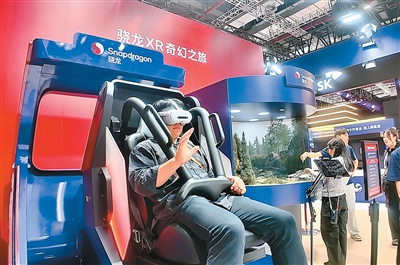
Group 1 - The Auto Show at this year's Import Expo has been renamed to the Auto and Smart Mobility Exhibition, showcasing advancements in automotive safety, smart mobility, and sustainable development from both foreign and Chinese companies [1] - Tesla's Cybercab, featuring a golden streamlined body without a steering wheel or pedals, demonstrates the arrival of the autonomous driving era, utilizing Tesla Vision and end-to-end neural networks without expensive hardware like LiDAR [1] - The Q-Tractor, a new energy autonomous driving tractor developed by Westwell Technology, offers a range of 200 kilometers and rapid battery swapping in 5 minutes, already implemented in logistics scenarios at Hong Kong International Airport and Chengdu Shuangliu Airport [1] Group 2 - The XCIENT hydrogen fuel cell heavy-duty truck, jointly developed by Hyundai Motor Group and Plus AI, made its debut in China, being the world's first mass-produced hydrogen-powered heavy truck, achieving zero-emission operations while enhancing logistics efficiency [1] - The 49-ton hydrogen fuel cell tractor developed by Toyota and China National Heavy Duty Truck Group, equipped with the TL Power 300 fuel cell system, is suitable for long-distance heavy-duty logistics and is already in use in regions like Shandong and Hubei [1] - The E20 eVTOL (electric vertical takeoff and landing aircraft) showcased by Times Technology offers a travel range of 30 to 150 kilometers, indicating the potential of low-altitude economy and innovative transportation methods [2]

截至9月底 中国新型储能装机规模超1亿千瓦
Ren Min Ri Bao Hai Wai Ban· 2025-11-07 01:40
Core Insights - The new energy storage sector in China is experiencing rapid growth, with installed capacity expected to exceed 100 million kilowatts by September 2025, representing a more than 30-fold increase compared to the end of the 13th Five-Year Plan [1] - China's new energy storage accounts for over 40% of the global total installed capacity, making it the largest in the world [1] - The industry is transitioning from the initial commercialization phase to large-scale development, with significant advancements in technology and business models [1] Installed Capacity and Trends - The majority of new energy storage installations are large-scale, with over two-thirds of installations exceeding 100,000 kilowatts [1] - The average storage duration is 2.34 hours, with 76.4% of installations providing 2-hour storage and 16.7% providing 4-hour storage [1] - The increase in installed capacity enhances the role of new energy storage in facilitating renewable energy development and improving the stability and reliability of the power system [1] Utilization and Regional Performance - In the first three quarters of 2025, the equivalent utilization hours for new energy storage in China reached approximately 770 hours, an increase of about 120 hours year-on-year [1] - Several provinces, including Yunnan, Zhejiang, Jiangsu, Xinjiang, Sichuan, Qinghai, and Hubei, have shown good performance in utilizing new energy storage, further enhancing its regulatory capabilities [1] Innovation and Technology - The innovation capability of new energy storage equipment is continuously improving, with a diversified development trend in technology routes [2]