
Jing Ji Guan Cha Bao

Search documents
理想汽车|写入《2025 汽车行业影响力年鉴》
Jing Ji Guan Cha Bao· 2025-12-30 11:23
Group 1 - The Chinese automotive industry is entering a new development stage as the "14th Five-Year Plan" concludes, with a focus on the impact of AI on technology paths and market structures [1] - AI is transitioning from a functional enhancement to a core capability that determines the upper limits of intelligence in the automotive sector, yet few companies have fully integrated systematic AI capabilities into mass production [1] - Li Auto is positioning itself with a clear path by unifying perception, understanding, and execution capabilities of intelligent assisted driving under a single AI architecture, moving towards AGI technology evolution [1] Group 2 - Li Auto is at the forefront of productizing edge AI, with initiatives like "Li Xiang Classmate" for multimodal interaction and the development of AI glasses Livis, extending AI capabilities beyond in-car systems [2] - The company's value this year lies in integrating AI as a core element, aligning assisted driving, cabin interaction, and edge products into a cohesive evolution logic, providing a benchmark for other automakers in the AI-driven competition [2] - Li Auto has been recognized in the "2025 Automotive Industry Influence Yearbook" as a representative automaker in the annual process of intelligentization due to its achievements in AI architecture integration and edge product implementation [2]

蔚来能源|写入《2025 汽车行业影响力年鉴》
Jing Ji Guan Cha Bao· 2025-12-30 11:23
(原标题:蔚来能源|写入《2025 汽车行业影响力年鉴》) 在"十四五"规划收官之际,中国汽车产业正在进入新的发展阶段。经济观察报第十九届中国汽车年会暨 《2025汽车行业影响力年鉴》,基于公开数据、市场表现与行业共识,对年度内在技术路径与市场格局 层面产生实际影响的"明亮因子"进行系统梳理。 在汽车产业迈向全面电动化转型的关键阶段,能源服务的创新与布局,已成为衡量企业长期竞争力与用 户体验的重要标尺。蔚来能源 以前瞻的战略眼光、扎实的网络建设、开放的生态合作以及持续演进的 商业模式,重塑电动汽车用户的补能体验,开辟出一条兼具成长性、行业引领性与社会价值的新赛道, 成为2025年备受关注的投资价值标杆。 秉持"让加电比加油更方便"的愿景,蔚来能源累计投入约180亿元,系统构建起"可充、可换、可升 级"的全场景能源服务体系。截至2025年12月,其已在全国布局超过8500座充换电站,形成覆盖"9纵11 横16大城市群"的高速换电网络,1000余座高速换电站联通全国550座城市。在部分基础设施相对薄弱、 但出行需求旺盛的区域,蔚来布局了80余条加电风景线,并向全行业电动车用户开放,助力低碳出行。 2025年,蔚来 ...

2025汽车行业年鉴 | 营销篇:信任崩塌之后开启冷思考
Jing Ji Guan Cha Bao· 2025-12-30 11:23
Core Insights - The automotive industry's marketing landscape in 2025 is experiencing a significant downturn, characterized by increased marketing and management expenses while facing declining sales growth [1] - The industry is witnessing a shift towards more authentic and transparent marketing practices, driven by consumer demand and regulatory pressures [1] Group 1: Marketing Challenges - The automotive sector is facing a crisis due to rampant false advertising, which has escalated from a "hidden rule" to a major industry issue in 2025 [2] - Specific cases of misleading product features, such as a cross-industry car brand's overpriced carbon fiber hood and another brand's deceptive red caliper cover, have led to consumer lawsuits and highlighted the gap between marketing rhetoric and product reality [2] - Extreme marketing tactics, including unrealistic performance tests, have eroded brand credibility and trust among consumers [2] Group 2: Impact of Personal Branding - The over-reliance on personal branding, exemplified by figures like Xiaomi's founder Lei Jun, has backfired as product issues have intensified public scrutiny and trust crises [3] - The automotive industry’s focus on short-term marketing gains through personal IP conflicts with the long-term value proposition essential for a capital-intensive sector [3] - Some companies have engaged in creating hype around concept cars to attract deposits, but this strategy has led to disappointing delivery rates and subsequent stock price declines [3] Group 3: Regulatory and Self-Regulatory Responses - The Chinese automotive industry is undergoing a rational return driven by regulatory actions, industry self-reflection, and consumer awakening [4] - Regulatory bodies have initiated measures to curb exaggerated and false advertising, emphasizing the need for accurate product representation [4] - Industry leaders are advocating for a return to integrity and high-quality development, urging adherence to legal and ethical standards in marketing practices [5] Group 4: Consumer Behavior Shift - Consumers are increasingly prioritizing product reliability and long-term value over marketing gimmicks, reflecting a trend towards practicality and rationality in purchasing decisions [5] - The influence of third-party evaluations and real user experiences is growing, as consumers become more discerning and critical of manufacturer claims [5] - Companies are adapting to this shift by moving away from personal narratives and focusing on systematic brand development, as seen with Li Auto's decision to hire a celebrity spokesperson [5] Group 5: Safety and Reliability Focus - Recent high-profile incidents involving smart electric vehicles have prompted a reassessment of safety and reliability as core selling points, moving away from superficial marketing tactics [6]
龙光集团公告:境内债136.6亿元取得重大进展
Jing Ji Guan Cha Bao· 2025-12-30 11:23
Core Viewpoint - Longfor Group Limited has made significant progress in its domestic debt restructuring plan, indicating a potential resolution to its debt issues and a pathway to restore normal operations [1] Group 1: Debt Restructuring Progress - As of the announcement date, Longfor Group has repurchased bonds with a total face value of RMB 13.66 billion through various options including cash buyback, asset-for-debt swaps, and specific asset trust options [1] - The amount of bonds repurchased exceeds 62% of the remaining principal of 21 publicly issued domestic bonds due by July 10, 2025 [1] - The progress in domestic debt restructuring is expected to fundamentally address the company's debt problems [1]
把“远方”变成“日常”:科技服务的另一种距离
Jing Ji Guan Cha Bao· 2025-12-30 10:24
Core Viewpoint - In the era of digital connectivity, consumers are increasingly seeking not just efficiency but also emotional value and immediate service, highlighting the need for a service system that combines online and offline support with a personal touch [3][4][24] Group 1: Service System - A comprehensive service system that integrates online and offline support is essential to meet consumer expectations for immediate and emotionally resonant service [4] - Huawei's service model includes a nationwide network of service centers, on-site support, and 24/7 online customer service, positioning itself as a reliable partner in consumers' lives [7][8] Group 2: Consumer Experience - Huawei's service network consists of over 2,400 authorized service centers and more than 20,000 collection points, covering 99% of prefecture-level cities and 97% of counties in China, ensuring accessibility for consumers [8][9] - The service experience is designed to be warm and welcoming, with local touches such as offering tea in service centers, creating a sense of community and familiarity [9][11] Group 3: Professionalism and Efficiency - High efficiency and professional repair services are crucial for consumer satisfaction, with nearly 80% of Huawei's service engineers holding professional certifications [15][17] - The transparent repair process allows consumers to witness the service being performed, enhancing trust and comfort [17] Group 4: Proactive Service Approach - Huawei's service philosophy has shifted from "customers seeking service" to "service reaching out to customers," integrating support into daily life through community engagement initiatives [18][20] - Special service days and continuous support during holidays, such as the Chinese New Year, exemplify Huawei's commitment to being a constant presence in consumers' lives [22][24]


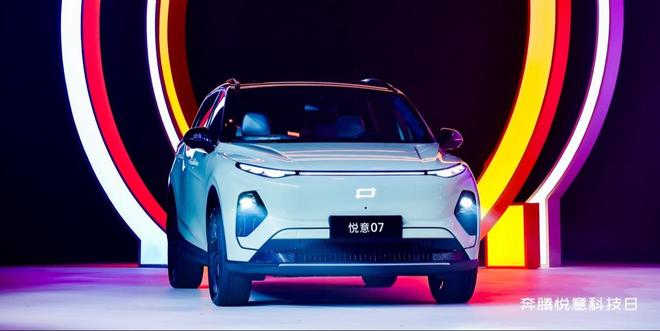
从悦意07看一汽奔腾:一场基于技术资产的长期实践与观察
Jing Ji Guan Cha Bao· 2025-12-30 08:52
Core Insights - The launch of the Yuyue 07 plug-in hybrid SUV by FAW Bestune in May 2025 exemplifies the transformation path of traditional automotive manufacturers in the context of the deepening development of China's new energy vehicle market [2][8] - The vehicle's introduction, along with its underlying technology and market strategy, illustrates how companies can convert phased R&D investments into tangible products while seeking positioning in a dynamic market [2] Technological Layout - The Yuyue 07 showcases FAW Bestune's current technological architecture, relying on the "Yueying platform," which supports a wide range of vehicle types from A0 to B-class and accommodates various powertrains including pure electric, plug-in hybrid, and range-extended systems [2] - This platform includes five technological foundations: ultra-light architecture, versatile comfort, agile energy efficiency, star-speed chassis, and rock-solid safety, representing a common solution for the global automotive industry to address product diversification and rapid iteration demands [2] Core Power System - The hybrid system of the Yuyue 07 boasts a maximum engine thermal efficiency of 45.21%, and its "armor battery" has passed multiple safety tests, including puncture and extrusion tests [4] - These technical achievements reflect the company's investment and phased results in specialized R&D for power systems [4] - The vehicle also features an AI voice interaction function in its "Ruyi cockpit," highlighting the industry's shift towards intelligent and software-driven experiences [4] Financial Strategy - Typically, new product launches incur initial market promotion, channel development, and user cultivation costs, which can pressure the company's current financial statements [6] - The Yuyue 07 enters the competitive plug-in hybrid SUV market with a starting price of 99,800 yuan, aligning with a strategy of balancing short-term investments with long-term planning [6] - The "Yueying platform" and "Zhuri power system" have high upfront R&D costs that have been capitalized as long-term assets, with their true economic value depending on the platform's ability to efficiently derive multiple competitive models in the future [6] Transformation Process - The market journey of the Yuyue 07 is a critical observation period for FAW Bestune and many traditional automakers in their transition to new energy [8] - It signifies that FAW Bestune's new energy business segment is gradually establishing self-sustaining capabilities to support stable sales scales and positive operating cash flow for long-term development [8] - The platform strategy aims to reduce marginal production and manufacturing costs for subsequent products, thereby gaining profit leverage in increasingly competitive markets [8] Capital Market Implications - The transformation practices represented by the Yuyue 07 and its underlying technology system are reshaping the capital market's valuation logic for traditional automotive manufacturers [10] - When companies demonstrate systematic R&D capabilities and verifiable technological achievements in pure electric platforms and intelligent networking, market evaluations will consider not only current manufacturing profits but also the long-term growth potential of their technological assets [10] - Overall, the launch of the Yuyue 07 is a key product milestone in FAW Bestune's systematic transformation towards the new energy vehicle era, carrying the mission of expanding market presence and validating business models [10]
世界并非注定如此|我们的四分之一世纪
Jing Ji Guan Cha Bao· 2025-12-30 05:59
Group 1 - The article reflects on the significant events and transformations in China over the past 25 years, highlighting the optimism at the turn of the millennium and the subsequent challenges faced by society [2][4][5] - The emergence of new technologies and companies, such as the iPhone in 2007, marked a pivotal moment in the tech industry, influencing consumer behavior and market dynamics [3][6] - The financial crisis of 2008 had a profound impact on the labor market and economic policies, leading to significant government interventions like the "four trillion" stimulus plan [5][6] Group 2 - The rise of e-commerce platforms and new internet giants in 2016 indicated a shift in consumer behavior towards lower-tier markets, reflecting a broader trend of consumption downgrade [6][7] - The COVID-19 pandemic in 2020 reshaped societal perspectives on life and death, influencing the younger generation's views on family and future aspirations [8][9] - The nostalgia for the early 2000s and the contrasting fears surrounding technological advancements, such as artificial intelligence, highlight the generational divide in perceptions of progress and opportunity [9][10]
际会云烟——武汉博物馆藏近现代书画展
Jing Ji Guan Cha Bao· 2025-12-30 04:59
(原标题:际会云烟——武汉博物馆藏近现代书画展) 由北京鲁迅博物馆与武汉博物馆合作举办的"际会云烟——武汉博物馆藏近现代书画展"在北京鲁迅博物 馆前哨展厅正在举行。 本次展览精选武汉博物馆近现代书画名家作品40件,涵盖任伯年、吴昌硕、齐白石、徐悲鸿、高剑父、 陈树人等艺术巨擘,基本展现了海上画派、岭南画派、京津画派乃至新金陵画派的艺术风貌。让我们循 着这些翰墨佳作,聆听百年之前中西交融、百花齐放的余响,感受跃动其间的画艺赤心。 北京鲁迅博物馆前哨展厅 即日起 —2026年1月20日 地点 展期 ...
陈春花:获得组织与个人的绩效,取决于信任
Jing Ji Guan Cha Bao· 2025-12-30 04:59
Core Insights - Trust is the core of collaboration and the greatest motivation for organizations [1] Group 1: Importance of Trust in Organizations - Organizations often struggle to find talent both internally and externally, yet they should invest time in developing internal talent [2] - Trust is essential for establishing performance; without it, neither internal nor external talent can achieve true performance [2] - Research indicates that trust significantly reduces tension and enhances individual, team, and organizational performance [2] Group 2: Upward Management - Effective management requires both upward management and downward responsibility, both of which revolve around trust [3] - To win the trust of superiors, employees should communicate proactively, share expectations, and understand their superiors' expectations [4] - Building trust involves leveraging each other's strengths to contribute to organizational performance [4][5] Group 3: Downward Responsibility - Gaining the trust of team members is fundamental for managers to effectively lead and motivate [6] - A good leader is evaluated based on their ability to help subordinates achieve goals, grow professionally, and trust them for guidance [7] - Leadership involves recognizing and utilizing subordinates' strengths, providing opportunities, and offering support for their development [8][9] Group 4: Empathy and Trust Building - Genuine trust leads to real performance, and individuals are promoted based on trust rather than just ability [10] - Building trust requires empathy, which involves respecting differences, listening openly, and understanding various perspectives [11] - In the era of collaborative management, trust is paramount as organizational performance increasingly relies on external factors and collaboration [12]
江中药业总经理肖文斌辞职
Jing Ji Guan Cha Bao· 2025-12-30 04:06
公告披露,肖文斌、周违莉女士辞职后仍在公司担任其他职务。经公司第十届董事会提名委员会2025年 第三次会议、第十届董事会审计委员会2025年第七次会议和第十届董事会第十一次会议审议通过,董事 会聘任徐永前为公司总经理。 公开资料显示,徐永前持有江西中医大学医学学士学位,高级经济师。曾任公司副总经理,江西江中制 药(集团)有限责任公司党委委员、副总经理,华润江中制药集团有限责任公司党委委员、副总经理, 华润三九医药股份有限公司党委副书记、副总裁,华润江中制药集团有限责任公司党委副书记、总经 理、董事。 (原标题:江中药业总经理肖文斌辞职) 12月30日,江中药业(600750.SH)对外公告,公司董事会于近日收到总经理肖文斌、财务总监周违莉 女士的辞职报告。因工作调整,肖文斌申请辞去公司总经理职务,周违莉女士申请辞去公司财务总监职 务,辞职报告书自送达董事会之日起生效。 ...
