
Jing Ji Guan Cha Bao

Search documents
磷酸铁锂材料分会发通知规范行业发展 设报价底线防恶性竞争
Jing Ji Guan Cha Bao· 2025-11-20 08:51
Core Viewpoint - The Lithium Iron Phosphate (LFP) Materials Subcommittee of the China Chemical and Physical Power Industry Association has issued a notice to its members to standardize industry development and set a price floor to prevent vicious competition [1] Group 1: Industry Challenges - The industry has faced continuous overall losses and disordered competition for several years [1] - There is a significant issue of low-price competition leading to internal market turmoil [1] Group 2: Regulatory Measures - Members are required to use the cost range for specific specifications of LFP materials disclosed on November 18 as a pricing reference, which is between 15,714.8 yuan/ton and 16,439.3 yuan/ton, excluding lithium carbonate costs and taxes [1] - Members must report production capacity and other data by the 5th of each month [1] - The notice advises caution in capacity expansion to curb vicious competition and promote healthy industry development [1]
专访中国海洋大学教授陈旭光:深海采矿要来了吗?
Jing Ji Guan Cha Bao· 2025-11-20 07:11
Core Viewpoint - Deep-sea mining is transitioning from exploration to development, driven by technological advancements and increasing demand for deep-sea metals, although it still faces significant economic, environmental, and legal challenges [1][2]. Industry Overview - The deep sea contains over 60 types of metals, including copper, cobalt, nickel, and gold, with an estimated resource volume of approximately 30 billion tons and a recoverable potential of about 7.5 billion tons [2]. - The price surge of various metals, particularly copper and cobalt, has made deep-sea mining economically viable [2]. - Historical attempts at deep-sea mining date back to the late 19th century, with significant efforts in the 1970s, but commercial viability remains elusive [2]. Environmental Concerns - There are ongoing debates regarding the environmental impact of deep-sea mining, with 37 countries advocating for a pause or ban until comprehensive environmental assessments are conducted [3][4]. - Key environmental concerns include sediment plumes, heavy metal pollution, and noise pollution affecting marine life [5][6]. Legal Framework - The current legal framework for deep-sea mining is primarily governed by the United Nations Convention on the Law of the Sea, which outlines the management and regulation of international seabed activities [7]. Commercialization Challenges - Despite technological advancements in mining equipment, such as mining vehicles and ships, profitability models remain unproven, with significant operational challenges including equipment malfunction and low extraction efficiency [9]. - The extraction process from depths of 4,000 to 6,000 meters presents logistical challenges, with no existing pipelines capable of such depths [9]. - The complexity of deep-sea equipment development and the high costs associated with testing further complicate commercialization efforts [9][10]. Alternative Applications - The technology developed for deep-sea mining vehicles may find alternative applications in offshore wind turbine maintenance, leveraging expertise in marine soil mechanics [11].
2025深圳国际金融大会开幕 聚焦大湾区高水平对外开放与金融强国建设
Jing Ji Guan Cha Bao· 2025-11-20 06:19
Core Points - The 2025 Shenzhen International Financial Conference opened on October 19, focusing on "Building a Financial Power and High-Level Opening Up in the Greater Bay Area" [1] - The conference aims to explore the future direction of financial development and new chapters in Bay Area cooperation [1] Group 1: Financial Development and Reform - Zhang Donggang emphasized the importance of financial construction in the 14th Five-Year Plan, highlighting the strategic deployment for building a financial power during this critical development period [2] - The Greater Bay Area is positioned as a pioneering area for financial innovation and openness, aiming to construct a robust financial knowledge system and promote a virtuous cycle of "technology-industry-finance" [2][3] - The conference serves as a platform to deepen global financial exchanges and cooperation, contributing to the Greater Bay Area's role as a significant growth engine for the global economy [2][3] Group 2: Talent Development and Education - The "International Financial Excellence Talent Practice Base" was established to meet the development needs of the Greater Bay Area, focusing on cultivating high-quality financial professionals [4] - The base aims to integrate classroom learning with practical experience and research, fostering a new model of collaborative education [4] Group 3: Insurance and Risk Management - Zhou Yanli discussed the role of insurance in risk management, emphasizing its importance in supporting the real economy and maintaining financial security [4] - The insurance sector is expected to enhance public safety capabilities and act as a stabilizer for economic and social development [4] Group 4: Technological Innovation and Market Transformation - Wang Zhongmin highlighted the rapid transformation in financial assets due to AI technology, advocating for a shift from heavy assets to light assets supported by capital [5] - The Greater Bay Area is identified as a core area for this transformation, promoting collaborative innovation and industry chain synergy [5] Group 5: Banking Sector Transformation - Wang Liang noted that the Chinese banking industry is entering a new phase of transformation and value creation, requiring alignment with national needs and customer demands [6] - The banking sector must enhance its capabilities in specialized, comprehensive, and international financial services to seize new opportunities in the Greater Bay Area [6]

凤舞鸾歌:惊鸿千年的乐舞
Jing Ji Guan Cha Bao· 2025-11-20 06:19
Core Points - The article discusses the historical development of music and dance in ancient China, tracing its origins back over 8000 years to the earliest known musical instruments and cultural practices [1][3][4] - It highlights the evolution of musical instruments and the establishment of a structured musical system during the Xia, Shang, and Zhou dynasties, emphasizing the significance of music in rituals and governance [4][9][10] - The article also explores the integration of various cultural influences, particularly during the Tang dynasty, leading to a flourishing of music and dance that reflected the era's prosperity and cultural exchange [23][25][30] Group 1: Historical Context - The earliest known musical instrument, the Jiahu bone flute, dates back over 8000 years, marking the beginning of Chinese musical history [3] - The Yao era, around 4000 years ago, saw the emergence of complete musical instruments, indicating the early development of ritual music [4] - The concept of "Eight Sounds" was established during the Yao and Shun periods, categorizing musical instruments into eight types based on material [4][6] Group 2: Cultural Significance - Music and dance were integral to ancient rituals, serving to honor deities and celebrate significant events, as seen in the records of the Xia and Shang dynasties [6][7][8] - The Zhou dynasty formalized music and dance as tools for governance, using them to maintain social order and reinforce hierarchy [9][10] - The article notes that music and dance were not only for entertainment but also played a crucial role in societal cohesion and cultural identity [8][9] Group 3: Evolution and Influence - The Tang dynasty marked a peak in the development of music and dance, with the establishment of formal institutions to manage and promote these arts [25][30] - The integration of Western musical influences during the Tang dynasty led to the creation of new forms of music and dance, reflecting a blend of cultures [23][25] - The decline of these art forms post-Tang dynasty was attributed to social upheaval and the fragmentation of cultural institutions [30][31]
最好的情绪价值,是自己给的
Jing Ji Guan Cha Bao· 2025-11-20 03:46
Core Viewpoint - The article emphasizes the importance of emotional value and self-worth, suggesting that individuals should cultivate their own emotional strength rather than relying on others for validation and support [1][2][3]. Group 1: Emotional Value - Emotional value refers to the ability to bring positive emotions to others, but some individuals tend to seek emotional support from others instead of nurturing their own self-love [2][3]. - The article encourages individuals to become "emotional banks" by focusing on self-improvement and emotional resilience [4]. Group 2: Self-Improvement Strategies - **Stop Self-Denial**: Individuals often seek emotional value due to low self-esteem and self-worth. It is crucial to support oneself unconditionally and recognize one's unique existence [5]. - **Avoid Rumination**: The article discusses the negative impact of rumination, where individuals repeatedly dwell on past negative events, leading to emotional depletion. It advises against overthinking and emphasizes the importance of living in the present [6][7][9]. - **Restore Subjectivity**: People with low self-worth tend to care excessively about others' opinions. The article highlights the importance of being the main character in one's life and focusing on personal goals and growth [10]. - **Avoid Self-Limiting Beliefs**: Self-limiting beliefs are described as defense mechanisms that prevent individuals from achieving their potential. The article encourages individuals to overcome these barriers and take action without preconceived limitations [11][13][15]. Group 3: Conclusion - The best source of emotional value comes from within oneself. The article outlines four key strategies to enhance self-worth: stop self-denial, avoid rumination, restore subjectivity, and avoid self-limiting beliefs [16].
今日看点|中国11月LPR将公布
Jing Ji Guan Cha Bao· 2025-11-20 01:01
Group 1 - The one-year and five-year Loan Prime Rate (LPR) in China will be announced on November 20 [1] - The Ministry of Commerce will hold a regular press conference to discuss recent key work in the business sector on November 20 at 3 PM [2] - The 2025 World Computing Conference will take place in Changsha from November 20 to 21, where "Top Ten Global Computing Innovations" and "Ten Development Trends" will be released [3] Group 2 - A total of 2.37 billion shares from five companies will be unlocked today, with a total market value of 6.111 billion yuan based on the latest closing prices [4] - 20 companies have disclosed stock repurchase progress, with three companies announcing new repurchase plans and two companies having their plans approved by shareholders [5] - The highest repurchase amounts include 360 million yuan from Puluo Pharmaceutical, 5.4765 million yuan from Xianheng International, and 27,300 yuan from Jianbang Technology [5]
北京集中出让2宗涉宅用地 北京城建、未来科学城竞得
Jing Ji Guan Cha Bao· 2025-11-19 12:09
Core Insights - Beijing has concentrated on the sale of two residential land plots on January 19, with a total land area of approximately 66,000 square meters and a total planned construction area of 107,000 square meters, starting at a total price of 3.1926 billion yuan and ultimately generating a total revenue of 3.2706 billion yuan [1][2] Group 1: Land Sale Details - The first plot located on Qinian Street in Dongcheng has a construction land area of 22,800 square meters and a planned construction area of 25,000 square meters, with a starting price of 1.95 billion yuan and a starting floor price of 78,000 yuan per square meter [2] - After 38 rounds of bidding, Beijing Urban Construction Xingrui Real Estate won the plot for 2.028 billion yuan, resulting in a transaction floor price of 81,120 yuan per square meter and a premium rate of 4%, with construction requirements to adhere to the old city style and courtyard house form, prohibiting high-end villas [2] - The second plot located in Changping Future Science City has a construction land area of 43,000 square meters and a planned construction area of 82,200 square meters, with a starting price of 1.2426 billion yuan [2] - Beijing Future Technology City Changxin Real Estate acquired the plot at the base price, with a comprehensive transaction floor price of 15,115 yuan per square meter, and the cultural facility plot must be transferred without charge by August 2027 [2]
上海交大沈文忠: 相关部门正在制定光伏组件标准,标准是功率大小
Jing Ji Guan Cha Bao· 2025-11-19 10:59
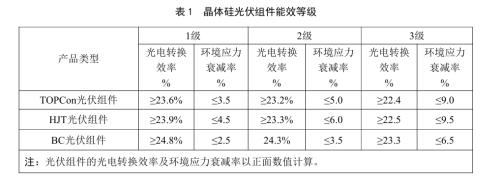
Core Viewpoint - The photovoltaic industry is expected to eliminate outdated production capacity, with a focus on power ratings of solar cells and modules as key indicators for procurement standards [1] Group 1: Industry Standards and Regulations - Relevant authorities are developing standards for photovoltaic modules, categorizing them into three power levels based on efficiency, which will be crucial for state-owned enterprise procurement [1] - The National Market Supervision Administration and the National Standardization Administration have proposed a draft that classifies silicon photovoltaic modules into three types: TOPCon, BC, and HJT, each with three efficiency levels [1][3] Group 2: Market Dynamics and Capacity - The industry currently has an excess capacity of 800GW to 1000GW for TOPCon technology, while the annual demand is approximately 400GW, indicating a significant oversupply [4] - It is projected that half of the TOPCon capacity will be eliminated in the near future due to the need to meet new standards [4] Group 3: Technological Innovation and Future Trends - The photovoltaic industry has seen rapid technological innovations aimed at increasing power and efficiency, with TOPCon expected to remain the dominant technology until 2026 [4] - The slow expansion of BC technology capacity is attributed to high technical barriers and limited participation, with expected shipments reaching around 100GW [4]
武商集团回应WS江豚会员店调整消费“门槛”:是基于用户需求与数据支撑的战略升级
Jing Ji Guan Cha Bao· 2025-11-19 07:21
Group 1 - The core viewpoint of the article is that Wushang Group's adjustment of the WS Jiangtun membership store's consumption threshold is a strategic upgrade based on user demand and data support [1][2] - The WS Jiangtun membership store, which opened on July 29, 2025, is the first local membership store in Wuhan, featuring a paid membership model with annual fees of 199 yuan for regular members and 580 yuan for diamond members [1] - On November 6, Wushang Group announced significant changes to the membership rights, allowing VIP members to enter the store without paying the annual fee starting November 7, which was perceived as lowering the consumption threshold [1][2] Group 2 - Wushang Group stated that the adjustment was based on a special consumption survey conducted among VIP members, many of whom expressed a desire to integrate WS Jiangtun membership rights into the group's VIP rights system [2] - The aim of the adjustment is to break down operational barriers, enhance consumer value, and increase user scale and consumption frequency, aligning with the company's service philosophy of "everything reflects member value" [2] - The first WS Jiangtun store is performing well, and a second store is set to open soon, with previous paid members receiving upgraded rights and refunds [2]

台海观澜 | 再谈日本敢不敢武力干涉中国的统一
Jing Ji Guan Cha Bao· 2025-11-19 05:40
Core Viewpoint - The article discusses Japan's potential military intervention in China's unification, questioning whether Japan has the capability or willingness to engage in such actions given the current international dynamics and national interests [1][2][3]. Summary by Sections Japan's Domestic Sentiment - Following provocative statements by Japanese Prime Minister Fumio Kishida regarding the Taiwan Strait, a significant portion of the Japanese public appears supportive of the idea of military intervention, with a poll indicating 48.8% in favor of collective self-defense in response to a "crisis" involving Taiwan [2]. - Kishida's cabinet approval rating has increased to 69.9%, reflecting a rise of 5.5 percentage points from the previous month, suggesting a growing public backing for his stance [2]. Taiwan's Political Response - Taiwanese officials, particularly from the Democratic Progressive Party (DPP), have echoed Kishida's sentiments, while opposition parties face backlash for advocating peaceful resolutions, indicating a polarized political environment in Taiwan [2]. International Dynamics and Japan's Constraints - Japan's potential military intervention is primarily influenced by the United States, as Japan would not act independently without U.S. approval, despite recent changes to its security laws allowing for collective self-defense [3]. - The risks associated with military intervention, including potential retaliation from China and the threat of Japan becoming a battlefield, are significant deterrents for Japanese politicians [3]. Geopolitical Considerations - Japan's geographical proximity to Taiwan poses a strategic dilemma, as any conflict in the Taiwan Strait could jeopardize Japan's energy security and national interests, making military intervention a complex decision [3]. - The article emphasizes the need for Japanese politicians to consider the broader implications of their actions on national interests and regional stability [4].