
Guan Cha Zhe Wang

Search documents
电动化水土不服,经典车型难圆旧梦
Guan Cha Zhe Wang· 2025-12-24 08:42
Core Insights - The U.S. electric vehicle industry is facing significant challenges, particularly due to new policies from Trump and recent decisions by major automakers like Ford and Volkswagen [1][2] Group 1: Ford's Electric Vehicle Strategy - Ford announced a restructuring of its electric vehicle business, resulting in a $19.5 billion write-down and the cancellation of several electric vehicle projects, including the F-150 Lightning [1][2] - The F-150 Lightning was initially expected to match the performance of Ford's traditional F-Series trucks, which have been the best-selling vehicles in the U.S. for nearly 50 years [2][4] - Despite initial high demand, customer dissatisfaction with the F-150 Lightning's performance, particularly in towing and off-road capabilities, has led to a decline in orders [4][5] - The average transaction price of the F-150 Lightning is 18% higher than that of the gasoline version, which has deterred potential buyers [5] Group 2: Volkswagen's ID.Buzz Challenges - Volkswagen's ID.Buzz electric bus will cease imports to the U.S. due to insufficient market demand, despite being based on the iconic T-series van [6][9] - The ID.Buzz has faced criticism for its high price and limited range of approximately 250 miles (about 402 kilometers) on a single charge, which is less competitive compared to other electric vehicles [6][9] - The design of the ID.Buzz, which pays homage to the classic T1, has been deemed unsuitable for electric vehicle standards, resulting in subpar aerodynamics and efficiency [6][9] Group 3: Industry-Wide Implications - The struggles of Ford and Volkswagen highlight the broader difficulties traditional automakers face in transitioning to electric vehicles, as they often rely on existing models that do not meet modern consumer expectations [9][11] - Traditional automakers' attempts to electrify classic models have not resonated with consumers, who prioritize technology, range, and user experience over brand legacy [11]



工业 AI 的胜负手:海智在线如何打开供应链黑箱
Guan Cha Zhe Wang· 2025-12-24 08:42
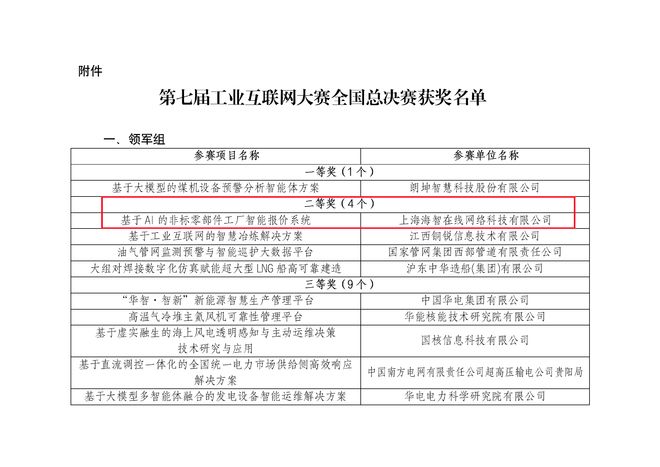
Core Insights - The AI industry continues to thrive, with OpenAI's ChatGPT reaching approximately 700 million weekly active users and Google's Gemini App exceeding 650 million monthly users, indicating a robust growth in user engagement [1] - In 2024, global private investment in generative AI reached $33.9 billion, with one-third of global venture capital directed towards AI startups, highlighting the significant financial interest in the sector [1] - The increasing consensus is that data is more challenging to replicate than models, and acquiring real-world application experience is even more difficult, emphasizing the importance of practical implementation in industrial settings [1] Industry Competition - The seventh Industrial Internet Competition showcased projects primarily from state-owned enterprises and research institutions, focusing on core industrial areas such as coal equipment warning systems and oil and gas pipeline monitoring [1] - The award-winning project from HaiZhi Online, an intelligent quoting system for non-standard parts, was recognized for addressing the long-standing issue of supply chain opacity [2][3] Supply Chain Challenges - The concept of a "black box" in supply chains is prevalent, where communication barriers lead to significant information loss, complicating decision-making processes [3] - Quoting processes are often superficial and heavily reliant on experience rather than structured data, resulting in inefficiencies and potential quality issues [5][6] Technological Solutions - HaiZhi Online's intelligent quoting tool aims to extract key factors influencing pricing from the black box, transforming them into explainable and traceable digital assets [4][11] - The tool's development is based on ten years of data accumulation, allowing for a more transparent and collaborative quoting process [4][12] Future Directions - The company plans to further develop its digital supply chain network, enhancing the efficiency and reliability of Chinese manufacturing capabilities on a global scale [15] - The integration of AI into real business processes is seen as a critical differentiator for industrial applications, moving beyond mere automation to creating value through data-driven decision-making [14]
星光何以成炬?“在一起”就是答案
Guan Cha Zhe Wang· 2025-12-24 08:02
Core Viewpoint - The "2025 HarmonyOS Starry Night Gala" symbolizes a significant milestone in the narrative of "Digital China," showcasing the progress and collaborative spirit behind the development of the HarmonyOS ecosystem, which is pivotal for China's technological independence and innovation [3][4][14] Group 1: Event Overview - The gala was themed "Together, We Can," emphasizing the collaborative nature of the HarmonyOS ecosystem and the collective achievements of various partners [4][5] - The event featured a unique stage design created by the Beijing Olympic opening and closing ceremony team, symbolizing the harmony and unity of the HarmonyOS spirit [4][6] - The gala included performances and speeches that highlighted the contributions of developers and partners, showcasing the human stories behind the technology [10][12] Group 2: Ecosystem Development - The HarmonyOS application market has surpassed 300,000 searchable applications, with major internet applications fully adapted and continuously improved [5] - Numerous national and local government applications have been integrated into the HarmonyOS, enhancing user experience in governance and public services [5][6] - The ecosystem has seen nearly 10,000 applications participating in system-level innovations, marking a significant collaborative effort in the history of operating systems [6][7] Group 3: Technological Innovations - Innovations such as the "Live Window" weather effect and the "Tap to Share" feature have been introduced, enhancing user experience and showcasing the capabilities of HarmonyOS [6][8] - The gala highlighted various applications that have successfully integrated with HarmonyOS, demonstrating the platform's versatility and the depth of its ecosystem [10][11] - The event underscored the importance of technology in enhancing daily life, with examples of how HarmonyOS facilitates seamless connectivity and user interaction across devices [12][13] Group 4: Community and Collaboration - The gala celebrated the contributions of diverse developers and partners, emphasizing the importance of community in driving technological advancements [10][13] - Personal stories from developers illustrated the transformative impact of HarmonyOS on their projects and the broader ecosystem [11][12] - The event concluded with a call for continued collaboration and innovation, reinforcing the idea that the success of HarmonyOS is a collective achievement [14]

中芯国际部分产能涨价10%,芯片代工行业产能紧张
Guan Cha Zhe Wang· 2025-12-24 06:53
Core Viewpoint - Semiconductor industry is experiencing increased demand driven by mobile applications and AI, leading to price hikes in wafer foundry services, with SMIC implementing a 10% price increase on some capacities [1] Group 1: Price Increases and Demand - SMIC has raised prices on certain capacities by approximately 10%, with expectations for quick implementation [1] - The increase in demand for chips is attributed to the growth in mobile applications and AI, alongside rising raw material costs [1] - TSMC is consolidating its 8-inch capacity and plans to shut down some production lines by the end of 2027, which may lead to further price increases in wafer foundry services [1] Group 2: TSMC's Challenges - TSMC's mature process capacity utilization is impacted by the rise of China's mature processes, with its Kumamoto factory facing losses due to declining demand from major Japanese automakers [1] - TSMC's Kumamoto factory, which focuses on 28nm processes for automotive chips, has seen low capacity utilization and increasing losses [1] - TSMC plans to shift its future Kumamoto factory construction from 6nm to 2nm processes to cater to clients like NVIDIA and AMD for AI chips [1] Group 3: Capacity Utilization and Revenue Growth - SMIC's capacity utilization rose from 92.5% in Q2 to 95.8% in Q3, equating to a monthly capacity of one million 8-inch wafers [3] - Huahong Semiconductor also reported high utilization at 109.5% in Q3, shipping approximately 1.4 million 8-inch wafers [3] - Both companies experienced significant revenue growth in Q3, with SMIC reporting revenue of 17.162 billion yuan (up 6.9% quarter-on-quarter) and a net profit of 1.517 billion yuan (up 43.1% year-on-year) [3] - Huahong Semiconductor achieved a record high revenue of $635.2 million in Q3, reflecting a year-on-year growth of 20.7% [3] Group 4: Market Position and Future Outlook - By Q3 2025, SMIC is projected to hold a 5.1% market share, ranking third globally in wafer foundry sales, while Huahong Semiconductor is expected to rank sixth with a 2.6% market share [3] - SMIC's CEO noted that the industry is undergoing rapid changes, with ongoing inventory replenishment and increased output, despite a seasonal slowdown in Q4 [4] - The average selling price for SMIC's products increased by 3.8% quarter-on-quarter due to the complexity of products being shipped [4]



租机器人:今年10亿,明年100亿?
Guan Cha Zhe Wang· 2025-12-24 06:53
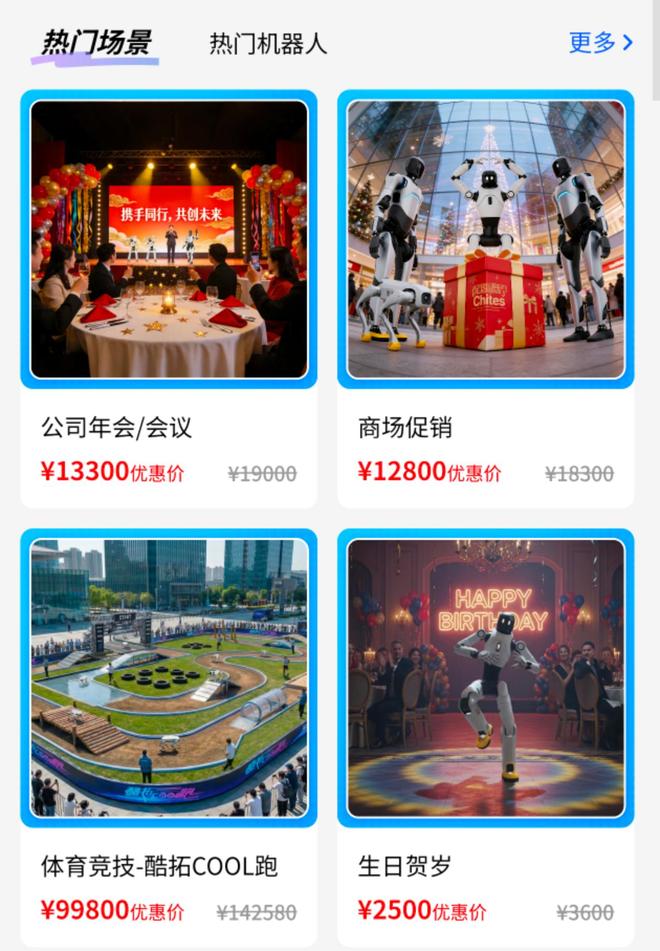
Core Insights - The "Qingtian Rental" platform, the first open robot rental platform in China, was officially launched at the National Robot Rental Ecological Summit on December 22, 2025, in Shanghai [1] - The platform aims to provide a one-stop service for users needing robot rentals, allowing channel merchants to manage orders and creators to innovate content through the "Lingchuang" platform [1] Group 1: Market Overview - The robot rental market has surpassed 1 billion yuan this year, with predictions of reaching no less than 10 billion yuan next year due to platform-driven operations [9] - The market experienced a "roller coaster" trend in 2025, with rental prices peaking at 20,000 yuan per day for a robot, but later dropping to 3,000 yuan with low demand [11] Group 2: Challenges and Opportunities - The rapid iteration of robot technology poses a risk of quick obsolescence, as new models with better performance can replace current products, leading to depreciation [13] - High prices of humanoid robots remain a barrier to widespread adoption, with current models priced between 99,000 yuan and 650,000 yuan [13] Group 3: Platform Strategy - The "Qingtian Rental" platform aims to address industry pain points such as fragmented supply and demand information, and long maintenance cycles, by providing a neutral, third-party rental service [16] - The platform plans to expand to 50 key cities within a week and over 200 cities by the Spring Festival of 2026, with a goal of deploying over 2,000 devices and partnering with over 600 service partners [16] Group 4: Future Projections - The market's growth is expected to be driven by three key variables: a significant increase in supply, the platform's ability to convert novelty demand into regular usage, and high transaction values in rental scenarios [17] - The industrial sector is viewed as a critical area for realizing the true productivity value of robots, with rental solutions offering flexible, low-cost labor alternatives for small and medium-sized enterprises [21] Group 5: Technological Development - The company aims to focus on "operational intelligence" as a core technological breakthrough, with plans to pilot in simple factory scenarios by 2026 and achieve large-scale operations by 2027-2028 [23] - The transition from entertainment to practical applications in industrial settings will depend on advancements in operational intelligence and the maturity of the ecosystem in terms of standardization and cost control [24]

“擎天租”机器人租赁平台发布:市场今年10亿,明年100亿?
Guan Cha Zhe Wang· 2025-12-24 06:40
Core Viewpoint - The launch of the "Qingtian Rental" platform marks a significant step towards organized and platform-based operations in the humanoid robot rental industry, transitioning from a fragmented and spontaneous state to a more structured approach [1][20]. Group 1: Market Overview - The robot rental market has surpassed 1 billion yuan this year, with expectations to reach no less than 10 billion yuan in the next year due to platform-driven operations [8][15]. - The market experienced a volatile trend in 2025, initially booming due to high demand, but later facing a sharp decline in rental prices, with daily rental fees dropping from 20,000 yuan to 3,000 yuan [10][11]. Group 2: Platform Features and Expansion Plans - The "Qingtian Rental" platform aims to cover 50 core cities within a week and expand to over 200 cities by the Spring Festival of 2026, with plans to deploy over 2,000 devices and partner with over 600 service providers [8][14]. - The platform is designed to simplify processes and address industry pain points, such as fragmented supply and demand information, by providing a neutral third-party rental service [14][15]. Group 3: Key Factors for Market Growth - Three critical variables are identified for the anticipated market growth: 1. A significant increase in supply as manufacturers ramp up production [15]. 2. The platform's ability to convert initial curiosity into habitual usage, similar to early ride-hailing platforms [15]. 3. High average transaction values in current rental scenarios, such as corporate events, which support the projected market size [15][16]. Group 4: Challenges and Future Directions - The industry faces challenges in transitioning from entertainment applications to industrial applications, where reliability and complex operations are crucial [20][21]. - The development of "operational intelligence" is highlighted as a core technological breakthrough needed for robots to perform tasks in industrial settings, with pilot projects planned for 2026 [19][21].

影之刃零:抛出武侠新生的现代化与全球化之问
Guan Cha Zhe Wang· 2025-12-24 06:34
2025年末的TGA颁奖礼上,当《影之刃零》四分钟新PV播放时,现场爆发的惊呼声浪成为了当晚最具感染力的时刻。 PV中,新Boss剑痴将坛中酒一饮而尽,眼中红光闪烁,身形飘忽如鬼魅,一套似醉非醉、攻防难辨的剑法,让即便不懂醉眼观剑背后东方意境的欧美观 众,也直观感受到了视觉与感官的震撼。 新登场BOSS"剑痴" 视频截图 这阵惊呼并非偶然。 其背后是灵游坊与影之刃零的制作人梁其伟长达数年的系统性探索。这场探索的目标,并非简单地将古典武侠翻译成游戏语言,而是试图完成一次从内核到 表现、从本土到全球的创造性转化。 12月17日,在《影之刃零》位于上海的动捕棚中,《影之刃零》的制作人梁其伟对观察者网等媒体阐述了这款备受期待的武侠动作游戏背后的创作理念、工 业化路径、全球化思考和他对功夫朋克的理解。 在爱恨情仇的底色上,嫁接现代与全球的语境 新PV中角色与玩家熟悉的雨血剧情产生的微妙差异,引出了第一个核心问题:何为重构? 梁其伟的回应谨慎而清晰,他揭示了剧本重构的三个核心原则。 首要原则是继承武侠故事的情感基调。无论故事如何演变,那种江湖中的爱恨情仇、黑暗中的微光、人性在极端环境下的挣扎与坚守,这些主题必须一脉相 承 ...

《向鸿蒙生活比个6》:鸿蒙生态的生命力,在于点亮每一颗“星”
Guan Cha Zhe Wang· 2025-12-24 06:26
Core Insights - The collaboration with HarmonyOS is characterized by a sense of partnership and mutual support among developers, highlighting the ecosystem's commitment to valuing every idea and individual contribution [1] - Developers are increasingly choosing HarmonyOS due to user demand, with specific examples illustrating how user feedback drives product development [3][4] - The ecosystem fosters a sense of equality and support, enabling developers to launch applications rapidly and efficiently [6] Developer Experiences - Developers express that the HarmonyOS ecosystem is a "blue ocean" for innovation, allowing even niche applications to thrive and generate significant revenue [8] - The user experience is enhanced through innovative features that simplify interactions, such as seamless sharing and multi-device integration [11][13] - The support from HarmonyOS includes technical assistance and recognition of innovative ideas, creating an environment where developers can flourish [14] Ecosystem Growth - The growth of the HarmonyOS ecosystem is driven by listening to user needs, with over 32 million devices now running HarmonyOS 5 and HarmonyOS 6, showcasing the collaborative nature of the ecosystem [15]

抖音电商报告:兴趣产业带超2.35万个,年成交额激增近千亿
Guan Cha Zhe Wang· 2025-12-24 06:26
Core Insights - Douyin E-commerce released a report indicating that its interest industry belts have exceeded 23,500, with nine belts achieving over 100 million orders in the past year and a year-on-year increase in transaction volume of nearly 100 billion [1][2] Group 1: Industry Growth - Over 6,000 county-level interest industry belts joined Douyin E-commerce in the past year, with more than 9,800 merchants increasing their sales from zero to one million [1] - More than 200 merchants saw their sales grow from one million to one billion, and over 9,200 new brands emerged, with nearly 1,300 brands experiencing a year-on-year sales increase of over 285% [1] Group 2: Case Studies - The heritage brand "Yiben Tang," known for its cast iron cookware, transitioned to a modern factory in 2024, utilizing oxidation and nitriding technology to improve product quality, achieving sales of 600,000 per month on Douyin E-commerce [1] - Other popular heritage products include wooden combs from Changzhou, ceramic chopsticks from Jingdezhen, and incense from Xianyou, which are among the most favored by Douyin users [1] Group 3: Economic Impact - The growth of Douyin E-commerce's interest industry belts has positively impacted county economies and local industry upgrades, with 491 industry belts projected to exceed 100 million in sales by 2025, contributing to one-fourth of total sales [2] - Key county-level industry belts include those from Zhejiang Jinhua Yongkang, Shanxi Jinzhou, and Qingdao Pingdu, with a trend of clustered industry belts radiating to nearby counties [2] Group 4: Future Support Initiatives - Douyin E-commerce plans to continue supporting merchants with initiatives such as zero-cost entry, commission-free product cards, exclusive incentive policies, and special funds for small and medium-sized businesses to facilitate rapid growth [2]

“县域力量”崛起:抖音电商超1/4兴趣产业带销售额来自县城
Guan Cha Zhe Wang· 2025-12-24 06:21
Core Insights - Douyin E-commerce has released a report indicating that its interest industry belts have exceeded 23,500, with nine of them achieving over 100 million orders in the past year and a year-on-year increase in transaction volume of nearly 100 billion [1][2] - The report highlights the significant contribution of interest industry belts to the platform's growth, with over 6,000 county-level interest industry belts joining Douyin E-commerce in the past year [1] Group 1 - The number of new brands emerging from interest industry belts has surpassed 9,200, with nearly 1,300 brands experiencing a year-on-year sales growth of over 285% [1] - Notable examples include the heritage brand "Yiben Tang," which, after modernizing its production, achieved sales of 600,000 in its first month on Douyin E-commerce and has stabilized monthly sales at 6 million [1] - Other popular non-heritage products include wooden combs from Changzhou, ceramic chopsticks from Jingdezhen, and incense from Xianyou, all of which rank among the most favored non-heritage items by Douyin users [1] Group 2 - In the past year, the number of active products from Jingdezhen ceramics increased by 535%, while the number of merchants in the traditional incense industry from Fujian grew by 128% [2] - The sales revenue of non-heritage merchants in the interest industry belts increased by 219% [2] - By 2025, there will be 491 interest industry belts on Douyin E-commerce with sales exceeding 100 million, with 108 of these coming from county-level areas, contributing to a quarter of total sales [2]
