Guan Cha Zhe Wang

Search documents
手机巨头叫停AI眼镜:当下难做差异化
Guan Cha Zhe Wang· 2026-01-23 05:16
Core Insights - Vivo has halted its AI glasses project after six months of secret preparation due to concerns from senior executives about the difficulty of achieving differentiation in the current market [1] - The AI glasses market is expected to be a major trend in consumer electronics by 2025, with several companies, including Xiaomi and Huawei, actively developing their own products [1] - The Chinese smart eyewear market is projected to see significant growth, with shipments expected to reach 623,000 units in Q3 2025, a year-on-year increase of 62.3% [1] Group 1 - The AI glasses market is facing severe homogenization, with products largely following the design of Ray-Ban Meta and focusing on similar core functionalities such as translation and photography [2] - The content ecosystem for AI glasses remains underdeveloped, lacking essential use cases outside of smartphones, which limits the potential for deeper AI integration in diverse scenarios [2] - Major companies, including Vivo and Xiaomi, are reassessing their strategies in the AI glasses market, with Xiaomi reportedly lowering its second-generation AI glasses shipment forecast from 300,000 to approximately 120,000 units [2] Group 2 - Vivo continues to explore new entry points in the market, having launched the Vivo Vision mixed reality headset, which aims to address comfort and content ecosystem issues [3] - The Chinese smart glasses market is projected to reach 4.508 million units by 2026, with a year-on-year growth of 77.7%, driven by audio and audio-capturing glasses [3] - The market for AR/VR devices is also expected to grow, with projected shipments of 1.073 million units in 2026, reflecting a year-on-year increase of 62.1% [3]


春运客流或创新高, 国际航线冷暖分极
Guan Cha Zhe Wang· 2026-01-23 05:16
Core Viewpoint - The 2026 Spring Festival travel season in China is expected to see record-high passenger flow and transportation volume across railways and civil aviation, with significant increases in both sectors compared to previous years [1][4]. Railway Sector - The China National Railway Group anticipates sending 539 million passengers during the Spring Festival travel period from February 2 to March 13, 2026, representing a 5% year-on-year increase [1]. - On peak travel days, over 14,000 passenger trains are expected to operate, with a 5.3% increase in seating capacity compared to the previous year [1]. - The railway ticketing service will enhance support for key passenger groups, including additional discounts for college graduates and continued services for students and workers [1][3]. Civil Aviation Sector - The civil aviation sector is projected to transport 95 million passengers during the Spring Festival, with a daily average of 2.375 million passengers, marking a 5.3% increase [4]. - Major airlines are expected to operate 657,000 flights, also reflecting a 5% increase year-on-year [4]. - The top three airlines (China Eastern, Air China, and China Southern) will account for 43% of the flights, while the top 20 airlines will represent 90% of the total operations [4]. Ticket Pricing and Trends - As of January 15, 2026, the average pre-sale price for domestic economy class tickets during the Spring Festival is 1,064 yuan (including tax), which is 20% higher than the actual transaction price from the previous year [5]. - The peak ticket prices are expected around the Spring Festival, with significant price drops possible for travelers who adjust their travel dates [5]. - Popular domestic travel destinations are dominated by southern cities, with Shantou leading in booking growth at 186% year-on-year [5]. International Travel - During the Spring Festival, outbound travel is primarily focused on Southeast Asia, with Thailand being the most popular destination [6]. - There has been a significant reduction in flights to Japan, with a cancellation rate of 36% for flights during the travel period [6]. - The demand for customized outbound travel packages has increased, with an 18% rise in pre-orders for long-haul trips [6].




“这个难题,美国有,中国没有”
Guan Cha Zhe Wang· 2026-01-23 03:31
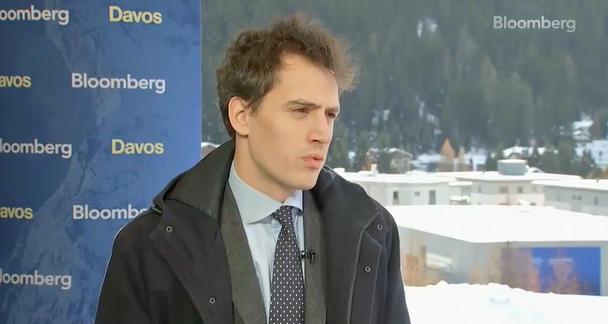
【文/观察者网 张菁娟】在瑞士达沃斯论坛上,马斯克为美国AI产业的狂热泼下一盆冷水。 据《财富》22日报道,马斯克在与美国贝莱德集团首席执行官、世界经济论坛临时联合主席芬克 (Larry Fink)的对话中表示,制约美国人工智能(AI)发展的最大瓶颈,是竞争对手中国完全无需应 对的电力短缺问题。 "我认为,人工智能落地应用的根本制约因素就是电力。"马斯克说,美国AI芯片产能正呈指数级扩张, 但电力配套建设的滞后,已严重拖累AI数据中心的模型训练与部署效率。 他预测,或许就在今年下半年,美国就将陷入"芯片造得出、却开不了机"的窘境。 报道称,美国电网系统之所以弊病丛生,根源在于数十年的投资不足与基础设施老化。随着科技企业对 电网供电的依赖程度与日俱增,供电可靠性不足、产能受限等问题,正直接阻碍AI技术的落地速度, 引发投资者对"AI泡沫"的担忧。 能源困境已传导至产业端。有能源领域专家指出,英伟达位于加州圣克拉拉总部的两座超大规模数据中 心,因电力供应迟迟不到位,或将空置数年。与此同时,AI产业催生的海量用电需求,叠加电网升级 的压力,最终成本将转嫁至普通民众身上,让他们的电费账单持续攀升。 马斯克 彭博社 全 ...

如何为人工智能“立心”?儒学有独特解释
Guan Cha Zhe Wang· 2026-01-23 03:11
"AI向具身智能、通用智能演进"的趋势,让我们看到了技术发展背后对"真经验"与"活智慧"的渴求。 在AI技术狂飙突进的时代,如何重新发现传统的价值?古老的儒学是否可以古为今用、推陈出新,启 发人工智能下一步的方向?AI对人文学科是悲报还是福音? 在观察者网"2026答案秀·思想者春晚"活动期间,中国社会科学院信息化研究中心原主任、中国管理科 学学会学术委员会副主任姜奇平与观察者网对谈,围绕技术与人文、理智与情感、创新与传承、冲突与 共赢等一系列话题,分享了独到见解。 他指出,早年的网络研究,关注的都是互联互通的线路、光纤等等物理载体。全球范围内,尚无一门学 问专门研究"活的网络",只有儒学。 孔子曾说过,君子笃于亲,儒学实际研究的就是社会这个网络如何连接。孔子说的网络是人际的、用亲 情联系的网络,也就是人心。人心知寒知暖、知远知近。机器哪能和另一个机器"将心比心"? 人工智能中有没有人所具有的活的灵性,一直困惑着我们。这灵性是什么?姜奇平指出,就是"为天地 立心"里的"心"。 以下为对谈全文: 首先,我认为山河四省在历史上它就是一处创新的中心。票号,曾由四省创立并流行。票号就相当于今 日的华尔街,这片区域过去 ...

百度“文心5.0”正式版发布,两名年轻技术骨干公开亮相
Guan Cha Zhe Wang· 2026-01-23 03:07
Core Insights - Baidu has launched the official version of its native multimodal large model, Wenxin 5.0, which features 2.4 trillion parameters and utilizes a unified modeling technology for multimodal understanding and generation [1][4] - The model supports various types of information inputs and outputs, including text, images, audio, and video, positioning Baidu at the forefront of the global AI landscape [1][3] Model Architecture and Performance - Wenxin 5.0 employs a unified autoregressive architecture for native multimodal modeling, allowing for joint training of multiple data types within a single framework, enhancing feature integration and optimization [4] - The model's language and multimodal understanding capabilities have surpassed those of competitors like Gemini-2.5-Pro and GPT-5-High, securing a leading position in international evaluations [3] Technical Innovations - The model incorporates a large-scale mixture of experts structure with ultra-sparse activation parameters, maintaining strong performance while improving inference efficiency [8] - Baidu has developed several application models, including a voice token-based end-to-end synthesis model and real-time interactive digital human technology, which enhance user engagement and application versatility [12][11] Application and Industry Impact - Baidu's digital human generation technology has been successfully applied in live streaming and e-commerce, demonstrating the practical value of its models in real-world scenarios [13] - The Qianfan platform supports the deployment of Wenxin 5.0 and over 150 SOAT models, providing a comprehensive environment for enterprises to innovate and operate efficiently [15] Strategic Vision - Baidu aims to create a closed-loop ecosystem that integrates chips, intelligent cloud platforms, and models to empower various AI applications across industries, reflecting its commitment to advancing AI solutions [15]


现货白银价格一度突破99美元/盎司,再创历史新高
Guan Cha Zhe Wang· 2026-01-23 02:41
彭博社、路透社等外媒分析认为,受地缘政治高度不确定性影响,去年以来,黄金、白银等贵金属价格 持续走高,2025年黄金价格上涨超过60%,白银价格上涨近150%。而贵金属仍保持上升势头。今年以 来,白银价格涨幅已超过30%。不过,越来越多分析师对白银未来价格走势持有保守态度。 1月23日,现货白银价格再创历史新高,一度突破99美元/盎司。截至北京时间10点18分,现货白银报 98.47美元,涨幅2.39%。 ...
中国AI落后?“美国人压力太大,在说梦话”
Guan Cha Zhe Wang· 2026-01-23 01:45
Core Viewpoint - The CEO of French AI startup Mistral, Arthur Mense, claims that the notion of China lagging behind the U.S. in AI technology is a "fairy tale" and asserts that China's open-source AI capabilities may pressure U.S. CEOs [1][3] Group 1: Company Insights - Mistral is projected to exceed €1 billion in revenue by the end of this year [1] - The company plans to invest a similar amount in high-performance computing chips and related infrastructure for AI model development and operation [1] - Mistral's valuation reached $13.7 billion during a funding round last year, with Dutch chipmaker ASML as a major investor [1] Group 2: Industry Context - AI is becoming a significant geopolitical force with the potential to reshape economies and labor markets in the coming years, with companies and nations investing tens of billions of dollars in AI infrastructure [1] - The AI market is currently dominated by the U.S. and China, while Europe is seeking differentiation [1] - Many U.S. AI models, such as Google's Gemini and OpenAI's ChatGPT, are closed-source, which can lead to higher costs and less flexibility compared to China's leading position in open-source model development [5]
吉利明确旗下各品牌定位,目标2030年销量突破650万辆,营收破万亿
Guan Cha Zhe Wang· 2026-01-22 23:16
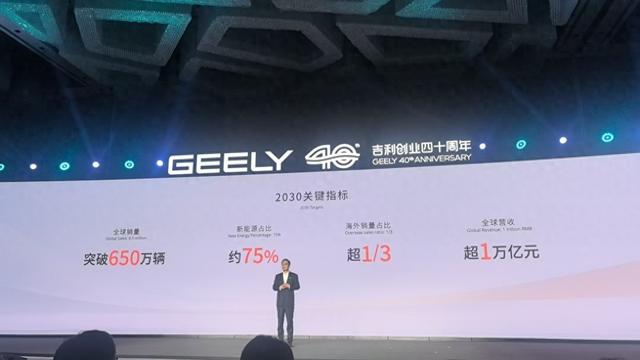
(文/观察者网 张家栋 编辑/高莘) 1月22日的吉利创业四十周年大会上,吉利控股集团CEO安聪慧公布了吉利汽车未来发展的目标。 安聪慧表示,到2030年,吉利控股集团的全球年销量将突破650万辆,新能源车型的销量占比将达到 75%,海外市场销量占比将超过三分之一,全球营收将突破1万亿元。 在国际品牌阵营中,沃尔沃为"全球豪华品牌";极星为"全球高性能豪华新能源品牌";莲花为"兼具历 史传承与机制驾控的英国科技品牌"。 文中图片均来自观察者网 该目标标志着吉利汽车将在进一步深化全球化战略、推动智能化和电动化转型。同时,通过回顾2025年 吉利汽车在多个领域的成果,安聪慧还介绍了吉利汽车未来发展方向。 安聪慧表示,2025年,吉利在销量上实现了411.6万辆,同比增长26%,并成功完成与极氪智能科技的 合并,进一步推动了资源整合与技术创新。 在新能源汽车领域,吉利以400万辆的销量跻身全球前十,其中,新能源汽车销量229.3万辆,同比增长 58%,新能源渗透率56%。 与此同时,吉利也在核心技术上不断突破,推出了全球领先的"浩瀚超级电混"发动机、新一代"雷神AI 电混"动力系统以及神动金刚电池,标志着其在电动化 ...

报告揭秘:飞行汽车面临八大核心命题,市场如何走向?
Guan Cha Zhe Wang· 2026-01-22 23:04
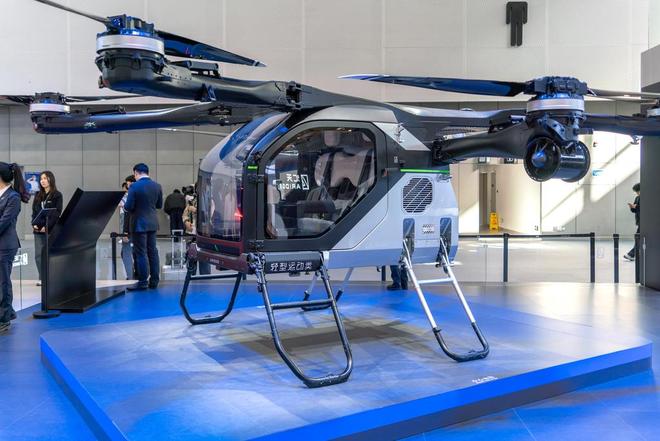
中国首款飞行汽车预计于2026年开始交付。在政府支持与电动垂直起降(eVTOL)飞行汽车制造商加 速涌现的推动下,中国的低空经济正逐步走向商业化现实。 据香港《南华早报》报道,广汽集团旗下飞行汽车子公司GOVO近日宣布已获得2000架订单,总价值超 过33亿元(人民币,下同)。有分析指出,该消息进一步增强了业界对飞行汽车商业化运营可能早于预 期实现的信心。 报道称,预计今年年底前将有7家eVTOL制造商开始交付产品。其中,飞行汽车企业小鹏汇天计划于今 年下半年交付首批产品,单架目标售价低于200万元。 中国民航局表示,一旦中国低空经济实现全面商业化,其年收入有望突破1万亿元。胡润研究院的报告 则预测,到2035年,中国低空经济市场规模将接近3万亿元。 当前,飞行汽车已成为全球汽车巨头与科技企业竞相布局的新赛道。大众、丰田、现代等跨国车企正积 极推进飞行汽车的前沿探索。在中国,小鹏汇天等车企正通过研发飞行汽车寻求新增量,部分原型产品 已进入适航审定阶段。 【文/观察者网 邓军 编辑/高莘】 《报告》围绕产业应用、技术创新和支撑保障三大领域,梳理出飞行汽车行业当前面临的八大核心问 题,包括"哪些场景应优先落地"" ...
国产显示芯片独角兽再闯港交所,台积电是最大供应商
Guan Cha Zhe Wang· 2026-01-22 14:13
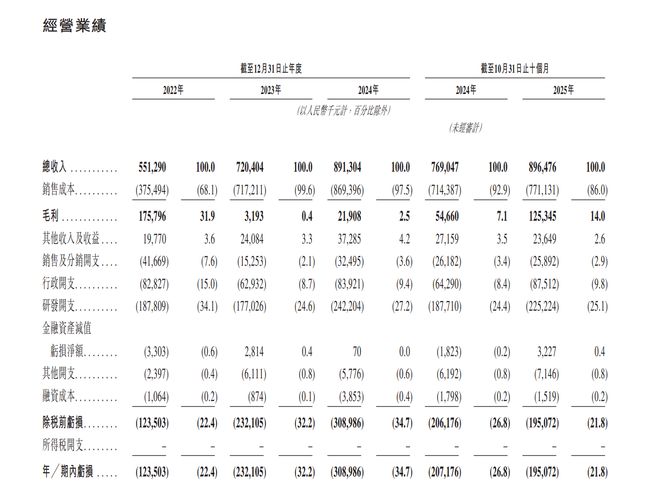
Core Viewpoint - Yunyinggu Technology Co., Ltd. is seeking to list on the Hong Kong Stock Exchange after a tumultuous journey, with significant financial challenges and a need for capital to support its operations and R&D efforts [1][11]. Company Overview - Established in 2012 and headquartered in Shenzhen, China, Yunyinggu specializes in the design and sale of display driver chips, particularly for AMOLED and Micro-OLED technologies [1]. - The company has raised over 1.3 billion RMB through multiple rounds of financing, with notable investors including BOE Technology Group and Qualcomm China [1]. - As of August 2024, Yunyinggu's valuation reached approximately 8.33 billion RMB [1]. Market Position - In 2024, Yunyinggu ranked as the fifth largest supplier of AMOLED display driver chips globally and the largest in mainland China, with a market share of approximately 5.7% [2]. - The company achieved a domestic market share of 12.4% in the same year, ranking third in the local market [2]. - Yunyinggu is also a significant player in the Micro-OLED display backplane/driver market, holding a global market share of about 40.7% [2]. Financial Performance - Revenue for the years 2022, 2023, and projected for 2024 and 2025 are 551.29 million RMB, 720.40 million RMB (30.7% YoY growth), and 891.30 million RMB (23.8% YoY growth) respectively [3][4]. - The company reported a cumulative loss of approximately 722 million RMB from 2022 to 2025, with a significant drop in gross profit margin in 2023 to 0.4% [4][11]. - The average selling price of AMOLED display driver chips has decreased significantly, with a drop of nearly 40% from 2022 to 2024 [4]. Challenges and Strategies - The decline in average selling prices and inventory devaluation due to weak global consumer electronics demand has pressured the company's profitability [4][7]. - To maintain market share amid fierce competition, Yunyinggu adopted a pricing strategy that involved lowering prices to increase volume, which has further impacted gross margins [7]. - The company has shifted its sales model from direct sales to a dealer-based approach to improve cash flow and reduce collection periods [9]. Supply Chain and Production - Yunyinggu relies heavily on third-party foundries for chip manufacturing, with TSMC being a key partner, accounting for a significant portion of its procurement [10]. - The company is gradually transitioning to domestic foundries like SMIC to mitigate supply chain risks amid geopolitical tensions [10]. Conclusion - Despite having a strong customer base and market presence, Yunyinggu faces significant challenges in achieving sustainable profitability and cash flow management, necessitating successful capital market entry to alleviate financial pressures [11].