
Hua Xia Shi Bao

Search documents
“金九银十”激战正酣:手机大厂子品牌加入战局,市场增长后劲何寻
Hua Xia Shi Bao· 2025-10-22 23:55
Core Viewpoint - The smartphone market is experiencing intense competition, particularly among sub-brands, with rising prices amid increasing component costs, challenging traditional pricing strategies [3][8]. Group 1: Market Dynamics - The "Golden September and Silver October" smartphone battle is heating up, with major brands and their sub-brands launching new products [3]. - iQOO15, launched by iQOO, has a starting price of 4199 yuan, which is an increase from the previous generation's price of 3999 yuan [8]. - The overall smartphone market in China is facing a decline in shipment volumes, with a projected 3% year-on-year decrease by Q3 2025 [9]. Group 2: Competitive Strategies - iQOO is focusing on its gaming attributes, utilizing self-developed chips and gaming engines to differentiate itself in a crowded market [5]. - The company aims to enhance product quality rather than engage in price wars, as traditional pricing strategies are becoming less viable [8]. - AI features are increasingly important to consumers, with over 80% of users considering AI experience significant in their next phone purchase [6]. Group 3: Industry Trends - The global mobile gaming market is expected to grow by 4.8% to 635.57 billion yuan in 2024, with China's share expanding to 37.5% [5]. - The competition is shifting from individual devices to a comprehensive battle over ecosystems and business models, with emerging markets expected to drive future growth [9]. - Chinese brands have significantly increased their global market share from 11% in 2013 to 52% in the first half of 2025 [10].


民营银行年内罚款超千万元,合规管理、反洗钱违规高发
Hua Xia Shi Bao· 2025-10-22 15:35
Core Viewpoint - The regulatory environment for private banks in China has become increasingly stringent, with significant penalties imposed for compliance failures, particularly in areas such as anti-money laundering and internal controls [2][6]. Summary by Sections Regulatory Penalties - A total of six private banks have been fined 11.66 million yuan this year, with Huazhi Bank facing the largest penalty of nearly 8 million yuan [2][3]. - Specific penalties include: - Weihai Blue Ocean Bank fined 209,000 yuan for violating credit information regulations [3]. - Chongqing Fumin Bank fined 580,000 yuan for failing to identify customers properly [3]. - Su Shang Bank fined 600,000 yuan for inadequate information technology risk management [3]. - Meizhou Merchant Bank received a warning and a fine of 870,000 yuan for multiple compliance violations [3]. - Beijing Zhongguancun Bank fined 1.4 million yuan for various infractions, including improper loan management [3]. Compliance Challenges - The main issues leading to penalties are concentrated in compliance management, particularly in information management, anti-money laundering, customer identification, and credit management [6][7]. - The "double penalty system" has become standard, where both the bank and responsible individuals face fines and warnings [6]. - Analysts indicate that many private banks are struggling to keep their internal compliance systems updated in line with rapid business expansion, particularly in technology systems and risk control models [6][8]. Impact of New Regulations - The introduction of new regulations is expected to increase compliance requirements for private banks, potentially leading to higher penalties in the future [7][8]. - The new rules require banks to clarify service fees in cooperation agreements, which may increase funding costs and narrow net interest margins, impacting profitability [7][8]. - Banks that have optimized governance structures or introduced state-owned shareholders may benefit from these changes, allowing them to shift towards more sustainable business models [8].

大有能源13天9板股价大涨,公司已连亏9个季度
Hua Xia Shi Bao· 2025-10-22 12:16
Core Viewpoint - Daya Energy's stock has experienced significant growth, with a 198.98% increase year-to-date, driven by strong demand expectations for coal due to winter heating needs and low initial valuations in the coal sector [1][6]. Stock Performance - Daya Energy's stock price closed at 8.79 yuan per share on October 22, marking a 10.01% increase, with 12.4 million shares traded [1]. - The company has achieved 9 limit-up days in 13 trading days, indicating strong market interest [1]. - The stock's price surged 103.83% from October 10 to October 21, while the Shanghai Composite Index fell by 0.45% during the same period [2]. Risk and Valuation - Daya Energy has issued multiple risk warnings regarding its stock price volatility, indicating that its current price significantly deviates from the broader market and industry indices [2]. - As of October 21, the company's price-to-book ratio was 3.94, notably higher than the coal mining industry's average of 1.76, suggesting overvaluation [2]. Operational Status - The company confirmed that there are no undisclosed significant matters affecting its operations, and its production activities are normal [2][4]. - Daya Energy is involved in a strategic restructuring with its controlling shareholder, but this is not expected to impact its operational activities significantly [4]. Financial Performance - In the first half of 2025, Daya Energy reported a revenue of 1.92 billion yuan, a decrease of 680 million yuan year-on-year, and a net loss of 851 million yuan, worsening by 362 million yuan compared to the previous year [5]. - The company has faced continuous losses since the second quarter of 2023, with nine consecutive quarters of negative net profit [5]. Market Dynamics - The coal market is experiencing a shift in supply and demand, with rising prices for thermal coal, which increased by 22.71% from 621 yuan/ton to 762 yuan/ton [7]. - The demand for coal is expected to rise due to winter heating needs, while supply constraints are anticipated due to regulatory measures [7][8]. - Market sentiment regarding coal prices has shifted from pessimism to optimism, leading to increased purchasing and inventory replenishment [9].


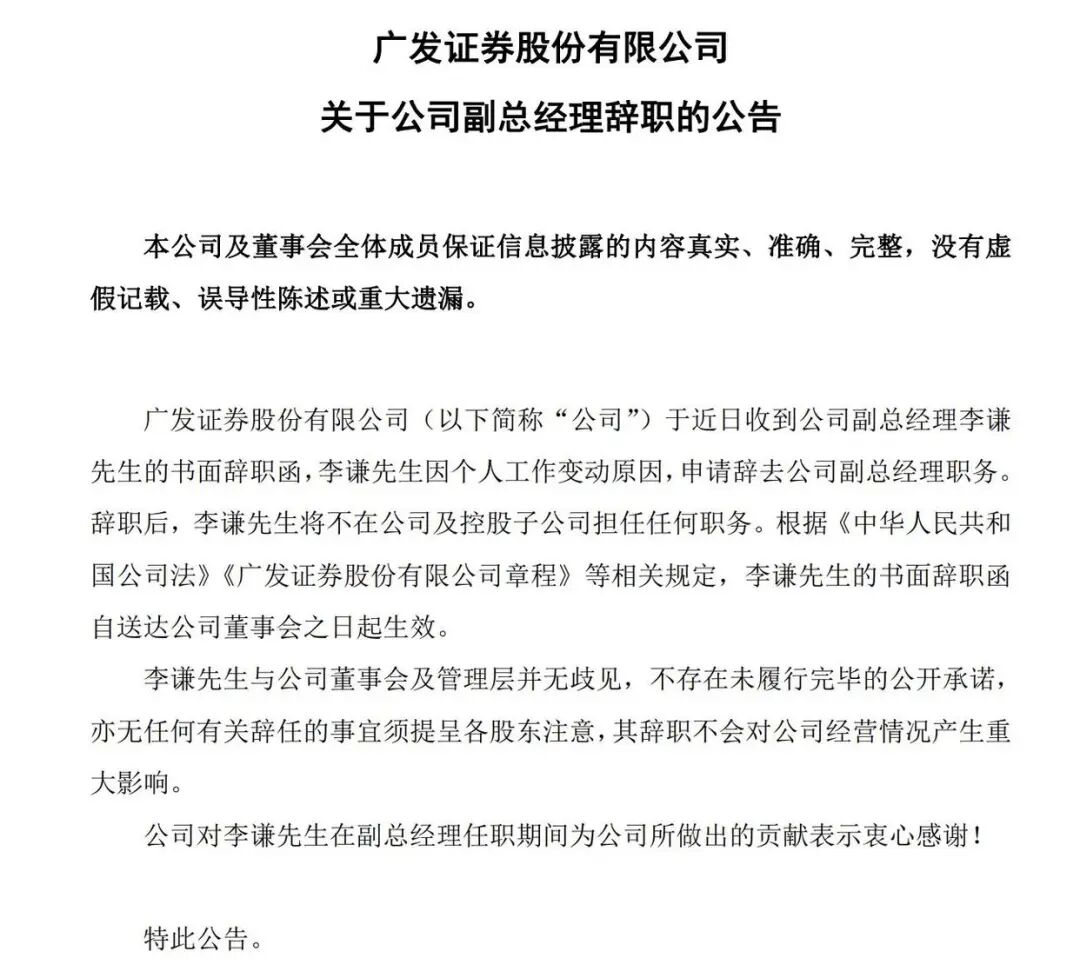
广发证券原副总李谦,拟任平安证券总经理
Hua Xia Shi Bao· 2025-10-22 12:06
Core Viewpoint - The recent appointment of Li Qian as the general manager of Ping An Securities marks a significant shift in the leadership landscape of the brokerage industry, indicating potential strategic advancements for the company [2][6]. Group 1: Leadership Changes - Li Qian, former vice president of Guangfa Securities, is set to join Ping An Securities as the general manager [2]. - His resignation from Guangfa Securities was announced on October 15, citing personal reasons, and he will not hold any positions in the company or its subsidiaries post-resignation [2]. - The leadership transition at Ping An Securities is seen as a foundation for deepening company strategy, upgrading service systems, and strengthening internal control management [6]. Group 2: Background of Li Qian - Li Qian, born in 1984, holds a bachelor's, master's, and doctoral degree in economics from Renmin University of China [4]. - His career includes significant roles at the Industrial and Commercial Bank of China and Guangfa Securities, where he held various leadership positions [4]. Group 3: Ping An Securities' Recent Developments - Ping An Securities has been actively promoting wealth management capabilities and has implemented an integrated service model, achieving a top-three position in personal customer numbers and leading app user engagement in the industry [4]. - The company reported a revenue of 11.382 billion yuan and a net profit of 4.376 billion yuan for 2024, doubling its performance since 2018, with a return on equity (ROE) of 9.4%, maintaining a leading position in the industry [5]. Group 4: Other Key Appointments - Alongside Li Qian, other executives such as Jiang Xuehong and Zou Li have been promoted, with Zou Li's responsibilities expanding to enhance the internal control system [4][5].

特稿|人形机器人“觉醒”时刻
Hua Xia Shi Bao· 2025-10-22 10:49
本报(chinatimes.net.cn)记者石飞月 北京报道 几乎与王兴兴同期,彭志辉也在2023年踏上人形机器人的创业路。这位曾以B站"稚晖君"走红、2020年 加入华为的"天才少年",在2022年底离开华为。2023年4月,他以一则视频预告发布会时,已悄然完成 从华为工程师到创业者的转型,同年便以智元机器人联合创始人的身份正式入局。智元自创办起就自带 关注度,2025年7月"闪电"入主上纬新材的动作,更让其在资本端的存在感迅速拉满。 "如果说未来中国哪个领域可能成为像新能源汽车这样规模的产业,我认为一定是人形机器人。"半年 前,当周全在中关村梦想实验室对《华夏时报》记者说出这句话时,不像是在预测,更像是在下一个赌 注。阳光穿过玻璃幕墙,落在这位英诺天使基金合伙人与他押注的赛道上。那个时候,他主导投资的松 延动力,刚在人形机器人半马比赛中拿下亚军。 这个赌注在当时看起来仍显孤独,因为投资圈对于人形机器人的分歧还很激烈,有人认为是前夜,有人 断定是泡沫。金沙江创投主管合伙人朱啸虎那时公开向"具身智能"泼下冷水,并透露已逐渐从一些项目 抽身,其中就包括松延动力。周全笑笑,对记者说:"投资赚的就是非共识的钱"。 ...


固有业务扛起增长大旗,陕国投信托第三季度营收增速超30%
Hua Xia Shi Bao· 2025-10-22 10:13
Core Viewpoint - Shaanxi Guotou Trust (000563.SZ) reported a significant recovery in its performance for the first three quarters of 2025, with total revenue reaching 2.161 billion yuan, a year-on-year increase of 7.18%, and net profit of 996 million yuan, up 6.60% compared to the previous year, indicating successful business transformation and asset operation [2][3][5]. Financial Performance - The company achieved total revenue of 2.161 billion yuan in the first three quarters, with a notable 30.64% increase in revenue for the third quarter alone, amounting to 794 million yuan compared to 608 million yuan in the same period last year [3][4]. - Net profit for the first three quarters reached 996 million yuan, reflecting a year-on-year growth of 6.60%, with the third quarter's net profit at 270 million yuan, an increase of 8.96% [4][5]. - Basic earnings per share rose to 0.1948 yuan, up 6.62% from the previous year [4][6]. Business Transformation - The growth in revenue and net profit is attributed to the improved performance of proprietary business investments, with the scale of consolidated structured entities increasing by 3.04 billion yuan year-on-year [5][6]. - The company has demonstrated resilience and adaptability in a challenging industry environment, indicating a potential optimization of its business model and a solid customer base [6][8]. Asset Management - As of September 30, 2025, total assets reached 28.291 billion yuan, an increase of 11.16% from the beginning of the year, while net assets rose to 18.577 billion yuan, reflecting a growth of 3.85% [4][6]. - The company has also announced a plan to issue shares to raise up to 3.8 billion yuan to enhance its capital base and support business transformation [8]. Strategic Initiatives - Monthly operational analysis meetings are held to ensure the achievement of annual targets and to promote innovation and transformation within the company [9][10]. - The company is focusing on enhancing its digital capabilities and risk management systems to maintain stable profitability and support business expansion [10].


片仔癀“中药茅”光环褪色:渠道失守、扣非腰斩,非经常性收益粉饰下的主业困局
Hua Xia Shi Bao· 2025-10-22 09:41
Core Viewpoint - The recent quarterly report of Pianzaihuang reveals significant declines in revenue and net profit, raising concerns about the company's core profitability and growth sustainability [2][3][10]. Financial Performance - For the first three quarters, Pianzaihuang reported revenue of 7.44 billion yuan, a year-on-year decrease of 11.93%, and a net profit of 2.13 billion yuan, down 20.74% [2][4]. - In Q3 alone, the company’s revenue was 2.06 billion yuan, a decline of 26.28%, and net profit was 687 million yuan, down 28.82% [3][10]. - The non-recurring net profit saw a drastic drop of 54.6%, indicating a severe deterioration in core profitability [10]. Cost and Margin Issues - The company's core pharmaceutical manufacturing segment, which accounts for a significant portion of revenue, experienced a revenue decline of 12.93%, with a notable increase in costs [5][9]. - The gross margin for the core product, a liver disease medication, fell to 61.11% due to rising costs, which increased by 20.64% [5][9]. - The overall cash flow from operating activities decreased by 62.53%, indicating financial strain [8]. Market Dynamics - Pianzaihuang's pricing strategy has faced challenges, with unofficial channel prices dropping nearly 30% below official prices during promotional events [6][8]. - The company’s contract liabilities decreased significantly, reflecting reduced enthusiasm from distributors [8]. Product and Business Segment Performance - The pharmaceutical manufacturing sector's revenue dropped by 12.93%, while the cosmetics segment saw a 23.82% decline [9]. - The heart and brain medication segment's revenue plummeted by 65.20%, highlighting the company's heavy reliance on a single core product [9]. Investment and R&D Developments - Pianzaihuang reported a substantial increase in investment income, which rose by 819.32% in Q3, contributing positively to overall performance [11]. - The company is advancing its R&D efforts, with a new traditional Chinese medicine entering phase III clinical trials, although this will not significantly impact the current financial year [13][14].


全球首条印刷OLED8.6代线开工!TCL华星295亿元押注,中尺寸“耐力赛”开启
Hua Xia Shi Bao· 2025-10-22 09:18
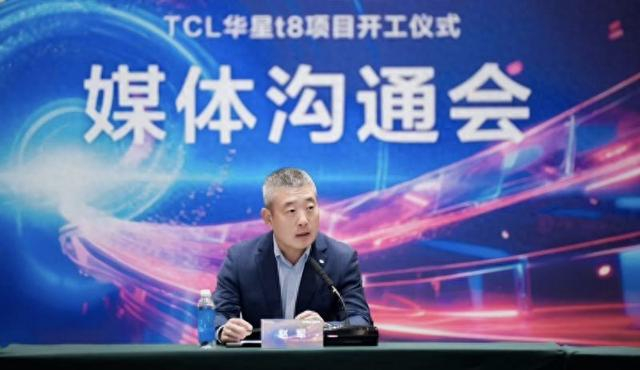
Core Viewpoint - TCL Huaxing has officially commenced construction of its OLED 8.6 generation line, becoming the fourth global player in this segment, with a total investment of approximately 29.5 billion yuan, expected to achieve mass production by 2027 [2][3]. Investment and Production - The T8 project is a joint investment between TCL Huaxing, the Guangzhou Municipal Government, and the Guangzhou Economic and Technological Development Zone Management Committee [2]. - The total investment of 29.5 billion yuan for the T8 project is significantly lower than that of competitors, such as BOE's 63 billion yuan and Visionox's 55 billion yuan for their respective OLED 8.6 generation lines [3][4]. Technology and Production Capacity - TCL Huaxing's T8 project is the world's first printed OLED 8.6 generation line, differing from competitors who use evaporation technology [3]. - The initial design capacity of the T8 project is 22,500 panels per month, which is lower than the 32,000 panels per month capacity of other OLED 8.6 generation lines [4]. - The company aims to achieve a 50% localization rate for equipment in the first phase of the T8 project, with expectations for further increases in subsequent phases [3]. Market Dynamics and Competition - The competition for mid-size displays is intensifying, with TCL Huaxing planning to expand its OLED market presence from niche professional fields to broader consumer electronics [5][6]. - The demand for AMOLED panels is projected to grow significantly, with an expected shipment of 1.01 billion panels in 2024, increasing to over 1.33 billion by 2030 [6]. - The entry of TCL Huaxing into the OLED market is seen as a challenge to South Korean companies, marking a shift in competitive dynamics within the industry [7]. Future Outlook - TCL Huaxing's first consumer OLED product is expected to enter mass production in the first half of next year, focusing on mid-size applications such as monitors, laptops, tablets, and automotive displays [5][6]. - The company anticipates that the growth of mid-size OLED demand will accelerate significantly starting in 2026, leading to increased competition and potential market consolidation [7].

半导体并购“不香”了!拿下上海荣湃全部股权等不到涨停,牛散何明坤退出帝奥微前十大流通股东
Hua Xia Shi Bao· 2025-10-22 07:33
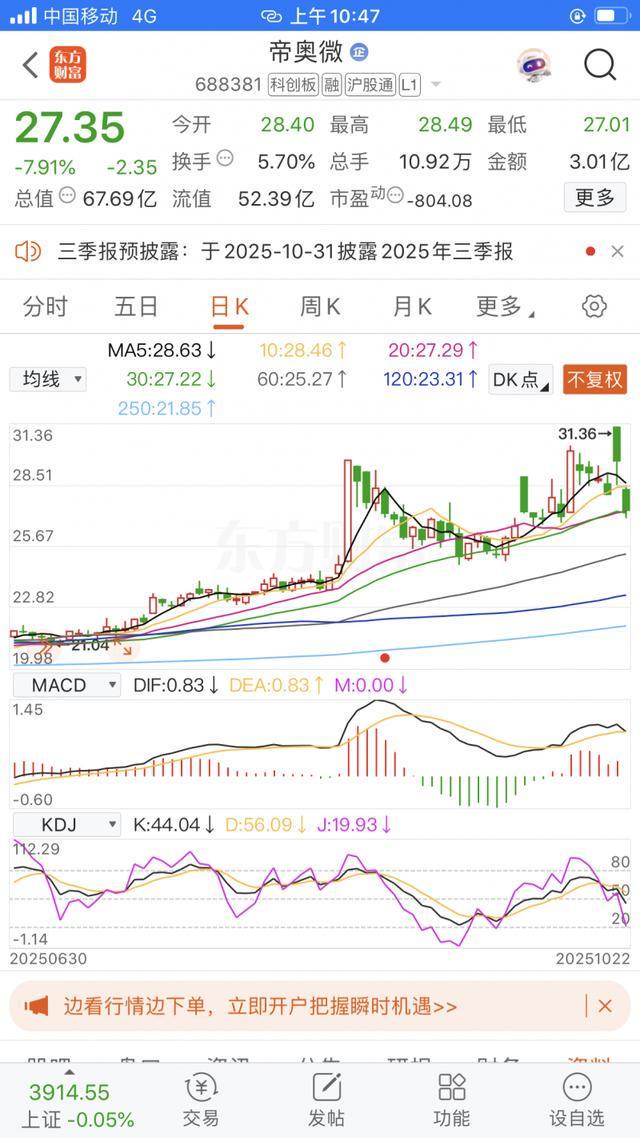
Core Viewpoint - The semiconductor company Diaowei (688381.SH) announced plans to acquire 100% of Shanghai Rongpai Semiconductor through a combination of stock issuance and cash payment, while also raising funds from specific investors. However, the market response has been lukewarm, with the stock price not experiencing a significant increase post-announcement, indicating skepticism about the merger's potential benefits [2][3][7]. Group 1: Acquisition Details - Diaowei plans to acquire Shanghai Rongpai Semiconductor, which specializes in products like digital isolators and isolation interfaces, through issuing shares at a price of 19.84 yuan per share [2][4]. - The acquisition aims to enhance Diaowei's product offerings in the analog chip sector and leverage Rongpai's established technology and customer resources, particularly in automotive electronics and industrial control [4][5]. - The deal is seen as part of a broader strategy to integrate resources within the Xiaomi ecosystem, as both companies have received investments from Xiaomi Changjiang Industrial Fund [5]. Group 2: Market Reaction - Following the announcement, Diaowei's stock saw a brief surge during pre-market trading but closed with a modest gain of less than 6% on October 21, and then dropped over 8% the following day, reflecting market skepticism about the merger [3][7]. - Notably, prominent investor He Mingkun, who had previously invested in Diaowei, has exited the top shareholder list, indicating a potential lack of confidence in the stock's future performance [2][7][9]. Group 3: Financial Implications - Shanghai Rongpai has reported losses in recent years, with projected revenues of 61.1 million yuan in 2023 and a net loss of approximately 66.3 million yuan, raising concerns about the financial impact of the acquisition on Diaowei [8]. - Analysts from various brokerages have expressed cautious optimism about the acquisition, highlighting the potential for market expansion in high-tech sectors like new energy and automotive electronics, contingent on the successful integration of the two companies [6].

应对车市变局,宝马、丰田、福特齐掀渠道革命
Hua Xia Shi Bao· 2025-10-22 06:36
Core Viewpoint - Traditional automotive giants such as BMW, Toyota, and Ford are undergoing significant channel transformations to adapt to changing market dynamics and competition from domestic brands [1][2][3] Group 1: Channel Transformation Trends - BMW plans to abandon the traditional dealership model by 2027, shifting to a direct sales approach that emphasizes control over the sales process [2][3] - Toyota is implementing a "single city, single store" strategy, consolidating its dealerships to enhance efficiency and reduce costs while maintaining dual-brand service [2][3] - Ford has established a wholly-owned sales service company in Shanghai to unify its sales channels, aiming to maximize efficiency and reduce internal conflicts among dealers [3] Group 2: Market Impact and Consumer Experience - The channel transformations are improving consumer experiences by allowing customers to view multiple vehicle types in a single location, thus eliminating the need to visit multiple dealerships [4] - Ford's channel integration has led to increased profitability for dealers by offering a wider range of vehicles, enhancing customer attraction and retention [4] Group 3: Industry-Wide Characteristics - The industry is moving towards a "light asset, heavy operation" model, with companies like Lincoln reducing store sizes and investment requirements significantly [5] - Companies are adopting a "fill-in layout" strategy, adjusting dealership numbers based on regional market conditions to optimize resource allocation [5] - The traditional 4S dealership model is being re-evaluated, with a focus on sales and after-sales services rather than the previous all-in-one approach [5] Group 4: Strategic Recommendations - Manufacturers are encouraged to enhance product competitiveness through technological innovation and to explore new channel models for better collaboration with dealers [6] - Dealers should adapt to channel changes by improving service capabilities and operational efficiency, including staff training and expanding business areas like used car sales and automotive finance [6]

