
Zhong Guo Neng Yuan Wang

Search documents
矿端紧缺逻辑延续,金融环境利好大宗商品价格 | 投研报告
Zhong Guo Neng Yuan Wang· 2025-11-28 02:02
Core Viewpoints - The copper price experienced three rises and three falls from January to November 2025, showing a fluctuating upward trend, with a range of $8,539 to $11,068 per ton and an average price of $9,704 per ton, representing a year-on-year increase of 6%, and is expected to break historical highs by the end of the year [2][3] - The main factors influencing copper prices in 2025 return to traditional frameworks, highly correlated with commodity attributes, while financial attributes show a negative correlation [2][3] - The demand for copper remains robust, but supply sentiment reacts more strongly than the actual fundamental performance [3][4] Supply and Demand Analysis - From January to August 2025, global copper supply and demand maintained a tight balance, with an average monthly supply surplus of 0.8 thousand tons [2][3] - The global refined copper demand in 2024 is projected to have China accounting for 58% and the U.S. for 6%, with a compound annual growth rate (CAGR) of 2% from 2016 to 2024 [3] - The refined copper production in China and the U.S. for 2024 is estimated at 1,557 million tons and 162 million tons, respectively, with year-on-year growth of 1.3% and 0.5% [3] Price Forecast for 2026 - The copper market is expected to be in a state of tight balance in 2026, with a supply gap of 50 thousand tons, and global supply projected at 28.97 million tons, a year-on-year increase of 3%, while demand is expected to reach 29.01 million tons, also a year-on-year increase of 3% [4] - The copper price is anticipated to continue its upward trend, potentially reaching an average of $10,500 per ton in 2026 due to tightening supply and sustained demand [4] Investment Strategy - For upstream mining resources, companies with significant resource releases and development advantages are expected to benefit, with recommendations for Zijin Mining and Luoyang Molybdenum [5] - In the downstream sector, companies with high barriers to processing and strong performance in downstream industries are favored, with recommendations for Hailiang Co., Ltd. and attention to companies like Bowei Alloys and Srey New Materials [6]
每吨猛涨2万元!铜价为何历史性冲高?背后是这些新兴产业在拉动
Zhong Guo Neng Yuan Wang· 2025-11-28 00:01
Group 1 - Copper prices have been on the rise this year, with multiple domestic and international copper price indicators reaching historical highs, driven by various supporting factors [1][2] - China's annual refined copper consumption is approximately 15 million tons, while domestic copper production is only about 1.8 million tons, leading to a high dependency on imports exceeding 80% [2] - The current copper resource reserves in China have exceeded 40 million tons, showing a growth of over 50% since 2020, and the utilization of recycled copper is expected to account for 28% of total copper consumption by 2024 [2] Group 2 - The rapid development of new industries such as renewable energy and data centers has significantly increased the demand for copper, contributing to the ongoing rise in copper prices [2][3] - The overall copper consumption in China has been growing since the 14th Five-Year Plan, with refined copper consumption projected to reach 14.95 million tons in 2024, a year-on-year increase of 2.75% [3] - The potential for copper to be replaced by lighter and cheaper aluminum in sectors like electric vehicles and household appliances could weaken the growth expectations for downstream demand if raw material prices continue to rise [3]
储能电芯市场供需两旺 竞争主线从“拼规模”转向“拼技术”
Zhong Guo Neng Yuan Wang· 2025-11-27 23:54
Core Viewpoint - The energy storage industry continues to experience high demand, with a significant increase in orders for energy storage cells, leading to a situation where supply cannot meet demand, indicating a transition from "scale expansion" to "quality and efficiency improvement" in the industry [1][2]. Group 1: Market Demand and Supply - The energy storage cell market is currently characterized by strong supply and demand, with leading companies extending order schedules into next year [1]. - Companies like Longjing Environmental Protection have reported full orders, with production schedules extending to June 2026, and are planning to increase capacity to meet the "one cell hard to find" demand [1]. - Huizhou EVE Energy has also confirmed full production status and has achieved mass production of large cells, maintaining a strong market share [1][2]. Group 2: Upstream Material Production - Upstream material companies are experiencing high production levels due to strong demand from downstream power and energy storage batteries [2]. - Companies such as Hunan YN Energy and Guizhou Anda Technology have reported being at full production capacity [2]. - The demand for phosphate cathode materials is expected to continue growing, driven by both power and energy storage batteries [2]. Group 3: Competitive Strategies - Companies are focusing on technological upgrades and innovative models to strengthen their competitive advantages [3]. - Longjing Environmental Protection plans to implement lean production and cost-reduction measures to cope with industry competition, with a reported gross margin of approximately 10% for energy storage cells [3]. - Strategic long-term partnerships are becoming crucial for stable supply chain development, as seen in the ten-year agreement between Haibo Sichuang and CATL [3]. Group 4: Industry Trends and Recommendations - The energy storage industry is advised to avoid falling into low-price competition by enhancing industry self-discipline and promoting procurement based on "optimal value" rather than "lowest price" [4]. - There is a need for differentiation in technology and products to improve the usable capacity and cost performance of energy storage systems [4]. - Accelerating international expansion and certification processes is essential for participating in global competition [4].



去全球化背景下战略小金属景气有望延续,稀有金属ETF获资金逢低布局
Zhong Guo Neng Yuan Wang· 2025-11-27 14:21
Core Viewpoint - The rare metals sector is experiencing a rebound, driven by increased demand from downstream industries such as energy storage and power batteries, alongside supply-side uncertainties [1] Industry Summary - As of November 27, 2025, the China Securities Rare Metals Theme Index rose by 0.54%, with notable increases in stocks such as Yunnan Zhenye (+5.63%) and Tin Industry Co. (+4.90%) [1] - The price of lithium carbonate futures previously exceeded 100,000 yuan/ton due to significant growth in demand and supply constraints [1] - The scarcity of strategic minor metals, coupled with rapid growth in demand from sectors like new energy, semiconductors, and military industries, is intensifying supply-demand conflicts [1] - Future price trends for rare metals are expected to continue upward due to ongoing resource scarcity, demand structure upgrades, and policy adjustments [1] Company Summary - According to Shenwan Hongyuan Research, the small metals sector is anticipated to see positive changes in 2026, with energy storage demand driving an earlier reversal in the lithium carbonate industry cycle [1] - The value of strategic minor metals such as rare earths, tungsten, and antimony is expected to be continuously reassessed in the context of de-globalization [1] - The restructuring of the global credit landscape and the continuation of the Federal Reserve's interest rate cuts will support the favorable trends for precious and minor metals [1] - As of October 31, 2025, the top ten weighted stocks in the China Securities Rare Metals Theme Index accounted for 60% of the index, including companies like Northern Rare Earth, Luoyang Molybdenum, and Ganfeng Lithium [1]



量产效率22%,钙钛矿产业化取得突破性进展
Zhong Guo Neng Yuan Wang· 2025-11-27 08:42
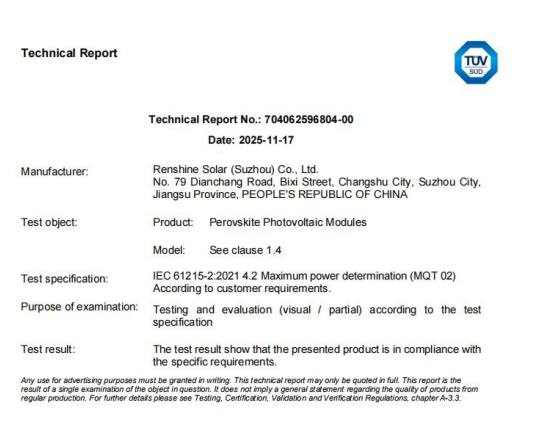
Core Insights - Renshine Solar (Suzhou) Co., Ltd. has achieved a stable efficiency of over 22% for its perovskite photovoltaic modules, marking a significant milestone in the commercialization of perovskite solar technology, comparable to traditional silicon photovoltaics [1][4] Industry Development - The theoretical photoelectric conversion efficiency of perovskite materials can reach 45%, with production costs being one-tenth of silicon [2][3] - China is leading the global development of perovskite photovoltaics, with notable research efficiencies achieved by institutions such as the Chinese Academy of Sciences and Renshine Solar [3] - The perovskite technology is recognized in national planning documents as a key direction for development, receiving strong policy support [2][3] Market Trends - The perovskite industry is experiencing rapid technological advancements, with Renshine Solar's 22% efficiency being a critical performance threshold for full commercialization [4] - Perovskite modules exhibit over 10% higher actual power generation efficiency compared to silicon under the same conversion efficiency, with Renshine Solar's modules achieving over 24% actual power generation efficiency [4] - The market for perovskite applications is diversifying, with products like photovoltaic tiles and flexible outdoor power sources being developed to meet various customer needs [5] Investment and Ecosystem - The perovskite industry ecosystem is becoming increasingly robust, with various companies investing in R&D and production capabilities [6] - The Ministry of Industry and Information Technology of China has emphasized support for the industrialization of perovskite materials, indicating a commitment to advancing high-efficiency photovoltaic technologies [6] - The global market for perovskite photovoltaic modules is projected to reach approximately 20 GW by 2030, with a market space of around 20 billion yuan, reflecting a compound annual growth rate (CAGR) of 243% from 2025 to 2030 [5][6]

周三国际银价大幅上涨
Zhong Guo Neng Yuan Wang· 2025-11-27 08:19
Core Insights - International mineral prices mostly increased, with silver showing the highest gain [1] Group 1: Oil Prices - West Texas Intermediate (WTI) crude oil closed at $58.55 per barrel, up 0.77% [1] - Brent crude oil closed at $62.47 per barrel, up 0.92% [1] Group 2: Uranium and Iron Ore Prices - Uranium (U3O8) closed at $76.35 per pound, up 0.26% [2] - 62% iron ore fines closed at $104.90 per ton, up 0.10% [3] - 58% iron ore fines closed at $91.67 per ton, essentially unchanged [3] Group 3: Base and Precious Metal Prices - LME copper futures closed at $10,960.92 per ton, up 1.26% [3] - Aluminum closed at $2,864.61 per ton, up 2.29% [3] - Lead closed at $1,973.50 per ton, down 0.30% [3] - Zinc closed at $3,055.28 per ton, up 1.91% [3] - Nickel closed at $14,840.50 per ton, down 0.43% [3] - Tin closed at $38,090.00 per ton, up 1.25% [3] - Gold price on the NYMEX closed at $4,162.70 per ounce, up 0.77% [3] - Silver closed at $53.35 per ounce, up 3.65% [3] - Platinum closed at $1,587.60 per ounce, up 2.47% [3] - Palladium closed at $1,424.00 per ounce, up 2.15% [3]
绿色钢铁的经济账:每吨高出300元,电炉短流程的低碳优势如何变现?
Zhong Guo Neng Yuan Wang· 2025-11-27 04:56
Core Viewpoint - The steel industry in China, as the largest producer and consumer globally, faces significant pressure to reduce carbon emissions, which account for approximately 15% of the country's total emissions. The transition to a low-carbon model, particularly through the adoption of electric arc furnace (EAF) short processes, is becoming increasingly urgent in the context of global green transformation [1]. Group 1: Development of Electric Arc Furnace Short Processes - The report highlights that the traditional blast furnace-converter process is challenged by high carbon emissions due to its reliance on iron ore and coal, while the EAF short process, which primarily uses scrap steel, offers clear advantages in terms of low carbon emissions and energy efficiency [1][2]. - Sichuan province has emerged as a leader in the development of EAF short processes, with a total crude steel capacity of 32.3 million tons, where the short process accounts for approximately 40% of the total production [2]. - The province's electricity generation capacity has increased significantly, with hydropower contributing over 80% of the total, providing a stable and low-cost energy source for EAF operations [2]. Group 2: Challenges in Scrap Steel Supply - Scrap steel is the primary raw material for the EAF short process, but a shortage of scrap resources poses a significant barrier to its development. By 2045, scrap steel is expected to become the main raw material for steel production in China, with EAF processes projected to account for about 50% of production by 2060 [3]. - A specific example from a southwestern province indicates that while scrap steel resources have increased from 8.86 million tons in 2020 to 9.64 million tons in 2024, consumption has also risen, leading to a persistent shortage [3]. Group 3: Economic Viability and Cost Challenges - The production cost of EAF short processes in Sichuan is approximately 300 RMB per ton higher than that of traditional processes, primarily due to high scrap prices and greater energy consumption [5]. - The report suggests that stable clean energy supply is crucial for maintaining the cost-effectiveness of EAF production, as fluctuations in energy availability can undermine its low-carbon advantages [5]. - To enhance the economic viability of EAF short processes, the report recommends promoting green finance and establishing a green premium sharing mechanism to improve competitiveness [5]. Group 4: Industry Perspectives and Future Outlook - Despite current cost challenges, many steel companies remain optimistic about the future of EAF technology. It is anticipated that as carbon emission costs rise, companies will reassess the overall costs, including carbon costs, leading to increased investment in EAF short processes [6].
长源电力增资至34.8亿,增幅约27%
Zhong Guo Neng Yuan Wang· 2025-11-27 03:21
Group 1 - The core point of the article is that Changyuan Electric Power has increased its registered capital from approximately 2.75 billion RMB to about 3.48 billion RMB, representing an increase of around 27% [1] - The company has undergone changes in several key personnel [1] Group 2 - Changyuan Electric Power Co., Ltd. was established in April 1995 and is legally represented by Wang Dong [1] - The company's business scope includes heat production and supply, research and development of emerging energy technologies, and manufacturing of basic chemical raw materials [1] - Shareholder information indicates that the company is jointly held by China Energy Investment Corporation, China Energy Construction Group Co., Ltd., and Hubei Railway Development Fund Co., Ltd. [1]

《磷酸铁锂材料行业成本研究》发布,或为恶性竞争划定红线 | 投研报告
Zhong Guo Neng Yuan Wang· 2025-11-27 03:07
Core Insights - The report highlights the urgent need to address the severe competition in the lithium iron phosphate (LFP) materials industry, aiming to establish a cost index to guide companies and regulators [2][8]. Industry Overview - The lithium battery export value reached $55.38 billion from January to September 2025, marking a year-on-year increase of 26.75% [3]. - The energy storage installation capacity surged by 60% year-on-year, with the total industry output value expected to exceed 3 trillion yuan [3]. - LFP materials dominate the market, accounting for nearly 74% of cathode material shipments, with a staggering 99.9% share in the energy storage battery sector [4]. Structural Challenges - The industry faces overcapacity, with domestic production capacity projected to reach 4.7 million tons in 2024, a 34% increase year-on-year, while actual production is only 2.3 million tons, resulting in a utilization rate of less than 50% [5]. - Prices have plummeted from 173,000 yuan per ton at the end of 2022 to 34,000 yuan per ton by August 2025, reflecting a dramatic decline of 80.2% [6]. - The industry has experienced continuous losses for over 36 months, with six listed companies reporting an average debt-to-asset ratio of 67.81% [7]. Cost Index Development - The cost index is based on audited data from seven leading companies, which collectively hold a 74% market share, using various methodologies to establish a clear development benchmark [8]. - The average cost range for LFP materials is determined to be between 15,714.8 yuan/ton and 16,439.3 yuan/ton (pre-tax), providing a reference point for cost management [8]. - This cost index aims to enhance market transparency, assist upstream and downstream companies in decision-making, and delineate boundaries for unhealthy competition [8]. Investment Strategy - Companies with technological leadership and strong influence in the LFP cathode material supply chain, such as Hunan Youneng and Deyang Nano, are recommended for investment focus [9].


AI驱动存储新周期 | 投研报告
Zhong Guo Neng Yuan Wang· 2025-11-27 03:04
Industry Overview - The semiconductor industry is experiencing a new storage cycle driven by emerging technologies and AI demand, with historical cycles characterized by demand, capacity, and inventory phases [1][2] - The memory segment, being the second largest in semiconductors, shows greater volatility than the overall industry, with significant market growth expected due to AI [1] Capital Expenditure Projections - DRAM capital expenditure is projected to reach $53.7 billion in 2025, increasing to $61.3 billion in 2026, representing a year-on-year growth of approximately 14% [3] - NAND Flash capital expenditure is expected to be $21.1 billion in 2025, with a slight increase to $22.2 billion in 2026, reflecting a year-on-year growth of about 5% [3] AI Impact on Storage Demand - The introduction of reasoning chains in large language models (LLMs) is significantly increasing data storage needs, with a shift from KB to TB and even EB in storage units [2] - The cost of reasoning in large models has decreased exponentially since the release of ChatGPT-3, which is expected to drive application growth and storage demand [2] - KV Cache is identified as a key mechanism for optimizing reasoning efficiency in large models, further increasing storage requirements [2] Current Industry Focus - Memory manufacturers are shifting focus from pure capacity expansion to upgrading process technologies and developing high-value products like HBM [3] - Current cleanroom space is nearing capacity limits, with only a few manufacturers like Samsung and SK Hynix having limited expansion capabilities [3] Investment Recommendations - Continuous monitoring of memory inventory, pricing data, and the impact of AI computing power on storage chip demand is advised [4]