
Zhong Guo Neng Yuan Wang

Search documents
聚氨酯TPU结构件,防护减震理想选择,人形机器人量产落地的“安全垫”
Zhong Guo Neng Yuan Wang· 2026-01-19 00:54
Core Insights - The TPU (Thermoplastic Polyurethane) market is expected to grow significantly, driven by its applications in humanoid robots, with consumption in China projected to rise from 447,000 tons in 2019 to 720,000 tons by 2024, reflecting a CAGR of 10% [1][4] - The introduction of Tesla's Optimus robot, which features soft covering materials, highlights the increasing importance of TPU in robotics, particularly for safety and interaction [2][4] Group 1: TPU Applications in Robotics - TPU materials are ideal for safety and shock absorption in humanoid robots, providing protection for internal components and suitable for high-contact scenarios [3] - The versatility of TPU allows for the production of non-load-bearing structural components, enhancing the manufacturing process through techniques like 3D printing [3] - TPU's properties make it suitable for protective and sealing applications in high-motion areas, such as joints and cables [3] Group 2: Market Growth and Investment Opportunities - The mass production of humanoid robots is anticipated to expand the TPU market significantly, with a potential market space exceeding 3 billion yuan when producing one million robots [4] - Companies with existing expertise in TPU manufacturing and partnerships with downstream robot manufacturers are positioned to benefit first from this growth [5] - Specific companies identified as beneficiaries include Kaizhong Co., Moulded Technology, and others involved in flexible covering materials and TPU production [5]


锂价上涨带动产业链上行,固态电池与自动驾驶提速
Zhong Guo Neng Yuan Wang· 2026-01-19 00:54
Core Viewpoint - The report highlights the continuous growth and optimization of the supply-demand structure in the Chinese electric vehicle (EV) industry, supported by favorable policies and strong market demand [2][3]. Industry Performance - In December, China's monthly production and sales of new energy vehicles reached 1.718 million and 1.71 million units, respectively, marking year-on-year increases of 12.3% and 7.2% [2][3]. - For the entire year of 2025, cumulative production and sales are projected to reach 16.626 million and 16.49 million units, reflecting year-on-year growth of 29% and 28.2% [2][3]. - New energy vehicle sales are expected to account for 47.9% of total new car sales in the market [2][3]. Supply and Demand Dynamics - The supply side is characterized by the continuous introduction of new products from battery and main engine manufacturers, with positive feedback from demand [2][3]. - The industry has experienced significant price declines, leading to reduced capital expenditures, while the supply-demand balance is improving [2][3]. - The industry is actively optimizing capacity and supply, aiming to stabilize prices and ensure profitability for enterprises [2][3]. Price Trends - The report indicates that the prices within the industry are at a bottom level and are beginning to stabilize and recover [2][3]. - Strong demand and tight supply for certain materials, such as lithium carbonate and lithium iron phosphate, are leading to price increases [2][3]. Investment Strategy - The report maintains a "recommended" rating for the new energy vehicle industry, emphasizing the selection of companies that are expected to deliver excess returns [3]. - Focus areas for investment include robotics, solid-state batteries, battery materials, and liquid cooling technologies [3][4]. Industry Dynamics - Recent price movements in the supply chain include lithium carbonate prices rising to 157,900 CNY/ton, an increase of 12.7% from the previous week [6]. - The Ministry of Industry and Information Technology plans to accelerate breakthroughs in solid-state battery technology by 2026 [7].





煤价上行回归合理价格,坚定稳煤价逻
Zhong Guo Neng Yuan Wang· 2026-01-19 00:45
Group 1 - The core viewpoint of the report indicates that coal prices are returning to reasonable levels, with a slight decline in thermal coal prices, and an expectation for gradual recovery to around 750 RMB/ton [1][2] - As of January 17, the Qinhuangdao Q5500 thermal coal price is 695 RMB/ton, down 4 RMB/ton from the previous period, having previously reached the estimated target price range of 800-860 RMB/ton [1][2] - The report highlights that the recent price drop is attributed to a combination of supply tightening due to regulatory actions and increased demand driven by seasonal heating needs [2][3] Group 2 - The investment logic suggests that both thermal and coking coal prices have reached a turning point, with thermal coal prices expected to undergo a recovery process influenced by policy adjustments and market dynamics [3] - The report outlines a four-step process for thermal coal price recovery, including the restoration of long-term contracts and achieving a balance in profitability between coal and power companies [3] - Coking coal prices are more influenced by market supply and demand fundamentals, with target prices linked to the price ratio between coking and thermal coal [3] Group 3 - The investment recommendation emphasizes a dual logic of cyclical recovery and stable dividends, suggesting that coal stocks are positioned for upward price movement due to low historical price levels and improving supply-demand fundamentals [4] - The report identifies four main investment lines in coal stocks, focusing on cyclical logic, dividend potential, diversified aluminum exposure, and growth logic [4] - Specific coal companies are highlighted as beneficiaries of these trends, including Jin控煤业, 兖矿能源, 中国神华, and others [4]



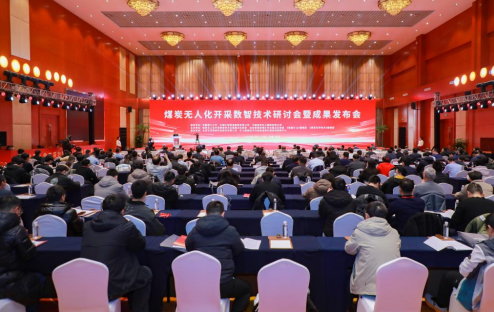
煤炭无人化开采数智技术研讨会暨成果发布会在京召开 12项重大成果引领行业转型
Zhong Guo Neng Yuan Wang· 2026-01-18 03:50
Core Viewpoint - The conference on "Coal Unmanned Mining Digital Technology" aims to promote the intelligent, unmanned, and high-quality development of the coal industry, showcasing innovations in key technologies, equipment development, and demonstration projects [1][4]. Group 1: Conference Overview - The conference was co-hosted by several key organizations, including the National Key Laboratory for Intelligent Mining Technology and Beijing Tianma Zhikong Technology Co., Ltd., and took place in Beijing on January 10 [1]. - The event gathered 27 leaders and experts from various sectors, including government, academia, and industry, to discuss technological innovations and development paths for the coal industry [2]. Group 2: Industry Leaders' Insights - China Coal Group's Deputy General Manager Gao Shigang emphasized the importance of integrating research and industry resources to support the laboratory's efforts in technology development and talent cultivation [4]. - The Deputy Minister of Emergency Management, Song Yuanming, highlighted the critical role of technological advancement in ensuring safety in coal production and called for a balance between efficiency and safety [4][5]. - The President of the China Coal Industry Association, Fu Jianhua, noted significant achievements in coal mine automation during the 14th Five-Year Plan period and stressed the need for a shift from technology demonstration to value realization [5]. Group 3: Technological Innovations - The conference featured the release of 12 major technological achievements in areas such as intelligent mining control systems, high-reliability communication, and intelligent safety monitoring [6]. - The achievements represent a collaborative effort to address key challenges in the industry and reflect the integration of research, industry, and application [6]. Group 4: Future Directions - The conference set the stage for future collaboration among industry experts to explore the technological pathways for the coal industry's transition to unmanned, digital, and intelligent operations [7][8]. - The laboratory aims to focus on key areas such as digital foundational theory and intelligent mining technologies to support the industry's transformation [7]. Group 5: Industry Collaboration and Development - Various industry representatives discussed the importance of collaboration between research institutions and enterprises to drive technological advancements and ensure the safety and efficiency of coal mining operations [9][10]. - The conference served as a platform for sharing insights and experiences, fostering a collective approach to overcoming challenges in the coal industry's digital transformation [8][9].


煤矸石发电遭多重制约,建材利用卖不动!资源化路径为何越走越窄?
Zhong Guo Neng Yuan Wang· 2026-01-18 03:30
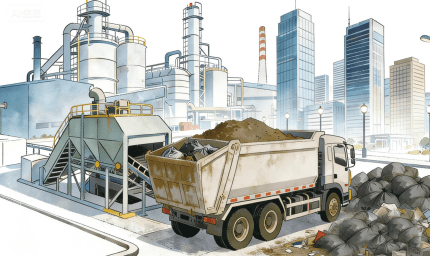
Core Viewpoint - The State Council has issued the "Solid Waste Comprehensive Management Action Plan," emphasizing the need to enhance the comprehensive utilization of bulk solid waste, particularly coal gangue, which poses environmental risks if improperly managed [1] Group 1: Current Situation of Coal Gangue - Coal gangue, a byproduct of coal mining, constitutes about 20% of the raw coal output, with an estimated annual production of 825 million tons in 2024 and a historical cumulative stock exceeding 7 billion tons [2] - The improper disposal of coal gangue leads to significant environmental concerns, including the potential leaching of heavy metals and acidic substances into water and soil [2] - The comprehensive utilization rate of coal gangue in China reached 73.8% in 2022, but this is still lower than the over 90% rates seen in countries like the U.S. and the U.K. [3] Group 2: Challenges in Utilization - The complexity of coal gangue composition and its low calorific value hinder its utilization, with only about 30% currently used for low calorific value power generation [3][4] - The high costs associated with the treatment and utilization of coal gangue, along with competition from traditional markets, limit its effectiveness in construction material production [4] - The current capacity for high-value utilization of coal gangue is low, with some production lines handling less than 100,000 tons per year, which is insufficient compared to the millions of tons generated by mines [4] Group 3: Potential Solutions and Global Practices - Countries like the U.S. and Australia have established effective pathways for the utilization of coal gangue, particularly in construction materials and resource extraction [5] - In the U.S., coal mines have successfully transformed coal gangue mountains into agricultural land through soil improvement and vegetation restoration [5] - China's underground filling and land reclamation methods show promise for large-scale coal gangue disposal, but they also increase mining costs and reduce operational efficiency [6]
动力电池格局生变:铁锂快速抢占市场,三元电池退守高端赛道
Zhong Guo Neng Yuan Wang· 2026-01-18 03:20
Core Insights - The Chinese power battery industry has made significant progress, expanding in scale while undergoing deep market adjustments, with a focus on technological innovation and global operations as it moves towards a new development stage by 2026 [1] Market Growth - The domestic power battery installation volume reached 93.5 GWh in November 2025, with a month-on-month increase of 11.2% and a year-on-year increase of 39.2%. Cumulatively, the installation volume for the first 11 months of 2025 was 671.5 GWh, reflecting a year-on-year growth of 42.0% [2] - Lithium iron phosphate (LFP) batteries continue to dominate the market, accounting for 80.5% of the total installation volume in November 2025, with a year-on-year growth of 40.7% [2] - The demand for materials in the battery sector is also increasing, with LFP materials reaching 290.2 thousand tons in the first 11 months of 2025, compared to 193.4 thousand tons in 2024 [2] Technology and Market Trends - LFP batteries are rapidly capturing market share due to cost advantages and technological breakthroughs, while the growth of ternary batteries is slowing down [3] - The global shipment of LFP cathode materials is expected to reach 5.25 million tons by 2026, representing a year-on-year increase of 36% [3] Export and Application Expansion - The export volume of domestic power batteries was 21.2 GWh in November 2025, with a year-on-year increase of 70.2%. Cumulatively, the export volume for the first 11 months of 2025 was 169.8 GWh, reflecting a year-on-year growth of 40.6% [4] - The energy storage sector is becoming a significant growth driver for many established power battery companies, with companies like Yiwei Lithium Energy and CATL reporting substantial increases in both power and energy storage battery shipments [4] Future Market Outlook - The domestic energy storage market is expected to expand significantly, with new bidding for energy storage projects reaching 255.8 GWh in the first nine months of 2025, a year-on-year increase of 97.7% [5] - The overall supply-demand structure of the lithium battery industry is anticipated to improve further by 2026, driven by increased electric vehicle penetration and enhanced economic viability of energy storage installations [8] - The cumulative production of power and other batteries in China reached 1,468.8 GWh in the first 11 months of 2025, with a year-on-year growth of 51.1% [8]
氢能商业化关键一步:首份绿氢CCER方法学落地,激活环境资产价值
Zhong Guo Neng Yuan Wang· 2026-01-18 03:17
Core Viewpoint - The newly issued methodology for voluntary greenhouse gas emission reduction projects in renewable energy hydrogen production aims to standardize emission accounting for electrolysis projects, enabling them to monetize their emission reductions in the carbon market, thus supporting the commercialization and scaling of the hydrogen industry in China [1][2]. Group 1: Methodology Overview - The methodology is the first of its kind in China's hydrogen sector, providing a unified standard for calculating emission reductions from eligible electrolysis hydrogen production projects [1]. - It is designed specifically for new projects, excluding existing projects undergoing modifications or upgrades, and requires that renewable energy used for hydrogen production comes from the project's own renewable energy sources [2][3]. Group 2: Industry Development and Potential - China's hydrogen production capacity is projected to exceed 50 million tons per year by the end of 2024, with over 600 planned renewable energy electrolysis hydrogen projects, positioning China as a global leader in this sector [4]. - Currently, fossil fuel-based hydrogen production accounts for 98% of the market, while renewable energy electrolysis hydrogen represents only about 1%, indicating significant potential for growth and decarbonization [4]. Group 3: Economic Impact and Commercialization - The implementation of the methodology is expected to create a second core revenue stream from carbon asset income for green hydrogen projects, significantly improving their economic models and accelerating commercialization [6]. - Existing renewable energy electrolysis hydrogen projects are generally unprofitable, with costs typically 2 to 3 times higher than fossil fuel hydrogen production, highlighting the need for market incentives to enhance economic viability [7]. Group 4: Broader Industry Benefits - The methodology will benefit not only individual hydrogen projects but also the broader hydrogen industry chain, including project owners and renewable energy power plants, by expanding market demand and alleviating renewable energy consumption challenges [8]. - It is anticipated that the methodology will stimulate the release of green hydrogen capacity, providing stable sources for downstream industrial users, thereby supporting deeper decarbonization efforts [8].
锂电回收市场大洗牌!“固废十条” 倒逼行业合规化转型
Zhong Guo Neng Yuan Wang· 2026-01-18 03:13
Core Insights - The State Council has released the "Solid Waste Comprehensive Management Action Plan" (referred to as "Solid Waste Ten Measures"), marking a significant top-level design in pollution control following previous initiatives targeting air, water, and soil pollution [2][4] - The plan aims to enhance solid waste management comprehensively, contributing to ecological protection and supporting a green transformation of the economy and society [2][4] Group 1: Objectives and Goals - By 2030, the plan sets clear targets, including significant improvements in solid waste management, effective control of historical waste stockpiles, and a reduction in illegal dumping [2] - The annual comprehensive utilization of major solid waste is expected to reach 4.5 billion tons, with the recycling of key resources projected at 510 million tons [2] Group 2: Current Challenges - The scale and complexity of solid waste generation in China present significant challenges, with 93.2 billion tons of solid waste produced across 315 cities in 2023 [3] - The breakdown of waste includes 38 billion tons of industrial solid waste, 1 billion tons of hazardous waste, 3.9 billion tons of municipal waste, 24.1 billion tons of construction waste, 25.8 billion tons of agricultural solid waste, and 0.4 billion tons of municipal sludge [3] Group 3: Policy Innovations - The "Solid Waste Ten Measures" introduces groundbreaking regulations, including a requirement for local governments to allocate at least 1% of industrial land for resource recycling projects, addressing long-standing barriers to project implementation [5] - The plan emphasizes the use of fiscal funds and the development of green finance to support projects, creating a "government-led + market-driven" investment mechanism [6] Group 4: Industry Implications - The measures are expected to stimulate demand across the entire waste management and recycling industry, promoting innovation and integration with energy and material sectors [6] - The lithium battery recycling sector is highlighted as a key area for transformation, with the introduction of extended producer responsibility (EPR) expected to enhance the recycling framework and reduce informal collection practices [7] Group 5: Market Dynamics - The current landscape of the lithium battery recycling industry is undergoing significant changes, with compliance and scale becoming the new norms as regulatory pressures increase [7] - Major automotive manufacturers are shifting from passive observation to active participation in recycling, indicating a move towards a closed-loop management approach [7]
首届中沙经济合作论坛在利雅得举行 聚焦项目化落地助力企业出海中东
Zhong Guo Neng Yuan Wang· 2026-01-18 03:09
Group 1 - The first China-Saudi Economic Cooperation Forum was held in Riyadh, Saudi Arabia, attracting around 800 participants from various sectors, including government, business, academia, and expatriate communities, under the theme "Silk Road Synergy, Expatriate Heart Building Dreams, Win-Win Cooperation" [1] - The forum focused on aligning China's Belt and Road Initiative with Saudi Arabia's Vision 2030, discussing cooperation opportunities in advanced manufacturing, digital economy, green transformation, logistics and supply chain, and business services [2] - Discussions highlighted the need for a mechanism to transition cooperation from "vision" to "projects," emphasizing the importance of collaboration in key sectors [2] Group 2 - The forum addressed common concerns for businesses entering the Middle East, such as information asymmetry, unclear compliance pathways, mismatched financing structures, and insufficient local partnerships and talent systems [3] - Representatives from media, strategic affairs, and international cooperation stressed the importance of a verifiable information system, credible communication mechanisms, and risk management tools to reduce uncertainties in cross-border cooperation [3] - The forum released the "Riyadh Cooperation Consensus," proposing the establishment of a long-term information sharing mechanism, a cross-border project matchmaking platform, and improved compliance services and risk prevention support [4] Group 3 - The forum aimed to enhance project landing success rates through standardized processes, integrated services, and a focus on actionable frameworks [4] - A project display and consultation area was set up during the forum to facilitate face-to-face communication regarding specific project needs, partner matching, compliance, and financial services [4] - A Saudi expatriate New Year gala was also held to strengthen community ties and foster a collaborative atmosphere for discussing cooperation [4]
以强大电力引擎支撑AI时代竞技
Zhong Guo Neng Yuan Wang· 2026-01-18 03:05
Group 1 - China is projected to have the largest power supply capacity globally, with total installed capacity expected to exceed 3.8 billion kilowatts by 2025, accounting for one-third of the world's total [1][2] - The total electricity consumption in China is anticipated to surpass 10 trillion kilowatt-hours, exceeding the combined annual consumption of the EU, Russia, India, and Japan [1][2] - China has established the world's largest and most advanced power supply system, with a reliability rate of 99.924% and coverage of 99.95% of the country [1][2] Group 2 - The development of renewable energy in China has seen significant growth, with installed capacity for wind and solar power exceeding 1.7 billion kilowatts, historically surpassing thermal power capacity [2][3] - The "14th Five-Year Plan" emphasizes building a clean, low-carbon, safe, and efficient energy system, highlighting safety, cleanliness, and efficiency as core requirements [2][4] - China's energy transition aims to create a complex super system capable of large-scale integration of renewable energy through digital and intelligent means [2][4] Group 3 - The demand for AI computing power necessitates a robust and continuously upgraded power system, as AI model training is energy-intensive [3][4] - The establishment of large-scale green computing centers in renewable energy-rich regions is becoming an economically and environmentally friendly choice [3][4] - A stable and intelligent power grid is essential for ensuring uninterrupted computing services and improving overall energy efficiency [3][4] Group 4 - Challenges remain in the power industry, particularly regarding the intermittency of renewable energy and the high stability requirements of computing facilities [4] - Continuous improvement in flexibility, cross-regional coordination, and market mechanisms is necessary to address these challenges [4] - The modernization of the energy system is crucial for competitiveness in the AI era, with China focusing on solidifying its energy foundation alongside advancements in computing and chips [4][5] Group 5 - China's energy revolution aims to support future digital civilization, ensuring economic development and carbon neutrality while providing a new paradigm for global AI infrastructure [5]