Zhong Guo Neng Yuan Wang

Search documents
2026年度策略:关注供需格局,布局航空、干散货海运、油运
Zhong Guo Neng Yuan Wang· 2026-01-04 01:24
Core Viewpoint - The transportation sector's performance is closely linked to macroeconomic conditions, with expectations of recovery in imports and exports boosting port throughput and cross-border logistics demand, while consumption and infrastructure investment recovery support the revival of express and logistics demand [1][2]. Investment Recommendations - The industry strategy suggests a positive outlook on policies, recommending investments in aviation, dry bulk shipping, and oil transportation. The recovery in demand and supply constraints are expected to create structural opportunities in the transportation sector [2]. - Specific recommendations include: 1. **Aviation**: Limited supply growth with a gradual demand recovery, indicating a potential turning point in supply-demand dynamics, leading to increased ticket prices and profitability [2][3]. 2. **Dry Bulk Shipping**: Continued supply constraints with improving demand structure, suggesting a basis for rising freight rates [2][4]. 3. **Oil Transportation**: Supply constraints combined with improving demand structure are expected to sustain high industry profitability [2][5]. Industry Insights - **Aviation**: The industry is expected to reach a supply-demand turning point by 2025, with capacity utilization during peak seasons exceeding 2019 levels. Supply growth is projected to be only 17% by the end of 2025 compared to 2019, while demand is expected to grow by 4.7% [3]. - **Dry Bulk Shipping**: The sector is characterized by limited supply and improving demand structure, with global dry bulk trade volume expected to grow moderately. The freight rate is anticipated to rise significantly by the end of 2025 [4]. - **Oil Transportation**: The industry is projected to maintain a high level of profitability through 2025-2026, driven by supply constraints and structural demand improvements, with historical trends indicating a correlation between freight rates and shipowner profitability [5].
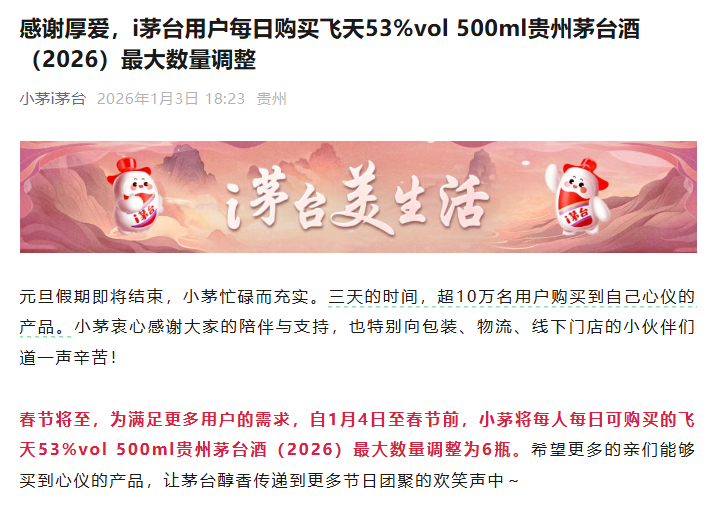
茅台最新调整:i茅台购买普茅数量从12瓶调整为6瓶
Zhong Guo Neng Yuan Wang· 2026-01-03 11:14
1月3日晚间,贵州茅台(600519)"小茅i茅台"发布最新消息称,春节将至,为满足更多用户的需求, 自1月4日至春节前,小茅将每人每日可购买的飞天53%vol500ml贵州茅台酒(2026)最大数量调整为6瓶。 ...


电力之光 点亮新征程
Zhong Guo Neng Yuan Wang· 2026-01-02 10:44
银线织山河,电流连秦川。 铁塔连峰起,灯火暖长安。 绿电织锦绣,山河焕新颜。 光明续长卷,征程向曙光。 值此新元肇启,国网陕西电力砥砺奋进,以坚韧之网守护三秦灯火,用绿色动能助推时代步伐,以电力 之光,照亮每一个新征程! ...
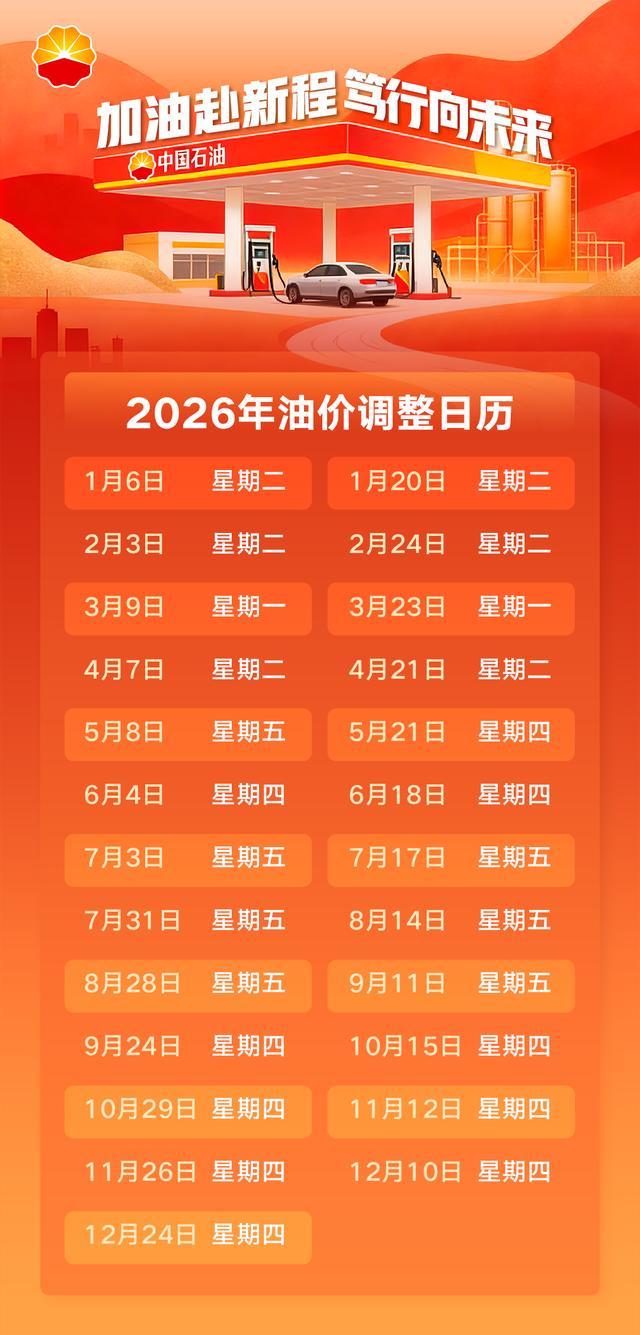
中国石油发布2026全年油价调整时间表:1月6日将迎来第一次调整
Zhong Guo Neng Yuan Wang· 2026-01-01 03:46
Group 1 - The core point of the article is that China National Petroleum Corporation has announced the oil price adjustment schedule for the year 2026, with the first adjustment set to occur on January 6, 2026 [1]

头部硅片企业上调报价,产业链企稳预期强化
Zhong Guo Neng Yuan Wang· 2025-12-31 16:06
Core Viewpoint - Leading silicon wafer companies have significantly raised their prices, indicating a stabilization expectation in the industry chain [2] Group 1: Price Adjustments - On December 25, four leading silicon wafer companies jointly increased their prices, with 183N wafers priced at 1.4 yuan/piece, 210RN wafers at 1.5 yuan/piece, and 210N wafers at 1.7 yuan/piece, averaging a 12% increase [2] - The average transaction prices for silicon wafers also saw notable increases: 183N wafers at 1.2 yuan/piece (up 2.56% week-on-week), 210RN wafers at 1.31 yuan/piece (up 9.17%), and 210N wafers at 1.52 yuan/piece (up 1.33%) [2][3] Group 2: Market Dynamics - The increase in silicon wafer prices is driven by a combination of supply contraction, recovering demand, and rising costs [2] - Supply is expected to decrease by approximately 5% month-on-month in December as silicon wafer companies maintain production cuts and control sales, leading to a reduction in low-price sales [2] - The acceptance of price increases by downstream battery manufacturers has risen due to significant increases in silver prices, resulting in higher procurement of expensive orders [2] - The cost support for silicon wafers has strengthened, with multi-crystalline silicon prices rising by 1-2 yuan/kg, increasing the cost of silicon wafers by 0.05 yuan/piece [2] Group 3: Industry Outlook - The overall operating rate in the silicon wafer industry remains stable, with leading companies operating at 50% and 48%, while integrated companies range from 50% to 70% [3] - If price transmission within the industry chain proceeds smoothly, the silicon wafer market is expected to maintain a strong trend, reinforcing expectations of recovery in the photovoltaic industry chain [3] - Recent increases in commodity prices have also raised non-silicon costs for batteries and components, shifting the overall transaction focus for photovoltaic materials upward [3] Group 4: Investment Recommendations - The photovoltaic industry chain presents opportunities driven by supply-side reforms, with recommended companies including Tongwei Co., Xiexin Technology, Longi Green Energy, JA Solar, JinkoSolar, and Trina Solar [4] - Growth opportunities from new technologies are highlighted, with recommendations for Aiko Solar, Mibet, and polymer materials [4] Group 5: Sector Rating - The electric power equipment sector maintains a "recommended" rating [5]
产业并购活跃,布局全球化与前沿冷却技术
Zhong Guo Neng Yuan Wang· 2025-12-31 16:01
Core Insights - The Chinese refrigeration and air conditioning equipment industry is at a critical turning point, transitioning from a price war-driven market to a stable development phase dominated by stock renewal demand and energy efficiency standards [1] - The report aims to analyze structural opportunities for growth in a mature market and provide insights into the long-term evolution and competitive landscape of the refrigeration equipment industry by benchmarking against overseas leaders [1] Group 1: Market Trends - The overseas HVAC giants are directing their capital expenditures towards data center infrastructure, driven by the global digitalization and intelligence wave, leading to increased demand for computing power [3] - The cooling systems in data centers represent a significant portion of energy consumption, making energy efficiency improvements and reduced Power Usage Effectiveness (PUE) critical requirements, thus creating market space for high-end cooling solutions [3] Group 2: Strategic Developments - Localized deepening in overseas markets and value extension in the supply chain are essential, with acquisitions of local brands allowing companies to quickly access established distribution networks and adapt to local product technologies [2] - The trend of direct overseas capacity construction in emerging markets like Southeast Asia is driven by tariff barriers, logistics costs, and the need to respond quickly to market demands while leveraging local resource advantages [2] Group 3: Investment Recommendations - In the household refrigeration equipment sector, attention should be given to industry leaders such as Midea Group [3] - In the specialized refrigeration equipment sector, domestic companies like Invec and Shenling Environment, which have rich reserves in data center cooling solutions, are worth monitoring [3] - Upstream components such as compressors, valves, and pumps are expected to benefit from the demand for data center cooling, with companies like Hanzhong Precision Machinery, Ice Wheel Environment, and Sanhua Intelligent Control being of interest [3]



2025年贵州省煤炭工业协会、贵州省煤炭学会年度大会暨贵州省煤炭行业高质量发展大会在贵阳举行
Zhong Guo Neng Yuan Wang· 2025-12-31 15:32
Core Insights - The conference held on December 29, 2025, in Guiyang focused on the high-quality development of the coal industry in Guizhou, emphasizing the integration of artificial intelligence and coal mining [1][3] - The event gathered over 200 leaders, experts, and industry representatives to discuss achievements, recognize outstanding contributions, and plan future developments in the coal sector [2][9] Group 1: Industry Development and Strategies - The conference highlighted the importance of the coal industry as a pillar of Guizhou's economy and its role in promoting high-quality industrial development [4] - Recommendations for industry transformation included leading with "intelligentization," adhering to "green" practices, and exploring "integration" paths to extend the industrial chain [3][4] - The establishment of the Guizhou Coal Industry Association's Artificial Intelligence Professional Committee marks a significant step towards intelligent transformation in the coal sector [7] Group 2: Achievements and Future Plans - The Guizhou Coal Industry Association reported positive progress in production efficiency, structural optimization, and technological innovation during 2025, while also acknowledging challenges such as safety and environmental constraints [4][5] - Plans for 2026 include advancing a provincial coal trading platform, establishing safety standards, and promoting intelligent coal washing facilities [5] - The conference featured academic reports on innovative technologies addressing challenges in coal mining, such as gas control and resource recovery [6] Group 3: Recognition and Collaboration - Awards were presented to outstanding individuals in the coal sector, including the "Most Beautiful Coal Science Workers" and recipients of the Guizhou Coal Youth Science Award [8] - The conference facilitated strategic partnerships among various organizations to enhance technological development and talent cultivation in the coal industry [7] - Participants expressed a commitment to leveraging the conference as a platform for collaboration and to further the "rich mine and precise mining" strategy [9]
让文化之花绽放 ——华能北方兴安热电公司企业文化建设工作纪实
Zhong Guo Neng Yuan Wang· 2025-12-31 14:24
Core Viewpoint - Huaneng Beifang Xing'an Thermal Power Company emphasizes corporate culture construction, aiming to create a unique cultural system that enhances internal motivation and supports reform and development [1][2]. Group 1: Cultural Framework - The company implements a "456 project" for cultural construction, focusing on four major systems, five guarantees, and six measures to build a vibrant workforce and promote reform [1]. - The "Four Major Systems" include cultural mission, Xi Jinping's cultural thought, Huaneng Group's "Three-color Culture," and the vision of becoming world-class [1]. - A "Cultural Corridor" has been established to immerse employees in the company's cultural ethos, showcasing various themes related to corporate values and aspirations [1]. Group 2: Cultural Development Plan - A three-year cultural development blueprint has been planned, aiming for comprehensive initiation in the first year, enhancement in the second year, and distinctive formation in the third year [2]. - The core values, spirit, mission, and vision have been refined to align with the company's strategic development needs, receiving high recognition from employees [2]. Group 3: Foundation of Cultural Construction - The company has established "Five Guarantees" to ensure the effective implementation of cultural construction, including awareness, leadership, staffing, responsibility, and funding [3]. - The leadership is actively involved in overseeing cultural initiatives, fostering a collaborative environment across departments [3]. Group 4: Implementation Measures - Six measures have been adopted to promote cultural integration, including moral lectures and online party classes, to embed socialist core values into the corporate culture [4][5]. - The company has successfully created multimedia platforms to enhance cultural atmosphere and engage employees in various activities [4]. Group 5: Achievements and Recognition - Huaneng Beifang Xing'an has been recognized for its cultural achievements, successfully passing evaluations for national civilized units for fourteen consecutive years [5]. - The company has produced award-winning microfilms that reflect its commitment to social responsibility and community support [5].
洮儿河畔,民族花开红艳艳 ——华能北方兴安热电着力打造民族团结进步工作“红石榴”特色品牌
Zhong Guo Neng Yuan Wang· 2025-12-31 14:24
Core Viewpoint - Huaneng Northern Inner Mongolia Thermal Power Company emphasizes the integration of party building and ethnic unity to foster a cohesive work environment and promote high-quality development through innovative initiatives and cultural activities [1][2][3][4]. Group 1: Brand and Community Engagement - The creation of the "Red Pomegranate" brand symbolizes the unity of employees from various ethnic backgrounds, promoting shared prosperity and development [1]. - The company has implemented a "Party Building Service Circle" to ensure that all ethnic employees benefit from development initiatives, enhancing community engagement [1][2]. - Innovative services, such as real-time bus tracking for employees and diverse meal options catering to different ethnic dietary needs, have been introduced to improve daily interactions among staff [1][2]. Group 2: Performance and Achievements - The thermal power company has maintained the highest heat fee recovery rate in the Northern Company for ten consecutive years, with a heating area expansion to 10.67 million square meters [2][4]. - The company has achieved continuous profitability for six years, establishing itself as a critical energy source in the city [2][4]. - Cultural activities, including ethnic work discussions and themed film screenings, have effectively promoted interaction and integration among employees from different ethnic backgrounds [2][3]. Group 3: Educational Initiatives and Talent Development - The company has utilized local red resources to integrate red culture into political education, fostering a strong sense of national identity among employees [3]. - Since 2022, the proportion of minority party members has reached 10%, with 20% of professional technical talents being from minority backgrounds [3]. - The company has successfully trained young minority leaders, exemplified by a Mongolian youth winning a prize in a skills competition, showcasing the growth of minority employees [3]. Group 4: Community Support and Infrastructure Development - Huaneng Northern Inner Mongolia Thermal Power Company has invested in local community infrastructure, including renovations of service centers to enhance public facilities [5][6]. - The company has committed financial resources to support rural revitalization efforts, demonstrating its dedication to community welfare and development [6]. - The collaborative efforts of employees from various ethnic backgrounds have fostered a harmonious and supportive work environment, contributing to social stability [6].
南方电网云南曲靖陆良供电局:织密农村冬季用电“安全网” 守护群众温暖过冬
Zhong Guo Neng Yuan Wang· 2025-12-31 14:06
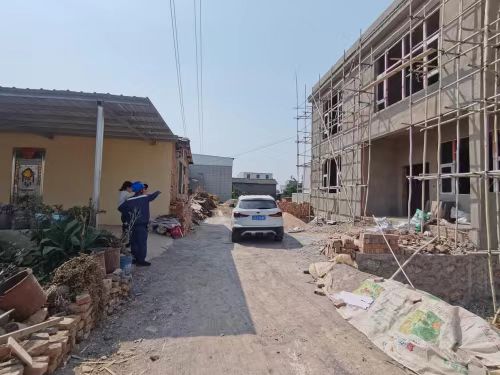
Core Viewpoint - The article highlights the proactive measures taken by the Southern Power Grid Yunnan Qujing Luliang Power Supply Bureau to ensure safe electricity usage during the winter season, particularly in rural areas, by addressing safety hazards related to electrical installations and activities such as construction and fishing [1][3][5] Group 1: Safety Measures and Actions - The power supply bureau has initiated a special action to inspect and rectify safety hazards related to private electrical connections and unsafe activities, ensuring a safe and harmonious electricity environment for the community [1] - A comprehensive inspection was conducted to identify external safety hazards affecting power supply lines, with a focus on construction activities and fishing, to prevent potential safety incidents [1][3] - The bureau established a regular communication mechanism with construction personnel to monitor safety hazards and ensure compliance with safety protocols during ongoing construction activities [1] Group 2: Community Engagement and Awareness - The bureau has implemented public awareness campaigns by distributing safety manuals and posting educational materials to enhance community awareness regarding electrical safety [1][5] - Specific measures were taken to address the increased risk of electric shock during winter fishing activities, including inspections of high and low voltage lines over fishing ponds and rivers, and updating warning signs [3] - A total of 400 safety awareness materials were distributed to fishing enthusiasts and pond owners to educate them about the dangers of fishing under high voltage lines [5] Group 3: Outcomes of the Initiative - The special action resulted in the removal of 4 safety hazards from power line corridors, the cessation of 5 unsafe construction activities, and the removal of 3 individuals fishing under power lines [5] - More than 10 warning signs were replaced or added to enhance visibility and safety [5]