
Zhong Guo Jing Ying Bao

Search documents
耐心资本助力“ 硬科技” 多家人保寿险投资企业上市
Zhong Guo Jing Ying Bao· 2026-02-06 16:54
Group 1 - The core viewpoint of the news is that China Pacific Insurance has successfully invested in Shenzhen Jingfeng Medical Technology Co., Ltd., which has recently gone public on the Hong Kong Stock Exchange, raising HKD 1.199 billion through its IPO at an issue price of HKD 43.24 per share [1] - Jingfeng Medical has achieved significant technological breakthroughs in surgical robots, holding 734 global patents and becoming the first in China and the second globally to receive regulatory approval for three types of surgical robots: multi-port, single-port, and natural orifice [1] - China Pacific Insurance emphasizes its commitment to "value investment and empowering growth," providing stable early-stage funding to support Jingfeng Medical's transition from technology development to commercialization [1] Group 2 - Industry insiders note that the long-term stability of insurance funds aligns well with the long-term capital needs of the GPU industry, highlighting the strategic investment by China Pacific Insurance [2] - In recent years, China Pacific Insurance has focused on key sectors such as integrated circuits, utilizing a diversified product system of "equity + debt" to inject insurance capital into strategic emerging industries, supporting the development of new productive forces [2] - The company plans to continue deepening its technology finance layout and nurturing more "hard technology" enterprises through patient capital, in line with the financial sector's strategic goals [2]
61万亿元!上交所ETF成交额位列亚洲第一、全球第三
Zhong Guo Jing Ying Bao· 2026-02-06 11:08
Core Insights - In 2025, the total scale of ETFs in mainland China surpassed Japan, reaching approximately $860 billion, making it the largest ETF market in Asia [1] - The Shanghai Stock Exchange (SSE) ranked first in Asia and third globally in ETF trading volume, with a total trading volume of 61 trillion yuan, reflecting a compound annual growth rate of 42% over the past five years [1] - Daily average trading volume for ETFs on the SSE was 299.9 billion yuan, indicating increasing market liquidity [1] Trading Volume Breakdown - The total trading volume for stock ETFs, bond ETFs, cross-border ETFs, and commodity ETFs in 2025 was 15.8 trillion yuan, 24.4 trillion yuan, 13.1 trillion yuan, and 1.9 trillion yuan respectively, representing increases of 42%, 275%, 134%, and 217% compared to 2024 [1] - Three products in the domestic ETF market had daily average trading volumes exceeding 10 billion yuan, all listed on the SSE, with the Hai Futong CSI Short Bond ETF achieving a record daily average of 18.47 billion yuan, a 69% increase from 2024 [1] - Among the top 30 ETFs by daily average trading volume on the SSE, 18 had daily volumes exceeding 5 billion yuan, with 82% of these being domestic products, an increase of 13 products from 2024 [1]
米兰冬奥会开幕在即 赞助商李宁正式入驻中国奥组委“中国之家”
Zhong Guo Jing Ying Bao· 2026-02-06 11:02
Group 1 - The 2026 Milan-Cortina Winter Olympics opening ceremony will take place at San Siro Stadium in Milan, Italy, with a Chinese sports delegation consisting of 286 members, including 126 athletes [1] - This Winter Olympics marks the largest participation of Chinese athletes and events outside of China, with a participation rate of 78.4% [1] - Speed skater Ning Zhongyan and short track speed skater Zhang Chutong will serve as flag bearers for the Chinese delegation during the opening ceremony [1] Group 2 - The "China House" at the Milan Winter Olympics serves as a comprehensive service facility for the Chinese sports delegation, promoting Chinese sports spirit and traditional culture while facilitating international sports exchanges [1][2] - Li Ning, as an official partner of the Chinese Olympic Committee, has set up a special exhibition at the "China House," showcasing traditional Chinese culture and winter sports experiences [2] - The "China House" promotes green sports concepts, with Li Ning focusing on sustainable development and showcasing innovations in biodegradable materials and environmentally friendly sports products [2]

摩根大通刘鸣镝:2026年中国资产吸引力凸显 关注价值及预期洼地
Zhong Guo Jing Ying Bao· 2026-02-06 10:55
Core Viewpoint - The Chinese stock market is expected to see improved foreign investment allocation in 2026, driven by reasonable valuations, a stable currency, and strong innovation capabilities in AI and other fields [1][2]. Group 1: Market Positioning and Fund Allocation - Despite global active funds being underweight in China, there has been a marginal improvement in allocation, particularly among global and Asia-Pacific funds [2]. - As of December 2025, the allocation of Chinese stocks in global (including U.S.) active equity funds is approximately 3.1%, while it is 9% in Asia-Pacific excluding Japan, 29% in emerging market funds, and 32.7% in Asia excluding Japan [2]. - The underweight position in Chinese stocks for global (including U.S.) active equity funds is 1.8%, and for Asia-Pacific excluding Japan, it is 2.4% [2]. Group 2: Valuation and Performance Expectations - The MSCI China index is currently valued at a price-to-earnings (P/E) ratio of 12.5, which is relatively reasonable compared to the MSCI Asia-Pacific and Asia excluding Japan, which have P/E ratios of 15.3 and 13.9, respectively [3]. - The expected earnings growth for the MSCI China index is 12.3% this year, with the CSI 300 expected to grow by 18%, suggesting potential benchmark targets of 100 and 5200 for these indices [3]. Group 3: Real Estate and Consumer Market Insights - The ratio of residential property value to GDP in China is 1.8 times as of the end of 2025, lower than the historical median of 2 times since 1998, indicating room for stabilization in the real estate market [3]. - The cost of purchasing homes has significantly decreased compared to 2021, and there are signs of policy easing in first-tier cities that could stabilize property prices and boost consumer spending [3]. - China's household consumption market is valued at $7 trillion, with a decrease in household debt to GDP ratio from 62% in 2021 to 59.4% by the end of 2025, indicating a healthier financial environment for consumers [4]. Group 4: Investment Opportunities in Key Sectors - Key investment sectors identified include technology, consumer goods, and exports, with a focus on AI and its ongoing growth potential [5]. - The essential consumer sector is noted for its low valuations compared to markets in the U.S., Japan, and India, with a focus on the food and beverage industry, which is seen as undervalued and having room for innovation [5]. - Other themes to watch in 2026 include export stocks, the impact of reducing excessive competition on profitability, and AI infrastructure developments that have not yet been fully priced in [5].

博源化工近20亿元诉讼和解 预计影响2025年损益1.23亿元
Zhong Guo Jing Ying Bao· 2026-02-06 10:49
Core Viewpoint - Boyuan Chemical has reached a settlement regarding a capital increase and share expansion agreement dispute with China Coal Energy and Wushenqi Mengda Mining, which will impact the company's financials in 2025 [1][2] Group 1: Settlement Details - The settlement involves Boyuan Chemical offsetting the unpaid exploration rights payment of 1.889 billion yuan with undistributed profits from its 34% stake in Mengda Mining, along with an additional payment of 12.4714 million yuan for legal fees [1] - The settlement is a result of an arbitration ruling that required Boyuan Chemical to pay the exploration rights price difference of 1.889 billion yuan [2] - Boyuan Chemical plans to pursue compensation from Shanghai Zheda Investment Development Co., which is also involved in the arbitration, but the specific amount remains uncertain [2] Group 2: Financial Performance - Boyuan Chemical's net profit dropped significantly from 2.660 billion yuan in 2022 to 1.410 billion yuan in 2023, a decline of 46.99%, before recovering to 1.811 billion yuan in 2024, which is still a 32% decrease from 2022 [3] - Revenue has shown consistent growth from 10.987 billion yuan in 2022 to 13.264 billion yuan in 2024, despite the profit decline [3] - For the first three quarters of 2025, the company reported revenue of 8.656 billion yuan, a year-on-year decrease of 16.54%, and a net profit of approximately 1.062 billion yuan, down 41.15% year-on-year [3] Group 3: Industry Outlook - The soda ash industry is expected to face oversupply issues, with new production capacity being released in 2024-2025 while demand growth slows, leading to a decline in market prices [3][4] - Analysts predict that the total capacity of the soda ash industry may reach 47.5 million tons by 2026, with a year-on-year production increase of over 10% [4] - High inventory levels and supply pressures are expected to continue suppressing price rebounds, particularly affecting downstream demand in sectors like real estate and solar glass [4][5]

欧美后院“打理生意”加速洗牌 多家园林工具巨头业绩由盈转亏
Zhong Guo Jing Ying Bao· 2026-02-06 10:48
据Global Market Insight日前发布的最新数据,2025年,全球园林设备与工具市场规模预计在900亿— 1120亿美元之间。具体来看,欧美市场是全球园林设备与工具主要市场,其中,北美市场占据约35%— 40%的全球份额,欧洲市场份额则达到25%左右。 值得注意的是,随着园林工具电动化转型加速,这一市场规模也在不断增长,预计到2032—2034年,市 场规模将突破1300亿—1600亿美元,保持约4.5%至6.5%的年均复合增长率。 在此背景下,格力博(301260.SZ)、大叶股份(300879.SZ)等多家中国园林工具上市企业正加速出 海,闯荡海外市场。不过,2025年,多家企业业绩由盈转亏。以格力博为例,2025年业绩预告显示,该 公司预计2025年归母净利润在-3.5亿至-2.7亿元之间。2024年,格力博尚盈利0.88亿元。 行业盈利空间收窄,并未阻碍"新入局者"的热情。日前,新兴园林工具品牌劳尼克斯在上海市举行发布 会。劳尼克斯全球GTM负责人陈蕊在接受包括《中国经营报》在内的媒体记者采访时表示,园林工具 并非新兴市场,劳尼克斯和百年品牌竞争的优势在于产品的硬核实力,公司团队人员中的 ...

恺英网络的IP“生意经”
Zhong Guo Jing Ying Bao· 2026-02-06 10:48
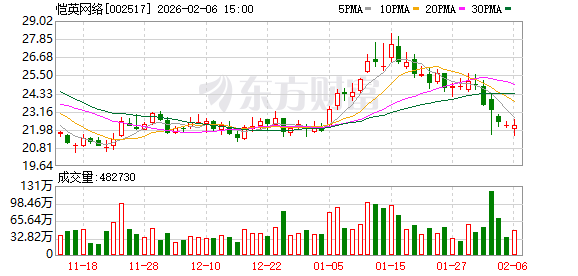
Core Viewpoint - Kaiying Network is expanding its "Game+" business through cross-industry collaborations and leveraging its strong IP portfolio, particularly the "Legend" IP, to enhance revenue and market presence [2][3][4]. Group 1: Business Expansion and Collaborations - Kaiying Network's self-developed national style IP "Baigongling" has entered a cross-industry partnership with Lila Food to create co-branded food and toy products [2]. - The company is also collaborating with Zhejiang Cultural Property Exchange to develop a project focused on the inheritance of intangible cultural heritage [2]. - The 996 Legend Box, a core platform for game distribution and community engagement, is central to the company's strategy [3]. Group 2: Financial Performance and Market Potential - In the first three quarters of 2025, Kaiying Network achieved a revenue of 4.075 billion yuan, a year-on-year increase of 3.75%, and a net profit of 1.583 billion yuan, up 23.7% [3]. - The "Legend" IP is projected to reach a market size of 35.55 billion yuan by 2025, with cumulative value creation exceeding 370 billion yuan [3][4]. - The potential for further growth in the "Legend" IP market is significant, with expectations of reaching 40 billion yuan by 2026 [3]. Group 3: User Engagement and Ecosystem Development - The "Legend" IP ecosystem is characterized by strong social interaction and competition, driving users to maintain a competitive edge through continuous payments [4]. - Kaiying Network's subsidiary, Xianqu Interactive, has signed licensing agreements to develop and promote community-focused products based on the "Legend" games [4]. - Collaborations with various gaming companies are expected to enhance the user experience and community engagement within the 996 Legend Box [5]. Group 4: Cultural and Commercial Value Expansion - The partnership with Lila Food aims to integrate IP with consumer culture, enhancing the accessibility of traditional culture through modern products [6]. - The Chinese game IP market is projected to reach 275.3 billion yuan by 2025, with a significant increase in the revenue from derivative products [6][7]. - The competition among IPs is shifting towards establishing deep emotional connections with users, emphasizing the importance of a compelling narrative and long-term engagement [7]. Group 5: Future Strategies and IP Portfolio - Kaiying Network plans to continue its IP product strategy, enriching its product matrix and enhancing long-term operational capabilities [8]. - The company has accumulated a diverse range of IP licenses, including popular franchises such as "Mobile Suit Gundam," "Overlord," and "Tomb Raider" [8].


全球手机均价首破2900元,谁在为“涨价潮”买单?
Zhong Guo Jing Ying Bao· 2026-02-06 10:48
Core Insights - A "price increase storm" is sweeping the global smartphone market, with the average selling price (ASP) expected to exceed $400 for the first time by Q4 2025, reaching $424, driven by a 13% year-on-year revenue growth to a record $143 billion, despite only a 5% increase in shipment volume [1][2] Group 1: Market Trends - The high-end trend remains the core driver of the smartphone market, with consumers purchasing more expensive devices, indicating a shift from "scale expansion" to "value expansion" in the industry [1] - Apple emerges as the biggest winner, with a 23% year-on-year revenue growth and a market share of 59%, significantly benefiting from the iPhone 17 series and an increase in Pro version sales [2] - The pricing pressure is more pronounced among domestic brands, with Xiaomi experiencing a 9% revenue decline and an 11% drop in shipment volume, while OPPO saw a 23% revenue increase due to its high-end product lines [2][3] Group 2: Price Increase Drivers - The price hikes are attributed to soaring supply chain costs, particularly in memory chips, with DRAM prices skyrocketing by 171.8% year-on-year and LPDDR5X memory prices increasing by over 110% [4] - The rising costs of flagship processors, such as Qualcomm's Snapdragon 8 Gen 2, which costs $280, have also contributed to the overall increase in smartphone prices [4][5] - The AI wave is squeezing production capacity, with priority given to AI and server needs over smartphone production, further exacerbating the situation [4][5] Group 3: Industry Implications - The price increase trend is expected to continue, with forecasts suggesting the global smartphone ASP will reach $412 by 2029, driven by high-end market growth and rising component costs [5] - The current price surge presents an opportunity for industry reshuffling, where weaker brands may be eliminated, while those achieving technological breakthroughs can establish a foothold in the high-end market [6] - Consumers are advised to adjust their purchasing strategies, considering longer upgrade cycles and focusing on previous flagship models or mid-range devices that offer competitive features [6]
迪士尼告别20年的“艾格时代” 好莱坞将在3月开启新格局
Zhong Guo Jing Ying Bao· 2026-02-06 10:48
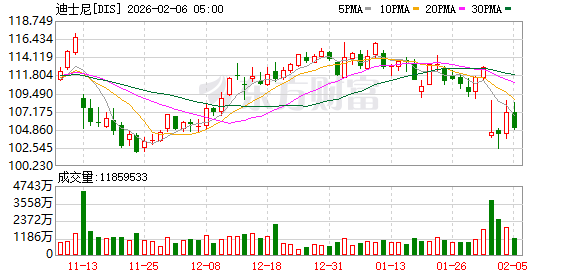
Core Viewpoint - Disney's long-serving CEO Robert Iger will step down, with Josh D'Amaro appointed as the new CEO, marking a strategic shift away from acquiring new IPs to focusing on deepening the value of existing IPs [2][11]. Group 1: Leadership Transition - Robert Iger has led Disney for over 20 years, overseeing significant acquisitions including Pixar, Marvel, Lucasfilm, and 21st Century Fox, which expanded Disney's portfolio to nearly $200 billion in market value [2][3]. - Josh D'Amaro, who has been with Disney for 28 years, will take over as CEO, emphasizing the importance of experience in the theme park and entertainment sectors [11]. Group 2: Strategic Changes - Disney's recent earnings call indicated a shift in strategy, moving away from further IP acquisitions to enhancing the value of existing IPs [2][10]. - The company plans to focus on operational efficiency and maximizing IP value, transitioning from large-scale acquisitions to internal growth [11]. Group 3: Financial Performance - In the first fiscal quarter of 2026, Disney reported revenues of $25.981 billion, a 5.23% increase year-over-year, while net profit decreased by 6.05% to $2.484 billion [10]. - The entertainment segment generated $11.609 billion, the experience segment $10.006 billion, and the sports segment $4.909 billion in revenue [10]. Group 4: Challenges and Recovery - Disney faced significant challenges during the COVID-19 pandemic, impacting its theme parks and film revenues, leading to a decline in market value by approximately 43.91% in 2022 [6][9]. - Iger's return as CEO aimed to stabilize the company and restore trust, with a focus on creative leadership and resolving conflicts with content creators [7][8]. Group 5: Future Outlook - The new strategy under D'Amaro will prioritize the core experience business and creative content management, aiming to create a closed loop of "content empowering experience, experience feeding back into content" [11]. - Disney is currently not interested in acquiring more assets but is investing in enhancing the value of existing IPs, such as the upcoming "Frozen" themed area in Disneyland Paris [11].

AI或将深入基层医疗 提高农村公共服务便利度
Zhong Guo Jing Ying Bao· 2026-02-06 07:55
"围绕解决农村群众上学、看病、养老等急难愁盼问题,文件提出了不少有含金量的政策举措。"近日, 在国新办举行的新闻发布会上,中央财办副主任、中央农办副主任祝卫东表示。 日前,2026年中央一号文件——《中共中央国务院关于锚定农业农村现代化扎实推进乡村全面振兴的意 见》正式发布,该文件中提及的诸多内容,引发业界、学界高度关注,并认为在高科技引导的改革举措 下,农业农村有望迎来全新的改变,其中,涉及AI、医疗、养老问题,尤其受到关注。 以AI弥补医疗差距 祝卫东在国新办新闻发布会上介绍:"医疗方面,强调实施医疗卫生强基工程,稳步提高医保基金在县 乡村医疗卫生机构使用比例,实施大学生乡村医生专项计划。" 记者了解到,当前人工智能(AI)相关投入更多集中在大型医院,社区医院、基层诊疗机构在AI应用 与配套投入方面相对薄弱。多位业内人士认为,随着基层医疗服务能力建设持续推进,AI未来或将更 深度进入县乡村医疗场景,以助力提升基层诊疗水平与服务效率。 一位卫健系统人士向记者表示:"对医生而言,AI是对专业知识以及其他学科知识的重要补充,这一点 对基层医疗卫生机构医生来说尤为重要。"该人士进一步解释称,基层医生接触的病例多以 ...