
Zhong Guo Qing Nian Bao

Search documents
低空经济受关注 第七届中国天津国际直升机博览会开幕
Zhong Guo Qing Nian Bao· 2025-10-17 05:13
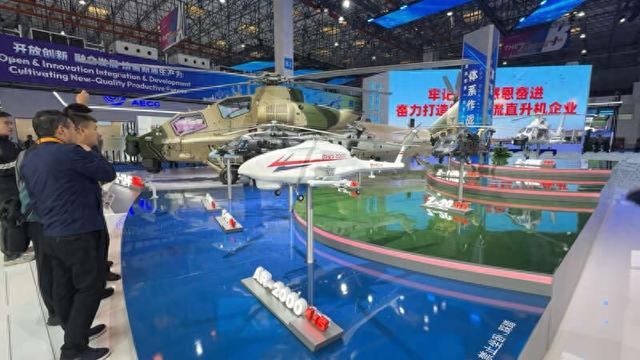
Core Points - The 7th China Tianjin International Helicopter Expo opened on October 16, lasting for four days, featuring a new low-altitude economy display area and showcasing multiple military and civilian helicopters and low-altitude flying vehicles [1][3] Industry Overview - The expo is co-hosted by the Aviation Industry Corporation of China and the People's Liberation Army Ground Force, themed "Open Innovation, Integrated Development, Cultivating New Quality Productivity," attracting nearly 400 enterprises from over 30 countries and regions, including major global helicopter manufacturers like Airbus, Russian Helicopters, and Bell [3][6] - The event aims to promote global helicopter industry cooperation and enhance China's aviation industry's core competitiveness by showcasing new technologies, products, and achievements in the helicopter and drone sectors [3][6] Company Highlights - The Aviation Industry Corporation of China presented a series of helicopter products under the theme "Soaring Together, Sharing the Future," focusing on user needs and professional application scenarios, with exhibits organized into five units: "System Operations," "Emergency Rescue," "Technological Innovation," "System Support," and "Comprehensive Services" [5][6] - The expo featured real aircraft such as the Z-10ME, AC311A, and AC312E, as well as models and immersive virtual reality demonstrations of advanced design, manufacturing, and integrated service capabilities [6][7] - New products like the AR-E40, AR-E300, and AR-E300A eVTOLs were showcased, with the AR-E800 entering the research and test flight phase and securing orders for 160 units [6][7] Event Details - The total exhibition area is approximately 160,000 square meters, with nearly 250 booths across 10 categories, and the event will include high-level forums, new product launches, project signings, business negotiations, and cultural events [7]


专家:中美贸易紧张局势短期内难以根本性缓和
Zhong Guo Qing Nian Bao· 2025-10-17 04:30
Core Viewpoint - The new round of trade tensions between China and the U.S. is unlikely to fundamentally ease in the short term, but both sides have the motivation to avoid a complete economic decoupling [1] Group 1: Trade Relations and Measures - Since the Madrid economic talks in September, the U.S. has continued to introduce a series of restrictive measures against China, including adding multiple Chinese entities to export control lists, which has severely damaged the atmosphere for trade talks [1] - On October 9, China announced export control measures on rare earths and other related items, while on October 10, the U.S. threatened to impose a 100% tariff on Chinese goods starting November 1 [1][2] - The alternating threats and conciliatory remarks from the U.S. reflect a strategy to exert pressure while also attempting to calm market reactions to tariff threats [3] Group 2: Economic Impact and Strategic Considerations - China's export controls on rare earths are expected to significantly impact the U.S. military industry, indicating that U.S. attempts to suppress China will not succeed [2] - The U.S. faces political and economic obstacles in imposing high tariffs on China, as such measures would burden the U.S. economy and face opposition from the American business community [3] - The future trajectory of U.S.-China trade tensions is characterized by a coexistence of competition and cooperation, with structural contradictions remaining difficult to resolve [4] Group 3: Potential Areas for Cooperation - Non-traditional security cooperation, such as in climate change and public health, may become breakthrough areas for U.S.-China collaboration [4]
稀土新规护主权 中国经济有底气
Zhong Guo Qing Nian Bao· 2025-10-17 04:30
Core Insights - China's recent export regulations on rare earth materials and related items are seen as a strategic move to leverage its market position and resource endowment in the context of global value chain restructuring [1][2] - The regulations are a response to the U.S. Department of Commerce's inclusion of several Chinese entities on its export control "entity list," aiming to prevent future export restrictions against China [1][2] Group 1: Export Regulations and Strategic Implications - The new export controls target high-value, low-substitutability materials critical for emerging technologies such as renewable energy, artificial intelligence, and quantum communication [2][3] - The introduction of a threshold for "Chinese content" at 0.1% for overseas products marks a significant regulatory change, enhancing China's influence in trade negotiations [2][3] - The measures are intended to maintain stability in global supply chains rather than to gain geopolitical advantages [3][4] Group 2: Economic Performance and Trade Dynamics - China's foreign trade has shown resilience, with exports of mechanical and electrical products accounting for 60.5% of total exports in the first three quarters of the year [5][6] - The country has achieved continuous year-on-year growth in imports and exports for eight consecutive quarters, indicating a robust trade environment [4][5] - The ongoing trade tensions have not deterred foreign investment, as evidenced by Apple CEO Tim Cook's commitment to increasing investment in China [4][6] Group 3: Global Economic Impact and Future Outlook - The International Monetary Fund (IMF) and World Bank have raised China's economic growth forecasts for 2025, highlighting its role as a key driver in the East Asia and Pacific region [6][7] - China's economic fluctuations can significantly impact regional economies, with a 1% change in China's economy potentially affecting neighboring economies by 0.3% [6][7] - Upcoming APEC meetings are expected to focus on multilateral trade systems, regional economic integration, and cooperation in technology and trade friction resolution [7][8]
坚守大学使命,摆脱“AI依赖”困境
Zhong Guo Qing Nian Bao· 2025-10-17 03:51
DeepSeek等人工智能应用的相继推出,重塑了网络信息的传输和接收方式。对于大学生而言,生成式 人工智能可以激发他们的思维想象、拓展知识边界。不过,部分学生则因为惰性驱使而陷入了AI依赖 的困境,从而丧失了独立思考的习惯和能力。 去年,南京农业大学和浙江大学的两位老师对来自13所高校的3000多名大学生进行了调研。结果显示, 本科生使用生成式AI辅助学习的频率较高,其中"有时使用""经常使用"和"总是使用"的占比分别为 32.92%、40.49%和12.29%;有三四成的本科生表示自己会直接复制AI生成的内容。这一情况在笔者的 课程中也时有上演,所以我会采取一些应对措施,比如组织无手机状态下的随堂测验答题,或者要求学 生提交附带摘录页码的读书笔记等。 那么,应该如何引导大学生处理与AI技术的关系呢?在人工智能技术发展中,智能机器作为人类"镜 子"与"他者"的角色正在不断凸显。作为"镜子",智能机器帮助人类内窥到深层的认知规律,也在一些 侧面反映着现实世界,映照出人类的局限。因此,大学生在使用AI时,应该将其视为一面用来参照 的"镜子",而不是对其过度依赖或完全拒绝尝试。 在研究生群体中,AI依赖的问题更为突 ...
黑龙江:创新农业技术手段 把中国饭碗端得更牢
Zhong Guo Qing Nian Bao· 2025-10-17 00:26
Core Insights - Heilongjiang Province is actively engaged in the autumn harvest, with over 11.1 million acres of crops harvested by October 10, accounting for more than 50% of the total area [2] - The province is implementing the "storing grain in the land and technology" strategy during the 14th Five-Year Plan, focusing on the protection and utilization of black soil to ensure food security [3] - The average organic matter content in the soil has increased to 40.3 grams per kilogram, up by 4.1 grams since 2016, indicating improvements in soil quality [3] Agricultural Practices - The province has established a standardized technical system for black soil protection, covering all soil types related to black soil [4] - Various technical measures are being employed to address issues such as soil thinning, nutrient depletion, and soil hardening [4][5] - The Beidahuang Agricultural Group has implemented three main types of technology for black soil protection, including integrated demonstration engineering technology and modern agronomic practices [5] Research and Development - Continuous sampling and research on soil conditions are being conducted, with a focus on increasing organic matter content and improving soil health [2][3] - The establishment of a collaborative innovation and promotion system for black soil protection has brought together experts from various institutions [3] Technological Innovations - New agricultural technologies, such as water-fertilizer integration, are being tested to enhance crop yields while reducing fertilizer usage [6] - Sensors are being utilized to monitor soil data, aiding in precise fertilization and improving overall agricultural efficiency [6] Challenges and Future Outlook - The promotion of agricultural technology faces challenges, particularly in smallholder farming, where access to machinery and resources is limited [6] - There is a growing involvement of younger individuals in agricultural technology promotion, indicating a positive trend for future black soil protection efforts [7]

书写中国发展的“长期答卷”
Zhong Guo Qing Nian Bao· 2025-10-16 22:54
Core Insights - The article emphasizes the critical role of China's five-year plans in driving economic growth, social prosperity, and scientific development, showcasing the unique advantages of the Chinese governance system [1][4]. Group 1: Five-Year Planning Mechanism - China's five-year planning process is characterized by a systematic approach that integrates top-level design with grassroots implementation, creating a cohesive governance strategy [1][2]. - The planning process involves a structured path where the Central Committee proposes planning suggestions, the State Council drafts the planning outline, and the National People's Congress reviews and approves it [1][4]. Group 2: Cross-Departmental Collaboration - The five-year plans facilitate cross-departmental collaboration, breaking down silos and enhancing policy coherence across various sectors, such as environmental management and green manufacturing [2][4]. - Regional strategies are tailored to leverage local strengths, with eastern regions focusing on technological innovation, central regions on industrial transfer, and western regions on ecological security [2][4]. Group 3: Long-Term Vision and Flexibility - The concept of "long-termism" is highlighted as a fundamental aspect of China's development strategy, allowing for flexibility and adaptability in response to changing circumstances while maintaining overall direction [3][4]. - The transition from rigid "plans" to more flexible "plannings" reflects a strategic evolution that accommodates both specific targets and broader developmental goals [3][4]. Group 4: Quantitative Achievements - During the "14th Five-Year" period, China's GDP surpassed 110 trillion, 120 trillion, and 130 trillion yuan, with per capita GDP increasing from $10,632 in 2020 to $13,445 in 2024 [5]. - The global innovation index ranking improved to the top 10, and the income disparity between urban and rural residents decreased, demonstrating the effectiveness of the five-year planning approach [5]. Group 5: Future Outlook - The upcoming "15th Five-Year" plan is expected to provide a clear and actionable roadmap for achieving the 2035 long-term goals, addressing development needs and public concerns [5]. - The plan aims to consolidate the foundation for modernization and national rejuvenation, ensuring that each step forward harnesses the collective strength of the populace [5].
全国首列氢能文旅列车“氢春号”下线
Zhong Guo Qing Nian Bao· 2025-10-16 13:32
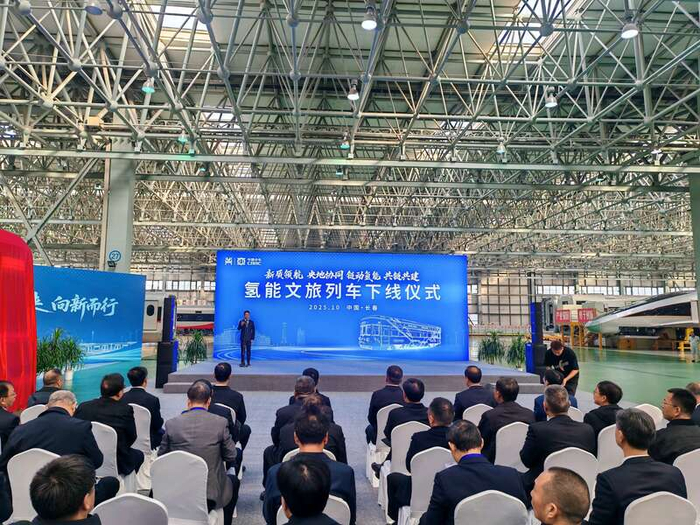
Core Viewpoint - The launch of the "Hydrogen Spring" tourist train marks a significant breakthrough in China's green rail transportation sector, showcasing the integration of hydrogen energy technology in public transport [2][4]. Group 1: Hydrogen Energy Train - The "Hydrogen Spring" train is equipped with a hydrogen energy power system, producing only water as a byproduct during operation, thus achieving zero carbon emissions [2]. - This train features characteristics such as environmental friendliness, smart comfort, and integration with tourism [2]. Group 2: Industry Conference - The China CRRC Modern Industrial Chain Integration Development Conference focuses on three major industrial chains: rail transit equipment, clean energy equipment, and hydrogen energy [4]. - The conference includes an exhibition showcasing hydrogen energy application scenarios, the Jilin hydrogen energy industry, hydrogen energy equipment, and integrated solutions for wind-solar-hydrogen storage [4].

雷军:智能网联汽车行业要以安全为基础,共同抵制黑公关等网络乱象
Zhong Guo Qing Nian Bao· 2025-10-16 13:25
在他看来,AI大模型就是智能网联汽车的未来发展趋势,蕴藏着巨大创新机遇。比如,端侧AI模型无 需联网,就可以整合车内外摄像头、麦克风等多传感器信号,实现拟人化语音控车,且本地算力调用可 保障数据隐私安全。 来源:中国青年报客户端 中国青年报客户端北京10月16日电(中青报·中青网记者 贾骥业)今天下午,小米集团创始人、董事长 兼CEO(首席执行官)雷军在"2025世界智能网联汽车大会"上发言时表示,当前智能网联汽车的发展正 处于历史机遇期,不是零和博弈,需要全行业团结一致,共建共享智能网联汽车的新生态,共同推进行 业的发展。 他在大会现场呼吁,全行业要在政府的指导下,以安全为基础,质量为根本,创新为方向,携手围绕重 要底层技术和研发领域,把资源和精力集中到科技创新和技术研发上,共同抵制水军、黑公关等网络乱 象,一起营造积极向上、文明有序的产业发展环境。 雷军说,如今,智能网联汽车上半场"电动化"已初步完成,下半场"智能化"正逐步深入,"智能化一系 列的创新技术正在重塑汽车的产品定义、生产模式、商业模式和用户体验"。 ...

印度承诺不将中国稀土出口至美国
Zhong Guo Qing Nian Bao· 2025-10-16 11:34
Core Insights - India has assured China that rare earth materials imported from China will not be exported to the United States, highlighting India's dependence on China's rare earth industry and its delicate balancing act between the US and China [1][2] Group 1: Industry Dependence - India's electric vehicle and renewable energy sectors are heavily reliant on stable supplies of rare earth magnets, particularly critical elements like dysprosium and terbium, essential for electric motors and wind turbines [2] - In the fiscal year 2024-2025, India is expected to import approximately 870 tons of rare earth magnets, with a total value exceeding 3 billion rupees [2] - An executive from an Indian electric vehicle company stated that there is currently no alternative to China's supply chain, as other countries like Australia and the US cannot meet the demand [2] Group 2: Strategic Moves - China has restored exports of light rare earth magnets to India following the Shanghai Cooperation Organization summit in September, but shipments of heavy rare earth permanent magnets are pending formal usage guarantees [2] - China's recent expansion of export controls on rare earths is framed as a national security measure to prevent sensitive technologies from being used for military purposes [2][3] - Indian officials acknowledge that the country's manufacturing sector cannot afford to risk supply disruptions from China, indicating a reliance on Chinese support in critical areas [3]

今年前三季度设备更新加快推进 消费品以旧换新政策成效明显
Zhong Guo Qing Nian Bao· 2025-10-16 08:06
Core Insights - The latest data from the National Taxation Administration indicates a significant acceleration in equipment updates and the effectiveness of the "old-for-new" consumption policy in China, particularly in the first three quarters of 2025 [1][2] Group 1: Equipment Procurement Trends - In the first three quarters of this year, the amount spent by industrial enterprises on machinery and equipment increased by 9.4% year-on-year [1] - High-tech manufacturing maintained a strong growth momentum, with machinery and equipment procurement rising by 14% [1] - The electricity, heat, gas, and water production and supply sectors saw a 10.5% increase in machinery and equipment procurement [1] - The information transmission, software, and IT services sectors experienced significant growth, with procurement amounts increasing by 26.8% and 32.5% respectively [1] Group 2: Digital Equipment Investment - Nationally, the procurement of digital equipment by enterprises grew by 18.6% year-on-year, indicating a strong push towards digital transformation [1][2] - High-end manufacturing sectors, such as shipbuilding and computing, reported year-on-year increases in digital equipment procurement of 17.3% and 22.7% respectively [1] Group 3: Role of Private Enterprises - Private enterprises showed a more pronounced role in equipment updates, with machinery and equipment procurement increasing by 13% year-on-year, surpassing state-owned and foreign enterprises [2] - In innovative sectors, private enterprises in the internet and smart drone industries saw procurement increases of 32.8% and 70.5% respectively [2] Group 4: Impact of "Old-for-New" Policy - The "old-for-new" policy has significantly boosted retail sales in various sectors, with home appliance sales such as refrigerators and televisions increasing by 48.3% and 26.8% year-on-year [2] - Retail sales in furniture and lighting also saw substantial growth, with increases of 33.2% and 17.2% respectively, particularly in smart home products like robotic vacuum cleaners, which grew by 75% [2] - The newly expanded scope of the policy also led to a 19.9% increase in retail sales of mobile communication devices [2]