
Zhong Guo Hua Gong Bao

Search documents
【石油和化工行业景气指数】2025年12月:终端需求改善 景气指数上涨
Zhong Guo Hua Gong Bao· 2026-01-13 03:43
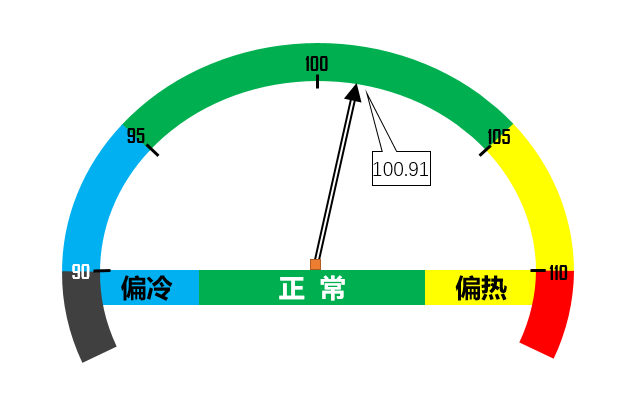
Core Insights - The oil and chemical industry prosperity index rose to 100.91 in December 2025, indicating signs of recovery with a month-on-month increase of 3.7 percentage points [2][10] - The sub-indices show significant divergence: the oil and gas extraction sector continues to decline due to low oil prices, while the fuel processing industry benefits from cost advantages as demand stabilizes [2][10] Industry Overview - The oil and gas extraction sector's prosperity index fell to 93.20, a decrease of 3.52 percentage points, entering a cold zone for the first time in four months, reflecting a negative cycle of price drops leading to reduced production and increased inventory [10] - The fuel processing industry saw its index rise to 114.45, an increase of 19.77 percentage points, demonstrating high volatility driven by alternating cost and demand factors [11] - The chemical raw materials and products manufacturing sector's index decreased to 95.62, down 6.75 percentage points, as downstream industries reduced procurement following inventory digestion [11] - The rubber, plastic, and other polymer products manufacturing sector's index increased to 100.97, up 7.02 percentage points, due to proactive inventory reduction strategies [12] Market Trends - China's manufacturing PMI returned to the expansion zone at 50.1% in December 2025, signaling a recovery in manufacturing activity and potential support for the chemical industry [3][15] - The Federal Reserve cut interest rates by 25 basis points to a range of 3.5%-3.75%, which may benefit downstream sectors by lowering costs, although the upstream oil and gas extraction sector remains under pressure [4][16] Future Outlook - In January 2026, the oil and chemical industry is expected to experience a gradual recovery characterized by macroeconomic improvements and structural differentiation, with downstream sectors likely recovering before upstream [8][18] - The overall trend indicates that while upstream sectors face ongoing challenges, the downstream sectors may benefit from lower costs and potential demand recovery [17][18]

碳酸锂价格迎来“开门红”
Zhong Guo Hua Gong Bao· 2026-01-13 03:30
Group 1 - Lithium carbonate prices have surged to over 140,000 yuan per ton in early 2026, marking a 19% increase from the end of 2025 and an 83% rise compared to the same date in 2025 [1] - The rapid price increase is attributed to a combination of international expectations, policy disruptions, and industry behaviors, with geopolitical tensions raising concerns about supply chain stability [1] - Brazil's recent decision to freeze new mining rights auctions has heightened market fears regarding lithium resource supply tightening, further influencing price expectations [1] Group 2 - Domestic policies and capacity factors are tightening supply, with the State Council's action plan aimed at promoting sustainable development potentially increasing environmental costs for lithium mining [2] - Short-term supply of lithium is significantly constrained, with production delays from key mines leading to a monthly supply gap of 5,000 to 8,000 tons [2] - The overall inventory of lithium ore in domestic main ports has slightly decreased to 142,000 tons, supporting upward price movement despite some production increases in lithium spodumene and recycling [2] Group 3 - The demand for lithium carbonate remains strong due to the booming electric vehicle market, with battery manufacturers actively procuring lithium to meet production needs [3] - Some downstream companies have announced production line maintenance, which may impact lithium carbonate prices to varying degrees [3] - The short-term fundamentals for lithium carbonate are expected to support prices, with a strong upward trend likely to continue [3]

石油与化工指数多数上涨(1月5日至9日)
Zhong Guo Hua Gong Bao· 2026-01-13 03:30
Group 1: Chemical Sector Performance - The chemical index outperformed the oil index last week, with all chemical indices rising. The chemical raw materials index increased by 5.14%, the chemical machinery index rose by 7.20%, the chemical pharmaceuticals index climbed by 7.33%, and the pesticide and fertilizer index went up by 5.10% [1] - In the oil sector, the oil processing index increased by 0.65%, while the oil extraction index fell by 3.82%, and the oil trading index rose by 4.88% [1] Group 2: Oil Price Movements - International crude oil prices showed mixed trends. As of January 9, the settlement price for West Texas Intermediate (WTI) crude oil was $59.12 per barrel, up 3.14% from January 2. The settlement price for Brent crude oil was $63.34 per barrel, up 4.26% from January 2 [1] Group 3: Petrochemical Product Price Changes - The top five petrochemical products with the highest price increases were battery-grade lithium carbonate (up 18.21%), butadiene (up 10.37%), isooctyl acrylate (up 8.23%), diethylene glycol (up 5.90%), and polybutadiene rubber (up 4.86%). The top five products with the largest price declines were liquid chlorine (down 31.25%), glycine (down 4.55%), vitamin D3 (down 4.00%), mancozeb (down 3.45%), and acrylonitrile (down 3.33%) [1] Group 4: Capital Market Performance of Listed Chemical Companies - The top five listed chemical companies with the highest stock price increases were Puli Tech (up 42.59%), Dawi Technology (up 35.34%), Sanfu Co. (up 32.29%), Guofeng Plastics (up 30.63%), and Tongcheng New Materials (up 30.54%). The bottom five companies with the largest stock price declines were Evergrande High-tech (down 13.05%), Jiabiyou (down 12.16%), Hangzhou High-tech (down 11.24%), Yahua Group (down 6.59%), and Fengshen Co. (down 5.48%) [2]
沥青:传统淡季迎冲高行情
Zhong Guo Hua Gong Bao· 2026-01-13 03:24
Core Viewpoint - The asphalt market is experiencing a price surge due to international supply disruptions, but this is expected to be temporary as demand remains weak and inventory levels are high [1][4]. Group 1: Price Movements - In late December 2025, the average ex-factory price of 70 asphalt in Shandong was 2900 yuan per ton, which rose to a peak of 3150 yuan by January 5, 2026, marking a significant increase [2]. - The futures market also reflected this trend, with the asphalt 2602 contract rising by 4.4% within a week [2]. - The price fluctuations are linked to a significant reduction in Venezuelan crude oil exports, which have decreased sharply, impacting regional raw material availability [2][3]. Group 2: Supply and Demand Dynamics - The asphalt market is currently constrained by weak demand and high inventory levels, with a reported asphalt production of 553,000 tons in the last week before New Year's, a 14% increase week-on-week [4]. - The operating rate for modified asphalt production was only 20%, continuing a four-week decline, while Shandong's refineries reported a 19% increase in shipments to 148,600 tons [4]. - Social and factory inventories reached 666,000 tons, up 4% week-on-week, indicating a weak fundamental structure in the off-season [4]. Group 3: Future Outlook - Domestic asphalt consumption is projected to reach 30.78 million tons in 2025, an increase of 1.88 million tons or 6.49% year-on-year [5]. - However, the real estate market is expected to slow down, and infrastructure investments will focus more on quality and efficiency, leading to a decline in overall asphalt demand [5]. - The total asphalt supply for the year is estimated at 31.43 million tons, with a supply-demand gap of approximately 880,000 tons, indicating a trend of oversupply [5][6].
南大光电深化电子特气业务布局
Zhong Guo Hua Gong Bao· 2026-01-13 03:24
Core Viewpoint - Jiangsu Nanda Optoelectronics Materials Co., Ltd. plans to acquire approximately 16.17% equity in its subsidiary, Nanda Optoelectronics (Ulanqab) Co., Ltd., for a cash consideration of 77.6 million yuan, increasing its ownership from 74.88% to 91.05% [1] Group 1 - The acquisition involves purchasing 13.33% equity held by Suzhou Nansheng No. 3 Enterprise Management Partnership and 2.83% equity held by Suzhou Nansheng No. 4 Enterprise Management Partnership [1] - As of November 30, 2025, the net assets of Ulanqab Nanda are valued at 477.115 million yuan, with the total transaction price set at 77.6 million yuan [1] - This equity acquisition is part of Nanda Optoelectronics' strategic layout for its electronic specialty gas business for 2025 [1] Group 2 - On October 29, 2025, the company announced that it would utilize 92.175 million yuan of unused fundraising for a project to expand the production of 2,000 tons of high-purity electronic-grade nitrogen trifluoride at Ulanqab Nanda [1] - The total investment for this expansion project is approximately 368 million yuan, focusing on 5.5N high-purity product specifications [1] - This project aims to meet the performance enhancement requirements for chips driven by the development of artificial intelligence and the Internet of Things, helping the company to quickly enter the high-end market and open new growth avenues [1]

中煤鄂能化图克公司产品产量创新高
Zhong Guo Hua Gong Bao· 2026-01-13 03:24
Core Viewpoint - In 2025, China Coal Ordos Energy Chemical Co., Ltd. achieved record production levels for urea and methanol, reaching over 2.1 million tons and 1.1 million tons respectively, with year-on-year growth of 14.1% and 11.3% [1] Group 1: Production Achievements - The company’s urea production exceeded 2.1 million tons, marking a historical high [1] - Methanol production reached 1.1 million tons, also a record level [1] - Year-on-year production growth for urea was 14.1% and for methanol was 11.3% [1] Group 2: Operational Efficiency - The company implemented safety measures by installing 87 monitoring devices at high-risk operation points, ensuring "no operation without monitoring" [1] - Technical upgrades and optimized maintenance led to an average online operation cycle of 280 days for gasifiers, supporting long-term operational stability [1] Group 3: Environmental and Cost Management - The company reduced annual water consumption by 5% compared to the average of the past three years through initiatives like recycling high-salinity wastewater [1] - Fuel costs were effectively controlled by increasing the proportion of internally supplied coal and optimizing the blending of low calorific value coal [1]
荆门石化微晶蜡液态集装箱首发欧洲
Zhong Guo Hua Gong Bao· 2026-01-13 03:24
Core Viewpoint - Jingmen Petrochemical has successfully delivered its first batch of microcrystalline wax transported in liquid containers to the European market, marking a significant shift from its previous solid-state export method [1] Group 1: Transportation Innovation - The company has implemented liquid container transportation to enhance its international market reach, reducing intermediate repackaging steps and improving quality control precision [1] - This new transportation method significantly lowers costs compared to traditional solid packaging, providing a competitive advantage [1] Group 2: Market Expansion Strategy - Jingmen Petrochemical is accelerating the development of small packaging for microcrystalline wax to meet diverse purchasing needs of downstream customers [1] - The company aims to further expand its international market presence through this initiative [1]
寿阳化工:党建引领激活企业新动能
Zhong Guo Hua Gong Bao· 2026-01-13 03:18
Group 1 - The core viewpoint of the articles emphasizes the integration of party building with production operations at Lu'an Chemical Group's Shouyang Chemical Company, leading to a path of high-quality development characterized by strong party leadership and thriving business growth [1][2] Group 2 - The company has implemented a "first agenda" system and regularly conducts theoretical learning sessions, party branch meetings, and themed party days to strengthen political guidance and establish a solid foundation for development [1] - The party organization is optimized by establishing party branches at the production frontline and project sites, ensuring that party presence extends wherever business operations occur [1] - Initiatives such as "Party Member Pioneer Posts" and "Party Member Responsibility Areas" have been launched to enhance the effectiveness of party building, focusing on safety production, technological innovation, and cost reduction [1][2] Group 3 - The company has successfully tackled multiple production technology challenges, leading to steady improvements in product quality, while party volunteers act as "safety supervisors" to conduct hazard inspections and safety training [1] - A talent cultivation mechanism combining party leadership with talent development has been established, fostering a new generation of skilled, management-savvy, and business-oriented professionals [2] - The integration of party culture with corporate culture has been emphasized through cultural activities, enhancing employee sense of belonging and collective effort towards development [2] Group 4 - The company reports steady growth in production value and innovation capabilities, with a renewed workforce appearance, indicating a successful synergy between party work and business operations [2] - Future plans include deepening the role of party leadership and exploring new pathways for integrating party building with business operations to contribute more significantly to local economic and social development [2]
吉化丁苯橡胶年产量增长67%
Zhong Guo Hua Gong Bao· 2026-01-13 03:13
为使已运行40余年的装置保持稳产高产,吉林石化实施了关键设备升级改造。为进一步提升核心设备脱 水能力,技术人员通过扩大脱水机返流面积、优化减速机转速等措施,使胶粒含水量下降8%,蒸汽消 耗降低5%,实现了增产和提质降耗的目标。此外,技术人员还将湿粉碎设备轴承座优化为剖分式结 构,单次维修时间缩短超60%,进一步延长了装置的有效生产时间;使用新型液环真空泵替代老旧往复 式真空泵,消除了隐患,保障了单体回收系统稳定运行。 中化新网讯 2025年,吉林石化丁苯橡胶累计产量达12.6万吨,比上年增长67%,创近年来新高。 ...
荆门石化95号汽油产销量创新高
Zhong Guo Hua Gong Bao· 2026-01-13 03:13
荆门石化针对渣油加氢、催化裂化等关键装置开展优化攻关,从源头提升优质汽油组分收率;同时持续 优化汽油调和方案,精准把控关键质量指标,确保产品质量优于国家标准,最大限度提高95号汽油产出 率。此外,该公司建立精细化客户数据库,实施"一省一策"差异化营销;完善快速响应机制,针对不同 客户群体设计差异化权益组合,深化"炼销一体"协同机制,确保资源高效配置;统筹仓储与运力资源, 灵活调配管输、铁路、公路等多种出厂方式,确保高产情况下的高效交付。 中化新网讯 2025年,荆门石化95号高标号汽油产销量首次达到50.03万吨,比上年提高7.5%,创历史新 高。 ...