Zhong Guo Qi Che Bao Wang

Search documents
造车新势力“盈利潮”来了,今年集体“上岸”?
Zhong Guo Qi Che Bao Wang· 2025-09-08 03:45
这是否意味着,造车新势力今年要集体"上岸"了吗? 理想:看似稳健,实则"最危险"? 盈利,成为当下造车新势力们亟待攻克的关键堡垒。 9月2日晚间,蔚来发布二季度财报。至此,主要新势力车企上半年业绩全部出炉。从上半年各家财报数据来看,理想持续领跑盈利榜单,零跑异军突 起首次实现半年度盈利,小鹏、蔚来全力冲刺四季度盈利,小米汽车今年"必然"盈利。 2025年上半年,理想汽车实现营收561.72亿元,同比微降1.99%,这是其自上市以来中期营收首次下滑。不过净利润为17.43亿元,同比微增2.82%。 第二季度表现亮眼,营收达302亿元,较一季度增长16.7%;净利润11亿元,较一季度大增69.6%,经营利润从一季度的2.72亿元跃至8.27亿元,环比提升 204.4%,已连续11个季度盈利。 理想汽车上半年交付量达20.39万辆,同比增长7.9%,但背后也有隐忧,最引市场关注的是其疲弱的第三季度业绩指引。理想汽车预计三季度车辆交 付量仅为9万至9.5万辆,同比降幅高达37.8%至41.1%。同时,公司预计三季度收入总额将同比锐减38.8%至42.1%,降至248亿元至262亿元之间。与此同 时,现金流也亮起红灯, ...


产品未出渠道先行,信心爆表还是急于卖车?
Zhong Guo Qi Che Bao Wang· 2025-09-08 02:59
Core Viewpoint - GAC Group and Huawei have launched a city channel recruitment plan for their joint venture, Huawang Automotive, which aims to penetrate the high-end smart new energy vehicle market using a "1+N" channel model [2][3] Group 1: Company Overview - Huawang Automotive was established with an investment of 1.5 billion yuan by GAC Group and is a key part of the strategic cooperation between GAC and Huawei [2] - The company plans to offer two models, a sedan and an SUV, targeting the 300,000 yuan market segment, with expected launch next year [2] - The recruitment plan for channels has been initiated even before the first model's details are fully disclosed, raising questions about the urgency to sell cars [2][8] Group 2: Channel Strategy - The channel recruitment focuses on five major regions in China, including key cities like Beijing, Shanghai, Guangzhou, and Shenzhen, adhering to a "few dealers, many stores" principle [3][4] - Huawang Automotive has set specific criteria for potential dealers, including experience with luxury or mainstream new energy brands and sufficient professional staff [4] - The strategy emphasizes leveraging existing resources within GAC's dealer network to support initial channel development, minimizing external recruitment needs [6][5] Group 3: Market Context - GAC's current market performance shows a declining trend in sales, with projections indicating a drop from 886,500 units in 2023 to 789,500 units in 2024 [8] - The new energy segment, particularly the Aion brand, is also facing challenges, with expected sales declines [8] - The urgency of the collaboration with Huawei is seen as a potential lifeline for GAC, but the timing may be late given the competitive landscape [8][9] Group 4: Challenges and Concerns - The rapid channel recruitment before product launch reflects GAC's anxiety about transformation and market entry [9] - Existing dealers may be hesitant to invest in new resources due to their own operational pressures, complicating the recruitment process [9] - The lack of a recognizable naming strategy for Huawang could hinder brand awareness and market penetration [9]


生态有多大,二手车出口的舞台就有多大
Zhong Guo Qi Che Bao Wang· 2025-09-08 02:51
Core Insights - The Chinese used car export industry has transitioned from an exploratory phase to a new stage of quality improvement and expansion, with export scale growing nearly 50% in the past two years and covering over 160 countries and regions globally [2][3][6] - The establishment of the used car source working group by the China Automobile Circulation Association marks a significant step towards enhancing the export ecosystem and indicates the beginning of a long-distance used car era [2][11] Industry Development - Since the pilot program began in 2019, the used car export sector has undergone a critical period of institutional improvement and experience accumulation, moving towards large-scale operations and sustainable development [3][4] - The industry has officially moved past the exploratory phase, with a focus on systematic output and enhanced competitiveness in the global market [3][4] Market Expansion - By 2024, China's used car exports are expected to exceed 400,000 units, with significant growth in markets beyond traditional regions, including the Middle East, Latin America, and parts of Europe [6][10] - The number of used car export companies has surged from 47 to 3,000, with a 40% reduction in customs clearance time, indicating a robust growth trajectory [6][10] Strategic Initiatives - The China Automobile Circulation Association emphasizes the need for a comprehensive ecosystem that includes parts export, local service capabilities, and a three-in-one ecological loop of vehicle sales, parts supply, and service assurance [4][12] - The working group aims to integrate domestic used car sources and expand overseas batch export opportunities, enhancing the reputation of Chinese used cars abroad [11][12] Key Challenges and Solutions - The industry faces challenges in establishing trust and scale in international trade, which can be addressed through proactive global outreach, resource integration, and standardization of used car offerings [10][11] - The focus is on creating a complete ecosystem from procurement to after-sales service to enhance the global competitiveness of Chinese used cars [7][10]

硬派越野车的“新三样”革命
Zhong Guo Qi Che Bao Wang· 2025-09-08 02:44
Core Insights - The Chengdu Auto Show is witnessing a revolution in the rugged off-road vehicle segment, with the introduction of smart electric off-road vehicles, indicating a shift from traditional fuel-powered models to electric and intelligent designs [2][10] - Consumers are demanding off-road vehicles that not only perform well but also integrate smart technology and lifestyle features, reflecting a change in market expectations [2][6] Electric Drive Transformation - The transition to electric drive is significantly reshaping the performance boundaries of off-road vehicles, with electric systems reducing fuel consumption and emissions, thus aligning with regulatory requirements [3] - The Fangcheng Leopard 8, equipped with a 2.0T hybrid system, showcases impressive performance with a maximum power output of 550 kW and a torque of 760 N·m, achieving 0-100 km/h in just 4.8 seconds while maintaining a fuel consumption of 1.79 L/100 km [3] Intelligent Driving Systems - The integration of intelligent driving technologies is redefining traditional perceptions of rugged off-road vehicles, with features like advanced driver assistance systems becoming standard [6][7] - The Haval Tank 500 and Dongfeng Warrior M817 are examples of vehicles that incorporate sophisticated sensor systems and autonomous driving capabilities, enhancing the driving experience in challenging terrains [6][7] Ecosystem Redefinition - The development of a connected ecosystem is transforming off-road vehicles into "mobile ecological platforms," catering to diverse lifestyles and outdoor activities [8][10] - The trend of "urban and wild" versatility is evident in new vehicle launches, with brands emphasizing lifestyle integration and outdoor capabilities [8] Market Dynamics - The rugged off-road vehicle market is evolving from a niche segment to a mainstream category, driven by the adoption of electric, intelligent, and ecosystem-oriented features [10] - The shift towards "light off-road" vehicles is blurring the lines between traditional off-roaders and urban SUVs, expanding the potential user base [10]

在成都车展寻找个性
Zhong Guo Qi Che Bao Wang· 2025-09-08 02:44
Core Insights - The automotive industry is facing unprecedented technological homogenization, prompting companies to redefine automotive individuality through design aesthetics, user experience, brand culture, and scenario customization [2][8] Design and Emotional Interaction - Automotive design is shifting from a "parameter competition" to "emotional resonance," with AI quantifying aesthetic design to blend aerodynamics and artistic expression [3] - Lighting has evolved from a simple illumination tool to a significant language for vehicle personality expression, as seen in models like the Zhiji LS6 and ZEEKR STARGATE [3] Personalized Innovations in Smart Cockpits - The focus on personalized innovations in smart cockpits is becoming a new competitive edge, with examples like the Avita 06's multi-screen system and the ZEEKR 9X's advanced sensor architecture [4] - Consumer demand is shifting from "large screen stacking" to "scenario adaptation," emphasizing the importance of natural voice assistants and seamless interaction [4] Brand Culture and Scenario Recreation - In a context of technological convergence, brand culture serves as the soul of product individuality, with companies like BYD creating a clear brand matrix to cater to different consumer segments [5] - Scenario customization is reshaping automotive product individuality, with companies transforming technical parameters into tangible scenario values that resonate with consumer needs [6] Regional Market Personalization - Companies are focusing on regional market personalization as a key strategy, with brands like Chery and Great Wall tailoring their offerings to local consumer preferences and cultural nuances [6] Continuous Innovation and User Co-Creation - The creation of automotive individuality is a dynamic process requiring ongoing maintenance, as demonstrated by brands like George Barris, which leverage limited editions and customization to maintain unique positioning [7] - Technological innovations, such as CATL's sodium-ion batteries, provide new dimensions for product individuality, enhancing performance and user safety [7] - User co-creation is redefining the logic of individuality, with systems like Huawei's HarmonyOS allowing users to actively participate in customizing their in-car experience [7] Industry Transformation - The innovations showcased at the Chengdu Auto Show indicate a shift in the automotive industry's competitive focus from "hard power" to "soft power," emphasizing the need for emotional resonance, brand value, and user engagement [8][9] - The industry is transitioning from merely meeting functional needs to creating emotional value, which will redefine future automotive experiences [9]


中国汽车出海快马加鞭,隐秘的渠道力量浮出水面
Zhong Guo Qi Che Bao Wang· 2025-09-08 02:44
Core Insights - The Chinese automotive industry is accelerating its overseas expansion, with companies like BYD and Harmony Auto leading the charge in establishing international dealership networks [2][3] - Harmony Auto has recently sold 45% of its overseas electric vehicle business, iCar Group, to reduce financial risks while maintaining control over the business [6][7][8] - Despite a decline in overall revenue, Harmony Auto's overseas sales have surged, indicating a strong growth potential in international markets [5][8] Group 1: Overseas Expansion - In the first half of 2023, Chinese automotive brands have significantly increased their overseas presence, with Harmony Auto opening 100 BYD stores globally [2] - Harmony Auto has established a sales network across multiple countries in the Asia-Pacific region and Europe, with 83 operational stores in 18 countries [3] - The company has achieved notable sales figures, with 6,274 vehicles sold in 2024 from overseas markets, representing 18.9% of its total sales, a staggering increase of 146 times compared to 2023 [3] Group 2: Financial Performance - In 2024, Harmony Auto reported a total revenue decline of 5.8%, the smallest drop among eight Hong Kong automotive dealer groups [5] - The company's gross profit was 700 million yuan, with a gross margin of 4.5%, while net profit fell to a loss of 285 million yuan, a 20.8% decrease year-on-year [5] - The overseas business, while growing, has not yet generated significant profits, contributing to substantial losses for the iCar Group [8] Group 3: Strategic Asset Management - The sale of 45% of iCar Group's equity is seen as a strategic move to alleviate financial pressure and optimize the asset-liability structure of Harmony Auto [6][9] - The transaction allows Harmony Auto to maintain control over its overseas operations while reducing the burden of capital investment [8][9] - Analysts suggest that the rapid expansion of Harmony Auto's overseas network has led to increased operational costs, necessitating this asset sale to ensure sustainability [9][10]

搭载天枢智能座舱+新蓝鲸动力,长安第四代逸动上市
Zhong Guo Qi Che Bao Wang· 2025-09-07 06:54
Core Viewpoint - Changan Automobile has launched the fourth-generation Yidong, emphasizing the production of "smart energy-saving vehicles" aimed at global mainstream family users, providing a reliable and stable family sedan experience [2][4]. Product Features - The fourth-generation Yidong features a significant design overhaul based on the "Zongheng Wanxiang" design philosophy, incorporating elements like a front and rear LED digital waterfall light bar, a wind-driven electric tail wing, and 18-inch wheels [2][4]. - It is powered by the world's first 500Bar ultra-high-pressure direct injection new Blue Whale 1.5T engine and the iEM smart energy management system, making it the only T-powered family sedan in its class [2][9]. - The vehicle includes advanced technology such as the Tian Shu intelligent cockpit, which integrates AI voice recognition, hand-car interconnectivity, and various driving assistance features [2][12]. Pricing and Promotions - The fourth-generation Yidong is available in three configurations with a price range of 87,900 to 99,900 yuan, with promotional prices starting at 72,900 yuan after cash discounts [2][3]. Market Positioning - The Yidong series has built a reputation with 1.9 million users since its debut in 2012, becoming a trusted choice for family sedans and achieving sales in 101 countries [4][3]. - The fourth-generation Yidong aims to meet the growing expectations of consumers for high-quality family sedans while maintaining affordability [4]. Safety Features - The vehicle is equipped with a high-strength body structure, achieving a maximum steel strength of 1500Mpa and a high-strength steel ratio of 77.2%, exceeding industry standards [15]. - It includes multiple active and passive safety features, such as adaptive cruise control and a 540° panoramic camera system, enhancing driver safety and comfort [15].


激光雷达+800V+6C,长安启源A06打造家庭智能出行“天花板”
Zhong Guo Qi Che Bao Wang· 2025-09-05 15:11
Core Insights - The fifth Chang'an Automobile Technology Ecological Conference showcased the company's technological innovations in the era of smart vehicles, highlighting the launch of the intelligent brand "Tianshu Intelligent" [1] - The Chang'an Qiyuan A06, a key model under the Tianshu Intelligent brand, made its global debut, focusing on enhancing user experience in terms of space, comfort, intelligence, and safety [1][4] Group 1: Product Features - The Chang'an Qiyuan A06 addresses the conflicting needs of family users, offering a low-profile design with spacious interiors, advanced driving experience, and affordable technology [4] - The vehicle features a 10% increase in space utilization through innovative materials and structure, and a 65% reduction in charging time compared to 1.6C [4][8] - The A06's interior space is designed to accommodate 42 pieces of 20-inch luggage, with a total trunk capacity of 764L, the largest in its class [8][13] Group 2: Comfort and Safety - The A06 includes industry-leading features such as electric massage seats with 28-point settings, enhancing comfort for all passengers [16] - The vehicle's safety design incorporates a high-strength steel and aluminum mixed body structure, improving collision energy absorption efficiency by 70% [20] - The battery safety system includes multiple layers of protection and 24-hour monitoring, ensuring comprehensive safety for passengers and the vehicle [20] Group 3: Technological Advancements - The A06 is equipped with the Tianshu AI intelligent cockpit, enabling advanced human-vehicle interaction and enhanced perception capabilities through laser radar [17] - The vehicle's energy management system allows for a range of 630 km on a single charge, with an energy consumption of only 11.3 kWh per 100 km [17] - The A06 utilizes an 800V silicon carbide high-voltage platform, providing a rapid charging experience of "1 second for 1 kilometer" [17]

“安全、安全、还是安全”——“新长安”的第一份答卷
Zhong Guo Qi Che Bao Wang· 2025-09-05 15:03
Core Viewpoint - Changan Automobile emphasizes a comprehensive safety approach in its smart vehicle technology, expanding the traditional definition of safety to include driving safety, health safety, psychological safety, and privacy safety, under the new brand "Tianshu Intelligent" [5][11][12] Group 1: Safety Philosophy - Changan's safety philosophy is centered around the idea that "safety is the only non-negotiable bottom line" [8] - The company aims for "zero accidents, zero casualties" as its ultimate goal, utilizing a key technology platform characterized by "eyes wide open, brain agile, and legs quick" [8][9] - The technology includes advanced features such as laser radar for precise identification, millimeter-wave radar for penetrating rain and fog, and a comprehensive visual language action model [8] Group 2: Technological Innovations - Changan has developed 62 key technologies across three main areas: driving assistance, cabin, and chassis, achieving 96 functional scenarios, with 8 being industry firsts [11][12] - The driving assistance system can recognize risk scenarios in real-time and adaptively respond, mimicking experienced drivers [11] - The chassis technology allows for distributed electric drive with independent control, reducing the risk of loss of control on slippery surfaces by 76% [8][9] Group 3: Research and Development - Changan has established a global leading technology base, including the world's strictest CA-ITVS new vehicle verification system and a national key laboratory for intelligent vehicle safety technology [9][16] - The company has built 44 technology research and product development centers and over 200 laboratories across 16 fields [16] - Changan's R&D team consists of 24,000 members, focusing on three major plans: new energy, intelligent technology, and globalization [16] Group 4: Collaborative Ecosystem - Changan has formed strategic partnerships with companies like Huawei and Tencent to enhance its smart driving capabilities and data integration [17] - The company plans to expand its technological ecosystem, including the production of humanoid robots by 2028 and a manned flying car by 2026 [17] - Changan aims to lead the automotive industry transformation while maintaining safety as a foundational principle [17]

车企重金砸向赛车场背后的“阳谋”
Zhong Guo Qi Che Bao Wang· 2025-09-05 10:28
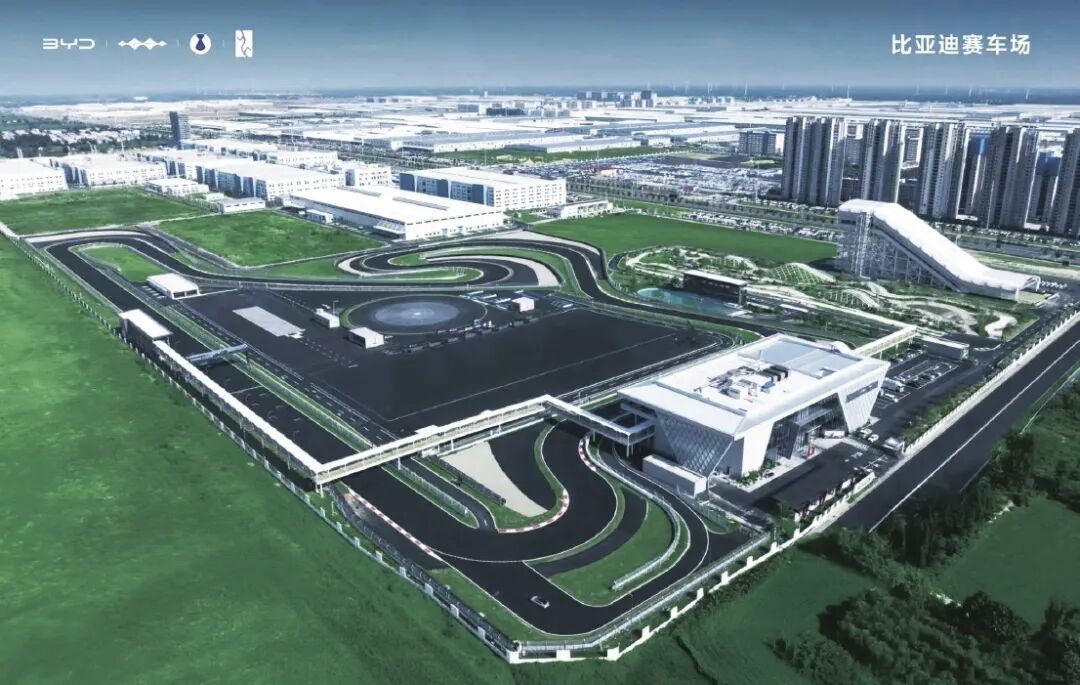
Core Viewpoint - BYD has opened two all-terrain racetracks in Zhengzhou and Hefei, marking a significant investment in motorsport infrastructure, with plans for a nationwide network of racetracks [3][4][7]. Group 1: Investment and Infrastructure - The Zhengzhou racetrack is 1810 meters long and features eight core experience scenarios, integrating various terrains such as asphalt, slippery surfaces, and off-road conditions [3][4]. - BYD announced a total investment of 5 billion yuan to establish the first batch of all-terrain professional racetracks globally, with plans for a racetrack in Shaoxing to open in early next year [3][7]. - The racetracks aim to create a platform for technical validation and brand promotion while popularizing motorsport among the general public [7][10]. Group 2: Market Strategy and Consumer Engagement - The racetracks allow ordinary people to experience motorsport, aligning with the trend of making racing more accessible, contrasting with the traditional perception of racing as an elite sport [4][5]. - BYD's slogan emphasizes that "Nurburgring is no longer a dream," aiming to bridge the gap between high-performance vehicle marketing and consumer experience [5][13]. - The racetracks are designed to provide a variety of driving experiences, catering to consumer curiosity and enhancing brand engagement [7][14]. Group 3: Challenges and Competitive Landscape - Operating racetracks presents challenges such as a single revenue model primarily reliant on event hosting and venue rental, which may not cover high operational costs [8][10]. - The long profitability cycle and the need for extensive market cultivation to promote motorsport participation add to the operational difficulties [8][17]. - Increased competition from other automakers entering the racetrack space necessitates continuous improvement in track facilities and service quality to attract customers [8][10]. Group 4: Broader Industry Implications - The investment in racetracks reflects a strategic move to enhance brand image and product quality through high-performance testing environments [13][14]. - The development of racetracks can stimulate the automotive supply chain, driving innovation in high-performance components and materials [14][18]. - The growing interest in motorsport and supportive government policies indicate a potential revival of the automotive culture in China, which could lead to a more vibrant motorsport ecosystem [16][19].