
Zhong Guo Zheng Quan Bao

Search documents
700亿龙头 冲上800元!历史新高
Zhong Guo Zheng Quan Bao· 2026-01-27 04:48
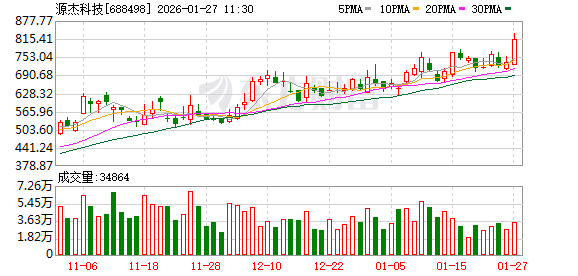
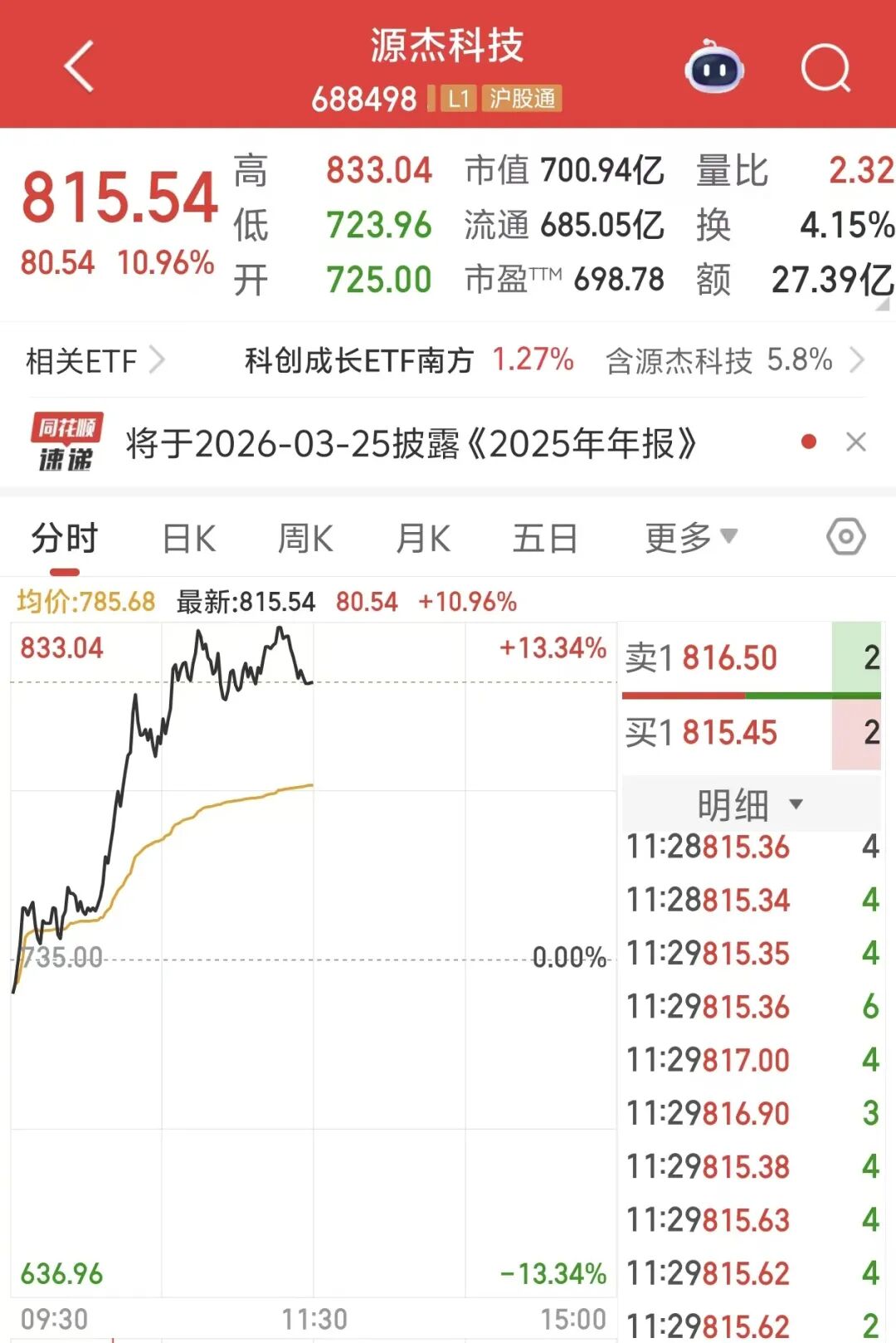
Market Overview - A-shares continued to decline in early trading, with the ChiNext Index and Shenzhen Component Index dropping over 1% at one point before a collective rebound occurred around 10:02 AM, leading to the ChiNext Index and Shanghai Composite Index turning positive [2] - Notable stocks driving the market include New Yi Sheng, Zhongji Xuchuang, and Tianfu Communication, with Tianfu Communication rising over 11% and entering the top five in trading volume [2] North American Computing Chain - The North American computing chain saw a strong performance, with Yuanjie Technology rising over 10% and reaching a historical high of 815.54 yuan, making it the third highest-priced stock in A-shares with a market capitalization of 70.094 billion yuan [2] - Other stocks in this sector, such as Robotech and Shijia Photon, also experienced significant gains [5] Semiconductor Industry - The semiconductor industry was a key driver of the index's rise, with storage chips and semiconductor equipment sectors leading the gains. Notable stocks included Dongxin Co., which hit the daily limit, and Puran Co., which surged 16% [6][8] - Several companies in the storage chip sector reported substantial profit growth forecasts for 2025, with expected increases ranging from 81.77% to 167.31% year-on-year [8] - The semiconductor equipment market is expected to continue growing, driven by AI computing demand and advancements in packaging technology [9] Institutional Investment Trends - Zhongji Xuchuang has gained significant attention, becoming the largest holding for public funds by the end of Q4 2025, with a market value of 78.421 billion yuan. It has been the most increased stock for public funds for three consecutive quarters [5] - The acceleration of the technology cycle, particularly in AI and data centers, is expected to benefit leading suppliers in the sector [5]




700亿龙头,冲上800元!历史新高
Zhong Guo Zheng Quan Bao· 2026-01-27 04:30
Market Overview - A-shares continued to decline in early trading, with the ChiNext Index and Shenzhen Component Index dropping over 1% at one point before a collective rebound occurred around 10:02 AM [1] - The Shanghai Composite Index rose by 0.03%, while the Shenzhen Component Index fell by 0.37%, and the ChiNext Index increased by 0.44% by the end of the morning session [3] Key Stocks and Sectors - Notable stocks that surged included New Yi Sheng (300502), Zhongji Xuchuang (300308), and Tianfu Communication (300394), with Tianfu Communication rising over 11% [1] - The North American computing power chain saw significant gains, with Yuanjie Technology rising over 10% and reaching a record high price of 815.54 yuan, making it the third highest-priced stock in A-shares with a market capitalization of 700.94 billion yuan [1] - The semiconductor industry, particularly the storage chip and semiconductor equipment sectors, led the market rally, with stocks like Dongxin Co. hitting the daily limit and others like Purun Co. and Jingzhida rising significantly [8][10] Institutional Insights - Zhongji Xuchuang is gaining attention as it is projected to replace CATL (300750) as the largest holding in public funds by the end of Q4 2025, with a market value of 784.21 billion yuan [6] - The stock has been the most increased in public fund holdings for three consecutive quarters, indicating strong institutional interest [6] Price Trends and Forecasts - Amazon Web Services (AWS) recently raised its EC2 machine learning capacity block prices by approximately 15%, breaking a long-standing trend of declining cloud service prices, reflecting tight supply conditions in computing power [7] - The semiconductor equipment market is expected to grow significantly, driven by AI demand and advancements in packaging technology, with strong growth anticipated in 2026 [11]
增长0.6%!扭转连续三年下降态势
Zhong Guo Zheng Quan Bao· 2026-01-27 04:30
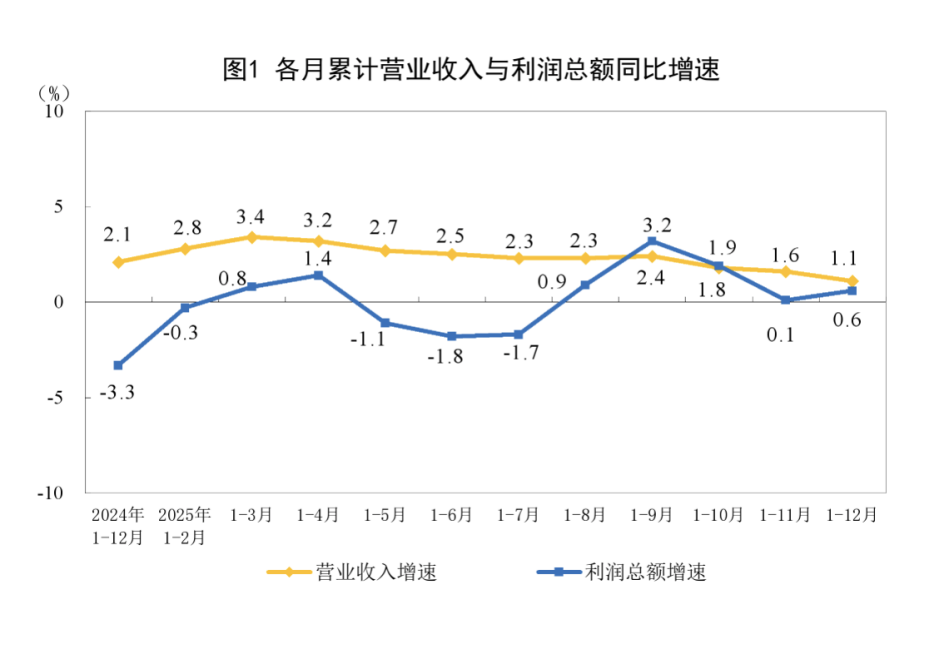
Core Insights - In 2025, the total profit of industrial enterprises above designated size in China reached 73,982 billion yuan, marking a 0.6% increase from the previous year, reversing a three-year decline trend [1][2] Group 1: Profit Growth by Sector - The manufacturing sector saw a profit increase of 5.0%, rebounding significantly by 8.9 percentage points compared to 2024 [2] - The electricity, heat, gas, and water production and supply sector experienced a profit growth of 9.4% [2] - The mining sector, however, faced a decline of 26.2% in profits [2] Group 2: Profit Improvement Among Different Business Entities - In 2025, profits for small and medium-sized enterprises, as well as foreign and Hong Kong, Macao, and Taiwan-invested enterprises, turned positive, growing by 1.4% and 4.2% respectively, compared to declines of 1.9% and 1.7% in 2024 [4] - Profits for joint-stock enterprises and state-controlled enterprises showed significant improvement, with the decline narrowing by 3.5 percentage points and 0.7 percentage points respectively compared to the previous year [4] Group 3: Contribution of New Growth Drivers - The equipment manufacturing sector contributed significantly to profit growth, with a 7.7% increase in profits, driving an overall profit increase of 2.8 percentage points for all industrial enterprises [5] - The share of equipment manufacturing profits in total industrial profits rose to 39.8%, an increase of 2.6 percentage points from the previous year [5] - High-tech manufacturing profits surged by 13.3%, outperforming the overall industrial profit growth by 12.7 percentage points, with smart electronic products leading to a 48% profit increase in the smart consumer device manufacturing sector [5] Group 4: Traditional Industries Upgrading - Traditional industries showed significant improvements, with profits in the biochemical pesticide and microbial pesticide manufacturing sectors growing by 20.7% and 15.2% respectively, exceeding the average profit growth in the chemical industry by 28 percentage points and 22.5 percentage points [6]
*ST宇顺:标的公司拟开展不超20亿元融资租赁业务
Zhong Guo Zheng Quan Bao· 2026-01-27 01:30
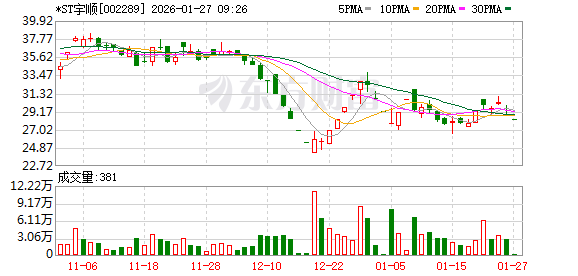
本次融资租赁业务的交易对方为具备资质且与公司及控股子公司无关联关系的融资租赁机构。 *ST宇顺主营业务为液晶显示屏及模组、触摸屏及模组、触摸显示一体化模组等产品的研发、生产和销 售。前三季度公司实现营业总收入1.92亿元,同比增长42.73%。 本次融资租赁的标的资产为数据中心机电设备等固定资产。除已为中信银行北京分行的固定资产贷款提 供抵押担保外,该资产不存在其他质押或第三人权利,无重大争议或司法查封情况。另一标的公司中恩 云(北京)数据信息技术有限公司拟提供应收账款质押担保。本次授权自公司股东会审批通过之日起12 个月内有效。 公告表示,此项业务有利于标的公司拓宽融资渠道,提高资金使用效率,且不影响其对相关资产的使 用,不会对日常经营构成重大影响。此外,开展该业务亦可解除标的公司的股权质押,以加速后续股权 过户至公司名下。 中证智能财讯*ST宇顺(002289)1月27日公告,标的公司中恩云(北京)数据科技有限公司拟通过售 后回租方式,与具有相应资质的融资租赁机构开展融资租赁业务,融资额度不超过20亿元,融资期限不 超过84个月。 ...

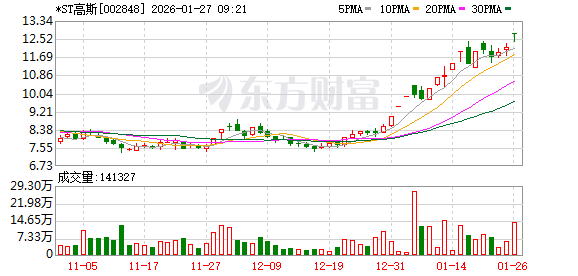
*ST高斯:拟向长沙炬神定增募资不超4.29亿元 控制权将变更
Zhong Guo Zheng Quan Bao· 2026-01-27 01:27
Group 1 - The company *ST Gauss (002848) announced a private placement plan on January 27, 2026, intending to issue shares to Changsha Jushen Management Consulting Partnership (Limited Partnership) at a price of 8.56 yuan per share, with a maximum issuance of 50.145 million shares, raising up to 429 million yuan [2] - The issuance will lead to a change in control of the company, with Changsha Jushen becoming the controlling shareholder and Yang Yao Peng as the actual controller after the completion of the issuance [2] - The company currently relies mainly on bank loans, with a debt-to-asset ratio of 73.59% as of September 30, 2025, and the fundraising will optimize its capital structure, reduce debt levels, and enhance its ability to repay and resist risks [2] Group 2 - The main business of *ST Gauss includes the production and sales of digital television hardware and software products, new materials, and consumer electronics [3] - Changsha Jushen specializes in the research, production, and sales of electronic products such as power supplies and smart home devices, covering areas like robotic vacuums, mobile power supplies, portable and home energy storage, TWS earphones, and wearable watches [2]

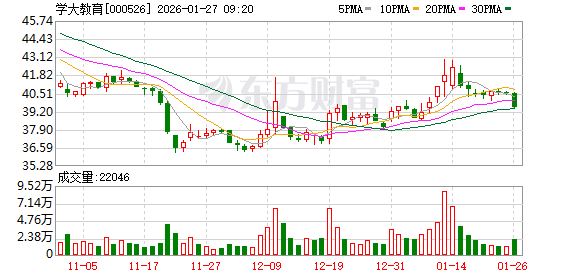
学大教育:拟不超3500万元增资EDA公司 拓展职业教育新场景
Zhong Guo Zheng Quan Bao· 2026-01-27 01:24
根据公告,拟新设的合伙企业为共青城学成启航创业投资合伙企业(有限合伙),其认缴出资额不超过 3610万元,专项投资于江阴启芯领航。参考评估结论并经协商,江阴启芯领航投前估值为5亿元。增资 款将主要用于标的公司的主营业务经营、市场拓展及归还银行贷款等用途。 公告称,该投资旨在把握EDA(电子设计自动化)赛道国产替代的重要机遇,拓展集成电路产业相关 的职业教育场景,从而丰富公司职业教育业务的产业内涵,培育新的业绩增长点,提升公司综合竞争力 与长期发展潜力。 中证智能财讯学大教育(000526)1月27日公告,为拓展战略业务,公司拟通过全资子公司北京学大信 息技术集团有限公司,以新设合伙企业的方式向专注于EDA工具与半导体IP研发的江阴启芯领航半导体 有限公司增资。本次投资金额不超过3500万元,投资完成后预计持有江阴启芯领航6.4791%的股权。 公告显示,学大教育作为深耕教育领域20余年的上市公司,在职业教育领域已构建成熟的运营体系,拥 有全国布局的产业学院教学点、标准化的课程与管理体系以及广泛的生源渠道。本次投资后,启芯领航 将为双方合作提供EDA领域核心实训资源支撑,包括协助搭建课程体系、提供FPGA云实训 ...

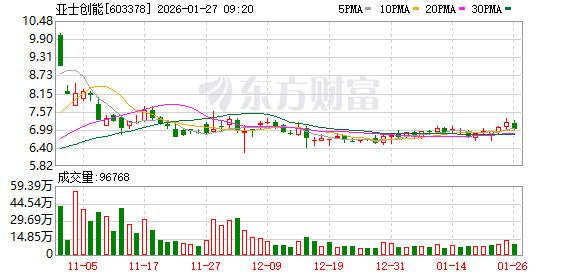
亚士创能:控股股东一致行动人或被动减持不超3%股份
Zhong Guo Zheng Quan Bao· 2026-01-27 01:24
Group 1 - The core issue involves a potential passive reduction of shares by Shanghai Runhe Tongcai Asset Management Co., Ltd., a significant shareholder of Yashi Chuangneng, due to a debt default in its margin trading business, which may lead to a forced liquidation of shares [2] - The number of shares to be reduced is up to 12.8579 million shares, accounting for 3% of the company's total share capital, with a closing stock price of 7.00 yuan per share on January 26, reflecting a decline of 2.91% [2] - The reduction plan includes a timeframe from February 26, 2026, to May 25, 2026, with a maximum of 4.286 million shares to be sold through centralized bidding and 8.5719 million shares through block trading, with prices determined by market conditions at the time of sale [2] Group 2 - Yashi Chuangneng specializes in the research, production, sales, and service of functional building coatings, integrated thermal insulation and decoration materials, energy-saving insulation materials, waterproof materials, mortar, and new home materials [3] - For the first three quarters of 2025, the company reported total operating revenue of 397 million yuan, a year-on-year decrease of 76.97%, and a net loss attributable to shareholders of 311 million yuan, compared to a loss of 18.5997 million yuan in the same period last year [3]

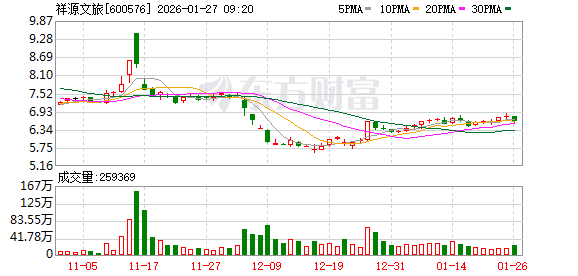
祥源文旅:子公司退出低空经济产业基金 聚焦低空文旅垂直业态
Zhong Guo Zheng Quan Bao· 2026-01-27 01:24
中证智能财讯祥源文旅(600576)1月27日公告,公司全资子公司上海丰豫投资管理有限公司拟从盐城 黄海汇创科泰低空经济产业投资基金合伙企业退伙,以进一步聚焦低空文旅垂直业态。 根据安排,低空经济产业投资基金将以现金形式支付上海丰豫退伙财产份额价值257.15万元。此次交易 主要基于公司低空战略规划及投资模式的调整,旨在聚焦低空文旅业态投资,不存在损害公司及股东利 益的情形。 回顾过往,2025年4月,上海丰豫计划以自有资金出资6500万元参与设立该低空经济产业投资基金,其 中首期投资1300万元,目前已完成实缴260万元。该基金于2025年5月完成私募投资基金备案。2025年6 月,公司与其他合作方重新签署协议,其中原合伙人江苏华兴投资集团有限公司所持3000万元出资份额 已转让给北京厚贞咨询有限公司。 公告显示,本次退伙事项已获全体合伙人会议一致同意。该产业投资基金不在公司合并报表范围内,本 次交易不会导致合并报表范围变更,不会对公司生产经营活动产生重大影响。 ...

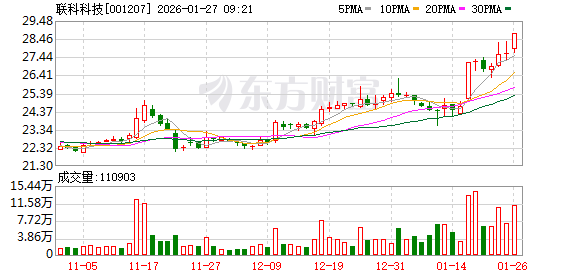
联科科技:子公司拟5.1亿元投建高纯净固体硅酸钠原料改扩建项目
Zhong Guo Zheng Quan Bao· 2026-01-27 01:24
Core Viewpoint - The company announced an investment project to expand its production capacity of high-purity solid sodium silicate, with a total investment of 510 million yuan and an expected construction period of 72 months [2] Group 1: Project Details - The project will be located within the existing factory area in Linqu County, Shandong Province, covering a total construction area of 25,000 square meters [2] - The main facilities to be constructed include sodium silicate production workshops, rice husk ash resource utilization workshops, finished product warehouses, and raw material warehouses [2] - Upon completion, the project is expected to achieve an annual production capacity of 450,000 tons of high-purity solid sodium silicate [2] Group 2: Strategic Importance - Sodium silicate is a key raw material for the company's production of silicon dioxide products, and its demand and purity are critical for enhancing product quality [2] - The project aims to meet the increasing demand for key raw materials, improve cost efficiency, and enhance product stability to better satisfy customer needs, ultimately boosting profitability [2] - The company emphasizes a "differentiation" strategy, focusing on new product development and upgrading existing products [2] Group 3: Financial Performance - For the first three quarters of 2025, the company reported total operating revenue of 1.788 billion yuan, an increase of 8.66% year-on-year [2] - The net profit attributable to the parent company was 230 million yuan, reflecting a year-on-year growth of 15.26% [2]
有色金属行业2025年业绩预告盘点:上游业绩股价双升 下游成本压力显现
Zhong Guo Zheng Quan Bao· 2026-01-27 00:18
A股上市公司业绩预告持续发布。Wind数据显示,截至1月26日19时,A股共有37家有色金属行业上市 公司对外披露2025年全年业绩预告,23家预喜,预喜比例约为62.16%。受金属价格上涨影响,涉矿类 上市公司业绩出现较为明显的增长。部分中下游上市公司业绩分化明显,一些公司下游需求回暖,原材 料涨价传导到下游产品较为顺畅。 有色行业表现不俗 已发布业绩预告的37家有色金属行业上市公司中,略增3家,扭亏5家,预增15家。 受益于产品价格上涨,相关上市公司股价近期也出现大幅上涨行情,上市公司扎堆提示风险。 以白银为例,1月26日,白银期货、现货双双创下历史新高。受此影响,白银概念股纷纷大涨。 1月26日晚,"5连板"白银有色发布股票交易风险提示公告称,公司股票价格短期涨幅较大,1月20日、1 月21日、1月22日、1月23日、1月26日已连续五个交易日公司股票价格大幅上涨,涨幅累计达61.16%, 存在交易风险。白银有色提到,公司主要业务为铜、锌、铅、金、银等多种有色金属及贵金属的采选、 冶炼、加工及贸易业务。公司白银产品的收入占总营业收入的比重较低。2025年上半年,公司营业收入 445.59亿元,销售白银产 ...