
Feng Huang Wang Cai Jing

Search documents
汽车电子与机器人双轨驱动价值重塑 汽车零部件龙头均胜电子赴港上市
Feng Huang Wang Cai Jing· 2025-10-15 08:35
Core Viewpoint - Junsheng Electronics has received approval from the China Securities Regulatory Commission for its Hong Kong listing, marking the start of its "A+H" dual capital platform strategy, aimed at enhancing its global competitiveness in the automotive industry [1] Group 1: Capital and Investment Strategy - The funds raised from the Hong Kong listing will be allocated to three core areas: expanding smart cockpit integrated research and development, improving global factory efficiency, and strategic investment expansion [1] - The company aims to strengthen its global resource integration capabilities and international market competitiveness through the "A+H" dual capital platform [6] Group 2: Business Performance - Junsheng Electronics reported a revenue of approximately 30.347 billion yuan for the first half of 2025, a year-on-year increase of 12.07%, with a net profit of 707.8 million yuan, up 11.13% [2] - The overall gross margin has increased for ten consecutive quarters, reaching 18.4%, with the automotive electronics segment achieving a gross margin of 21.5% [2] Group 3: Technological Advancements - The company has established 25 R&D centers and over 60 production bases globally, covering major automotive markets in Asia, Europe, and North America [2] - Junsheng Electronics has received new orders for its Central Computing Unit (CCU) and intelligent networking products, with a total lifecycle order value of approximately 15 billion yuan, set to start mass production in 2027 [3] Group 4: Robotics Expansion - The company is actively expanding into the robotics sector, positioning itself as an "automotive + robotics Tier 1" supplier, which has opened new growth opportunities [4] - Junsheng Electronics has established a wholly-owned subsidiary to advance its robotics business and has developed key components for robotic solutions [4] Group 5: Market Outlook - The global humanoid robot market is projected to exceed $100 billion by 2030, with a compound annual growth rate of 35%, positioning Junsheng Electronics favorably in this emerging market [5] - The company's stock price has increased by 125% this year, reflecting strong market recognition of its automotive intelligence and robotics business growth [6]

下一站出海,中国企业如何从“走出去”到“扎下去”?
Feng Huang Wang Cai Jing· 2025-10-15 07:39
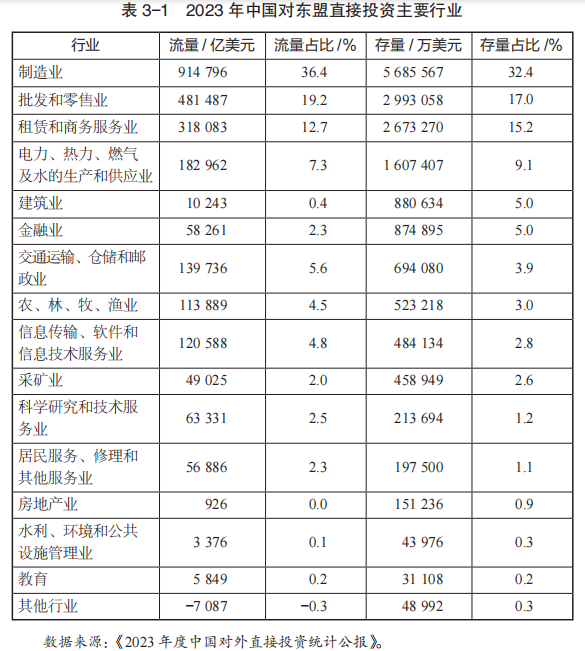
Group 1 - The core viewpoint of the articles highlights the significant acceleration of Chinese enterprises' globalization since the "Belt and Road" initiative was proposed in 2013, with a continuous increase in the number of companies and investment amounts in foreign markets [1][2][3] - By the end of 2023, there were 31,000 domestic enterprises in China establishing 48,000 foreign direct investment enterprises across 189 countries, with total overseas assets nearing $9 trillion [2] - The diversification of investment methods has become prominent, with greenfield investments and overseas mergers and acquisitions being the primary strategies, accounting for 46.4% and 32.3% respectively [4] Group 2 - The structure of foreign direct investment has shifted from being dominated by state-owned enterprises to a significant presence of private enterprises, which now account for 34.7% of the total [5] - A survey indicated that 48.6% of enterprises hold an optimistic view towards foreign investment, with 66.9% choosing "Belt and Road" countries as their preferred investment destinations [6][9] - Challenges faced by Chinese enterprises in overseas markets include political risks, legal compliance complexities, cultural differences, and talent shortages, which are critical for their international operations [12][15][16][17][19][21] Group 3 - The investment landscape shows that manufacturing remains the primary sector for Chinese investments in ASEAN countries, accounting for 32.4% of total investments, followed by wholesale and retail at 17% [3] - The increasing competition among Chinese enterprises in international markets has led to a compression of profit margins, with many relying on price competition due to a lack of differentiation [22] - There is a growing awareness of ESG (Environmental, Social, and Governance) issues among Chinese enterprises, although many still prioritize rapid expansion and profitability over sustainable practices [23]

黄益平:“华盛顿共识”破产后,全球南方的发展路在何方?中国经验给出答案
Feng Huang Wang Cai Jing· 2025-10-15 07:39
Group 1: Tanzania's Economic Vision - Tanzania's President Samia Suluhu Hassan announced the "Vision 2050," aiming for a GDP exceeding $1 trillion and a per capita GDP of $7,000 by 2050, which requires an annual nominal GDP growth rate of 6.8% [1] - The vision includes strategic pillars and industrial policies focusing on logistics, energy, technology, digital transformation, and nine key sectors such as agriculture, tourism, and mining to create jobs and boost exports [1] - The announcement may be politically motivated ahead of the upcoming elections in October 2025, as it lacks specific strategies and pathways for implementation [1] Group 2: Development Challenges in Southern Countries - Many Southern countries, like Tanzania, face significant challenges in achieving rapid economic development, often falling into the "middle-income trap" as defined by World Bank economists [3][4] - The "Washington Consensus" proposed by international organizations has had limited success in guiding economic reforms in developing countries, contrasting with the successful policies of East Asian economies [5][6] - The lack of innovation capacity and persistent issues such as inequality, poor education, and inadequate infrastructure hinder sustained economic growth in many Southern nations [4][6] Group 3: Lessons from China's Economic Policies - China's economic growth, with an average GDP growth rate of 8.9% from 1978 to 2024, serves as a potential model for Southern countries aiming for rapid development [8] - Key differences between China's policies and the "Washington Consensus" include a significant state-owned sector and active government participation in economic activities, including industrial policies [8][9] - The pragmatic approach of Chinese reforms emphasizes adapting policies to local conditions rather than strictly following theoretical models, which could provide valuable insights for other Southern nations [21][24] Group 4: Global South Consensus - The "Washington Consensus" is becoming outdated, as both Southern countries and Northern nations like the U.S. have moved away from its principles, highlighting the need for a new framework for economic development [20][26] - A proposed "Global South Consensus" aims to establish basic principles for economic policy that are tailored to the unique circumstances of Southern countries, focusing on market-driven resource allocation and pragmatic government intervention [23][24] - Successful experiences from East Asian economies, particularly China, can inform the development of this consensus, emphasizing the importance of context-specific policies and the balance between market and government roles [21][26]

市场探底回升,沪指涨超1%重回3900点,全市场超4300只个股上涨
Feng Huang Wang Cai Jing· 2025-10-15 07:12
Core Points - The market rebounded with the Shanghai Composite Index rising over 1% to surpass 3900 points, while the ChiNext Index increased by over 2% [1] - The total trading volume in the Shanghai and Shenzhen markets reached 2.07 trillion, a decrease of 503.4 billion compared to the previous trading day [1] Index Performance - Shanghai Composite Index: 3912.21, up 1.22%, with a trading volume of 961.55 billion [2] - Shenzhen Component Index: 13118.75, up 1.73%, with a trading volume of 1.11 trillion [2] - ChiNext Index: 3025.87, up 2.36%, with a trading volume of 491.77 billion [2] - North 50 Index: 1508.31, up 1.63%, with a trading volume of 177.97 billion [2] Sector Performance - Strong performance in sectors such as robotics, aviation, and pharmaceuticals, with several stocks hitting the daily limit [2][3] - Notable stocks include Wuzhou New Spring and Sanhua Intelligent Control in the robotics sector, and Hangzhou Airlines in the aviation sector [2] - Declines observed in the port and shipping sectors, with significant drops in stocks like Nanjing Port and Lianyungang [2][3]

市场冲高回落,创业板指涨0.22%,半导体、可控核聚变等热门赛道股调整
Feng Huang Wang Cai Jing· 2025-10-15 03:44
Market Overview - The market experienced a morning surge followed by a pullback, with the Shanghai Composite Index rising by 0.1% and the Shenzhen Component Index remaining flat at 0.00% as of the midday close [1] - The total trading volume in the Shanghai and Shenzhen markets reached 1.27 trillion, a significant decrease of 398.5 billion compared to the previous trading day, indicating a substantial contraction in market activity [1][4] Sector Performance - The pharmaceutical, retail, and consumer sectors showed strong performance, with notable gains in domestic software stocks, which rebounded due to positive stimuli [2][3] - Key stocks included Guoguang Chain, which achieved three consecutive trading limits, and several software stocks like Jiuqi Software and Rongji Software, both hitting the daily limit [2] - The innovative drug sector was also active, with stocks like Anglikang and Asia-Pacific Pharmaceutical reaching their daily limits, while the military and semiconductor sectors faced declines, with Northern Long Dragon dropping over 10% [2][3] Market Sentiment - Approximately 70.41% of users expressed a bullish outlook on the market, with 3,296 stocks rising, 1,952 declining, and 50 hitting the daily limit [4] - The overall market heat index was reported at 55, reflecting a decrease in trading enthusiasm compared to the previous day [4]


A股指数集体高开:创业板指涨0.29%,贵金属、超硬材料等板块涨幅居前
Feng Huang Wang Cai Jing· 2025-10-15 01:35
Market Overview - Major indices opened higher with Shanghai Composite Index up 0.06%, Shenzhen Component Index up 0.19%, and ChiNext Index up 0.29% [1] - The leading sectors included precious metals, superhard materials, and non-ferrous metals [1] Index Performance - Shanghai Composite Index: 3867.54, up 0.06%, with 1031 gainers and 771 decliners, trading volume of 96.75 billion [2] - Shenzhen Component Index: 12919.27, up 0.19%, with 1419 gainers and 938 decliners, trading volume of 80.62 billion [2] - ChiNext Index: 2964.52, up 0.29%, with 762 gainers and 422 decliners, trading volume of 29.28 billion [2] External Market - US stock indices showed mixed results with the Dow Jones up 202.88 points (0.44%) at 46270.46, while Nasdaq down 172.91 points (0.76%) at 22521.70, and S&P 500 down 10.41 points (0.16%) at 6644.31 [3] - Nasdaq Golden Dragon China Index fell by 1.95%, with major Chinese stocks like NIO down over 5% and Baidu down over 4% [3] Strategic Insights - CITIC Securities emphasizes the strategic opportunities in cobalt and rare earths, highlighting the export quotas from the Democratic Republic of Congo and the expected market shift from surplus to shortage in cobalt [4] - Huatai Securities is bullish on oil shipping and aviation sectors, citing OPEC+ production increases and seasonal demand as key drivers [5] - China Galaxy Securities identifies long-term investment value in the Beijing Stock Exchange, focusing on emerging industries like AI and commercial aerospace [8] Regulatory Developments - The new regulations on non-auto insurance business by the National Financial Regulatory Administration aim to enhance efficiency and reduce costs for insurance companies, promoting rational competition and improving underwriting profitability [9]

中国产机器人灵巧手“拿捏”肯尼亚客户:希望采购!
Feng Huang Wang Cai Jing· 2025-10-15 01:08
Core Viewpoint - The 2025 Hong Kong Autumn Electronics Fair showcased various robotic dexterous hand products, highlighting advancements in precision and functionality in robotics [1] Group 1: Product Highlights - Numerous exhibitors presented robotic dexterous hands capable of performing tasks such as holding eggs, lifting kettlebells, scanning, and shaking hands [1] - Zhejiang Qiangnao Technology displayed an intelligent bionic dexterous hand that can accurately hold an egg without breaking it, attracting significant attention from attendees [1] Group 2: Market Interest - A buyer from Kenya expressed strong interest in Chinese-manufactured dexterous hands, noting the impressive precision of the product [1] - The buyer indicated a potential for procurement, contingent on the market conditions in Kenya, which is still developing its electronic hardware equipment market [1] - The versatility of dexterous hands in various applications, including supermarkets, was highlighted as a key factor for market optimism [1]

能用英语夸人的屈原机器人,引中外观众围观
Feng Huang Wang Cai Jing· 2025-10-15 01:08
云幕智造展台工作人员向凤凰网财经介绍表示,这款人形机器人产品的售价在30万左右,主要用于文旅 表演、解说、迎宾接待等场景。除了屈原,公司推出的人形机器人还有唐伯虎、关公、王阳明等近五十 个形象,在各地就职。 2025香港秋季电子产品展上,云幕智造展台展出的一款双足型人形机器人吸引众多中外观众。这款机器 人外观形象酷似屈原,能够现场识别观众的体貌、行为,并针对这些特征进行称赞互动。 自动播放 ...
大反转!鲍威尔突然敞开降息大门,可美股不买账
Feng Huang Wang Cai Jing· 2025-10-14 22:59
Group 1: Market Performance - US stock indices showed mixed results, with the Dow Jones up by 0.44%, while the Nasdaq and S&P 500 fell by 0.76% and 0.16% respectively [1] - Notable declines were observed in major tech stocks, including Nvidia down over 4%, Amazon down over 1%, and Tesla down over 1% [1] - Chinese concept stocks mostly declined, with the Nasdaq Golden Dragon China Index dropping nearly 2%, and significant losses for Alibaba, Baidu, and NIO [1] Group 2: Federal Reserve Insights - Federal Reserve Chairman Jerome Powell indicated the possibility of interest rate cuts due to a weakening labor market, despite ongoing inflation concerns [2][3] - Powell highlighted the risks associated with rapid rate cuts potentially leaving inflation targets unmet, while slower cuts could harm the job market [2] - The Fed's balance sheet reduction may be paused in the coming months, reflecting a cautious approach to monetary policy [2] Group 3: IMF Economic Outlook - The International Monetary Fund (IMF) raised its global economic growth forecast for 2025 to 3.2%, but noted that US tariffs and trade protectionism are dampening growth prospects [4][7] - The IMF predicts US economic growth will slow to 2% this year, with a slight increase to 2.1% next year, while the Eurozone is expected to grow at 1.2% this year [4] - Despite a temporary boost from preemptive purchasing due to tariffs, the overall economic outlook remains bleak, with risks skewed to the downside [7][8]

美股三大指数持续下跌,纳指跌超1%
Feng Huang Wang Cai Jing· 2025-10-14 14:35
Group 1: Market Overview - U.S. stock indices continued to decline, with the Dow Jones down 0.42%, Nasdaq down 1.01%, and S&P 500 down 0.59% as of the report [1] - Chinese concept stocks showed mixed performance, with China Merchants Bank up over 5% and Xiaomi Group (ADR) up over 3%, while Pony.ai dropped over 6% and BOSS Zhipin fell over 4% [1] Group 2: Global Economic Concerns - A significant debate on "currency devaluation" is emerging in global markets as investors seek protection from uncontrolled budget deficits, indicating a potential long-term repricing across assets [2] - Japan's financial assets faced sell-offs following the unexpected withdrawal of the Komeito party from the ruling coalition, raising concerns about possible "black swan" events in the market [3] Group 3: Company News - OpenAI has entered a strategic partnership with Broadcom to develop custom chips with a total capacity of 10GW, marking a new phase in the artificial intelligence industry [4] - DJI has filed an appeal in the U.S. Court of Appeals against a ruling by the U.S. Department of Defense, following its inclusion on the "Chinese Military Companies" list [6] - Apple is facing activation issues with the iPhone 17 and iPhone 17 Pro Max, attributed to potential server malfunctions rather than hardware problems, with no specific resolution timeline provided [5]