
Zhong Guo Huan Jing Bao

Search documents
提升尾气治理成效需全链条“打假”
Zhong Guo Huan Jing Bao· 2025-07-16 00:14
Core Viewpoint - The article highlights the importance of strict regulation and accountability in the vehicle exhaust emission testing industry, emphasizing the need for a comprehensive approach to tackle fraudulent practices across all related sectors [1][2]. Group 1: Incident Overview - An environmental department discovered that a vehicle emission testing company issued a false compliance report for a heavy diesel truck lacking a catalytic converter, which is essential for exhaust purification [1]. - The investigation revealed that the truck owner had received a substandard exhaust pipe replacement from a repair shop, which did not contain a catalytic converter [1]. - The environmental authorities took action against the testing company and traced the issue back to the manufacturer of the defective exhaust pipes, leading to investigations and penalties for all involved parties [1]. Group 2: Regulatory Recommendations - The article suggests establishing a robust information-sharing and enforcement mechanism among regulatory bodies to ensure comprehensive oversight of all links in the vehicle exhaust management chain [2]. - It emphasizes the need for coordinated efforts to address multi-link fraudulent activities, ensuring that any violations are thoroughly investigated from all angles [2]. - The use of media for public exposure of fraudulent practices is recommended to deter potential offenders and promote awareness among industry participants about the consequences of engaging in deceitful activities [2].
以标识化管理促进差异化精准化监管
Zhong Guo Huan Jing Bao· 2025-07-15 23:13
Group 1 - The core viewpoint of the article emphasizes the importance of "strengthening identification management" as a significant measure to reconstruct the enforcement and regulatory logic in ecological environment supervision [1] - The initiative aims to convert various factors such as distribution areas, industry types, pollutant types, violation records, and public complaints into quantifiable and traceable "digital identifiers" [1] - This identification management approach seeks to optimize limited enforcement resources and provide a basis for differentiated and precise regulation, ensuring that enforcement efforts are aligned with environmental risk levels [1][2] Group 2 - The establishment of labels should be tailored to local conditions, creating a management framework that reflects regional characteristics, industry-specific pollutants, and historical violation records [2] - Data integration requires multi-party collaboration to transform fragmented regulatory elements into structured governance language, creating multidimensional "digital files" for regulatory subjects [2] - The dynamic maintenance of labels is crucial for ensuring their timeliness and accuracy, necessitating a regular maintenance mechanism to avoid one-time efforts [3] Group 3 - Enhancing capabilities involves multiple measures, including collaboration with research institutions and technology companies to support the design of label systems and data anomaly analysis [4] - Regular training for enforcement personnel on label classification, data entry, and risk assessment is recommended to improve practical application skills [4] - Incorporating identification management into the performance evaluation system for grassroots enforcement can promote proactive exploration and gradual deepening of this management approach [4]
党建引领强队伍 惠企利民护绿荫
Zhong Guo Huan Jing Bao· 2025-07-15 06:07
Core Viewpoint - The Kunshan Ecological Environment Bureau in Suzhou, Jiangsu Province, is actively exploring the deep integration of party building and business operations, creating a mutually reinforcing and jointly developing environment that enhances ecological protection efforts [1][6]. Group 1: Party Building and Brand Development - The bureau has established a "Heartfelt Environmental Protection" service brand, creating a unique "1+4" party building brand matrix with four specialized action branches: "Heartfelt Companion," "Determined Pioneer," "Original Intention Iron Army," and "Craftsmanship Sentinel" [2][7]. - By refining branch brands and aligning them with specific business characteristics, the bureau has formed action branches focused on service, tackling challenges, environmental protection, and ecological monitoring, thereby deepening the integration of party building and business [2][7]. - The "Brave Warriors" action branch leads initiatives in pollution control, providing technical support for various projects and enhancing the sense of mission and responsibility among party members [2][7]. Group 2: Service Improvement and Community Engagement - The bureau emphasizes a people-centered approach, implementing innovative service measures to benefit enterprises and the public [3][8]. - Through the "One-Time Role Swap" initiative, party members gain insights into the needs of businesses and the community, leading to improved efficiency in environmental assessment processes and significant time and cost savings for enterprises [3][9]. - The bureau has established a collaborative mechanism for addressing environmental issues across regions, conducting educational sessions for over 3,000 enterprises, and promoting environmental protection policies [4][9]. Group 3: Ecological Protection Initiatives - The bureau has developed a cooperative mechanism for water environment protection and is guiding the construction of waste-free parks, achieving closed-loop management of hazardous waste [5][10]. - Numerous ecological protection projects have been successfully implemented under the leadership of party building, including the establishment of an ecological zoning control system and collaborative agreements for environmental monitoring [5][10]. - The bureau aims to continue leveraging party building to enhance team development, prioritize enterprise and public welfare, and focus on ecological protection in its future initiatives [5][10].

在4000多年的治淮历程中传承弘扬淮河水生态文化|征文选登
Zhong Guo Huan Jing Bao· 2025-07-15 05:47
Core Viewpoint - The article emphasizes the historical significance and ecological wisdom of the Huai River, highlighting its role in Chinese civilization and the ongoing efforts in water management and pollution control [1][4][5]. Group 1: Historical Context - The Huai River, known as one of the "Four Rivers" in ancient China, has been a crucial part of Chinese civilization for over 4,300 years, reflecting the struggle between humans and nature [1]. - From 1194 to 1855, the Yellow River diverted the Huai River for 661 years, leading to significant efforts by various dynasties to manage the river and protect local communities [2]. - Notable figures like Pan Jixun contributed to the systematic governance of the Huai and Yellow Rivers, implementing innovative strategies to mitigate flooding [2]. Group 2: Modern Water Management - Since the establishment of the People's Republic of China, the Huai River has undergone extensive management, with significant initiatives launched after severe flooding in 1950 [2][3]. - The "蓄泄兼筹" (storage and discharge) strategy has guided three major waves of water management efforts, resulting in the construction of key infrastructure such as the Wangjiaba Dam [3]. - The Wangjiaba Dam has played a critical role in flood control, demonstrating the community's spirit of sacrifice for the greater good [3]. Group 3: Pollution Control Efforts - The 1980s saw increasing water pollution in the Huai River, prompting the government to prioritize its restoration through comprehensive management strategies [4]. - The implementation of the first basin-wide regulation for water pollution control marked a significant step in addressing the river's ecological challenges [4]. - Continuous efforts have led to improvements in water quality, with the Huai River's water quality classified as Grade III since 2019, transitioning from moderate pollution to good status [4]. Group 4: Cultural and Ecological Significance - The Huai River's ecological culture is an essential part of Chinese traditional culture, embodying the wisdom and emotions of the local people [5]. - There is a call for enhanced protection of cultural heritage related to the Huai River, including traditional water management techniques and local customs [6]. - Education and public engagement are crucial for fostering appreciation and recognition of the Huai River's ecological culture, promoting a collective effort in its preservation [6].
曲靖多措并举打好碧水保卫战
Zhong Guo Huan Jing Bao· 2025-07-15 02:08
Core Viewpoint - Since 2021, Qujing City has focused on improving water ecological environment quality, achieving stable progress through precise pollution control, scientific management, and legal enforcement, resulting in a significant improvement in water quality [1][9]. Water Quality Monitoring - In 2023, out of 39 monitored national and provincial surface water sections, 38 were rated as good, achieving a 97.4% good water quality rate. All 16 county-level drinking water sources have maintained a 100% compliance rate since 2021 [2][9]. Pollution Control Measures - The city has implemented various measures for surface water ecological protection, including the completion of 1,155 out of 1,559 administrative villages' sewage treatment, achieving a treatment rate of 74.1% [2][10]. Planning and Implementation - Ongoing implementation of key plans such as the "14th Five-Year Plan for Water Ecological Environment Protection" and the "Yangtze River Basin Phosphorus Pollution Control Plan" aims to maintain a 100% good water quality rate in the Yangtze River Basin by 2025 [3][10]. Heavy Pollution Management - Focused efforts on stabilizing and improving heavily polluted water bodies, with a systematic approach to address non-compliant water bodies through a four-step method: early warning, source tracing, plan formulation, and implementation [3][10]. Pollution Reduction Achievements - In 2024, the city is projected to reduce COD by 7,076.55 tons and ammonia nitrogen by 566.67 tons, exceeding the targets set by Yunnan Province [4][11]. Special Actions for Environmental Protection - Special actions have been taken to address issues in industrial park wastewater treatment facilities, with 76 problems identified and resolved across 10 parks and 21 areas [4][11]. Black and Odorous Water Body Management - The city has achieved a 100% remediation rate for black and odorous water bodies in urban areas, with ongoing efforts in rural areas showing a 100% project initiation rate [5][12]. Funding and Project Management - The city has effectively managed funding applications and project oversight, resulting in the acquisition of 21.6 million yuan in ecological compensation funds for 2023 [13]. Drinking Water Source Protection - Continuous efforts are made to protect drinking water sources, with a comprehensive assessment showing that all evaluated sources scored above 98, indicating excellent water quality [14][15].
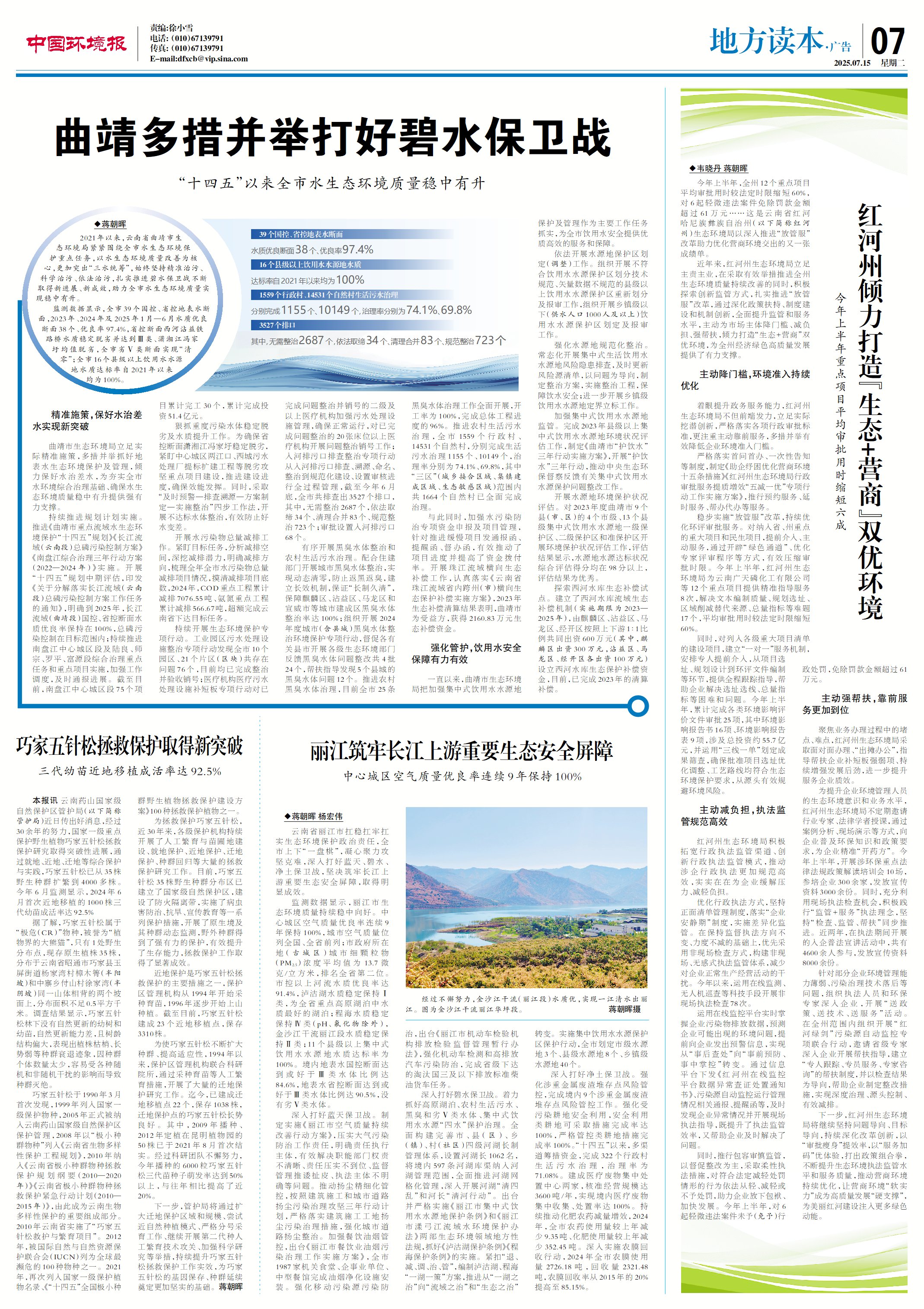
丽江筑牢长江上游重要生态安全屏障
Zhong Guo Huan Jing Bao· 2025-07-15 02:08
Core Viewpoint - The ecological environment quality in Lijiang, Yunnan Province, has shown significant improvement, with a focus on protecting air, water, and soil quality, thereby establishing a crucial ecological safety barrier in the upper reaches of the Yangtze River [2][3][4][5] Air Quality Protection - Lijiang has implemented the "Action Plan for Continuous Improvement of Air Quality," ensuring clear responsibilities for air pollution prevention and control [3] - The city has maintained a 100% good air quality rate for nine consecutive years, with PM2.5 concentration averaging 13.7 micrograms per cubic meter, ranking second in the province [2] Water Quality Protection - The city has established a comprehensive management system for rivers and lakes, appointing 1,062 river and lake chiefs to oversee 597 water bodies [4] - The water quality of major water sources is high, with a 91.4% good water quality rate for city-controlled rivers and 100% compliance for drinking water sources [2][4] Soil Quality Protection - Lijiang has completed risk control for nine heavy metal waste storage sites and achieved a 100% completion rate for safe utilization of contaminated farmland [5] - The city has also made significant progress in wastewater treatment, with a 71.08% treatment rate for domestic sewage in 322 administrative villages [5]
红河州倾力打造“生态+营商”双优环境
Zhong Guo Huan Jing Bao· 2025-07-15 02:08
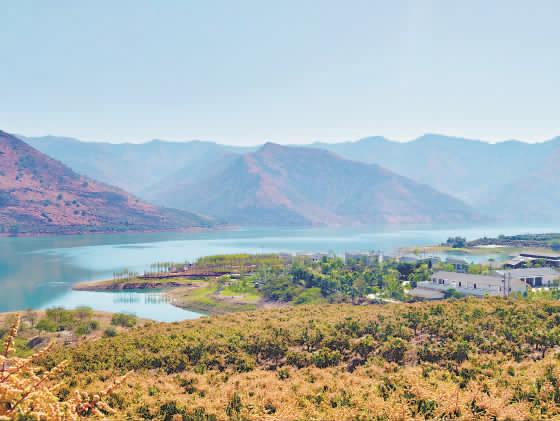
今年上半年,全州12个重点项目平均审批用时较法定时限缩短60%,对6起轻微违法案件免除罚款金额 超过61万元……这是云南省红河哈尼族彝族自治州(以下简称红河州)生态环境局以深入推进"放管 服"改革助力优化营商环境交出的又一张成绩单。 近年来,红河州生态环境局立足主责主业,在采取有效举措推进全州生态环境质量持续改善的同时,积 极探索创新监管方式,扎实推进"放管服"改革,通过深化政策扶持、制度建设和机制创新,全面提升监 管和服务水平,主动为市场主体降门槛、减负担、强帮扶,倾力打造"生态+营商"双优环境,为全州经 济绿色高质量发展提供了有力支撑。 主动降门槛,环境准入持续优化 红河州生态环境局积极拓宽行政执法监管渠道、创新行政执法监管模式,推动涉企行政执法更加规范高 效,实实在在为企业缓解压力、减轻负担。 优化行政执法方式,坚持正面清单管理制度,落实"企业安静期"制度,实施差异化监管。在保持监督执 法方向不变、力度不减的基础上,优先采用非现场检查方式,构建非现场、无感式执法监管体系,减少 对企业正常生产经营活动的干扰。今年以来,运用在线监测、无人机巡查等科技手段开展非现场执法检 查78次。 运用在线监控平台实时掌握 ...
绿色化数字化“两化融合”有哪些路径?
Zhong Guo Huan Jing Bao· 2025-07-15 00:18
Core Viewpoint - The acceleration of green low-carbon transformation is essential to address extreme climate risks and achieve sustainable development in the context of increasing global climate change [1] Group 1: Current Challenges - The integration of green low-carbon development and digital governance is insufficient, with a lack of collaborative mechanisms for digital empowerment in green transformation [2] - Urban green infrastructure lacks intelligent management capabilities, limiting its effectiveness in mitigating heat island effects and providing cooling spaces for citizens [2] - Existing green low-carbon policies lack a systematic evaluation mechanism driven by big data and AI, hindering dynamic adjustments and precise policy implementation [3] Group 2: Recommendations for Integration - Promote deep integration of digital technology and green low-carbon transformation by establishing cross-departmental collaboration mechanisms and integrating data resources across various sectors [5] - Upgrade urban green infrastructure and smart buildings to enhance their resilience and livability during extreme heat events, including the implementation of intelligent monitoring and control systems [6][7] - Improve the policy support and incentive systems for smart green low-carbon initiatives by establishing data-driven evaluation mechanisms and enhancing the digitalization of carbon markets [8] Group 3: Talent Development - Strengthen the talent pool for smart green governance by improving educational programs and fostering collaboration between academia and industry to cultivate professionals with both digital and green low-carbon expertise [8]
我国海洋碳汇工作进展如何?如何进一步推进海洋碳汇核算体系发展?
Zhong Guo Huan Jing Bao· 2025-07-14 23:16
Core Insights - The ocean is recognized as the largest carbon sink on Earth, with significant carbon storage capacity, efficiency, and longevity. The Chinese government has emphasized enhancing ecological carbon sink capabilities, particularly through marine carbon sinks, to support high-quality marine economic development [1][4]. Group 1: Marine Carbon Sink Development - The marine carbon sink primarily consists of coastal ecosystem carbon sinks, fishery carbon sinks, and microbial carbon sinks, with coastal ecosystems like mangroves, seagrass beds, and salt marshes being the most significant [1]. - The establishment of a marine carbon sink accounting system is crucial for assessing the capacity and potential of marine carbon sinks, which will aid in achieving China's carbon peak and carbon neutrality goals while providing a scientific basis for marine carbon trading and enhancing international influence [1][4]. Group 2: International Standards and Methodologies - The international marine carbon sink accounting system is still in development, with the concept of "blue carbon" introduced in 2009, highlighting the role of marine carbon sinks in climate change regulation [2]. - Current international standards focus on coastal ecosystems, with guidelines from the IPCC and methodologies for carbon stock assessment and monitoring established by various organizations [2][3]. Group 3: China's Marine Carbon Sink Initiatives - China has a vast marine carbon sink resource potential, with approximately 3 million square kilometers of jurisdictional sea area and 18,000 kilometers of coastline. The government has initiated various policies to explore marine carbon sink practices since 2012 [4][5]. - The first comprehensive marine carbon sink accounting standard was released in 2022, providing unified technical specifications and guidance for marine carbon sink accounting in China [5]. Group 4: Regional Efforts and Innovations - Local governments have been proactive in developing marine carbon sink standards and practices, with regions like Guangdong and Hainan implementing specific guidelines and pilot projects to enhance marine carbon sink capabilities [6]. - Innovative projects, such as the first marine carbon sink loan and the first fishery carbon sink trading project, have been successfully executed in various provinces, showcasing the practical application of marine carbon sink initiatives [6]. Group 5: Challenges in Marine Carbon Sink Accounting - Despite progress, challenges remain in marine carbon sink accounting, including unclear accounting boundaries, varying carbon storage cycles, and a lack of standardized methodologies [7]. - The scientific understanding of certain marine carbon sink types is still insufficient, which hampers the development of assessment standards and accounting methodologies [7]. Group 6: Future Directions and Recommendations - There is a need to enhance the recognition of marine carbon sinks in national strategies, integrating them with climate change responses and the goal of building a strong marine nation [8]. - Recommendations include improving the marine carbon sink accounting standard system, strengthening scientific research, and fostering international cooperation to establish a unified accounting framework [9][10].
紧扣“履职、规范、公平”三个核心,提升生态环境执法水平
Zhong Guo Huan Jing Bao· 2025-07-14 03:11
Group 1 - Ecological environment law enforcement is crucial for protecting natural resources and promoting green development, yet issues such as inadequate performance and non-standard enforcement hinder effective ecological governance [1] - To enhance law enforcement, a three-pronged mechanism of "responsibility implementation, supervision strengthening, and strict assessment" is proposed, emphasizing proactive engagement from enforcement personnel [1] - The establishment of a dynamic monitoring network for pollution sources using a "smart environmental protection" platform is recommended to ensure real-time oversight of key polluting enterprises and sensitive ecological areas [1] Group 2 - Standardizing ecological environment law enforcement is essential for maintaining public trust and protecting corporate rights, necessitating the creation of a standardized enforcement system [2] - The refinement of the "Ecological Environment Administrative Penalty Discretionary Power Benchmark" is suggested to clarify punishment gradients for different violations, reducing human intervention [2] - Promoting fairness in law enforcement requires dual efforts from both enforcement and corporate entities, including training for enforcement personnel and encouraging companies to invest in environmental protection technologies [2]