
Jing Ji Wang

Search documents
海底捞全国首家臻选店落地北京 锚准精致餐饮
Jing Ji Wang· 2025-08-05 08:45
Core Insights - Haidilao has launched its first premium store in Hanwei Building, focusing on high-quality ingredients and an upscale dining experience [1] - The average customer spending at the premium store is around 500 yuan, indicating a shift towards higher price points in the hot pot market [1][3] - The store features a variety of premium hot pot bases and seafood options, emphasizing quality and freshness [2] Company Overview - The premium store is part of Haidilao's strategy to cater to consumers seeking higher quality dining experiences for special occasions [1][2] - Haidilao has established multiple restaurant brands but has rarely pursued high-end routes until now [3] - The company plans to optimize the premium store model based on consumer feedback and may expand services like private chef offerings in the future [3] Industry Trends - The hot pot industry is experiencing a polarization in pricing, with mid to high-end establishments gaining traction among quality-seeking consumers [3] - There is a growing demand for customized and ceremonial dining experiences, particularly among younger and family consumer groups [2][3]

中国资产吸引国际资本增配
Jing Ji Wang· 2025-08-05 05:48
Group 1 - Recent trends show a surge in international capital reallocating towards Chinese assets, with nearly 60% of sovereign wealth funds prioritizing China as an investment market [1][2] - The Korean stock market has seen significant interest from investors, with a cumulative trading volume of $57.64 billion in Chinese stocks, making it the second-largest overseas investment destination for Korean investors [2] - UBS's survey indicates that 19% of global family offices plan to increase their allocation to Chinese assets, reflecting a 3% increase from 2024 [2] Group 2 - In July, five major overseas Chinese stock ETFs attracted over $2 billion in investments, with notable growth in assets for KraneShares and iShares ETFs [3] - Sovereign wealth funds are driven to allocate to Chinese assets due to attractive local returns, diversification benefits, and expanded market access for foreign investors [3] Group 3 - The Chinese economy's recovery has exceeded market expectations, bolstered by rapid policy responses to stabilize and stimulate growth, enhancing international investor confidence [4] - China has made significant advancements in technology and innovation, leading to a re-evaluation of asset valuations by international investors [4] Group 4 - As of August 1, four A-share stocks have over 24% foreign ownership, indicating strong interest from international investors in high-quality manufacturing sectors [5] - Foreign investors are selectively targeting growth stocks based on three core criteria: competitive barriers, sustainable growth trajectories, and expanding market shares [6] Group 5 - Foreign capital is favoring high-dividend stocks and growth stocks, reflecting a dual strategy of defensive and offensive investment approaches [7] - High-dividend stocks are recognized for their stable cash flows and strong governance, while growth stocks represent long-term bets on China's economic transformation [8]
多家银行信用卡业务“瘦身”
Jing Ji Wang· 2025-08-05 05:48
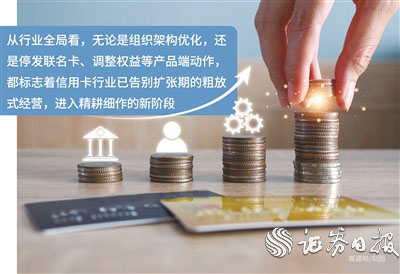
Core Insights - The domestic credit card market is undergoing significant changes, including reduced benefits, discontinuation of certain products, and closure of credit card centers, indicating a transformation trend in the industry [2][4]. Group 1: Adjustments in Credit Card Benefits - Several banks, including China Merchants Bank and Everbright Bank, have announced adjustments to high-end credit card benefits, focusing on increasing usage thresholds, modifying point accumulation rules, and reducing high-cost benefits [3][4]. - Specific changes include the adjustment of the annual fee waiver rules for credit cards, with new conditions requiring higher spending to qualify for fee waivers [3]. Group 2: Product Discontinuation - Many banks, such as Agricultural Bank of China and Postal Savings Bank, have stopped issuing certain credit card products, particularly co-branded cards in sectors like aviation and e-commerce, citing business strategy adjustments and service quality improvements [4][5]. Group 3: Shift in Business Strategy - The credit card industry is transitioning from an expansion-focused model to a more refined approach, emphasizing value creation and customer-centric strategies [5][6]. - The market environment and internal banking needs are driving this shift, with banks focusing on optimizing operations and enhancing customer engagement through tailored offerings [6][7]. Group 4: Future Development Directions - Future strategies will focus on deepening customer value, particularly for high-net-worth individuals, by creating tiered benefit systems and integrating various financial services [7]. - The industry is moving towards a model that prioritizes quality over quantity, aiming to enhance customer retention and profitability through comprehensive financial service offerings [7].







金融圈重塑行业竞争链
Jing Ji Wang· 2025-08-05 05:48
Core Viewpoint - The financial industry is facing a significant challenge of "involution," characterized by price wars and homogeneous competition, necessitating a shift towards quality and innovation to escape the current predicament [1][2][3]. Group 1: Involution and Competition - Involution in the financial sector is defined as irrational price competition that sacrifices product quality and service to gain market share, leading to a low-level repetitive competition and a lack of high-quality supply [2][3][5]. - Regulatory bodies are increasingly addressing involution through negative lists and self-regulatory agreements to curb unfair competition practices [2][10]. - The competition is marked by severe price wars, with institutions frequently undercutting each other on loan rates and insurance premiums, which compresses profit margins and accumulates industry risks [2][4][6]. Group 2: Structural Issues - Many financial institutions are overly focused on scale and rankings, neglecting risk management and long-term value creation, resulting in a "land grab" mentality [3][6]. - The lack of innovation and differentiation in products has led to a homogenization of offerings, where most banks and insurance companies provide similar products with minimal differentiation [6][7]. - The performance evaluation metrics within institutions often emphasize short-term growth, leading to a focus on quantity over quality, which hinders strategic transformation [6][9]. Group 3: Regulatory and Industry Responses - Experts suggest that regulatory authorities should enhance negative lists and establish clear regulatory boundaries to combat malicious price wars and false advertising [9][10]. - Financial institutions are encouraged to focus on technological and business model innovations, aiming for differentiated services in areas like inclusive finance, green finance, and digital finance [9][10]. - The industry is urged to adjust performance evaluation structures to prioritize long-term value creation, risk management, and customer satisfaction over short-term scale expansion [9][10]. Group 4: Future Directions - To break the cycle of involution, financial institutions must create value through differentiated positioning and innovative supply, transitioning from price competition to value competition [8][9]. - There is a call for a multi-dimensional supply system and enhanced service frameworks to address the challenges of homogenization and improve overall industry health [8][9]. - The recent regulatory actions, such as setting a 3% interest rate floor for consumer loans, aim to eliminate previous practices that masked true investment capabilities, promoting genuine competition based on actual performance [11].
贷款贴息政策惠企利民
Jing Ji Wang· 2025-08-05 05:48
Core Viewpoint - The implementation of personal consumption loan interest subsidy policy and service industry loan interest subsidy policy aims to stimulate domestic demand and enhance market vitality through financial support [1][5]. Group 1: Policy Implementation - Multiple banks are rapidly implementing the interest subsidy policy to lower consumer credit costs and encourage spending [2][3]. - The policy is designed to simplify application processes and enhance compliance to ensure effective delivery to consumers and service industry entities [2][3][4]. Group 2: Financial Support for Businesses - The interest subsidy policy is expected to reduce financing costs for service industry entities, encouraging them to offer better products and services [1][5]. - Banks like Agricultural Bank and Ping An Bank have reported quick loan approvals to individual businesses, demonstrating the policy's immediate impact [2][4]. Group 3: Interest Rate Reductions - Under the new policy, banks can offer interest rates as low as 3% for high-quality clients, significantly lowering loan costs for both individual consumers and small businesses [4][5]. - The policy aims to stimulate consumption by making credit more accessible and affordable [5][6]. Group 4: Risk Management and Compliance - Banks are advised to ensure that funds are used appropriately, with strict monitoring of loan purposes to maintain compliance with the subsidy policy [6][7]. - Financial institutions are encouraged to establish transparent processes for tracking loan issuance and subsidy applications [7].




新航海计划破浪前行 中国制造网织就全球贸易新图景
Jing Ji Wang· 2025-08-04 09:19
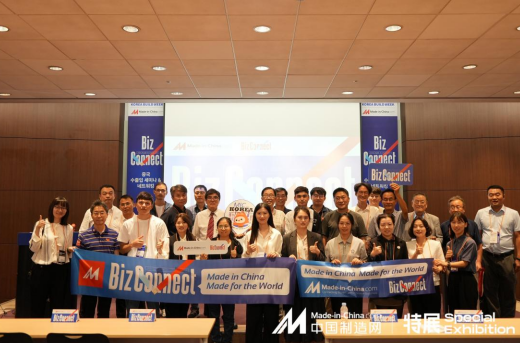
Core Insights - MIC International Station (MIC) successfully participated in the Korea Build Week and the Malaysia International Food and Beverage Trade Fair, enhancing its "New Maritime Plan" for diversified market expansion [1][6] Group 1: New Maritime Plan - Launched in April, the "New Maritime Plan" focuses on diversified international market strategies, supporting Chinese suppliers in emerging markets through resource investment and targeted operations [2][8] - The plan has led to a 44% year-on-year increase in platform traffic in Q2, with regions like the Middle East, Latin America, Africa, South Asia, and Europe seeing over 50% growth [7] Group 2: Trade Shows and Events - At the Korea Build Week, MIC organized a "Business Chain" event, facilitating over 100 buyers' participation and showcasing six exhibitors, which resulted in high engagement and potential client connections [4] - The Malaysia International Food and Beverage Trade Fair featured a dedicated "Chinese Food Machinery Zone," attracting significant attention, including a visit from the Deputy Minister of Agriculture and Agro-Based Industry [6] Group 3: Industry Support and Growth - A special fund of 150 million yuan has been established to support light industry products affected by tariff barriers, focusing on ten key sectors [7] - Notable increases in traffic for light industry categories were reported, with computer products, gift boxes, and consumer electronics seeing year-on-year growth rates of 108%, 97%, and 66% respectively [7] Group 4: Future Plans - MIC plans to accelerate its multi-market strategy with the launch of the "Golden Autumn Trade Fair" and participation in major industry exhibitions in Dubai, aiming to deepen its presence in the rapidly growing Middle Eastern market [8]
科技点亮夜经济,绿色照明助力城市“双碳”目标
Jing Ji Wang· 2025-08-04 09:19
Core Viewpoint - The development of the night economy in cities is being supported by innovative technologies that promote energy efficiency and low-carbon development, exemplified by the advancements made by Beijing Xingguang Yuhua Optoelectronic Technology Co., Ltd. [1][3] Group 1: Night Economy and Urban Lighting - The night economy has transformed from a "sunset to rest" model to a "24-hour operation" model, increasing the demand for urban lighting systems [1] - Traditional lighting systems are high in energy consumption and have short lifespans, which hinders the development of the night economy and the achievement of urban carbon neutrality goals [1] - The fifth-generation DC LED lighting technology developed by Xingguang Yuhua injects green energy into urban nights by optimizing power management, improving light efficiency, and implementing smart control algorithms [1] Group 2: Energy Efficiency and Environmental Impact - The new lighting technology achieves over 77% energy savings compared to traditional high-pressure sodium lamps and improves energy efficiency by over 50% compared to the fourth-generation LED streetlights [1] - The lifespan of the new lighting fixtures is extended to 2-3 times that of traditional products, reducing maintenance costs and resource waste [1] - Pilot projects across various regions have demonstrated significant energy savings and carbon emission reductions, with one project in Beijing expected to save 15.55 million KWh annually, equivalent to a reduction of approximately 15,000 tons of carbon emissions [2] Group 3: Innovative Business Model - Xingguang Yuhua employs an "energy cost management + social capital cooperation" model, where social capital covers all construction costs while the company handles design, upgrades, and operations [2] - This model alleviates financial pressure on the government and encourages social capital participation, successfully addressing traditional funding challenges in projects [2] - The technology has been promoted in nearly 100 cities across various applications, with potential annual energy savings exceeding 1 billion KWh and a reduction of over 1 million tons of CO2 emissions if scaled nationwide [2] Group 4: Company Mission and Future Plans - The company is committed to "empowering green lighting through technology," aiming to illuminate urban nights while supporting low-carbon transitions [3] - Plans include completing the renovation of 5,000 kilometers of roads within three years and enhancing energy utilization through supporting systems like energy storage and roadside charging stations [2]
江淮1van全系列全场景全价值新品上市
Jing Ji Wang· 2025-08-04 07:14
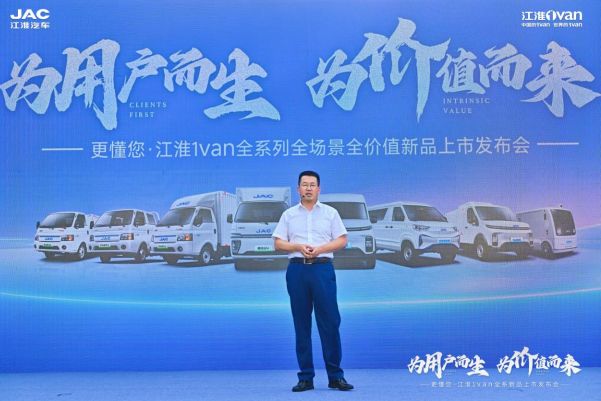
7月30日,更懂您·江淮1van全系列全场景全价值新品上市发布会在安徽合肥举行。活动现场,卡系 +VAN系+无人系三大系列新能源产品亮相,以全系列全场景全价值新能源物流解决方案,赋能用户价 值跃升,致力成为新一代智慧物流引领者。 据介绍,卡系产品分为恺达EX6和恺达U7两大系列,分别覆盖城市低频重载和城际高频重载场 景,栏板/厢体、单排/排半/双排、冷藏全覆盖,21项行业率先应用。其中,恺达EX6定位超值纯电小 卡,拥有重载版、双排作业版、平台定制版、地库厢车版以及冷链运输版,堪称城市重载首选;恺达 U7定位全新一代纯电高端轿卡,高端配送版空间、承载、续航、舒适全面领先,助力用户多拉多赚、E 路无忧、悦享旅途! 为用户而生 为价值而来 发布会活动现场 近年来,商用车市场正经历结构性变革,双循环、新能源驱动的市场变革重塑物流产业格局。凭借 成本、政策等优势,新能源物流车迎来黄金发展期。江淮1van顺势而为,为用户而生,为更高价值而 来,懂趋势、懂需求、懂创新,通过"市场、用户、技术、合作"四大路径,推动绿色物流发展,引领新 能源商用车产业升级。 在掌握了底盘关键科技技术之后,江淮1van坚持全新正向研发,以技术 ...

小兴趣激活大市场 直播电商助力实体经济新增长
Jing Ji Wang· 2025-08-04 06:33
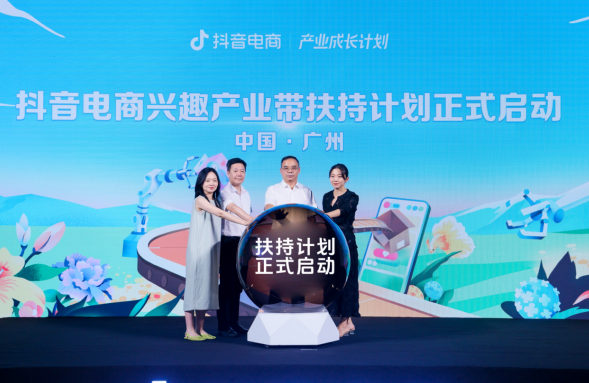
Core Insights - Douyin E-commerce launched the "Interest Industry Belt Support Plan" in Guangzhou, marking a significant step in integrating digital economy with the real economy, aimed at fostering new consumption dynamics and driving industrial upgrades [1][6] Group 1: Interest Consumption Rise - The concept of "Interest Industry Belt" refers to geographic clusters of products that fulfill consumers' emotional and spiritual needs, characterized by niche, cultural, and social aspects [3] - In the past year, five interest industry belts on live-streaming e-commerce platforms achieved a payment GMV exceeding 10 billion, with 57 belts surpassing 100 million, and Guangzhou's related order volume exceeding 340 million [3] Group 2: Digital Empowerment and Upgrading - The growth of interest industry belts is facilitated by live-streaming e-commerce platforms, which have lowered operational barriers for small and medium-sized businesses through policies like zero-cost entry and zero-commission on product cards [4] - The complete industry chain for the Guangzhou water pet industry belt includes "pet breeding + equipment maintenance + knowledge payment," showcasing a successful transition from traditional offline models to online integration [4] Group 3: Building a Guangzhou Model - Guangzhou has been designated as a key area for pet consumption, with Douyin E-commerce providing services such as traffic subsidies and operational training to stimulate local industry vitality [6] - Douyin E-commerce's initiatives have reached 130 cities across 27 provinces, helping 332 industry belts achieve order volumes exceeding 10 million and 830 belts with sales over 100 million [6] Group 4: Economic Growth through Interest Consumption - Interest consumption is identified as a crucial direction for consumption upgrade, transforming niche interests into new growth for the real economy [7] - The ongoing implementation of the "Interest Industry Belt Support Plan" is expected to deepen the integration of digital and real economies, contributing to the construction of a new development pattern and fostering new productive forces [7]
苹果“掉队”?
Jing Ji Wang· 2025-08-04 02:55
深入剖析苹果"掉队"根源,内部技术路线分歧是关键。公司内部长期存在两股力量的角力:一方致力于 探索通用人工智能(AGI)的"超级智能"愿景,追求科技突破;另一方则聚焦文本摘要、图像生成等实 用功能的快速落地。这种战略内耗导致决策低效与关键机遇错失。例如,早在2022年,苹果团队就已构 建起好几个大语言模型,却因公司高层质疑"实用性不足"而被搁置,错失先机。伴随战略摇摆而来的是 核心人才流失,OpenAI、Anthropic等新锐企业不断"挖角"苹果顶尖人才。 2025年,全球人工智能(AI)竞技场浪潮奔涌。微软、谷歌、亚马逊等科技巨头以及中国领军企业百 度、华为等,纷纷重金布局这场技术革命。然而,曾以颠覆性创新引领行业发展的苹果,近年来却异常 沉寂,显露出"掉队"迹象。 资本市场的风向标清晰可见。截至7月25日,凭借在AI算力芯片上的强势表现,英伟达以4.24万亿美元 市值登顶全球,微软以3.8万亿美元紧随其后。而昔日的行业王者苹果,市值已滑落至3.19万亿美元,与 英伟达的差距高达万亿美元。这一数字变化,不仅反映了资本的选择,更折射出AI时代产业格局的深 刻变革。 回望过去,苹果曾是AI领域的先行者。201 ...
