
3 6 Ke

Search documents
5万+品牌在用,平台的AI电商杀疯了
3 6 Ke· 2026-02-10 09:40
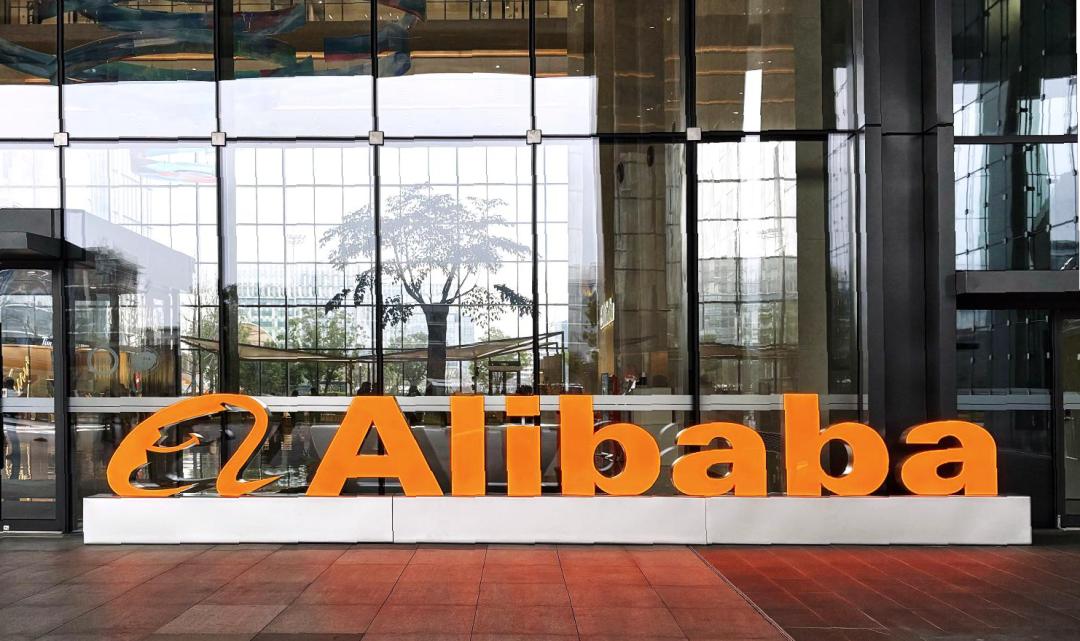
Core Insights - The AI competition during the Spring Festival has begun, with major internet companies heavily investing in AI technologies and initiatives to attract users and enhance their platforms [1][22] - Tencent, Alibaba, and other companies are launching various AI tools and services aimed at improving efficiency and reducing costs for merchants [2][5][21] Group 1: Major Investments and Initiatives - Tencent has announced a cash giveaway of 10 billion yuan through its app, aiming to replicate the success of past WeChat red envelopes [1] - Alibaba has committed over 380 billion yuan in the next three years to build cloud and AI hardware infrastructure [1] - Other companies like JD.com, Xiaohongshu, Kuaishou, and Meituan are also investing in AI capabilities [1] Group 2: AI Tools for Merchants - Alibaba's "Wangxiangtai AI Wujie" was launched to provide insights and strategies for merchants, helping them match product features with consumer needs [4][5] - JD.com has introduced a one-stop AI service center to enhance customer service and after-sales efficiency for merchants [5] - Meituan has released the AI management assistant "Huaxiaoniu" to improve various operational aspects for merchants [5] Group 3: Digital Humans and Live Streaming - The digital human market in China is projected to grow significantly, with a market size of approximately 4.12 billion yuan in 2024, reflecting an 85.3% increase from 2023 [6] - JD.com's digital human "Cai Xiao Dong Ge" achieved over 50 million yuan in sales during its first live stream, showcasing the effectiveness of digital humans in driving sales [7][9] - Kuaishou's digital human platform has also shown promising results, with merchants reporting significant sales increases after utilizing digital human live streaming [6] Group 4: AI Search and Apps - Major platforms like Taobao, JD.com, and Douyin have integrated AI search capabilities, enhancing user experience by providing tailored solutions [10][11] - JD.com has launched the AI shopping app "JD AI Purchase," which combines various services and aims to create a new shopping and service entry point [12][16] - The active user base for AI comprehensive assistant apps has reached 6.5 million, indicating a growing trend in AI-assisted applications [21] Group 5: AI Social Features - Tencent's "Yuanbao" has introduced the "Yuanbao Club," allowing users to engage in AI social interactions, enhancing user retention [20] - JD.com's "Ta Ta Ta" app also features AI social functionalities, enabling users to create personalized AI agents for social sharing [20] - The integration of AI social features is expected to increase user engagement and application stickiness [21]


在千问30亿请喝奶茶时,Kimi悄悄在海外干了件大事
3 6 Ke· 2026-02-10 09:38
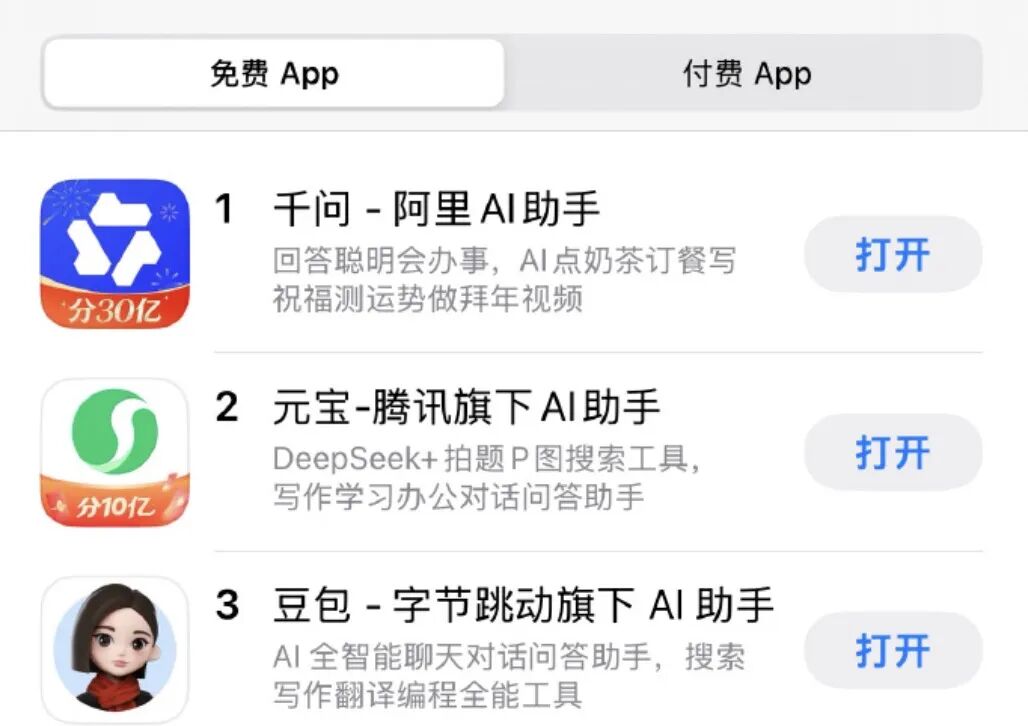
Core Insights - The article highlights the rapid evolution of AI from a futuristic concept to a practical tool for generating income, particularly through competitive strategies in the market [1]. Group 1: Competitive Landscape - Tencent's Yuanbao and Alibaba's Qianwen are engaging in aggressive marketing strategies, with Yuanbao offering low-value rewards and Qianwen providing substantial subsidies, including 3 billion yuan in cash and significant discounts [3][4]. - The competition has led to a reshuffling of rankings among AI applications, with Kimi being adversely affected despite its strong technical positioning [4][5]. - Kimi has shifted its focus from the crowded C-end chatbot market to the less competitive Agent direction, aiming to leverage its strengths in stability and performance [5][6]. Group 2: Product Development and Performance - Kimi's K2.5 version has shown improved stability in handling long texts and complex logic, making it suitable for engineering deployments [6][8]. - The model's ability to maintain memory stability over extended conversations has garnered attention from overseas developers, particularly in the context of the OpenClaw automation framework [8][11]. - Kimi has been recommended as a preferred model within the OpenClaw ecosystem, leading to increased global exposure and usage [11][12]. Group 3: Financial Position and Market Perception - Kimi's CEO disclosed that the company has nearly 10 billion yuan in liquid assets following a successful funding round, positioning it favorably compared to competitors facing significant losses [15][16]. - The substantial cash reserves allow Kimi to operate without immediate pressure to go public, contrasting with many AI startups struggling financially [16][22]. - Despite its strong financial position, Kimi faces challenges in scaling due to a shortage of computing resources, which could hinder its growth against larger competitors [23][26]. Group 4: Future Outlook and Challenges - The article raises concerns about Kimi's ability to maintain its competitive edge as larger companies may shift their focus to the Agent market, potentially overshadowing Kimi's advancements [28][30]. - Kimi's past experiences indicate that initial advantages can be quickly neutralized by larger players, raising questions about its long-term sustainability in the evolving AI landscape [30][31].
ChatGPT的第一块广告位,被谁买走了?OpenAI:别骂,我们这次所有底线都招了
3 6 Ke· 2026-02-10 09:11
Core Insights - OpenAI has announced the introduction of advertisements in its ChatGPT platform, which will appear at the bottom of responses for free and Go subscription users, while Plus, Pro, business, and educational users will not see ads [1][10] - The company aims to use ad revenue to support the infrastructure and operational costs of free and low-cost services, ensuring broader access to AI technology [10][12] - OpenAI emphasizes that ads will not affect the quality of responses and will be clearly distinguished from the content generated by the AI [1][5] Advertising Implementation - Ads will be tested primarily for free and Go subscription users, with a monthly fee of at least $20 required to avoid ads entirely [1][10] - OpenAI's CEO Sam Altman indicated that the monthly growth rate of ChatGPT has returned to over 10% and that an updated chat model will be deployed soon [3] - The company has established high standards for advertising, ensuring that ads are relevant, useful, and do not compromise user privacy [5][6] User Experience and Privacy - OpenAI has set principles to maintain user trust, including keeping ads separate from AI responses, ensuring privacy in conversations, and allowing users to control ad personalization [5][7] - Users will have the option to provide feedback on ads and can disable personalized ad settings, ensuring that sensitive topics are not targeted by ads [10][12] - The company aims to balance profitability with user experience, learning from early user feedback during the testing phase [10][12] Competitive Landscape - Other companies, such as Adobe and Target, have begun to announce their participation in the ad testing phase, indicating a potential shift in the AI industry's approach to monetization [12][13] - Competitors like Anthropic have committed to not using ads, highlighting differing business models within the AI sector [12][13] - OpenAI's approach may influence how other AI companies consider integrating advertising into their platforms in the future [12][13]

一条不存在的 AI 耳机广告,为什么惊动 OpenAI 总裁?
3 6 Ke· 2026-02-10 09:03
Core Viewpoint - OpenAI is facing a wave of speculation and interest regarding its upcoming hardware products, particularly after a fake advertisement incident that generated significant attention on social media [1][2][5]. Group 1: Fake Advertisement Incident - A Reddit user claiming to be an OpenAI employee leaked a video of a supposed advertisement for OpenAI's first hardware product, which was later dismissed by OpenAI as "fake news" [2][3]. - The video featured a sleek device and a man wearing open-ear headphones, leading to widespread sharing and discussion online [2][5]. - The quality of the video raised suspicions among some users, suggesting it was too polished to be AI-generated [3]. Group 2: OpenAI's Hardware Development - OpenAI is reportedly working on its first hardware product, with plans to unveil it later this year, involving a team that includes members from Apple's hardware division [7][9]. - The company has engaged with manufacturers like Foxconn and Luxshare Precision for assembly, although it prefers to assemble the product outside of China [9][21]. - The hardware is expected to be simple and innovative, with at least two products in development: a headset and a pen [9][10]. Group 3: Product Details and Features - The headset, referred to as "DIME," is designed to be a simplified audio device that may allow voice interaction with iPhone's Siri and other functionalities [9][13]. - The pen, internally called "Gumdrop," is speculated to have capabilities for context-aware operations, including converting handwritten notes to text and interacting with ChatGPT [13][17]. - Both devices are expected to prioritize voice interaction, with OpenAI aiming to enhance its audio AI models to match the performance of its text models [19]. Group 4: Market Position and Future Plans - OpenAI's approach to hardware development appears cautious, focusing on gradual product introduction rather than aggressive competition with established players like Apple [22]. - The company is also exploring additional product categories, including smart glasses and smart speakers, indicating a broader vision for its hardware ecosystem [19][22]. - OpenAI's reputation and the buzz surrounding its products suggest that its hardware launches could significantly impact the market and consumer interest [22].

创·问|奥哲徐平俊:企业级AI落地,难的不只是技术
3 6 Ke· 2026-02-10 08:55
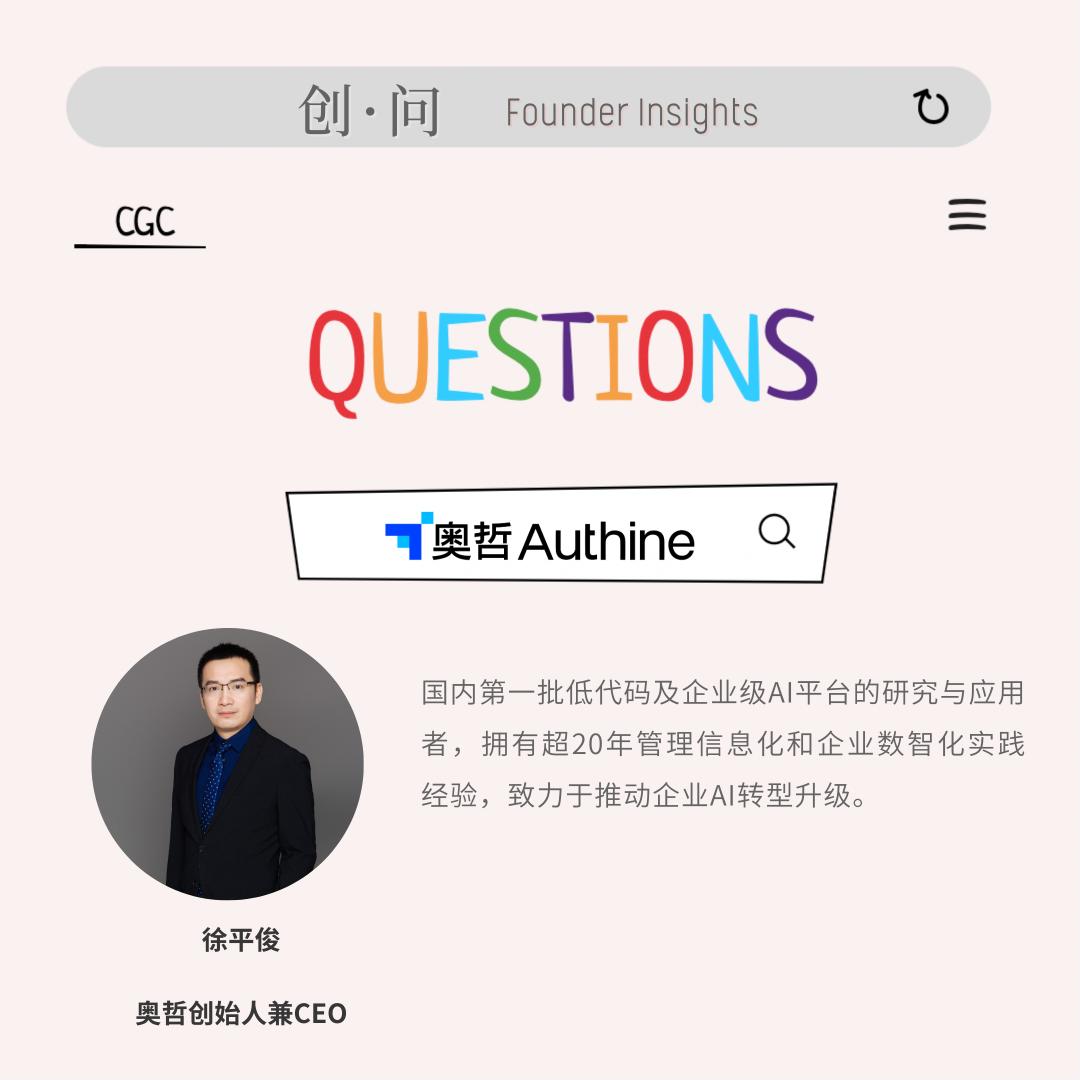
Core Insights - The article discusses the characteristics of successful companies and individuals, focusing on the insights from Xu Pingjun, the founder and CEO of AoZhe, a leading enterprise digitalization service provider in China [1][5]. Group 1: Company Overview - AoZhe is dedicated to helping enterprises achieve digital and intelligent transformation through low-code and enterprise-level AI platform products and solutions, having served over 200,000 enterprise users, including 60% of China's top 500 companies [1][5]. - The company transitioned from being a low-code platform to an enterprise-level AI platform, leveraging over a decade of industry experience to bridge the gap between technology proliferation and practical implementation [5][16]. Group 2: AI Implementation Challenges - Xu Pingjun notes that while there is a growing interest in AI applications among enterprises, many struggle to identify valuable business scenarios for implementation, indicating that the challenge lies not in technology but in recognizing worthwhile applications [3][10]. - The main challenges in AI implementation include determining the required precision for specific scenarios and the associated costs, which can be significant if aiming for high accuracy [11][12]. Group 3: Solutions Offered by AoZhe - AoZhe addresses these challenges by using low-code for data governance, providing insights through machine learning, and ensuring that AI applications are well-integrated with existing enterprise systems [18][19]. - The company emphasizes the importance of understanding enterprise data structures to enhance AI accuracy and effectiveness, moving beyond mere data organization [19][20]. Group 4: Market Trends and Opportunities - The demand for AI integration is increasing, with existing clients seeking to enhance traditional processes with AI capabilities, such as transforming contract management into intelligent contract management [21][22]. - New market opportunities are emerging as companies recognize the potential of AI to streamline operations and improve decision-making, even among those who previously did not engage with AoZhe's services [21][23]. Group 5: Future Outlook - Xu Pingjun believes that many enterprises, especially small and medium-sized ones, can leap directly into the AI era without going through traditional digitalization stages, indicating a significant shift in how businesses approach technology [23][24]. - The company aims to become an AI-native organization and assist clients in achieving the same, with ongoing internal training and the integration of AI across various departments [26][27].
瑞士工程科技公司Lightium研发量产级薄膜铌酸锂光子芯片代工服务,实现光子芯片规模化量产 | 瑞士创新100强
3 6 Ke· 2026-02-10 08:55
Core Insights - Lightium, a Swiss engineering technology company founded in 2023, specializes in providing mass production-level thin-film lithium niobate photonic chip foundry services, aiming to meet the growing demand for high-speed, low-energy data interconnects in data centers and telecommunications [2][6] Company Overview - Lightium was co-founded by Amir Ghadimi, Frédéric Loizeau, and Dirk Englund, with Ghadimi serving as CEO and having a PhD in Electrical and Electronic Engineering from ETH Zurich [2] - The company has developed proprietary manufacturing processes for mass production of thin-film lithium niobate chips, making it the first production-level foundry of its kind in Europe [7] Industry Context - The rapid development of AI and products like ChatGPT has led to an explosion in data volume, with data center processing expected to increase 100-fold by 2030, consuming 10% of global electricity [4] - Current semiconductor-based interconnect technologies face significant challenges beyond 800 Gb/s, reaching physical limits in material performance, necessitating the demand for alternative materials with superior electro-optical properties [4][6] Product Capabilities - Thin-film lithium niobate can achieve data transmission rates of 1.6 Tb/s and 3.2 Tb/s while reducing environmental impact and costs, requiring less lithium material compared to bulk lithium niobate [6][8] - Lightium's production capabilities include a bandwidth greater than 100 GHz and stable operation at low voltages, with a wide transparent window covering 350–5,500 nm [8] Market Applications - The primary application areas for Lightium's services are telecommunications and data center communications, which require higher bandwidth and lower power consumption [8] - Future expansion plans include applications in satellite communications, quantum computing, new optical computing architectures, and lidar [8] Funding and Recognition - In September 2024, Lightium completed a $7 million seed funding round led by Vsquared Ventures and Lakestar, aimed at accelerating the commercialization of its thin-film lithium niobate foundry services [9] - Lightium was recognized in the 2025 TOP100 Swiss Startups list, highlighting its innovative potential and market prospects in the Swiss technology landscape [11]

年轻人探索赛博一代身份认同,知乎发起同类识别活动
3 6 Ke· 2026-02-10 08:51
Group 1 - The article discusses the evolution of the younger generation into a new species characterized as "carbon-based life forms with silicon-based souls," referred to as the "Cyber Generation" [1] - It highlights the reliance on AI for decision-making and the use of digital companionship, such as "electronic pickles" and "cloud pet-raising," as a response to loneliness [1] - The article encourages participation in a challenge on Zhihu, aiming to create a sense of community and shared identity among individuals in the cyber world [1] Group 2 - The term "AI flavor" is mentioned, indicating a growing awareness and recognition of AI's influence in various aspects of life [3] - The concept of "identity verification" is introduced, suggesting a trend towards establishing authenticity within social circles [5] - The article features various individuals from different fields, emphasizing the diverse interests and identities within the Cyber Generation [7]


数据解读:胖东来、淘小胖、鲜风生活自有品牌哪家强?
3 6 Ke· 2026-02-10 08:20
Core Insights - The trend of private label brands is rapidly growing in China, with the share of private labels in supermarkets increasing from less than 5% to 8% in just two years, and expected to exceed 10% in the next two years [2] - Key players in the private label market include Pang Donglai, Tao Xiaopang, and Xianfeng Life, each showcasing unique advantages in their private label strategies [2] Group 1: Company Performance - Pang Donglai has developed 52 categories with 257 SKUs, demonstrating deep penetration in existing categories with an average of 4.94 SKUs per category [4] - Tao Xiaopang leads in category breadth with 84 categories and 227 SKUs, indicating a strategy focused on wide-ranging product offerings [4] - Xianfeng Life has a more cautious approach with 30 categories and 55 SKUs, reflecting a steady and careful development strategy [4] Group 2: Sales Performance - In the top 10 sales categories for private labels, Pang Donglai's products have achieved significant sales shares, indicating strong brand trust among consumers [10] - Notable categories include non-refrigerated fruit juice and laundry detergent, where Pang Donglai and Tao Xiaopang have excelled, with Pang Donglai's laundry detergent achieving a sales share of 12.43% [11][10] - Tao Xiaopang's organic and high-quality milk products have found a niche in the market, offering competitive pricing against established brands [11] Group 3: Strategic Positioning - Pang Donglai's private label products have moved beyond price competition, focusing on brand trust and quality, as evidenced by their pricing strategy [14] - Tao Xiaopang emphasizes value for money, with competitive pricing that supports its market expansion strategy [14] - Xianfeng Life's products are positioned in smaller categories, aligning with its cautious development approach and focus on quality [15] Group 4: Market Potential - The average share of private labels in supermarkets in Japan and South Korea is 20-25%, while in Europe and the US, it can reach 40-60%, indicating significant growth potential for China's retail sector [17]

爱芯元智登陆港交所,卡位边缘AI 万亿蓝海
3 6 Ke· 2026-02-10 08:04
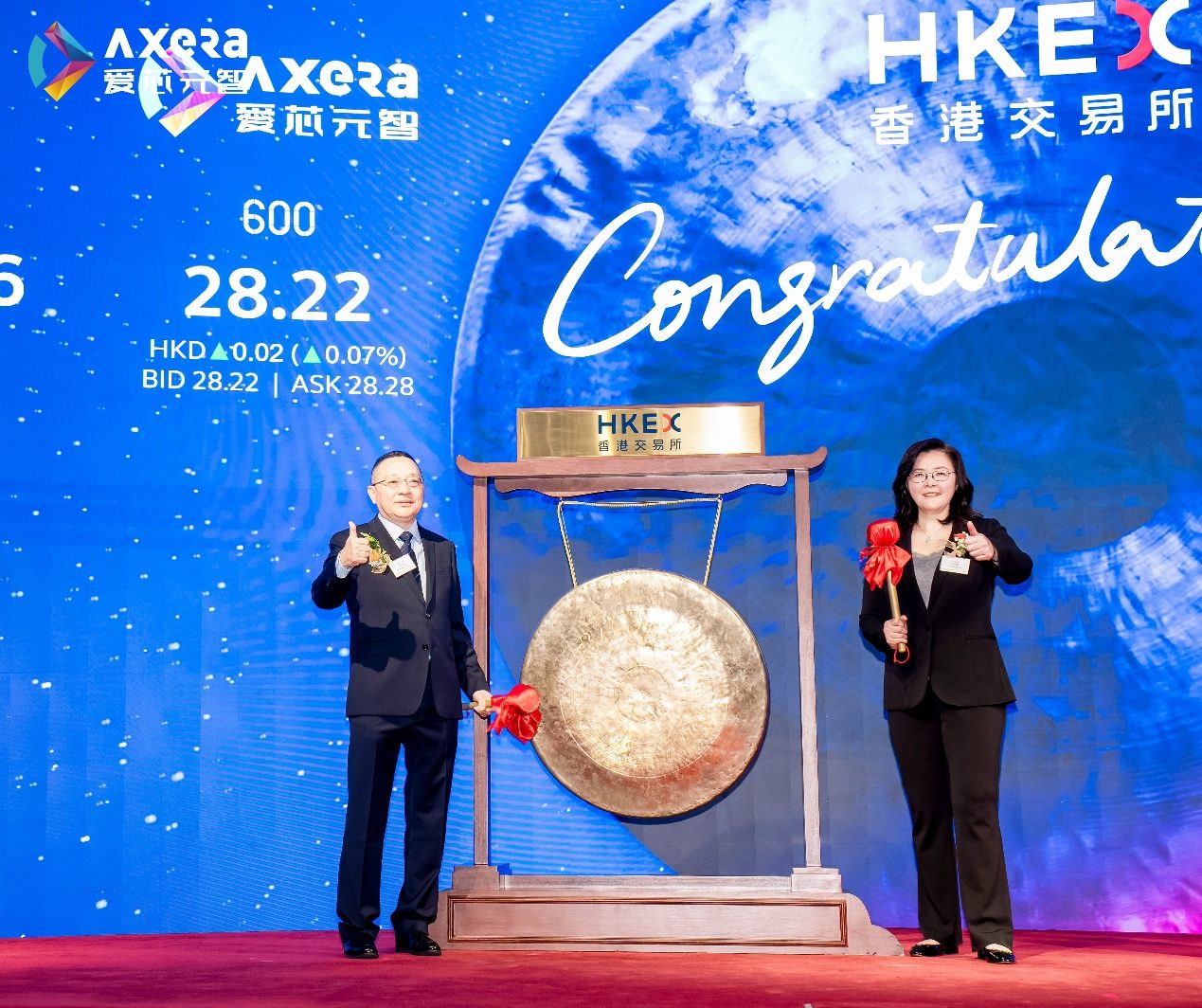
Core Insights - Aixin Yuanzhi has become the first Chinese edge AI chip company to be listed on the Hong Kong Stock Exchange, with an opening price of HKD 28.2 and a market capitalization of HKD 16.6 billion, reflecting strong market recognition of its growth potential [2] - The company is positioned in a rapidly growing market driven by the shift towards physical AI, which requires efficient edge computing solutions to handle real-time data processing [3][4] - The global market for edge inference and edge AI chips is projected to grow from RMB 379.3 billion in 2024 to RMB 1,612.3 billion by 2030, with a CAGR of 27% [7] Market Dynamics - The transition to physical AI is creating a significant market opportunity, as traditional cloud-based solutions face limitations in real-time applications [4][5] - The demand for edge AI chips is increasing due to the need for low-latency processing and reduced bandwidth requirements, which are critical for applications like autonomous driving and smart devices [4][5] Company Positioning - Aixin Yuanzhi is one of the few companies achieving large-scale shipments in the edge AI chip sector, with a strong focus on integrating perception, computation, and execution in its products [5][12] - The company has developed proprietary technologies that enhance the performance of its chips in challenging environments, ensuring high precision and low power consumption [12][14] Financial Performance - The company's revenue is expected to grow significantly, from RMB 50 million in 2022 to RMB 470 million in 2024, reflecting a CAGR of 207% [20] - Aixin Yuanzhi's product matrix includes terminal computing, smart automotive, and edge AI inference, with a cumulative shipment of over 157 million terminal computing SoCs [22] Growth Drivers - The company has established itself as a leading supplier in the visual edge AI chip market, holding a 24.1% market share in the competitive mid-to-high-end segment [22] - Aixin Yuanzhi's smart automotive SoCs have entered commercial applications, positioning the company as the second-largest domestic supplier in China [23] Future Outlook - The company is well-positioned to capitalize on the growing demand for edge AI solutions, with a focus on expanding its market presence and enhancing its product offerings [28][29] - Aixin Yuanzhi's strong R&D capabilities and strategic partnerships are expected to drive future growth and profitability, as it aims to leverage the ongoing industry trends towards physical AI [30][29]
顺丰发布2亿元春季增收计划,覆盖全部快递员
3 6 Ke· 2026-02-10 07:24
Core Insights - SF Express has launched a "Spring Income Increase" initiative aimed at frontline employees, investing 200 million yuan to enhance the income of couriers by approximately 500 yuan on average [1] Group 1: Initiative Details - The income increase plan will last for three months and will cover all frontline couriers nationwide [1] - The additional income will be distributed directly in the form of subsidies calculated per delivery [1] - This initiative marks the first nationwide income increase program for couriers in the industry [1] Group 2: Future Plans - SF Express has indicated that it will continue to introduce income increase plans for frontline couriers in the future [1]
