Tai Mei Ti A P P

Search documents
想教育消费者的百果园,自己要小心被趋势甩下车
Tai Mei Ti A P P· 2025-08-13 00:11
对于相关言论所带来的舆论风波,百果园相关负责人表示,该短视频有意截取了董事长发言最具争议的 部分制造对立,"完整的内容有前因后果,并非文中断章取义"。 然而,这一事件折射出的当下消费零售公司与用户之间的认知冲突,却具有这个时代特有的标本意义。 市值大幅缩水 事实上,百果园对于如今严峻的价格压力,并非毫无感知。在如今这个追求性价比的市场环境下,百果 园遭受着极大的经营压力,也曾经努力进行过调整。 2023年1月,头顶"中国水果连锁零售第一股"光环的百果园在港交所成功上市。不过,从近几年的财报 数据可以看出,产业作为一门,想要在水果零售这个长链条、高损耗、高成本的微利生意中赚到钱,并 不是一件容易的事。 对于好水果的价格,大家吵成了一片。 "百果园这么多年来都走在一个教育消费者成熟的路上,我们不会去迎合消费者,我们想告知消费者, 最后是消费者自己的选择。"日前,一段关于百果园创始人、董事长余惠勇回应水果太贵问题的视频, 在社交媒体上广泛流传。 "我认为商业就两种,第一个利用消费者的无知,第二个教育消费者成熟,像百果园这么多年来都走在 一个教育消费者成熟的路上。我们不会去迎合消费者,他并不清楚的,所谓的便宜之类的, ...

热爆了!中国机器人企业近100万家、融资超240亿,但仍有三大具身智能“非共识”争论
Tai Mei Ti A P P· 2025-08-12 23:25
Industry Overview - The Chinese robotics industry is experiencing significant growth, with nearly 958,000 existing robotics-related companies as of August 12, 2023, and a notable increase in registrations in 2024 and 2025 [2][4] - The East China region accounts for 39.64% of the robotics-related companies in the country, with over 160 humanoid robot platform companies and more than 600 core component suppliers [2] Investment Trends - From January to July 2023, there were over 200 investment events in the embodied intelligence and robotics sectors, with total financing exceeding 24 billion yuan, surpassing the total for the entire year of 2024 [4] - The humanoid robot market in China is projected to exceed 8.2 billion yuan by 2025, capturing over 50% of the global market [4] Market Potential - Citigroup predicts that by 2050, the global humanoid robot market will grow to 7 trillion USD (approximately 50 trillion yuan), with over 650 million humanoid robots, more than half of which will originate from China [4] Technological Challenges - Industry leaders highlight that while hardware technology for robots is sufficient, challenges remain in mass production and engineering, particularly in embodied intelligence and AI [4][6] - The current focus on data in embodied intelligence may overshadow the need for improved model architectures, which are crucial for practical applications [19][21] Model Development - There is ongoing debate about the future of embodied intelligence models, particularly whether the VLA (Vision-Language-Action) model or world models will prevail [6][10] - Experts suggest that the VLA model, while effective in certain tasks, lacks generalization capabilities and requires significant improvements in architecture and training methods [8][10] Data Utilization - The industry is divided on the importance of real-world data versus synthetic data for training robots, with many companies leaning towards real-world data while some advocate for synthetic data as a key asset for rapid development [26][29] - The effectiveness of data collection and its application in training models remains a critical challenge, with a consensus that both data types will play important roles in the future [29][30] Future Outlook - The humanoid robot industry is anticipated to reach a market size exceeding 100 billion yuan in the next decade, with predictions of exponential growth in production and capabilities [33] - The industry is expected to undergo a "survival of the fittest" phase, where many companies may not survive the upcoming mass production stage [33]

开普云收购金泰克:一场业绩跌落下的“负重并购”|并购一线
Tai Mei Ti A P P· 2025-08-12 09:34
Group 1: Core Views - Kaipu Cloud (688228.SH) announced a restructuring plan to acquire Shenzhen Jintaike Semiconductor Co., Ltd. or its storage business assets, amidst challenging circumstances for both parties [2] - Kaipu Cloud is facing a significant decline in performance, with a projected revenue drop of 11% in 2024 and a staggering 31% decline in Q1 of the same year [2][7] - Jintaike, despite being a capital darling with multiple financing rounds, reported a net asset of -379 million yuan in 2024 and a substantial loss of 350 million yuan in 2023 [2][5] Group 2: Financial Performance - Kaipu Cloud's revenue for 2024 is expected to be 617 million yuan, a year-on-year decrease of 10.98%, with Q1 revenue dropping to 60.29 million yuan, down 31.32% [7] - Jintaike's revenue for 2023 and the first half of 2024 was 941 million yuan and 2.21 billion yuan respectively, but it reported a net loss of 351 million yuan in 2023 and a net profit of 143 million yuan in H1 2024 [5][6] Group 3: Investment and Valuation - Jintaike's valuation has increased significantly, from 1.5 billion yuan to 1.8 billion yuan within six months, indicating a rapid rise in investor interest despite its financial struggles [5] - If Kaipu Cloud acquires a controlling stake (over 51%) in Jintaike, the transaction value could exceed 900 million yuan, not accounting for potential premium due to investor return expectations [5] Group 4: Strategic Considerations - The acquisition aims to integrate storage hardware resources to support Kaipu Cloud's AI model and computing power business, potentially creating a synergistic effect [9] - However, the actual synergy may be limited as Kaipu Cloud's core revenue still heavily relies on its digital intelligence and government services, with AI computing power contributing only 20% [9] Group 5: Management Sentiment - The recent performance decline has led to a mass sell-off by key executives, signaling a lack of confidence in the company's future prospects [10] - The combination of Kaipu Cloud's declining performance and Jintaike's unstable financial situation raises significant concerns about the viability of the acquisition [10]


燕京啤酒:高端化红利正“见顶”,双轮驱动尚未跑通|看财报
Tai Mei Ti A P P· 2025-08-12 07:04
Core Viewpoint - Yanjing Beer reported positive growth in revenue, profit, and sales for the first half of 2025, with net profit exceeding 1 billion yuan for the first time, indicating a seemingly stable situation for the company. However, the growth rate of its flagship product, Yanjing U8, has declined, suggesting that its peak growth period may be over, and the company has yet to find a new growth driver [2][3][4]. Financial Performance - In the first half of the year, Yanjing Beer achieved beer sales of 2.3517 million kiloliters, a year-on-year increase of 2.03% - The company reported operating revenue of 8.558 billion yuan, up 6.37% year-on-year - Net profit attributable to shareholders reached 1.1 billion yuan, a 45.45% increase, while the net profit excluding non-recurring items was 1.036 billion yuan, up 39.91% [3][4]. Product Performance - Yanjing U8 remains the fastest-growing product in the industry, but its growth rate has decreased from over 50% in 2022 to around 30% in 2023 [6][8]. - The revenue from mid-to-high-end products accounted for 70% of total revenue, with mid-to-high-end product revenue reaching 5.536 billion yuan, a year-on-year increase of 9.32% [3][4]. Market Challenges - The beer market in China is experiencing a contraction, with the top five beer companies holding over 90% market share, leading to intense competition [6][7]. - The overall beer production in China has been declining since reaching a peak in 2013, with a reported decrease of 0.6% in production for the previous year [6][7]. - Yanjing Beer faces challenges in expanding its market presence beyond its primary regions of North and South China, where it holds a significant revenue share [8]. Strategic Initiatives - Yanjing Beer has initiated a dual-drive strategy focusing on both beer and beverage segments, launching the Best Soda brand in March, which generated 83 million yuan in revenue, a 98.69% increase year-on-year. However, this segment still represents less than 1% of total revenue [4][5].


胡峥:产业链视角下,低成本与高性价比是商业航天的核心趋势 | 钛资本航空航天组
Tai Mei Ti A P P· 2025-08-12 06:44
Core Viewpoint - The development of China's commercial space industry is supported by government policies, aiming to reduce operational costs and enhance national defense security, while facing challenges in supply chain maturity and technology gaps compared to the U.S. [1][2][3] Industry Overview - China's commercial space sector began opening up around 2014-2015, driven by military-civilian integration policies [1] - The number of satellites planned for launch in China exceeds 40,000, while global commercial satellite plans may reach 800,000, indicating significant growth potential [1] - Despite rapid development, the industry remains in its early stages, lacking a mature supply chain and facing challenges in reusable, low-cost rocket technology [2][3] Current Challenges - The commercial space industry in China struggles with low launch frequency and high costs, with only 68 actual launches planned for 2024 compared to nearly 100 targeted [2] - Key bottlenecks include rocket design, manufacturing capabilities, and launch site adaptability [2] - The supply chain is primarily state-controlled, leading to inefficiencies and longer development cycles for commercial projects [3] Technological Gaps - There is a significant gap in rocket technology between China and the U.S., particularly in reusable rockets and cost efficiency [2][3] - The reliance on state-developed technologies results in high manufacturing costs and lengthy development times [3][4] Market Dynamics - The current business model in commercial space is heavily reliant on launch service fees, with insufficient data mining and commercialization [5] - The industry faces quality control challenges, with many companies lacking robust quality systems, leading to frequent low-level quality issues [5][6] Future Trends - The core trend in commercial space is to achieve low costs and high cost-performance ratios, with a focus on satellite networking [6][7] - The increasing number of satellites raises concerns about orbital debris, making debris removal technology a critical future focus [7] - The development of rocket technology must prioritize reusability, standardization, and modular design to enhance reliability and reduce costs [7][8] Strategic Directions - Future advancements in the commercial space sector require breakthroughs in low-cost, high-performance services, and effective debris management [9] - The industry must evolve to support consumer services, moving beyond government and military applications [7][9] - Differentiated design and innovation in key components like engines and materials are essential for competitive advantage [8][9] Investment Considerations - The commercial space industry requires patient capital and long-term investment strategies, focusing on practical capabilities rather than just innovative concepts [10][14] - The success of the industry hinges on the ability to optimize production processes and reduce costs through scale [12][20]
史亮:中国的人工智能物流机器人开启全球化时代 | 钛资本人工智能组
Tai Mei Ti A P P· 2025-08-12 06:44
Core Insights - The automotive manufacturing industry is facing high labor costs and recruitment difficulties, leading to a significant opportunity for AI logistics robots in China [1][2] - The market for indoor logistics is highly automated, while outdoor logistics remains largely manual, indicating a disparity that presents a business opportunity [2][3] - The demand for automated logistics solutions is driven by the high number of existing engineering vehicles and the increasing cost of labor [3][4] Market Demand and Challenges - The market for manual vehicles in China has a stock of approximately 3 million units, with an annual growth rate of about 16% [3] - There is a need to establish a technological barrier to prevent new entrants from flooding the market once profitability is achieved [3][4] - The standardization of production in the engineering vehicle sector supports the potential for large-scale automation [3][4] Product and Technology Strategy - The focus is on the unmanned balance heavy forklift segment, which is characterized by a significant market potential and a high concentration of demand [4][5] - The technology includes advanced sensors and control systems that enhance operational efficiency and safety in complex environments [5][10] - The cost of unmanned forklifts is significantly lower than that of manual forklifts over time, making them attractive to B2B customers [14] Application Scenarios - In the paper industry, unmanned forklifts improve safety and efficiency by automating the handling of heavy paper rolls [7] - In the beer industry, automated vehicles streamline the entire logistics process, enhancing operational efficiency and safety [8] - In the lithium industry, unmanned forklifts utilize real-time monitoring systems to optimize waste material handling [9] Safety and Infrastructure - A comprehensive industrial vehicle cloud architecture is necessary to ensure safe and efficient operations of unmanned vehicles [10][11] - The safety systems have achieved high certification levels, allowing for market entry in Europe [11] Patent Strategy and Market Expansion - The company has proactively secured patents for its core technologies, establishing a competitive edge in the heavy vehicle automation market [12][13] - Plans for international market expansion include partnerships with established companies in Europe, leveraging cost advantages from Chinese manufacturing [13] Cost Advantages and Market Strategy - A comparative analysis shows that unmanned forklifts can significantly reduce operational costs compared to manual forklifts, enhancing their market appeal [14] - The company is experiencing rapid order growth, supported by recognition from major global clients [14] Industry Dynamics - The logistics automation industry is undergoing a reshuffle, with a clear distinction between indoor and outdoor logistics solutions [15] - The relationship between traditional forklift manufacturers and new automation companies is characterized by both competition and collaboration [18]
高德地图携手通义实验室,深度共建全球首个AI原生出行智能体
Tai Mei Ti A P P· 2025-08-12 04:40
Core Insights - Alibaba Group's Amap and Tongyi Lab have announced a deep collaboration to enhance Amap's capabilities, transitioning from "connecting the world" to "understanding the world" with the launch of Amap 2025 [1] Group 1: Voice Interaction and User Experience - Amap 2025 introduces the industry's first intelligent assistant "Xiao Gao Teacher," which allows intuitive interaction through audio and text inputs [2] - The collaboration has resulted in a comprehensive voice interaction system that includes advanced speech recognition and understanding capabilities, achieving industry-leading accuracy and fluency [2] - The new system covers three main scenarios: navigation, local life, and casual conversation, utilizing a dual-channel voice technology for seamless user interaction [2] Group 2: Large Model Support - The "Xiao Gao Teacher" can efficiently utilize nearly a hundred internal tools to analyze data and provide optimal responses and map interactions [3] - The collaboration has led to the development of a large model cluster that includes multiple specialized models for spatial perception and behavior understanding, with Qwen2.5 pre-trained on 18 trillion tokens and Qwen3 on approximately 36 trillion tokens [3][4] - The Qwen series has achieved significant popularity, with 400 million downloads and over 140,000 derivative models, making it a leading base model globally [3] Group 3: Intelligent Agent Development - Amap and Tongyi Lab have developed a complex POI reasoning agent using the DeepResearch framework, which simplifies travel decision-making by understanding multiple constraints and integrating real-time information [5] - The agent possesses advanced capabilities for multi-dimensional POI reasoning, allowing it to handle complex spatial and temporal requirements [5][6] - It is equipped with pre-set APIs for real-time weather, traffic monitoring, and POI data queries, enabling it to adapt quickly to changing scenarios [5] Group 4: Industry Paradigm Shift - The collaboration represents a deep integration of AI capabilities with real-world applications, setting a new industry standard for "model + scene" fusion [7] - Amap leverages Tongyi's large model as an AI foundation to create a spatial intelligence capable of driving innovations in various fields, including smart vehicles and low-altitude flight [7] - The partnership is expected to provide replicable practices for the deployment of AI capabilities in real-world scenarios, accelerating the large-scale application of large models in consumer products [7]

上半年最 “生猛” 游戏股,股价狂飙 170%,谁已悄然离场?
Tai Mei Ti A P P· 2025-08-12 04:05
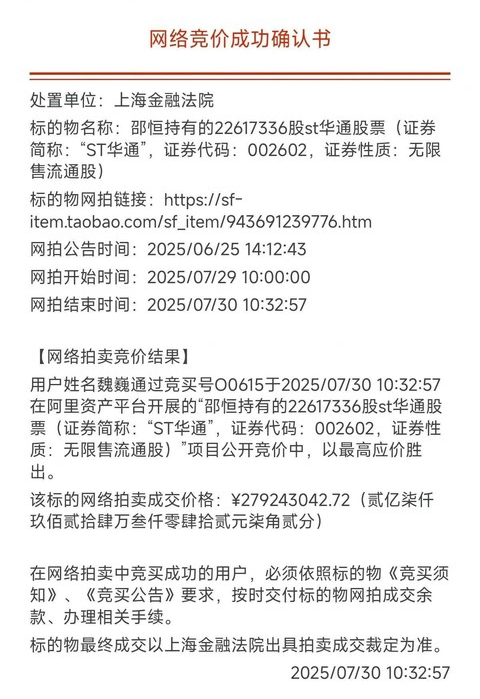
Core Viewpoint - The capital market has witnessed significant trading activity, particularly with the stock of Century Huatong, which has seen a dramatic price increase and substantial investments from various stakeholders [1][14]. Group 1: Major Investors Increasing Holdings - Super investor Wei Wei invested 279 million yuan to acquire 22.6173 million shares of Century Huatong, achieving a floating profit of over 37 million yuan within just six days [1][4]. - Hainan Qibing Network Technology Co., a subsidiary of listed company Kaiying Network, has become the ninth largest shareholder of Century Huatong, holding 100 million shares, with a floating profit nearing 600 million yuan [5]. - Guotai Fund's manager Cheng Zhou has newly increased holdings in Century Huatong, acquiring 7.99 million shares valued at approximately 88.53 million yuan, representing 4.07% of the fund's net asset value [7][10]. Group 2: Major Investors Reducing Holdings - Jin Danli, previously the third largest shareholder, has reduced his stake in Century Huatong to below 1.45%, having exited the top ten shareholders by the end of the first quarter of 2025 [11][12]. - Hong Kong Central Clearing Limited has also decreased its holdings, reducing its stake from 1.76% to 1.64%, selling over 8.56 million shares [13][14]. Group 3: Company Performance and Market Sentiment - Century Huatong's half-year performance forecast indicates an expected revenue of approximately 17 billion yuan, a year-on-year increase of about 83.27%, with net profit projected to grow by 107.20% to 159.00% [14]. - The company's subsidiary, Diandian Interactive, has significantly contributed to revenue growth, with a reported 81% increase in revenue for the first half of 2025, driven by successful game titles [14]. - The market sentiment is further bolstered by the expectation that Century Huatong may lift its ST status by November 2025, following the completion of regulatory rectifications [14].

深聊GPT-5发布:过度营销的反噬与AI技术困局
Tai Mei Ti A P P· 2025-08-12 03:18
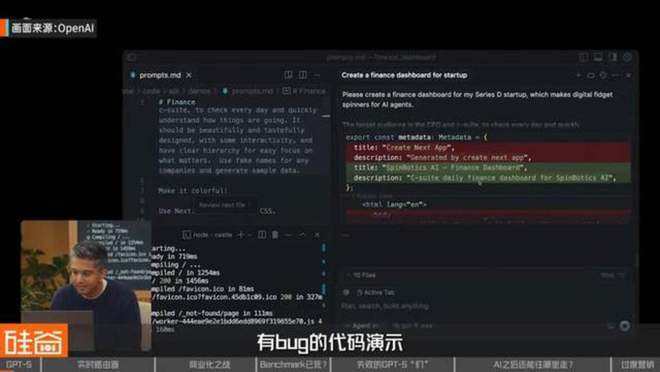
Core Viewpoint - The release of GPT-5 by OpenAI has faced significant criticism from users, leading to the reinstatement of GPT-4o for paid users. The expectations for GPT-5 were high, but the actual advancements were perceived as underwhelming compared to the leap from GPT-3 to GPT-4. The release highlighted various technical challenges and a shift in focus towards market competition and application in specific sectors like education, healthcare, and programming [1][3][4]. Group 1: Technical Challenges and Product Development - The development of GPT-5 encountered numerous technical bottlenecks, including data scarcity and model failures, which have raised concerns about OpenAI's ability to innovate [3][6][41]. - GPT-5 is speculated to be a "unifying system" that integrates various capabilities but relies on a "Real-time Model Router" to connect different sub-models rather than being a groundbreaking single model [6][7]. - The reliance on existing technologies for the routing system has led to skepticism about the novelty of GPT-5, with some experts suggesting it should be considered an incremental improvement rather than a significant upgrade [7][10]. Group 2: Market Implications and Application Areas - OpenAI is targeting three main verticals for GPT-5: education, healthcare, and programming, indicating a strategic shift towards commercial applications [13][14]. - The education sector is particularly highlighted, with concerns that ChatGPT could disrupt existing educational platforms, as evidenced by the stock fluctuations of language learning companies during the GPT-5 announcement [16][17]. - In healthcare, GPT-5 is positioned to assist patients in understanding complex medical information, potentially transforming patient-doctor interactions and empowering patients with knowledge [19][20]. Group 3: User Experience and Feedback - User feedback has been largely negative, with many expressing dissatisfaction over the perceived loss of customization and the effectiveness of GPT-5 compared to GPT-4o. This has led to calls for the return of the previous model [10][12]. - OpenAI's CEO has acknowledged the need for more customizable features and ongoing improvements to GPT-5 in response to user concerns [12][29]. Group 4: Future Directions and Innovations - The article discusses potential future directions for AI development, including reinforcement learning, multi-modal capabilities, and exploring alternative architectures like Joint Embedding Predictive Architecture (JEPA) to overcome the limitations of the current transformer-based models [46][57][62]. - The industry is at a critical juncture, with the need for breakthroughs in AI technology becoming increasingly urgent as existing models face diminishing returns in performance [41][63].
中美芯片博弈:英伟达被抽成H20芯片收入的15%,全新特供版AI芯片或将在中国销售
Tai Mei Ti A P P· 2025-08-12 02:56
Core Viewpoint - The U.S. government is considering allowing NVIDIA to sell its latest AI chips in China, with a 15% revenue share from sales going to the U.S. government, indicating a shift in policy towards semiconductor exports to China [2][3]. Group 1: NVIDIA and AMD's Agreements - NVIDIA's CEO Jensen Huang has reached an agreement with President Trump to allow the sale of the H20 AI chip in China, which is a modified version of an older chip [2][3]. - AMD has also confirmed a similar revenue-sharing agreement with the U.S. government, allowing it to sell the MI308 AI chip in China, with both companies agreeing to pay 15% of their sales to the U.S. government [3][4]. - If approved, these agreements could open up hundreds of billions of dollars in sales opportunities for NVIDIA and AMD in the Chinese market [3][4]. Group 2: Chip Specifications and Market Demand - The H20 chip, designed for the Chinese market, has performance capabilities reduced to about 20% of the H100 chip's performance, but still outperforms most domestic Chinese AI chips [4][5]. - As of April, NVIDIA reportedly received around $18 billion in orders for the H20 chip, indicating strong demand from Chinese internet companies [5]. Group 3: Security Concerns and Market Reactions - There are ongoing concerns regarding the security of NVIDIA's chips, with allegations of potential backdoor vulnerabilities leading to scrutiny from Chinese authorities [7][8]. - Following Trump's announcement of the revenue-sharing arrangement, NVIDIA's stock experienced volatility, with a slight decline in share price, while Intel's stock saw an increase in after-hours trading [9].