Tai Mei Ti A P P

Search documents
饿了么、飞猪会师淘天:大消费平台撬动新增量
Tai Mei Ti A P P· 2025-06-23 11:16
Core Insights - Alibaba Group's CEO announced the merger of Ele.me and Fliggy into Alibaba's China e-commerce business group, marking a strategic upgrade towards a "big consumption" platform aimed at enhancing user experience [1] - The integration of resources from Taobao, Tmall, Ele.me, and Fliggy aims to create a unified fulfillment network that spans various consumer needs, indicating a shift towards a comprehensive consumption platform [1][5] Group 1: Business Integration and Strategy - The merger is part of Alibaba's strategy to transition from an e-commerce platform to a big consumption platform, focusing on optimizing business models and organizational structures from the user's perspective [1] - The successful launch of Taobao Flash Purchase, which integrated Taobao's "hourly delivery" and Ele.me's supply, saw daily order volumes exceed 60 million within a month, highlighting the potential of integrated business models [2][6] - The integration aims to leverage Alibaba's extensive supply chain capabilities across various markets, including high-frequency local services and broader retail needs, creating a new market space for consumers [4][5] Group 2: Consumer Behavior and Market Trends - Young consumers, particularly those under 35, represent a significant portion of the instant retail market, indicating a shift in consumer preferences towards immediate and convenient shopping experiences [2][8] - Consumers are increasingly seeking a seamless shopping experience that combines online pricing with offline service, as demonstrated by the success of brands like Decathlon in utilizing Taobao Flash Purchase for local fulfillment [9][10] - The demand for a "super entrance" that meets comprehensive instant needs is evident, as consumers prefer a one-stop solution that offers both variety and convenience [2][4] Group 3: Fulfillment and Service Capabilities - Alibaba's ecosystem combines three core capabilities: a rich product supply, a robust fulfillment network, and cross-scenario service integration, essential for building a true big consumption platform [5][6] - Ele.me's delivery network, supported by advanced algorithms and a nationwide coverage, enhances the efficiency of local fulfillment, contributing to a high on-time delivery rate of 96% [7][6] - The integration of travel and local services through Fliggy allows for a more comprehensive consumer experience, catering to the evolving expectations of young consumers who prioritize convenience and immediacy [8][10] Group 4: Competitive Landscape and Future Outlook - The shift towards a big consumption platform redefines competition, moving from price wars to a focus on quality, service experience, and innovative scenarios [10][12] - The integration of Ele.me and Fliggy into Alibaba's ecosystem is timely, aligning with the upgrade in consumer demand and brand management transformation [10][11] - The next decade of consumer experiences is being redefined through this integration, emphasizing the importance of matching efficiency over scale efficiency in retail [12]

讯众通信赴港上市:左手现金流危机,右手800家玩家混战的 “突围局”
Tai Mei Ti A P P· 2025-06-23 10:24
Core Viewpoint - Xunzhong Communication Technology Co., Ltd. is preparing for an IPO on the Hong Kong Stock Exchange after multiple unsuccessful attempts in other markets, indicating a strong desire for capital to support business growth and product upgrades [1][5][9]. Company Overview - Founded in 2008 by Park Seong-geun, Xunzhong Communication is a full-stack cloud communication service provider with over 25 years of experience in the IT industry [7]. - The company has undergone several rounds of investment, with major shareholders including Park Seong-geun (27.36%) and institutional investors like Lianchuang Innovation and Dongfang Huagai [7][9]. - Xunzhong primarily offers three types of solutions: Cloud Communication Services, Intelligent Communication Solutions, and Other Communication Solutions, with CPaaS being the core business [8][9]. Financial Performance - Revenue for 2022, 2023, and 2024 was approximately CNY 810 million, CNY 916 million, and CNY 918 million, respectively, showing stable but insufficient growth [9]. - Net profit decreased significantly in 2024, dropping over 30% year-on-year to CNY 50.64 million, attributed to asset impairment losses [9][10]. - The company has faced cash flow issues, with operating cash outflows for the past three years totaling CNY 117 million, CNY 56.21 million, and CNY 114 million [12][13]. Market Position - Xunzhong ranks third in China's cloud communication service market, holding a market share of 1.8% in 2024, with the overall market expected to grow from CNY 503 billion in 2024 to CNY 745 billion by 2029 [8][15]. - The competitive landscape is intense, with around 800 cloud communication service providers in China, and the top five accounting for approximately 20.9% of the market [15]. Challenges and Opportunities - The company faces challenges in maintaining profitability due to high telecom resource costs and increased accounts receivable [12][13]. - Despite these challenges, Xunzhong has opportunities in the digital economy, particularly in the tourism sector, leveraging AI technology to enhance service offerings [17][18].

茅台跌倒,新消费三姐妹却“暴力逆袭”?
Tai Mei Ti A P P· 2025-06-23 08:09
Core Viewpoint - The article highlights the contrasting performance of traditional high-end liquor brands like Moutai, which are struggling, versus the rising success of new consumer brands such as Pop Mart, Mixue Ice City, and Laopu Gold, which are thriving in the current market environment [1][18]. Group 1: Company Performance - Pop Mart has achieved a market valuation close to HKD 300 billion, driven by its successful LABUBU plush toy line and a comprehensive IP ecosystem that includes original IP incubation and a blind box mechanism [3][10]. - Mixue Ice City has over 46,000 stores globally, with annual revenue exceeding CNY 24.8 billion and net profit over CNY 4.4 billion, focusing on affordable pricing and quality [4][10]. - Laopu Gold reported sales of CNY 9.8 billion in 2024, a 166% year-on-year increase, with net profit rising by 254% to CNY 1.47 billion, targeting a younger demographic with culturally rich gold jewelry [5][10]. Group 2: Business Strategies - Pop Mart's strategy involves creating a complete IP incubation system and product lifecycle management, moving beyond just selling blind boxes to a broader range of products [7][14]. - Mixue Ice City emphasizes a strong supply chain and low-cost entry for franchisees, allowing for rapid expansion and high turnover in the beverage market [10][14]. - Laopu Gold differentiates itself by combining traditional craftsmanship with modern aesthetics, positioning itself in high-end shopping districts and appealing to a younger, fashion-conscious audience [15][16]. Group 3: Market Trends - The article notes a shift in consumer preferences, with younger consumers favoring products that offer emotional value and social currency, as seen in the success of the new consumer brands [9][18]. - The traditional high-end liquor market is experiencing a downturn, with brands like Moutai facing challenges due to changing consumer habits and a decline in the "banquet culture" [18][19]. - The new consumer brands are capitalizing on the demand for affordable, trendy, and culturally relevant products, indicating a significant transformation in the consumption landscape [1][19].


银河通用获11亿元融资创纪录,机器人行业关注其与宇树技术和资本结合可能性
Tai Mei Ti A P P· 2025-06-23 04:51
Core Insights - The article highlights the significant financing round of 1.1 billion RMB (approximately 160 million USD) completed by Beijing Galaxy General Robotics, marking the largest single financing in the humanoid robot and embodied intelligence sector to date [2][5] - Galaxy General has raised over 2.4 billion RMB (approximately 340 million USD) since its establishment two years ago, with a projected valuation of 1 billion USD by mid-2025 [2][3] - The company focuses on high-value scenarios, emphasizing the cost-saving potential of their robots, which can replace human labor costs significantly [2] Financing Overview - Galaxy General Robotics secured seed funding shortly after its establishment, followed by a series of financing rounds, including 700 million RMB in angel funding and 500 million RMB in strategic funding [3] - The latest round of financing involved prominent investors such as CATL Capital and various national and local funds, indicating strong market interest and confidence in the company's potential [3][5] Technological Developments - The company announced the launch of OpenWBT, the world's first fully open-source, multi-model humanoid robot remote operation system, in collaboration with Tsinghua University [4] - Galaxy General's Galbot has been enhanced with a new end-to-end VLA model, improving its scalability and generalization capabilities [4] Commercial Applications - Galaxy General introduced the world's first humanoid robot smart retail solution, capable of managing a wide range of products in automated stores, with plans to deploy in 100 stores nationwide by the end of the year [4] - A joint venture with Bosch Group aims to explore commercial applications of embodied intelligence robots in industrial manufacturing [4] Market Potential - The humanoid robot market in China is projected to see sales of 2,400 units in 2024, increasing to 7,300 units in 2025, with a market size approaching 2.4 billion RMB [13] - By 2035, the humanoid robot market could reach approximately 140 billion RMB, with significant growth expected as production ramps up [13][14] Industry Dynamics - The collaboration between Galaxy General and Yushutech is noted for its potential to combine embodied intelligence technology with hardware and motion control [5][10] - The global humanoid robot market is anticipated to grow substantially, with estimates suggesting 200 million humanoid robots could be operational by 2050, addressing labor shortages and creating a market worth 30 to 50 billion USD by 2035 [14]


【产业互联网周报】 OpenAI开始提供ChatGPT企业版折扣;国家互联网信息办公室:中国已有433款大模型完成备案;消息称微软计划裁员数千人,主要集...
Tai Mei Ti A P P· 2025-06-23 02:22
Domestic News - Huawei announced the open-source release of its Cangjie programming language on July 30, aimed at full-scene application development and supporting operating systems like Euler and Harmony [2] - Yushu Technology completed a C round financing of approximately 700 million RMB, achieving a post-financing valuation of about 12 billion RMB, and is actively pursuing an IPO, primarily targeting the A-share market [3][32] - Huawei launched its new generation Ascend AI cloud service based on the CloudMatrix384 super node, which integrates 384 Ascend NPUs and 192 Kunpeng CPUs, achieving a single-card inference throughput of 2300 Tokens/s [4] - Dingjie Smart released the "2025 Generative AI Enterprise Application Practical Report," analyzing ten major applications of generative AI in enterprises [5] - Ant Group established a new technology company in Hangzhou with a registered capital of 30 million RMB, focusing on software development and data processing services [6] - Huawei introduced the CloudRobo embodied intelligence platform, which integrates various capabilities for data synthesis, model development, and cloud-edge collaboration [7] - Yuxin Technology submitted its listing application to the Hong Kong Stock Exchange [8] - Zhongke Xingtou resumed participation in military material engineering service procurement activities after a suspension [9] - RIK Chemical plans to establish a joint venture for intelligent computing technology with a registered capital of 40 million RMB [10] - Juchip Technology announced the successful promotion of its new AI audio chips, achieving significant market traction [11] - The first two data center REITs in China have been approved, marking a significant expansion in the public REITs market [12] International News - Microsoft plans to lay off thousands of employees, primarily in the sales department, with the announcement expected after the end of the fiscal year [22] - OpenAI is offering discounts on its ChatGPT enterprise version, with expected annual revenue from enterprise clients nearing $15 billion by 2030 [23] - Intel appointed new executives to enhance its sales and engineering leadership [24] - South Korea plans to invest 16.1 trillion KRW in artificial intelligence over the next five years [27] - Elon Musk's AI company xAI's acquisition of X is under investigation by the EU, with potential fines expected [29] - Medical technology company Semler Scientific appointed a Bitcoin strategy director, planning to hold 105,000 Bitcoins by the end of 2027 [30] - TerraPower, founded by Bill Gates, completed a $650 million financing round with participation from Nvidia's venture capital arm [31] Policy & Trends - Over 300 cities in China have achieved 5G-A coverage, with more than 10 million users [38] - The Ministry of Education in China emphasized the need to enhance population quality in the western regions through education [39] - The National Internet Information Office reported that 433 large models have been registered in China [40] - China Mobile's chairman stated that silicon-based life forms will surpass humans in number, creating a new "population dividend" [41] - Huawei's chairman noted that the telecom market is entering a phase of demand fragmentation and technological iteration [42] - The China Securities Regulatory Commission announced support for more frontier technology companies to apply for the Sci-Tech Innovation Board [43] - Wuhan introduced measures to support talent development in the AI sector [44] - The Central Cyberspace Administration of China launched a campaign to address the misuse of AI technology, achieving significant progress in the first phase [45]

大出海时代,两轮电动成例外
Tai Mei Ti A P P· 2025-06-23 02:17
Core Insights - The two-wheeled electric vehicle (EV) market in China is facing significant growth pressure due to market saturation, with over 350 million units in circulation as of 2024 and a 10.55% year-on-year decline in sales to 49.2 million units [2][3] - The overseas market is seen as the only viable option for growth, but challenges such as regulatory uncertainty and competition from gasoline motorcycles hinder expansion [2][3] - Southeast Asia is identified as a potential market for two-wheeled EVs, supported by favorable government policies promoting the transition from gasoline to electric [3][4] Domestic Market Challenges - The introduction of new national standards for electric bicycles in China will complicate the competitive landscape, with stricter regulations on speed and vehicle design set to take effect in September 2025 [18][19] - The new standards aim to differentiate electric bicycles from electric motorcycles, which may lead to the exit of less compliant brands from the market [22] International Market Opportunities - Southeast Asian countries like the Philippines, Vietnam, and Indonesia have implemented favorable policies for electric motorcycles, including zero tariffs and targets for electric vehicle adoption [3][4] - Despite these policies, Chinese manufacturers face quality challenges compared to established gasoline brands like Honda and Yamaha, which dominate the market with a combined 93% share [8][9] B2B Market Dynamics - The B2B segment, particularly in the food delivery sector, presents additional challenges for two-wheeled EVs, as existing delivery models in countries like Mexico favor gasoline motorcycles due to infrastructure and user habits [9][11] - Companies like Didi and Meituan are expanding their delivery services internationally, but the reliance on gasoline vehicles in these markets limits the immediate potential for electric two-wheelers [10][13] Product Development and Supply Chain Issues - The current supply chain for electric motorcycles is underdeveloped compared to electric bicycles, leading to higher costs and lower competitiveness against gasoline models [4][5] - The cost of electric motorcycle components, particularly batteries, significantly exceeds that of gasoline motorcycles, impacting pricing and market positioning [4][5] Future Outlook - The industry is expected to continue focusing on the domestic market due to the challenges of international expansion and the impending regulatory changes [22][18] - Companies are exploring new product categories like E-bikes, which may offer better market opportunities in the future [14][16]

【钛晨报】跨境支付通正式上线,两地居民可实时办理跨境汇款;据称英伟达计划在AI服务器生产线上部署人形机器人;华为20%收入做研发,中美竞争下加大投入
Tai Mei Ti A P P· 2025-06-22 23:28
Group 1 - The launch of the Cross-Border Payment Channel marks the connectivity between the Mainland and Hong Kong's rapid payment systems, allowing real-time cross-border remittances for residents [2][3] - As of June 22, the Northbound remittance transaction volume reached approximately 6,900 transactions, with an average transaction amount of about RMB 800, while the Southbound remittance transaction volume was around 19,000 transactions, averaging RMB 3,100 per transaction [2] - The Cross-Border Payment Channel aims to save time and costs for individuals transferring funds between the two regions, facilitating payments for tuition or remittances to friends and family [2] Group 2 - The daily limit for Hong Kong residents using the Cross-Border Payment Channel for Northbound remittances is HKD 10,000, with an annual limit of HKD 200,000, independent of the existing RMB limit [3] - The initial participating institutions include major banks from both the Mainland and Hong Kong, with plans to gradually expand the range of participating institutions [3] - The People's Bank of China emphasizes that the Cross-Border Payment Channel enhances the safety, efficiency, and convenience of payment services, supporting the integration of the Guangdong-Hong Kong-Macao Greater Bay Area [3]
杨植麟和闫俊杰首次“撞车”,MiniMax视频模型价格一年超万元
Tai Mei Ti A P P· 2025-06-22 03:25
Core Insights - The competition among the "Big Six" AI model companies in China is intensifying, particularly with the emergence of new products from MiniMax and 月之暗面, which aim to surpass existing models like DeepSeek [2][3][9] - MiniMax has launched multiple products, including the MiniMax-M1 series, which has shown significant performance improvements and cost reductions in reinforcement learning [9][10][12] - The market for generative AI software in China is projected to be limited, with IDC estimating a size of approximately 4.89 billion yuan from 2023 to 2028, indicating challenges for the "Big Six" in achieving sustainable growth [4] Company Developments - 月之暗面 has released its first open-source code model, Kimi-Dev-72B, achieving a 60.4% accuracy rate on the SWE-bench Verified benchmark, surpassing DeepSeek [2][16] - MiniMax is considering an IPO in Hong Kong with an estimated valuation of around $3 billion, joining other companies in the "Big Six" that are preparing for public offerings [3][18] - The "Big Six" companies are facing challenges such as talent loss and limited computing resources, which may hinder their growth and IPO prospects [4][21] Market Trends - The AI model landscape is undergoing significant changes, with DeepSeek's rise posing a threat to the existing players, leading to a potential consolidation in the market [5][22] - The overall capital market environment is favorable for AI companies looking to go public, with an increase in IPO activity in both A-shares and Hong Kong stocks [23][26] - The competition is expected to intensify as companies strive to establish themselves as leaders in the AI model space, with a focus on developing unique technological capabilities [6][17]

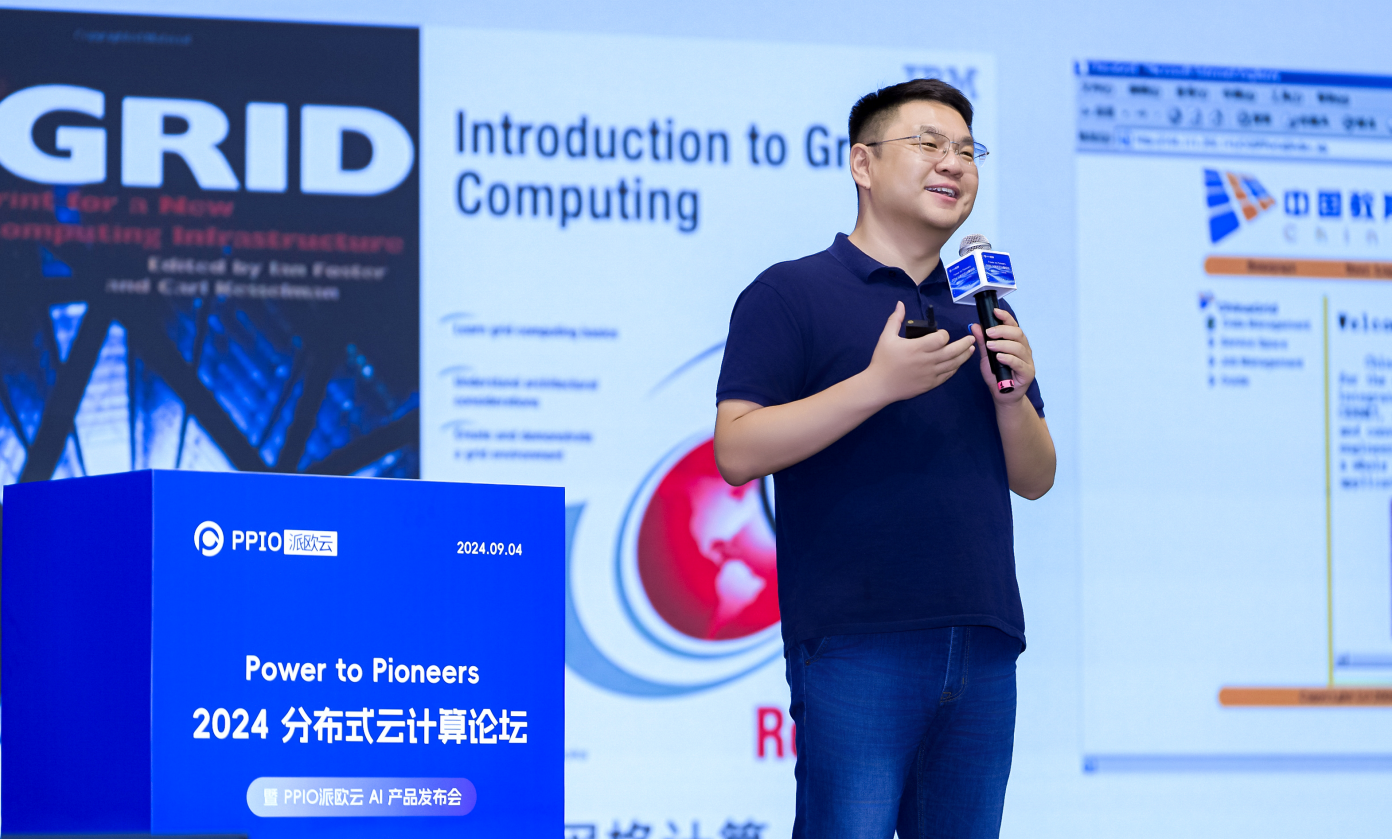
三年累亏5.68亿元,AI云公司PPIO派欧云冲刺港股CEO要圆上市梦
Tai Mei Ti A P P· 2025-06-21 00:57
Core Viewpoint - PPIO, founded by Yao Xin, is preparing for an IPO on the Hong Kong Stock Exchange, aiming to capitalize on the growing demand for distributed cloud computing and AI services [2][5]. Company Overview - PPIO was established in 2018 as an independent distributed cloud computing service provider, with its parent company PPLabs Technology Limited registered in the Cayman Islands in 2019 [5]. - Yao Xin, the founder and CEO, previously founded PPTV, a video platform that raised over $700 million before being sold to Suning in 2014 [5]. - PPIO has received angel investments from notable figures and institutions, including Wang Xiaochuan and Panlin Fund [5]. Financial Performance - PPIO's revenue for 2022, 2023, and 2024 was approximately RMB 286 million, RMB 358 million, and RMB 558 million, respectively, with a compound annual growth rate (CAGR) of 39.7% [11]. - The company reported losses of RMB 850 million, RMB 1.894 billion, and RMB 2.935 billion for the same years, totaling approximately RMB 5.68 billion in cumulative losses [11]. - Adjusted net losses were RMB 39.13 million, RMB 37.08 million, and RMB 61.62 million, totaling around RMB 138 million [12]. Business Segments - PPIO operates primarily in two segments: edge cloud services and AI cloud services, with partnerships including major telecom operators and Alibaba Cloud [8]. - In the fiscal year 2024, revenue from edge node services accounted for 70%, edge CDN for 28.1%, and AI cloud services for 1.9% [12]. Market Potential - The edge cloud computing market in China is projected to reach RMB 37 billion by 2029, with a CAGR of 22.9% from 2024 to 2029 [10]. - The global AI cloud computing market is expected to reach RMB 427.7 billion by 2029, with a CAGR of 68.5% during the same period [10]. - PPIO claims to be one of the earliest independent providers of AI cloud computing services in China, with significant growth in token consumption from 27.1 billion to 141.9 billion between December 2024 and May 2025 [10]. Future Outlook - Yao Xin anticipates a significant reduction in AI inference costs and believes distributed computing will drive the next wave of development [15]. - The company plans to use IPO proceeds to enhance its technology capabilities, expand its market presence, and support overseas growth [16].
美团既白,高星酒店的“第二大脑”
Tai Mei Ti A P P· 2025-06-20 10:49
Core Insights - The hotel industry's application of AI is evolving from a singular tool to an integrated ecosystem, enhancing operational efficiency and service models through human-AI collaboration [2][12] - Meituan's newly launched AI tool "Meituan Jihai" is positioned as a knowledgeable partner for high-end hotels, aiming to stimulate new demand and assist in navigating the competitive landscape [2][3] Group 1: AI Tool Features and Impact - "Meituan Jihai" focuses on three core areas: improving customer acquisition efficiency, optimizing long-term operational mechanisms, and reshaping service experiences through intelligent decision support [3][9] - The tool has demonstrated significant operational improvements, with early adopters like Huanglong Hotel reporting up to a 70% increase in efficiency for dynamic operational suggestions [3][6] Group 2: Market Trends and Consumer Behavior - The upcoming summer season is critical for high-end hotels, necessitating proactive demand forecasting and communication to enhance service quality [6][12] - The shift in consumer preferences towards experience-driven travel is evident, with a notable increase in cross-category demand on Meituan's platform, such as "accommodation + dining" up by 87% and "accommodation + entertainment" by 99% [7][12] Group 3: Challenges and Solutions in AI Implementation - The hotel industry faces challenges such as data silos and a lack of trust in technology among operators, which have historically slowed AI adoption [8][9] - Meituan's approach with "Meituan Jihai" leverages a specialized AI model designed to address specific operational pain points in the hotel sector, moving beyond generic AI applications [9][10] Group 4: Future Outlook and Strategic Partnerships - The collaboration between Meituan and major hotel groups, including Marriott and InterContinental, indicates a growing trend towards deeper integration of AI in hotel operations [11][12] - The evolution of AI in the hotel industry is expected to drive a transformation towards more efficient, personalized, and sustainable service models, emphasizing the importance of understanding the underlying technology and business logic [12][13]