Tai Mei Ti A P P

Search documents
【数智周报】MiniMax和智谱通过港交所聆讯;OpenAI据悉计划以8300亿美元估值筹资至多1000亿美元;寒武纪:拟使用27.78亿元资本公积金弥补亏损
Tai Mei Ti A P P· 2025-12-21 04:23
Group 1 - Elon Musk publicly criticized nuclear fusion power, stating that building small fusion reactors on Earth is economically foolish, as the sun itself is a massive, free fusion reactor capable of meeting all energy needs in the solar system [2] - Musk plans to deploy 100GW of solar-powered AI satellites annually, which is equivalent to about a quarter of the total electricity consumption of the United States [2] Group 2 - Zhongke Shuguang unveiled the scaleX Wanka supercluster at the HAIC2025 conference, marking the first appearance of a domestic 10,000-card AI cluster system in physical form [3] - Unisoc announced the establishment of a Central Research Institute to focus on new architectures and models for edge AI chips, particularly for applications in autonomous driving and robotics [3] Group 3 - Cambricon announced plans to use 2.778 billion yuan of its capital reserve to cover cumulative losses, with the aim of bringing its negative retained earnings to zero by the end of 2024 [4] Group 4 - MiniMax has passed the Hong Kong Stock Exchange hearing and plans to go public in January 2026, potentially becoming the fastest AI company to IPO globally within four years of its establishment [6] - Zhiyuan Technology has officially passed the Hong Kong Stock Exchange IPO hearing, with CICC as the sole sponsor [6] Group 5 - Tencent has established an AI Infra department to enhance its large model research framework, with Vincesyao appointed as the chief AI scientist [6][7] - The AI Infra department will focus on building technical capabilities for large model training and inference platforms [7] Group 6 - ByteDance is advancing a collaboration with Lenovo to develop AI smartphones, aiming to pre-install AIGC plugins to gain user access [8] - Doubao released version 1.8 of its large model, enhancing its capabilities for multi-modal agent scenarios [9] Group 7 - Qianwen APP has integrated with Alibaba's ecosystem, enabling it to access underlying services like Gaode Map for enhanced geographical understanding [10] - Alibaba launched the new generation of the Wanxiang 2.6 model, which supports role-playing functions for video production [11] Group 8 - Baidu launched the Wenxin Health Manager, positioning it as a 24/7 "all-in-one family doctor" service [14] - The application offers a comprehensive AI health service system covering light symptom consultations and complex disease planning [14] Group 9 - Aishi Technology signed a comprehensive cooperation agreement with Alibaba Cloud to enhance global deployment and compliance capabilities for its video generation model [15] - Xiaomi open-sourced its MiMo-V2-Flash model, which boasts competitive capabilities at a significantly lower inference cost compared to closed-source models [16] Group 10 - Muxi Technology officially listed on the Shanghai Stock Exchange's Sci-Tech Innovation Board, aiming to raise 4.197 billion yuan to accelerate the development of "Chinese chips" [17] - The company focuses on high-performance general-purpose GPU products for AI training and inference [17] Group 11 - Meituan released and open-sourced the LongCat-Video-Avatar model, which supports multiple video generation tasks [18] - The model has achieved significant breakthroughs in action realism and video stability [18] Group 12 - Chinese scientists achieved a breakthrough in optical computing chips, enabling large-scale semantic media generation [19][20] - The LightGen chip demonstrates significant improvements in performance and energy efficiency compared to traditional digital chips [20] Group 13 - Baidu's Kunlun chip business is reportedly nearing completion of its restructuring, aiming for a potential listing in Hong Kong [20] - SenseTime's Seko series models have successfully adapted to the domestic AI chip Cambricon [20] Group 14 - Nvidia's CEO revealed that the company has not yet made any payments to OpenAI as part of a planned $100 billion investment [22] - Nvidia launched the Nemotron 3 open-source model series, significantly improving throughput compared to its predecessor [23] Group 15 - OpenAI plans to raise up to $100 billion, potentially valuing the company at $830 billion [24] - The new image model GPT-image-1.5 was launched, enhancing image generation capabilities significantly [25] Group 16 - Intel is in talks to acquire AI chip startup SambaNova for approximately $1.6 billion [30] - Multiple AI companies have recently completed significant funding rounds to support their growth and technology development [31][32][33][34][35][36][37]



大模型挣钱有多难,看看智谱亏掉的 62 亿
Tai Mei Ti A P P· 2025-12-21 03:49
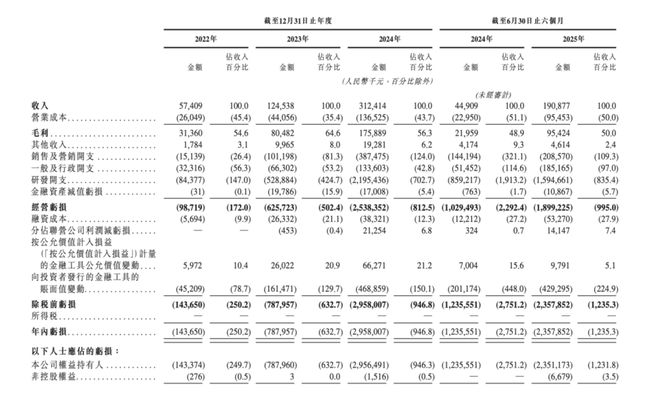
Core Viewpoint - The rapid capitalization process of large model startups is outpacing other industries, with the first global large model IPO imminent, highlighting China's faster deployment of AI compared to North America [1] Group 1: Company Overview - Zhiyu, a representative of large model startups, has accelerated its IPO process due to increasing funding pressures in the large model sector, with significant investments from global tech giants [1] - The company was founded in 2019 by a team from Tsinghua University, known as the "Tsinghua Gang," and has raised over 8 rounds of funding, totaling over 8.3 billion RMB [4][5] Group 2: Financial Performance - Zhiyu's revenue has seen a compound annual growth rate (CAGR) of over 130% over the past three years, but losses have also increased significantly, with total losses exceeding 6.2 billion RMB during the same period [2][5] - The company's cumulative revenue from 2022 to mid-2025 is approximately 685 million RMB, while cumulative losses exceed 6.2 billion RMB, with the loss-to-revenue ratio rising from 250.2% in 2022 to 1235.3% in the first half of 2023 [2][5] Group 3: R&D and Operational Costs - Over the past three years, Zhiyu's cumulative R&D expenditure has reached 2.809 billion RMB, with a projected increase to 1.595 billion RMB in the first half of 2025, totaling over 4.4 billion RMB [4][12] - The majority of R&D spending is attributed to computing power costs, with over 70% of R&D expenses allocated to service fees for computing power [12] Group 4: Market Position and Revenue Sources - Zhiyu ranks first among independent general large model developers in China, with a market share of approximately 6.6%, and is second overall among all general model developers [6][7] - The company's revenue is primarily derived from B-end clients, with localized deployment accounting for over 85% of total revenue in recent years, while cloud deployment remains a smaller segment [7][9] Group 5: Future Prospects and Challenges - Zhiyu is actively expanding its cloud-based MaaS platform and has reported significant growth in subscription services, with annual recurring revenue exceeding 100 million RMB [10] - Despite the growth in cloud services, the company faces challenges in maintaining its competitive edge, as the rapid evolution of model performance makes it difficult to sustain leadership in the market [14]
排“第二”的智谱AI,含金量多高?
Tai Mei Ti A P P· 2025-12-21 02:15
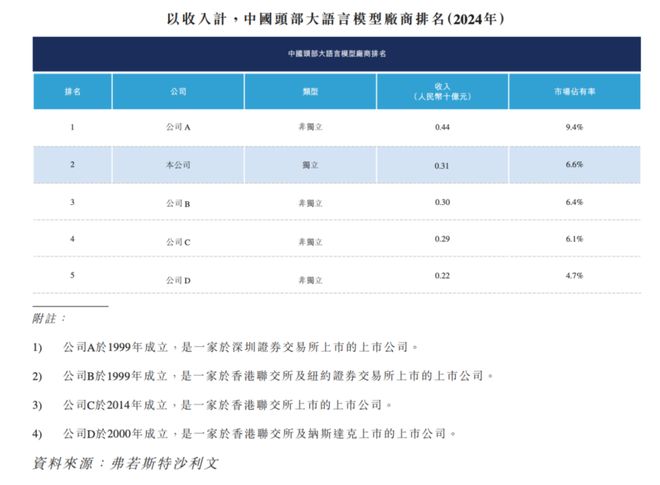
Core Viewpoint - The article discusses the recent IPO filing of Zhipu AI, often referred to as "China's version of OpenAI," highlighting its position in the competitive landscape of large model companies in China and its financial performance amid rapid growth and significant losses [1][31]. Company Overview - Zhipu AI, founded six years ago, has gained attention for its strong backing from major investors like Meituan, Alibaba, Tencent, and Xiaomi, and boasts a valuation exceeding 24 billion yuan [1]. - The company ranks second among Chinese large model manufacturers with projected revenues of 310 million yuan and a market share of 6.6% for 2024, trailing only iFlytek [2][26]. - Zhipu AI's founding team primarily comes from Tsinghua University's Knowledge Engineering Group (KEG), which has a long history in natural language processing and knowledge graph research [7]. Technological Development - Zhipu AI has been proactive in developing its technology, launching the GLM framework in 2021 and releasing the GLM-130B model in 2022, which was among the first of its kind in China [9]. - The company has introduced several models, including ChatGLM and the GLM-4 series, which competes directly with GPT-4, showcasing its ability to keep pace with industry advancements [10]. Business Model - Zhipu AI operates a "Model as a Service" (MaaS) platform, offering a variety of models for different applications, allowing clients to access capabilities via API on a pay-per-use basis [11]. - As of September 2024, the MaaS platform has attracted over 2.7 million developers and serves approximately 12,000 enterprise clients [12]. Financial Performance - The company has shown significant revenue growth, with a fivefold increase from 57 million yuan in 2022 to 312 million yuan in 2024, indicating accelerating commercialization [17]. - However, Zhipu AI faces substantial financial pressures, with an adjusted net loss of 2.47 billion yuan projected for 2024 and ongoing high R&D expenditures [6][21]. - The revenue structure indicates that 85% of its income comes from localized deployments, which are high-margin but have long project cycles, while 15% comes from the MaaS platform, which is lower-margin but scalable [17][18]. Market Position - According to various reports, Zhipu AI's ranking can vary significantly based on the metrics used. It ranks second in the narrow category of large model development platforms but falls to fourth when considering broader market metrics [26][28]. - The competitive landscape includes major internet giants like Alibaba and Baidu, which have more diversified revenue streams, making direct comparisons challenging [14][27]. Conclusion - Zhipu AI's IPO filing reveals a company with strong technological capabilities and a viable business model, yet it is grappling with high losses and cash flow pressures in a fiercely competitive market [31].
首张L3正式号牌落地:车牌“渝AD0001Z”背后的规则升级
Tai Mei Ti A P P· 2025-12-21 01:55
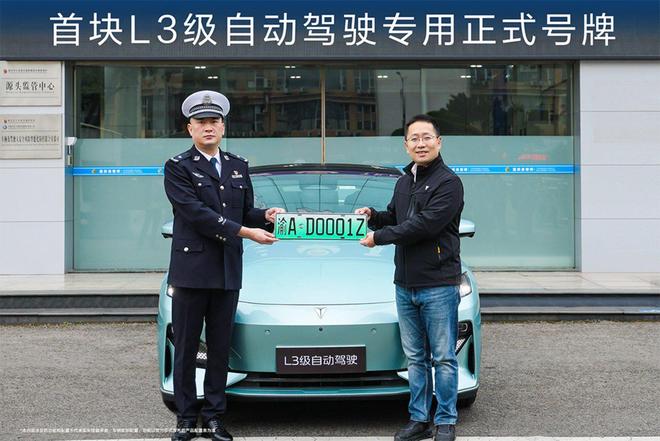
交巡警总队授牌 12月20日,一张印有"渝AD0001Z"字样的号牌在重庆正式发出。 这张由重庆市公安局交通管理总队授予长安汽车的号牌的意义远超出了行政许可本身。它是首块L3级 自动驾驶专用正式号牌,也意味着,中国智能网联汽车正在剥离模糊的营销话术,正式迈入权责分明的 合规商用时代。 长期以来,自动驾驶行业在L2与L3的界限上始终处于一种微妙的试探期。此次长安汽车获得正式号 牌,并在深蓝汽车上率先落地,实质上是撕开了L3级自动驾驶从技术验证向规模化量产突围的口子。 直到2025 年底,工信部在 12 月 15 日正式对外公布首批 L3 级有条件自动驾驶车型准入许可,长安深蓝 SL03 和北汽极狐阿尔法 S等车型都拿到了正式的入场券。 长安这块"渝AD0001Z",本质上是把纸面上的准入许可继续向前推进了一步,从工信部的产品准入,走 到了公安交管部门颁发的正式号牌。这意味着:监管链条从工信部扩展到公安、交通等多部门协同,对 车企来说,这也是从迈进"规则游戏"的新起点。 为何是长安?为什么落在重庆? 那么这块号牌为什么落在重庆、落在长安? 一头是有"8D 魔幻立体交通"的山城,一头是深耕重庆多年的老牌主机厂。双方 ...

60+CEO闭门会共识:工业数据不共享,具身智能就是″空壳″
Tai Mei Ti A P P· 2025-12-20 09:28
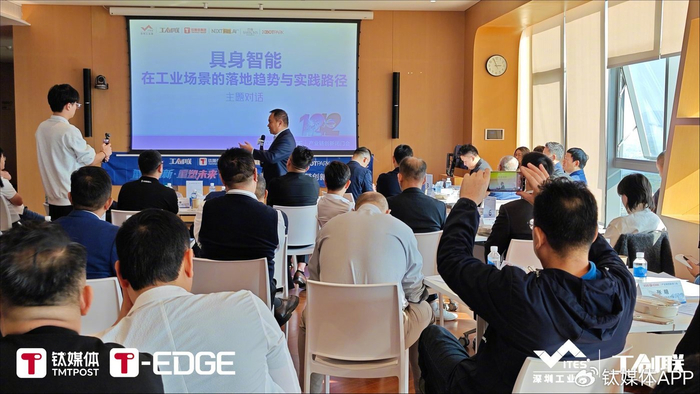
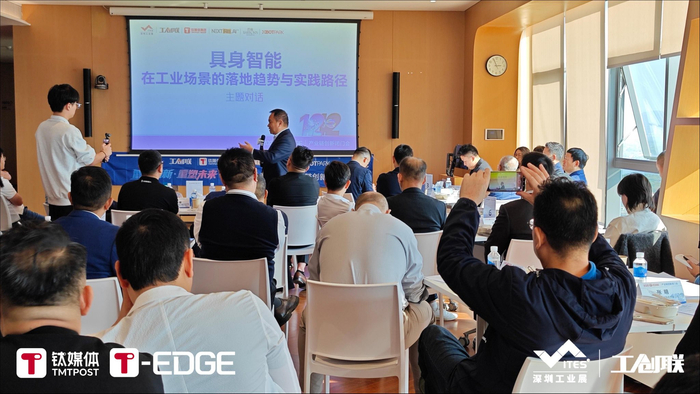
面对具身智能带来的新机遇和挑战,产业链各环节该如何一起合力推动中国制造在AI的加 持下提升竞争力? "中国具身智能技术全球领先,爆发的机会可能要超过新能源汽车"、"不转变只能被淘汰,工业是具身 智能最好的落地场景之一"、"现在具身智能还是四肢发达,头脑相对简单"、"中国企业最大的竞争对手 仍来自中国"...... 12月12日,在钛媒体集团联合ITES深圳工业展、工创联、XbotPark机器人基地联合举办的闭门会上,来 自具身智能产业链的60多位标杆企业家在李泽湘教授创办的松山湖国际机器人产业基地论道,围绕具身 智能从"技术探索"到"规模化落地"的行业痛点和解决方案等议题进行了坦诚而犀利的思想交锋,为中国 制造业的未来描绘了充满张力与可能性的路线图。 在这场长达三小时的深度对话中,有对具身智能与制造业必须结合的共识,也有对工业数据采集共享难 题的探讨。核心的一点就是,面对具身智能带来的新机遇和挑战,产业链各环节该如何一起合力推动中 国制造在AI的加持下提升竞争力,推动机器人赛道快速发展。 具身智能热潮的B面:四肢发达、头脑相对简单 钛媒体联合创始人、联席CEO刘湘明 在闭门会的一开场,钛媒体联合创始人、联席C ...
60+CEO闭门会共识:工业数据不共享,具身智能就是"空壳"|2025 T-EDGE全球对话
Tai Mei Ti A P P· 2025-12-20 04:03
"中国具身智能技术全球领先,爆发的机会可能要超过新能源汽车"、"不转变只能被淘汰,工业是具身 智能最好的落地场景之一"、"现在具身智能还是四肢发达,头脑相对简单"、"中国企业最大的竞争对手 仍来自中国"...... 在这场长达三小时的深度对话中,有对具身智能与制造业必须结合的共识,也有对工业数据采集共享难 题的探讨。核心的一点就是,面对具身智能带来的新机遇和挑战,产业链各环节该如何一起合力推动中 国制造在AI的加持下提升竞争力,推动机器人赛道快速发展。 具身智能热潮的B面:四肢发达、头脑相对简单 钛媒体联合创始人、联席CEO刘湘明 事实也是如此,今年作为具身智能的元年,实现了从"技术探索"到"规模化落地"的转身,不仅政策端上 升为国家战略,资本端融资额翻倍增长,更是在应用端从实验室走进大众视野和更多的工厂车间。 根据毕马威中国大湾区科技咨询合伙人李良分享的数据,2020年到2024年,我国具身机器人企业数量增 加近200%。从融资金额、融资事件看,过去三年也是将近十倍增长。同时,成本侧的降低,也推动了 具身智能产品的普及。 12月12日,在钛媒体集团联合ITES深圳工业展、工创联、XbotPark机器人基地联 ...
2025大厂领衔,AI应用创新开打“巅峰赛”
Tai Mei Ti A P P· 2025-12-19 11:29
Core Insights - The rapid adoption of AI applications in 2025 is transforming everyday life, driven by a competitive landscape among market participants [1] - The emergence of DeepSeek's R1 model has disrupted industry cost perceptions, demonstrating that top-tier AI can be developed at a fraction of the previously assumed costs [2] - Major players like Alibaba and Baidu are advancing their AI models, with Alibaba's Qwen3-Max and Baidu's Wenxin model achieving significant milestones in performance and ecosystem development [3][4] - The AI application market is witnessing intense competition, with a shift from model parameters to practical application capabilities, as evidenced by the rise of platforms like Doubao and Tencent Yuanbao [5][6] - The introduction of AI smartphones, particularly by ByteDance and ZTE, is reshaping the competitive landscape, raising concerns about user privacy and regulatory frameworks [7][8][9] Group 1: AI Model Development - DeepSeek's R1 model was launched in January 2025, with training costs around $294,000, challenging the notion that top models require tens of millions of dollars [2] - Alibaba's Qwen3-Max model has surpassed 1 trillion parameters and ranks among the top three globally in evaluations, showcasing its technical prowess [3] - Baidu's Wenxin model has evolved to version 5.0 with 2.4 trillion parameters, achieving competitive language and multimodal understanding capabilities [3] Group 2: Market Dynamics - The AI application market is rapidly evolving, with significant shifts in user engagement and application performance, as seen with Doubao's integration into over 50 internal business scenarios [5] - Tencent Yuanbao has quickly become a leading AI-native application, achieving daily active user numbers comparable to its monthly totals earlier in the year [5] - The "Qianwen" app, backed by Alibaba, gained 30 million monthly active users within 23 days of its public beta, indicating strong market demand [6] Group 3: AI Smartphone Impact - The launch of the "Doubao phone" by ByteDance and ZTE has introduced a new dimension to AI application competition, allowing for complex task automation across apps [7] - Concerns have arisen regarding user privacy and security as AI agents challenge traditional app ecosystems, potentially disrupting established business models [7][8] - The industry faces a need for new consensus on the legality and safety of AI smartphone operations to mitigate risks associated with user data and privacy [9]
你的“大厂经验”,在AI面前可能一文不值
Tai Mei Ti A P P· 2025-12-19 10:37
更讽刺的是,他们的客户,那些各行各业的佼佼者,已经在业务中深度运用AI,试图通过新技术重构 竞争壁垒。 而这些原本服务客户的"专家",却因为身处大厂那些"离AI很远"的部门,正在迅速丧失感知力。 如果说在过去,人和人的差距需要5年、10年才能拉开;那么在AI疯狂迭代的今天,这个差距的缩短只 需要2到3月。 文 | 邹叔数字营销与AI实战 一句话总结AI时代的职业真相:以前人和人的差距是5年,现在只需要3个月。 今天中午,和一位从某互联网大厂离职的朋友吃饭聊天。 她最近在面试和社交中发现了一个极其惊人的现象:两个曾经在同一个大厂、同一级别、甚至负责过类 似业务的人,在离职短短一年多后,展现出的AI认知和行动力竟然出现了"代际差"。 一个已经开始用AI重构所有的业务流,甚至利用大模型帮助客户做深度决策;而另一个,谈起AI依然 觉得那只是"写写文案、画画图"的辅助工具,还在用老一套的"系统化流程"处理手头的工作。 如果你还在那些"随着系统干活,而不接触AI"的岗位上按部就班,请务必读完这篇文章。 一、大厂的现状:最先进的公司里,往往藏着最保守的岗位 我们总有一种错觉:只要身处大厂,就代表站在了技术的最前沿。 事实恰 ...
中国车出海在俄遇阻:当地重建汽车工业 产品可靠性遭质疑
Tai Mei Ti A P P· 2025-12-19 10:37
Group 1: China’s Automotive Export Growth - In 2023, China's automotive export volume reached 5.22 million units, a year-on-year increase of 57.4%, surpassing Japan to become the world's largest automotive exporter [1] - For 2024, a 19% annual growth is expected, solidifying China's position as the top automotive exporter, with projections of total exports between 6.8 to 7 million units [1] Group 2: Decline in Exports to Russia - In 2025, despite overall growth, China's automotive exports to Russia are experiencing a significant decline, with a 50% year-on-year drop in the first four months [2] - By the first three quarters of 2023, exports to Russia decreased to 357,700 units, marking a 58% decline [2] - Russia has fallen to the third-largest market for Chinese automotive exports, with Mexico and the UAE now leading [2] Group 3: Russian Automotive Industry Policies - Following the Ukraine conflict, Russia aims to rebuild its automotive industry by limiting imports and increasing costs for foreign vehicles [3][4] - New policies include raising the scrappage tax for imported vehicles, with fees for 1L-2L engines increasing from 300,600 rubles to 556,000 rubles [3] - Import tariffs for vehicles will rise to between 20% and 38% starting January 1, 2025, increasing costs for Chinese imports [4] Group 4: Challenges for Chinese Brands in Russia - Chinese automotive brands face challenges in Russia due to a lack of after-sales service and product reliability, impacting their market share [6][7] - Despite a peak market share of 60% in 2024, this has dropped to below 40% in the first three quarters of 2023 [6] - Reliability issues have been highlighted, with tests showing that some Chinese models suffer from corrosion and durability problems in Russia's harsh climate [7][8] Group 5: Local Production and Market Adaptation - Chinese companies are adapting by increasing local assembly, with Great Wall Motors achieving a localization rate of about 65% [6] - New brands like Tenet have seen rapid growth in sales after local production began [6] - However, the overall market for automobiles in Russia remains weak, with low consumer demand and high interest rates affecting sales [5]
豆包大模型日均token用量破50万亿后,火山引擎将主战场押注Agent
Tai Mei Ti A P P· 2025-12-19 10:05
Core Insights - The release of Doubao Model 1.8 and Seedance 1.5 pro marks a significant update in AI capabilities, particularly in multi-modal understanding and Agent functionalities [2][4] - Doubao Model 1.8 has achieved a daily token usage of over 50 trillion, a tenfold increase from the previous year, with over 100 enterprise clients utilizing more than 1 trillion tokens [2][5] - The advancements in Agent capabilities are seen as a pivotal development, allowing for complex applications in enterprise scenarios [4][7] Group 1: Model Updates - Doubao Model 1.8 has significantly improved its tool-calling ability, allowing for the simultaneous use of over 20 tools, reducing planning steps by 37% and increasing execution success rates by 21% [5] - The model has enhanced capabilities in visual understanding, long video comprehension, and document structuring, along with native support for intelligent context management [5][6] - Seedance 1.5 pro is designed to meet the growing demand for video creation, featuring cinematic narrative tension and breakthroughs in audio-visual synchronization technology [2][5] Group 2: Industry Trends - The industry is still in its early stages, with ongoing technical limitations, but there is a strong demand for multi-modal models [3][7] - The Agent era is expected to continue its growth, with predictions of enterprises utilizing 50 to 200 Agents by 2025, necessitating improved management and operational capabilities [10] - Key sectors such as internet, retail, automotive, and education are rapidly adopting Agent technologies, while traditional industries are slower but have high potential [7][10] Group 3: Competitive Landscape - Major players like Anthropic, Google, and OpenAI are refining their models to enhance practical applications, with a focus on economic value and real-world utility [8][10] - The competition among large model vendors is anticipated to intensify as the Agent capabilities become more critical in the market [10]