Tai Mei Ti A P P

Search documents
VLA模型走不通,机器人的下一步该怎么走?
Tai Mei Ti A P P· 2025-12-22 12:58
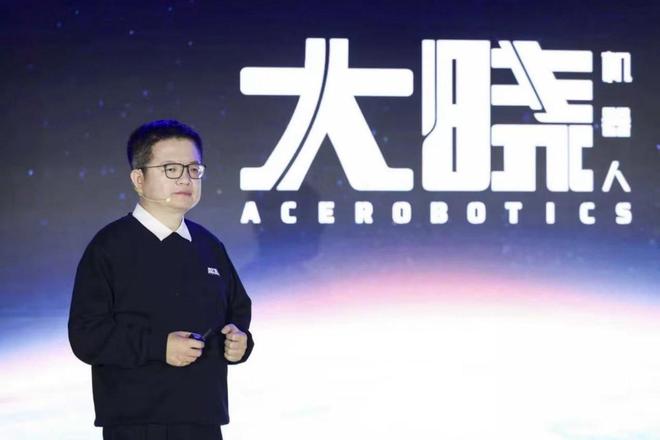
Core Insights - The VLA (Visual-Language-Action) model faces challenges in training due to the scarcity and complexity of physical world data, which is essential for enhancing its capabilities [2] - The shift from a machine-centered to a human-centered AI research paradigm is necessary for training embodied intelligence models [2] Group 1: ACE Paradigm - The ACE (Action-Centric Embodiment) paradigm focuses on human interaction with the physical world as the starting point for research, utilizing environmental data collection as a core engine [3] - The ACE framework integrates first-person and third-person video, haptic information, motion trajectories, and voice data to create a physics-based 3D asset library [3] Group 2: Open Source Model - The "Awakening World Model 3.0" has been released as an open-source and commercially applicable model, aiming to unify understanding across different domains by integrating physical laws, human behavior, and real machine actions [5] - The platform supports 11 major categories and 54 subcategories, covering 115 types of embodied scenarios, allowing developers to quickly generate visual task simulations with simple commands [5] Group 3: Industry Collaboration - The company collaborates with various robotics firms to integrate the ACE paradigm and world model with hardware solutions tailored for different scenarios [6] - Partnerships with domestic chip manufacturers enhance the computational capabilities of the Awakening World Model 3.0 [6] Group 4: Market Applications - In the short term, the focus will be on deploying quadruped robots with autonomous navigation capabilities in security and inspection sectors [6] - The medium-term strategy includes addressing labor-intensive logistics scenarios, while long-term goals involve exploring applications in home environments, contingent on resolving safety and liability issues [6] Group 5: Industry Trends - The ACE paradigm aligns with trends observed in companies like Tesla and Figure AI, indicating a significant opportunity in the sector over the next one to two years [7]


钛媒体「年度前沿科技产品」榜重磅揭晓 | 2025 T-EDGE AWARDS
Tai Mei Ti A P P· 2025-12-22 11:39
Group 1: Industry Trends - 2025 marks a pivotal year for the global technology industry, transitioning from "smart connectivity" to "intelligent autonomy" [1] - Hardware products are entering a new era of "edge AI explosion," driven by advancements in AI technology, the proliferation of 5G-A, and sustainable development [1] - The transformation of smart hardware is shifting from "single hardware parameters" to a "full-scenario intelligent ecosystem" [1] Group 2: Consumer Electronics and Innovations - Seamless integration between different types of devices is becoming more common, enhancing user experience across smartphones, computers, and tablets [1] - The rise of smart home appliances, automotive technology, and drones is significantly transforming lifestyles and industrial models [1] - The automotive sector is redefining its role, moving beyond being just a transportation tool to becoming part of a broader economic opportunity in low-altitude airspace [1] Group 3: 2025 EDGE Awards - The 2025 EDGE Awards will recognize outstanding technological products that have made significant contributions in functionality, design, user experience, and market performance [3] - Award-winning products are expected to address industry pain points, optimize user experiences, and explore new scenarios, setting market benchmarks and driving innovation [3] - The awards will highlight the most innovative products of the year, showcasing the profound impact of technological innovation on human life [3]






当开放架构遇上“产业大集”:国产AI生态进入“群体跃迁”时刻
Tai Mei Ti A P P· 2025-12-22 10:54
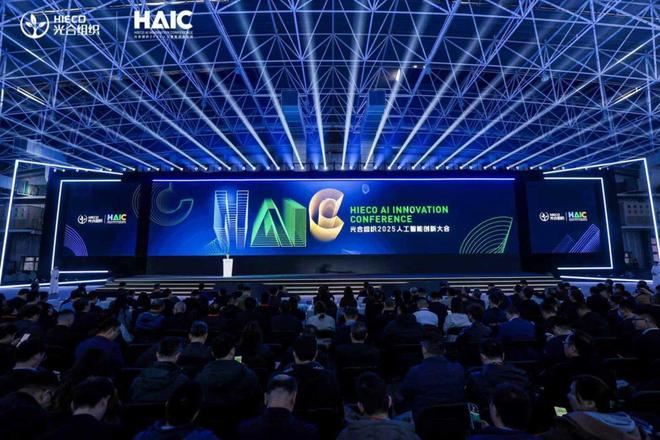
Core Viewpoint - The competitive rules of China's AI industry are being rewritten, shifting the focus from hardware performance to ecological collaboration efficiency as a new measure of competitiveness in the AI computing industry [1][4]. Group 1: Industry Trends - The HAIC2025 event showcased over 2,500 upstream and downstream enterprises, indicating a trend towards breaking down "technology walls" and "ecological walls" to achieve a "group leap" in the AI computing industry [1][3]. - The concept of "open architecture" is becoming essential for overcoming industry bottlenecks, as it promotes shared key technologies and lowers the barriers for research and application [4][6]. Group 2: Open Architecture and Collaboration - The AI computing open architecture aims to transform the industry from "physical stacking" to "chemical fusion," addressing issues such as high-end computing power shortages and high innovation thresholds [6][10]. - The launch of the scaleX super cluster, capable of deploying 10,240 AI accelerator cards and exceeding 5 EFlops in total computing power, demonstrates the technical feasibility and advantages of the open architecture [4][6]. Group 3: Partner Practices and Innovations - Companies like Qingdao Thunder Technology and Unisplendour have successfully utilized the open architecture to lower R&D costs and enhance product compatibility, leading to innovations in various industry scenarios [7][8]. - The collaborative model of "multi-vendor cooperation and shared foundation support" has proven effective in driving the domestic AI ecosystem into a "group leap" phase, with significant advancements in sectors like gaming and healthcare [7][9]. Group 4: Future Outlook - The establishment of the "AI Computing Open Architecture Joint Laboratory" aims to invest 1 billion yuan over three years, involving over 150 member units and 1,000 R&D personnel to enhance domestic AI capabilities [12]. - The ongoing reinforcement of the open architecture's "linking" role is expected to lead to a higher quality "group leap" in the domestic AI ecosystem, providing solid support for the implementation of the "Artificial Intelligence +" strategy [12].
腾讯从OpenAI、字节抢人才,加速AI破局
Tai Mei Ti A P P· 2025-12-22 09:49
近日,腾讯官宣人事任命和组织调整两条重要消息,在AI圈内引起广泛关注。 文 | 新质动能,作者 | 沛林,编辑 | 沐风 27岁的前OpenAI研究员姚顺雨(Vinces Yao)正式出任腾讯"CEO/总裁办公室"首席AI科学家,同时身兼 AI Infra部与大语言模型部的负责人,向总裁刘炽平和技术工程事业群总裁卢山双线汇报。 而姚顺雨,这位以研究"AI智能体"和提出"AI进入下半场"观点闻名的年轻人,会成为那个为腾讯找到破 局点的人吗? 技术明星的"中场"思考 事实上,姚顺雨在今年9月就已入职,这次只是正式公开这一消息。 有趣的是,3个月前,关于"腾讯上亿年薪聘请前OpenAI研究员"的传言已在行业内流传,腾讯官方出面 辟谣。如今看来,当时辟谣的焦点或许是薪酬数额,而人才落地的本身,早已悄然进行。 翻开姚顺雨的履历,是一个标准的"精英故事": 安徽理科探花、清华姚班、普林斯顿博士、师从GPT-1核心作者。他的学术轨迹,几乎与AI智能体研究 的关键进展同步。 在OpenAI期间,他深度参与的研究项目,旨在解决AI从"聊天"走向"做事"的范式转变:通过"思考—行 动—观察"的循环,让大模型学会使用工具;用"思维 ...

人工心脏“技术门”背后的安全之问
Tai Mei Ti A P P· 2025-12-22 09:23
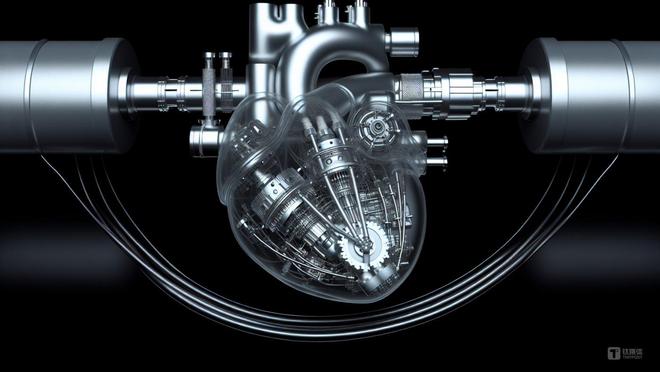
Core Viewpoint - The ongoing debate in the academic community regarding the definition and standards of artificial heart technologies is crucial for patient safety and clinical outcomes [2][3][8]. Group 1: Technical Definitions and Standards - The definition of "full magnetic suspension" in contemporary durable rotary blood pumps is ambiguous, leading to potential misinterpretations of product safety [2][4]. - Experts emphasize that any blood pump relying on fluid dynamic bearings in its primary operating mode cannot be classified as "full magnetic suspension" [2][8]. - A recent paper by Dr. Kurt Dasse highlights the need for clear definitions and evaluation standards for different bearing technologies in artificial hearts [3][8]. Group 2: Key Characteristics of CorHeart 6 - The CorHeart 6 device is categorized as a "centrifugal pump with magnetic-assisted dual fluid dynamic bearings" in authoritative literature, yet its manufacturer describes it as a "full magnetic suspension device" [4][24]. - Key specifications of the CorHeart 6 include a rotor speed range of 2200-4300 RPM, a device height of 26 mm, a diameter of 34 mm, a weight of 90 g, and a power consumption of 2.6 W at 2.0 L/min [5][24]. Group 3: Consensus on Magnetic Suspension - Experts at the ISMCS conference reached a consensus that true magnetic suspension must rely solely on magnetic forces for rotor stability across multiple degrees of freedom [14][20]. - The safety threshold for suspension gaps is established at ≥200 microns for full magnetic suspension, contrasting with ≤100 microns for fluid dynamic bearings [20][24]. - Stability verification methods, such as air testing, are proposed to ensure that magnetic bearings can maintain rotor suspension without fluid assistance [23][24]. Group 4: Clinical Implications and Data Transparency - The distinction between bearing technologies is critical as it directly impacts blood compatibility and patient outcomes, with fluid dynamic bearings showing significantly higher mortality risks compared to full magnetic suspension devices [24][25]. - The lack of long-term clinical data and transparency in the CorHeart 6's public disclosures raises concerns about its safety and efficacy [24][25]. - The industry is urged to adopt standardized definitions and transparent data sharing to enhance patient safety and foster innovation [24][25].


Transformer能否支撑下一代Agent?
Tai Mei Ti A P P· 2025-12-22 07:39
Core Insights - The current Transformer architecture is deemed insufficient for supporting the next generation of AI agents, as highlighted by experts at the Tencent ConTech conference [1][2][11] - There is a growing consensus that the AI industry is transitioning from a "scaling era" focused on data and computational power to a "research era" that emphasizes foundational innovation [11][12] Group 1: Limitations of Current AI Models - Experts, including prominent figures like Fei-Fei Li and Ilya Sutskever, express concerns that existing Transformer models are reaching their limits, particularly in understanding causality and physical reasoning [2][5][11] - The marginal returns of scaling laws are diminishing, indicating that simply increasing model size and data may not yield further advancements in AI capabilities [2][10] - Current models are criticized for their reliance on statistical correlations rather than true understanding, likening them to students who excel in exams through memorization rather than comprehension [4][5] Group 2: Challenges in Long Context Processing - The ability of Transformers to handle long contexts is questioned, with evidence suggesting that performance degrades significantly beyond a certain token limit [6][7] - The architecture's unidirectional information flow restricts its capacity for deep reasoning, which is essential for effective decision-making [6][7] Group 3: Need for New Architectures - The industry is urged to explore new architectural breakthroughs that integrate causal logic and physical understanding, moving beyond the limitations of current models [11][12] - Proposed alternatives include nonlinear RNNs that allow for internal feedback and reasoning, which could enhance AI's ability to learn and adapt [12][13] Group 4: Implications for the AI Industry - A shift away from Transformer-based models could lead to a reevaluation of hardware infrastructure, as current systems are optimized for these architectures [13] - The value of data types may also change, with physical world sensor data and interactive data becoming increasingly important in the new AI landscape [14] - Companies in the tech sector face both challenges and opportunities as they navigate this transition towards more advanced AI frameworks [16]
旧金山“黑夜迷途”:一次停电暴露自动驾驶单车智能的当下困境
Tai Mei Ti A P P· 2025-12-22 04:38
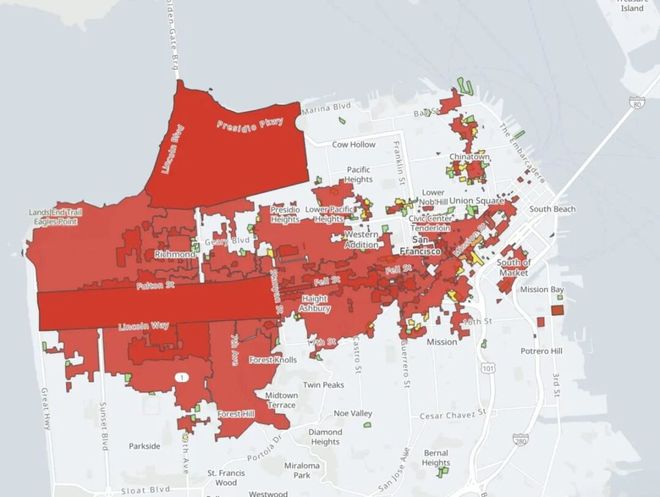
文 | 山自 2025年12月20日,旧金山遭遇一场罕见的大规模停电。太平洋煤气与电力公司(PG&E)一座变电站突 发火灾,导致全市约12.5万用户断电,覆盖西区、里士满、海特-阿什伯里、中国城等近三分之一区 域。交通信号灯集体熄灭,Muni公交停运,市长丹尼尔·卢瑞紧急呼吁市民非必要不出行。 2025年12月20日下午4:50的PG&E停电图 然而,在这场城市应急事件中,最引人注目的并非人类司机的混乱应对,而是——Waymo自动驾驶车 队的集体"宕机"。 有分析指出,伴随停电的蜂窝网络波动或实时交通数据中断,可能是另一重打击。Waymo等公司依赖 远程协助(Tele-assist)处理边缘场景。一旦通信中断,车辆不仅"看不见",还成了"信息孤岛",无法获 取后台指令或路径重规划。 社交媒体上,视频疯传:多辆白色Waymo车辆在漆黑潮湿的十字路口一动不动,红色尾灯在夜色中闪 烁,后方排起长龙,人类司机或鸣笛催促,或无奈绕行。有用户调侃:"停电摧毁了Waymos RIP。"更 有观察者尖锐指出:"看起来它们根本没接受过停电训练。" 停电期间,一辆Waymo被困在路上 次日,Waymo官方承认已暂停旧金山服务,并 ...
AI解答供需难题,宝宝树领跑家庭服务新生态
Tai Mei Ti A P P· 2025-12-22 02:42
在今天这个生育意愿低迷的市场环境下,母婴产业正面临增长和转型的双重考验期。用户减少、流量平 台固化、消费增长乏力等现象显现,给品牌的销售增长带来巨大压力。 但与此同时,消费侧也同样存在着服务质量有限,选择困难的现实问题。 面对供应和需求之间的错位困境,在这个机遇与挑战并存的市场环境中,母婴行业的前路究竟在何方? 在12月10日举办的第十一届金树盛典上,宝宝树通过"奇迹引擎"、"奇迹焕新"、"奇迹同盟"、"奇迹思 辨"四大篇章,系统展示了以AI驱动的战略升级、产品革新与生态共建蓝图。在人工智能的浪潮下,通 过技术赋能、生态协同与理念革新,服务年轻家庭的多元需求,共创增长新未来。 当供应无法满足需求,带来的既是全新挑战,又有可能成为陷入增长瓶颈的母婴行业的发展机遇。 而想要实现真正的破局,需要的是产业理解能力和先进技术的双重加持。"我们有能力做出全世界最好 的AI大模型,但是进入各行各业时,我们就需要行业专家,凭借他们手中的行业数据,才能够让通用 大模型在细分赛道上发挥出更大的价值。"据火山引擎泛互联网行业解决方案负责人江南介绍,火山引 擎与宝宝树在垂类模型上的合作,正是"技术平台能力"与"行业场景深耕"结合的典 ...

摩尔线程,走英伟达的路,也走自己的路
Tai Mei Ti A P P· 2025-12-22 01:37
Core Insights - The core message of the news is that Moore Threads is evolving from a GPU manufacturer to a comprehensive computing infrastructure company, similar to Nvidia, but tailored to address the unique challenges of the Chinese market [2][3]. Group 1: Product Development and Strategy - Moore Threads introduced its full-featured GPU architecture "Huagang" and the MUSA (Meta-computing Unified System Architecture) at the MDC 2025, emphasizing a shift towards a more integrated approach to computing [2][5]. - The company aims to support a wide range of applications, including graphics, AI, HPC, and video processing, through its full-featured GPU, which is designed to handle mixed computing tasks rather than focusing solely on AI [2][5][6]. - The MUSA architecture encompasses a complete technology stack, from chip architecture to software frameworks, allowing for versatile applications across different industries [7][8][10]. Group 2: Technical Innovations - The full-featured GPU integrates multiple computing engines, including AI computation, 3D graphics rendering, high-performance computing, and intelligent video encoding, to meet diverse computational needs [6][7]. - The latest MUSA upgrade to version 5.0 enhances compatibility with various programming languages and significantly improves performance metrics, such as achieving over 98% efficiency in core computation libraries [10][11]. - The "Huagang" architecture boasts a 50% increase in computing density and substantial improvements in energy efficiency, supporting a wide range of precision from FP4 to FP64 [12][14]. Group 3: Market Position and Future Outlook - Moore Threads is positioning itself as a key player in the domestic GPU market, leveraging its unique methodologies to tackle challenges such as supply chain uncertainties and technological barriers [3][5]. - The company is set to release two new chips, "Huashan" for AI training and "Lushan" for high-performance graphics rendering, which are expected to significantly enhance capabilities in their respective fields [14][15]. - The launch of the "Kua'a" supercomputing cluster marks a significant milestone, achieving floating-point performance of 10 Exa-Flops and demonstrating high efficiency in AI training and inference tasks [15][16].
【钛晨报】三部门发文,事关互联网平台价格行为;智谱、MiniMax双双通过港交所聆讯,争夺“大模型第一股”;首块L3级自动驾驶专用正式号牌诞生
Tai Mei Ti A P P· 2025-12-21 23:26
【钛媒体综合】近日,国家发展改革委、市场监管总局、国家网信办联合发布《互联网平台价格行为规 则》,旨在健全互联网平台常态化价格监管机制,规范相关价格行为,保护消费者和经营者合法权益。 《行为规则》共计7章29条,主要规定了平台经营者、平台内经营者实施价格行为应当遵守的规范。其 中,平台经营者,是指提供网络经营场所、交易撮合、信息发布等平台服务的法人或者非法人组织;平 台内经营者,是指通过平台销售商品或者提供服务的经营者。 具体来看,围绕经营者自主定价,《行为规则》提出,平台经营者不得强制或者变相强制平台内经营者 降价或者以让利、返现等方式进行促销,不得强制或者变相强制平台内经营者开通自动跟价、自动降价 或者类似系统。 在规范经营者价格标示行为方面,《行为规则》重申"明码标价"要求。比如,针对各平台广泛实施的价 格促销行为,《行为规则》要求"以方便消费者认知的方式标明促销价格或者价格促销规则"。同时, 《行为规则》还提到,标示预估价格应当公开预估价格的构成,充分提示预估价格与最终结算价格之间 可能存在差异;对于竞价排名的商品或者服务,应当显著标明"广告"。 规范平台经济领域的价格竞争行为是文件的重点内容。《行为 ...