投资界

Search documents
12个月,他们投向医疗30亿
投资界· 2025-12-26 09:41
Core Insights - The article highlights the resurgence of the innovative drug sector in China, marking 2025 as a pivotal year for medical innovation, with significant investment activity and market performance [2][6] - The investment strategy of Qiming Venture Partners, focusing on innovative drugs and medical devices, has proven successful, with a notable increase in IPOs and market valuations in the sector [3][7] Investment Trends - In 2025, Qiming Venture Partners invested in over 30 projects in the medical innovation field, contributing more than 30 billion RMB, with some investments made in late 2024 [3][6] - The company has been particularly active in supporting innovative surgical robotics, exemplified by its early investment in Cornerstone Robotics, which has raised over 3 billion RMB [3][4] Market Dynamics - The medical sector experienced a downturn in 2021, leading to cautious investment behavior among many firms; however, Qiming maintained close industry engagement during this period [6][7] - By mid-2024, Qiming's strategy of investing in undervalued Chinese innovations began to yield positive results, coinciding with a broader market recovery [7][8] Global Recognition - In 2025, approximately 40% of new drug projects licensed in by global pharmaceutical companies originated from Chinese biotech firms, a significant increase from 0% in 2019 [9][10] - The article emphasizes the growing global influence of Chinese medical innovations, with successful business development (BD) transactions indicating the capability of Chinese firms to collaborate with leading global pharmaceutical companies [10][11] Future Outlook - The article suggests that the next phase of medical investment will focus on building a sustainable ecosystem for biopharmaceuticals, with an emphasis on global market participation [8][12] - Qiming Venture Partners aims to assist its portfolio companies in navigating global markets, having facilitated numerous BD transactions totaling 19.7 billion USD by October 2025 [11][12]


黄仁勋打开一个世界
投资界· 2025-12-26 09:41
GPU。 作者 / 梦晨 来源 / 量子位 (ID:QbitAI) 英伟达方面也明确表态:我们不是在收购Gr o q这家公司,我们只是获得技术授权,并将Gr o q的产品整合到未来的产品中。 看起来老黄也学会了"人才收购"这招:重金掏空一家公司的人才和核心资产,但又避免触发反垄断。 所以这2 0 0亿美元到底买了什么? 席卷硅谷的"人才收购" 答案是 :技术授权,加上一整支核心团队。 平安夜老黄没有休息,一项2 0 0亿美元创纪录芯片收购消息,轰动硅谷。 英伟达官宣 :以2 0 0亿美元现金与AI芯片初创公司Gr o q达成交易。 消息一出迅速引发市场轰动,因为这是英伟达有史以来最大规模的一笔交易,远超2 0 1 9年收购Me l l a n o x的7 0亿美元。 但仅仅几小时后,画风突变。 英伟达和Gr o q双双发表声明,对交易性质进行了澄清,并非收购。Gr o q在官方博客中写道:我们与英伟达签订了一份非排他性技术 许可协议。 最先爆料的是Gr o q主要投资方Disr u p t i v e,其CEO透露英伟达已同意以2 0 0亿美元现金收购Gr o q的资产,交易进展非常迅速。 自2 0 1 6年 ...


中国制造承包了圣诞节
投资界· 2025-12-26 09:41
义乌出海特展。 作者 / theodore熙少 来源 / 旅界 (ID:tourismzonenews) 01 以下文章来源于旅界 ,作者theodore熙少 旅界 . 跟踪时代浪潮,讲述文旅商业好故事。 平安夜前,我带孩子逛了巴黎杜伊勒里花园圣诞集市,这里人声鼎沸,空气中弥漫着热红酒和华夫饼的味道。 在那些亮着暖黄色灯光的木屋间穿行没多久后,孩子被一家卖工艺品的摊位吸引住了,她指着一个晶莹剔透的雪花球,眼里全是光。 我被迫接过那个沉甸甸的球,2 5欧元,翻转底座,毫不意外,三个熟悉字母跳进眼里:Ma d e i n Ch i n a。 然后,我做了个快速心算,这玩意在义乌出厂价可能不到2 0块钱人民币,但在巴黎浪漫滤镜下,它的身价翻了1 0倍。 法国巴黎杜伊勒里圣诞市场/旅界实拍 买下后,我们又走到集市边缘另一个手工摊位前,摊主是个皮肤红润的法国老先生,他正熟练地包装一些彩绘胡桃夹子玩具。 我指着其中一个士兵摆件,问他,这些是不是来自当地手工作坊。 老先生抬头看了我一眼,露出一种看透世俗的微笑,摆了摆手说,"Ev e r y t h i n g is fr om Ch i n a , i n c l u d ...

今天,史上最大创投活水来了
投资界· 2025-12-26 06:51
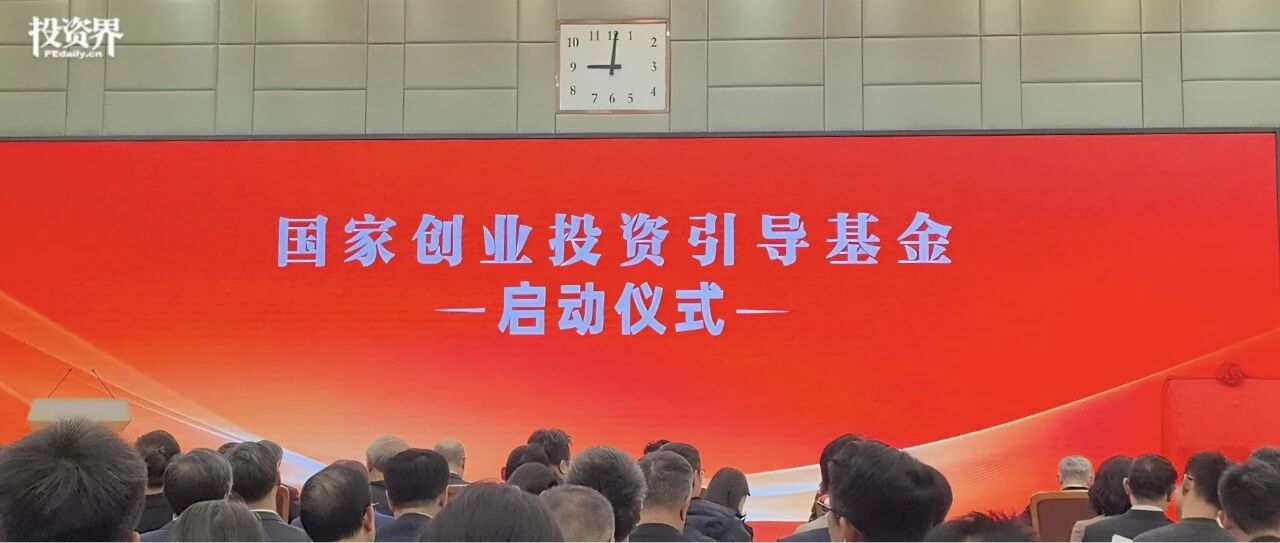
Core Viewpoint - The National Venture Capital Guidance Fund has officially launched, aiming to focus on hard technology and expected to leverage trillions of social capital over its 20-year lifespan [2][3]. Fund Structure and Operation - The National Venture Capital Guidance Fund was established on July 21, 2025, with a registered capital of 10 billion RMB, operating under a three-tier structure: guidance fund company, regional funds, and sub-funds [3]. - The fund has a 20-year duration, consisting of a 10-year investment period and a 10-year exit period, which is longer than typical equity investment funds [3]. - Regional funds have been established in Beijing, Shanghai, and Shenzhen, with the Beijing-Tianjin-Hebei fund having a registered scale of 29.646 billion RMB [3][4]. Investment Focus - The fund will prioritize investments in cutting-edge fields such as artificial intelligence, quantum technology, hydrogen energy storage, and other areas highlighted in government work reports [7]. - The first batch of signed funds and projects includes 49 funds and 27 direct investment projects, featuring notable names like Yizhuang Chip Innovation and Turing Quantum [7]. Market Positioning and Strategy - The National Venture Capital Guidance Fund aims to operate as a market-oriented fund, with the government not directly involved in daily management and avoiding regional investment requirements [8]. - The fund will collaborate with existing government investment funds and market-oriented funds to avoid overlapping investments and focus on addressing the long-term capital shortage in the venture capital industry [8]. Industry Context - The venture capital market has seen phenomena such as rushes to popular sectors and impatience for quick returns, highlighting the need for state-owned capital to play a role in long-term, patient investments in hard technology [9]. - The establishment of this "aircraft carrier" level national guidance fund marks a significant elevation of the venture capital industry in China [9].
摩尔线程,投出一个IPO
投资界· 2025-12-25 08:29
Core Viewpoint - The article discusses the upcoming IPO of Beijing 51 World Digital Twin Technology Co., Ltd. (referred to as "51 World"), which is leveraging 3D technology to create digital models of cities and natural environments for optimizing various sectors such as transportation and energy [5][10]. Company Overview - 51 World has completed 8 rounds of financing, achieving a valuation exceeding 4 billion RMB [5]. - The company is preparing to list on the Hong Kong Stock Exchange, with CICC and Huatai International as joint sponsors [5]. - The latest funding round in June 2024 raised 200 million RMB, resulting in a post-investment valuation of approximately 4.4 billion RMB [9]. Business Model and Technology - The company focuses on digital twin technology, utilizing 3D graphics, simulation, and AI to create digital versions of the real world to address issues like traffic congestion and climate prediction [10]. - 51 World has outlined a five-phase plan for its "Earth Cloning Project," currently in the fourth phase, capable of generating a city in one day with city-level rendering precision [10]. Financial Performance - Revenue from 2022 to 2024 is projected to grow from 170 million RMB to 287 million RMB, with a compound annual growth rate of 30.02% [12]. - Despite revenue growth, the company has not yet achieved profitability, recording losses of 190 million RMB in 2022, 87 million RMB in 2023, and an expected loss of 94 million RMB in the first half of 2025 [12]. Revenue Composition - The primary revenue driver is the digital twin platform 51Aes, accounting for approximately 80% of total revenue, while the digital earth platform 51Earth contributes only 3.9% [13]. Research and Development - R&D expenditures over the past three years were 134 million RMB, 103 million RMB, and 58.31 million RMB, representing 79%, 40.2%, and 20.3% of revenue, respectively [15]. - The reduction in R&D spending raises concerns about the company's technological autonomy in a competitive landscape [15][16]. Competitive Landscape - The digital twin market is competitive, with established players like GE and Huawei already having significant market presence [16]. - The company acknowledges the challenges posed by competitors with more resources and established market positions [16].

一级市场退出之战
投资界· 2025-12-25 08:29
Core Viewpoint - The article discusses the challenges and strategies related to exit opportunities in the investment landscape, particularly focusing on private equity and venture capital exits in China, highlighting the need for adaptive strategies in a changing economic environment [2][10]. Group 1: Exit Challenges and Strategies - The current economic downturn has created significant challenges for exits, with many funds facing systemic exit difficulties, particularly for projects invested in 2014, where 70% have yet to exit [10][11]. - The exit environment has changed drastically compared to previous years, necessitating proactive management and strategic planning for exits rather than a passive approach [8][10]. - The need for organizational restructuring within investment firms has been emphasized to better manage the complexities of the current exit landscape [8][9]. Group 2: Investment Focus and Performance - Various investment firms have reported their focus areas, with East Capital managing 63 funds totaling 390 billion yuan, and Puhua Group focusing on early-stage investments in healthcare, new energy, and hard technology [3][4]. - Tianchuang Capital has successfully listed 25 portfolio companies and maintains an annual investment of 300-400 million yuan, focusing on hard technology sectors [5][6]. - The performance of exits varies, with some firms achieving notable success while others struggle, indicating a mixed landscape of exit opportunities [7][10]. Group 3: Regulatory and Market Support - Recent regulatory changes, such as the updated merger loan management measures, are expected to enhance support for mergers and acquisitions, with increased leverage ratios and more flexible financing options [12][13]. - The bond market is also seen as a potential source of lower-cost funding for mergers, with current interest rates being favorable compared to traditional loans [13]. - The overall sentiment is cautiously optimistic regarding the future of exits, with expectations of a more favorable market environment in 2026, particularly for IPOs and mergers [23][24]. Group 4: Future Outlook and Recommendations - The article suggests that investment firms should establish closer collaborations with listed companies to better align acquisition targets and exit strategies [16][17]. - There is a call for clearer investment strategies, focusing on companies with high growth potential and stable cash flows, to facilitate smoother exits [17][18]. - The importance of continuous communication with founders and portfolio companies is highlighted to ensure accurate assessments of business performance and exit timing [27][28].



投资人眼中的「伟大生意」
投资界· 2025-12-25 08:29
以下文章来源于清科沙丘投研院 ,作者丁宝玉 清科沙丘投研院 . 沙丘投研院——中国投资界的黄埔军校,致力于培育新一代杰出企投家,塑造创投高端人才。我们不仅 分享体系化理论,积极实战,更构筑起"永不毕业"的创投社群,汇聚校友力量,在深度链接与互动中激 发合作,在持续共创与联投中携手向上,一同斩获更大成就。 不同行业,各有其独树一帜的发展脉络与特点。针对该行业的投资策略,也需要随之予以调整。企业 欲在商业世界的激烈角逐中脱颖而出,就必须具备独特的竞争优势,而投资的目标,则是找到这 些"别具一格"的企业。 在沙丘投研院黄埔15期课堂上, 同创伟业管理合伙人 丁宝玉导师 结合过往二十余年的投资经验成 果,分享道:一项投资的成功与否取决于三个关键因素—— 赛道、赛车、赛手 ,并强调 "制定投资 策略的前提,是学会思考底层逻辑" 。其中蕴藏的识人断事之道,往往也是指导经营与投资的关键心 法。 投资决策正确,结果也往往正确吗?什么才是投资人眼中伟大的生意?长期主义的 " 价值投资 " 究竟 要多长?怎样的创始人更容易获得资本青睐? …… 为回答这些问题,本文谨整理摘录 @同创伟业管 理合伙人、沙丘投研院导师 丁宝玉 课堂分 ...
中国下一波千亿IPO
投资界· 2025-12-25 08:29
Core Viewpoint - The article highlights the opening of an IPO window for China's commercial aerospace sector, with Blue Arrow Aerospace set to become the first company to list on the Sci-Tech Innovation Board, following the successful IPOs of domestic GPU companies like Moore Threads and Muxi [2][4]. Group 1: IPO Developments - Blue Arrow Aerospace has changed its IPO guidance status to acceptance for listing on the Sci-Tech Innovation Board, with China International Capital Corporation as its advisory firm [4]. - The competition for the first commercial aerospace IPO in China is intensifying, with several companies, including Blue Arrow Aerospace, Zhongke Aerospace, and Tianbing Technology, initiating their IPO processes [7][8]. - The IPO process for Blue Arrow Aerospace is expected to be completed in about five months, which is faster than Moore Threads, positioning it as a potential leader in the commercial aerospace IPO race [6]. Group 2: Market Context and Investment - The commercial aerospace sector in China is experiencing significant growth, with a notable increase in financing activities and a surge in stock prices for related companies, indicating strong investor interest [10][12]. - The article mentions that the commercial aerospace concept index has risen nearly 20% in the past month, with several stocks seeing gains of over 100% [12]. - Major investments have been made in Blue Arrow Aerospace, including a notable 1.2 billion RMB financing round in 2020, supported by various prominent investment firms [6][10]. Group 3: Industry Challenges and Future Outlook - Despite the promising developments, the commercial aerospace industry faces challenges such as high R&D costs and operational expenses, which necessitate substantial funding for technological advancements [12][13]. - The article emphasizes the urgency for commercial aerospace companies to go public to secure necessary capital, as seen with SpaceX's plans to raise over $30 billion through its IPO [13][14]. - The potential for the emergence of new billion-dollar companies in the commercial aerospace sector is highlighted, with expectations of significant market valuations upon listing [14].

300万留学,我成了LV柜姐
投资界· 2025-12-24 07:33
Core Viewpoint - The article discusses the challenges faced by international students in the hospitality industry in Europe, highlighting the disconnect between high educational costs and the realities of the job market, particularly for Asian students in a competitive environment dominated by local labor preferences [8][30][42]. Group 1: Student Experiences - A student named Xiao Yuan expresses concerns about the significant financial investment of approximately 3 million RMB (around 300,000 CNY) for his education, which has not translated into expected career opportunities [8][9]. - Clara, another student, struggles to find suitable internships and realizes that her prestigious education does not guarantee a desirable job, as she ends up receiving an offer for a sales associate position at LVMH instead of a management role in a hotel [17][20]. - Both students feel the impact of a "glass ceiling" in the Swiss job market, where local candidates are prioritized for employment, making it difficult for them to secure positions despite their qualifications [28][30]. Group 2: Market Conditions - The European hospitality industry is currently facing economic challenges due to rising energy prices and inflation, which have led to reduced training budgets and a preference for cheaper labor [36][38]. - The demand for skilled labor has shifted, with employers now favoring local or Eastern European workers who require less complex hiring processes and have lower salary expectations [41][42]. - The article notes that the previous trend of investing in diverse talent for enhancing service quality has diminished, as companies focus on cost-cutting measures [39][40]. Group 3: Educational Value - The article questions the return on investment for a 300,000 RMB education in hotel management, suggesting that the skills learned are becoming commoditized and easily replaceable [61][63]. - It argues that the true value of such an education may lie in the social capital and networking opportunities it provides, rather than in direct job placement [70][72]. - The narrative indicates a growing divide in the service industry, where standardized services are increasingly performed by low-cost labor, while high-end services require specialized professionals with unique skills [81][83].

黑石赚翻了
投资界· 2025-12-24 07:33
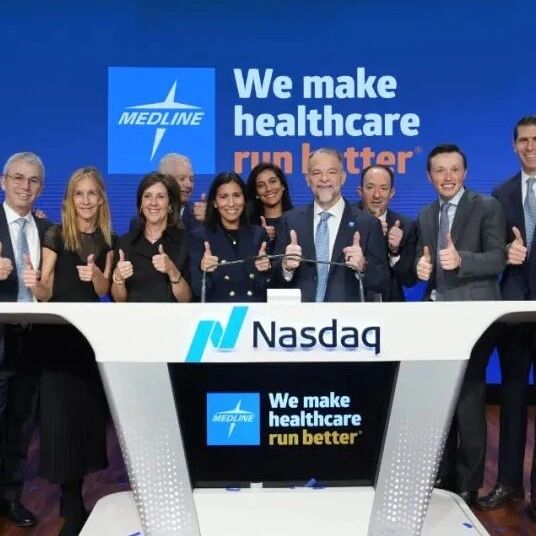
Core Viewpoint - Medline, a global healthcare company, has successfully gone public on NASDAQ, marking the largest IPO in the U.S. this year with a market capitalization exceeding $54 billion, providing substantial returns for its private equity backers [4][7][10]. Company Background - Medline was founded in 1966 by Jim and John Mills, inspired by their grandfather's sewing workshop in Chicago, initially focusing on manufacturing medical garments [8][9]. - The company briefly went public in 1972 but was privatized five years later, remaining a family-owned business until a private equity consortium acquired a majority stake in 2021 [9][13]. IPO Details - Medline's IPO raised approximately $6.26 billion by issuing 216 million shares at $29 each, with significant oversubscription, including cornerstone investments from entities like Singapore's GIC [10][12]. - The IPO not only surpassed the previous largest IPO of CATL in Hong Kong but also set a record for the largest private equity-backed IPO in history [10][13]. Financial Performance - Since the acquisition by private equity firms, Medline's revenue has surged nearly 50%, from $17.5 billion in 2020 to an estimated $25.5 billion in 2024 [13][14]. - The company has maintained a compound annual growth rate of 18% in sales since its inception, showcasing a remarkable growth trajectory [12]. Shareholder Gains - Major shareholders, including Blackstone, Carlyle Group, and Hellman & Friedman, collectively hold significant voting rights and have seen their investments appreciate substantially, with the value of Medline increasing by over $20 billion since the acquisition [15][16]. - Blackstone has already begun to realize profits from the IPO, selling approximately 13.46 million shares for about $382 million [15]. Future Outlook - Blackstone has several upcoming IPO projects, indicating a strong pipeline for future exits, with expectations of achieving one of its largest issuance years [16].