36氪

Search documents
「1元起拍」的宜家拍卖会,比苏富比玩得还刺激
36氪· 2026-01-12 13:35
Core Viewpoint - The article discusses how IKEA is democratizing the auction experience by offering low-entry auctions for everyday items, contrasting it with traditional high-end auctions like Sotheby's and Christie's [14][15][19]. Group 1: Auction Dynamics - IKEA's auctions start at prices as low as 1 yuan or 1% of the original price, making it accessible to the general public [17][19]. - The auction items include a variety of everyday products, such as toys, lamps, desks, and cabinets, which are often slightly damaged or overstocked [21]. - The auction process includes standard procedures like online reservations and live bidding, creating an engaging experience for participants [23][25]. Group 2: Competitive Environment - Participants in IKEA's auctions are primarily budget-conscious individuals, creating a competitive atmosphere where everyone aims to get the best deal [36][40]. - Unlike high-end auctions where wealthier bidders may not be as price-sensitive, IKEA's auctions feature participants who are all looking to save money, leading to intense bidding wars [38][41]. - The auction's structure encourages strategic bidding, as participants must balance their desire to win with the need to keep costs low [45][47]. Group 3: Experience and Engagement - The fast-paced nature of IKEA's auctions, often with time limits, adds an element of excitement and urgency, requiring quick decision-making from bidders [51]. - The experience is designed to be enjoyable, allowing participants to feel a sense of achievement whether they win or lose, thus enhancing customer engagement [56][57]. - Other brands like Decathlon and Sam's Club have also started similar low-entry auctions, indicating a growing trend in the retail industry [60].


前字节核心产品骨干做了款AI项链,他想分析老外的每一餐丨产品观察
36氪· 2026-01-12 13:35
Core Viewpoint - The article discusses the innovative approach of OdyssLife in the health monitoring sector, particularly focusing on the launch of their AI necklace, Odyss N1, which aims to provide comprehensive dietary and exercise tracking through advanced technology [4][5][15]. Group 1: Product Overview - Odyss N1 is the world's first Always-On smart necklace that integrates multi-modal perception capabilities, including image, audio, and motion sensing, to continuously monitor users' dietary and exercise behaviors [5][6]. - The necklace weighs less than 30 grams and features a discreet design that allows for comfortable all-day wear, providing a wide-angle view of the user's dining area [8]. - The device employs a unique "frame capture" technique to efficiently gather data on food intake and physical activity without the need for continuous video recording, thus conserving battery life [9][10]. Group 2: Market Potential - The global wearable device market is projected to exceed 560 million units by 2024, with the core health monitoring segment expected to reach a market size of approximately $65 billion to $80 billion [14]. - OdyssLife targets a specific demographic of 25 to 50-year-old North American users, capitalizing on the structured nature of their meal preparation and shopping habits, which facilitates accurate data collection [12][15]. Group 3: User Experience and Data Privacy - Odyss N1 aims to provide a seamless user experience by eliminating the need for manual input, as traditional dietary tracking apps often lead to user frustration due to their cumbersome processes [9][11]. - The product is designed with privacy in mind, ensuring that no raw images or audio recordings are stored, and only structured data related to food intake and activity levels is retained for user insights [17][18]. Group 4: Competitive Landscape - The article highlights the existing competition in the health monitoring space, including successful products like the Oura ring and Whoop bands, which focus on sleep and exercise monitoring, respectively [14]. - OdyssLife's entry into the market is seen as a response to the growing demand for innovative health monitoring solutions, particularly in the dietary tracking segment, which remains relatively untapped [15][16].

天价羽绒服的滤镜,被300元的超市平替彻底撕碎了
36氪· 2026-01-12 09:30
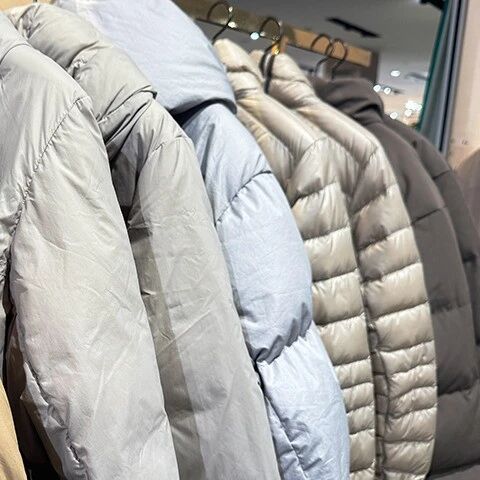
Core Viewpoint - The article discusses the decline of high-end down jackets, particularly brands like Canada Goose and Moncler, and highlights the rising popularity of affordable down jackets sold in supermarkets, which offer better value for money [5][6][12]. Group 1: Market Trends - Canada Goose's revenue growth has plummeted from 21.54% to 1.1% between fiscal years 2022 and 2025, with its market value shrinking by over 44 billion RMB [5]. - Moncler has also experienced a decline, with its revenue dropping in the third quarter of 2025, ending a nine-year streak of double-digit growth [6]. - The average price of domestic down jackets has risen to 881 RMB in 2023, driven by high-end branding and marketing strategies [20]. Group 2: Consumer Behavior - Consumers are increasingly turning to supermarkets for down jackets, with brands like Costco and Sam's Club seeing significant sales growth [10][12]. - Affordable options, such as a 256 RMB down jacket from Pang Donglai and a 499 RMB long down jacket from Sam's Club, have become popular, often selling out [26][28]. - A shift in consumer mindset is evident, with 61% of consumers indicating they are less impulsive in their purchases and focus more on value rather than price [60]. Group 3: Competitive Advantages of Supermarkets - Supermarkets utilize a "current stock" procurement model, reducing inventory pressure compared to traditional fashion brands that rely on "futures" [30]. - The down jackets sold in supermarkets are often classic styles with minimal design risks, ensuring high sell-through rates [30]. - Supermarkets leverage down jackets to drive traffic and boost sales of other products, allowing them to maintain lower prices [30]. Group 4: Consumer Preferences and Trust - Consumers are becoming more knowledgeable about down jacket specifications, with many prioritizing parameters like fill power and material quality in their purchasing decisions [37][41]. - Brands that emphasize transparency and trust, such as Pang Donglai and Sam's Club, are gaining consumer loyalty by providing clear information about product specifications and quality [51][53]. - The article notes that the market for down jackets is plagued by issues like inflated prices and misleading labeling, making trust a valuable commodity [49][50]. Group 5: Industry Dynamics - The success of supermarket down jackets is part of a broader trend where consumers are rejecting overpriced luxury items in favor of practical, affordable alternatives [66][69]. - The rise of "county town down jackets" and other practical clothing options reflects a shift towards value-driven purchasing in everyday wear [70][71]. - The article suggests that traditional marketing strategies emphasizing high-end materials and outdoor lifestyles are becoming less effective as consumers prioritize practicality and affordability [71][72].

CES2026揭示的AI三场变革:从眼镜到机器人、从家庭到工业丨36氪直击CES
36氪· 2026-01-12 09:30
Core Insights - The article emphasizes that AI is transitioning from being merely a tool to becoming the "underlying operating system" of human life, as highlighted by NVIDIA CEO Jensen Huang at CES 2026 [3][4] - The event showcased a clear trend of AI embedding itself into physical reality and daily life, with significant advancements in AI chip performance expected in the coming years [4][6] Group 1: AI in Daily Life - AI is becoming ubiquitous, with a notable shift in information interaction methods, particularly through the rise of smart glasses, which are predicted to replace smartphones as the primary information access point [5][10] - Over 50 companies showcased AI and AR glasses, indicating a strong market growth, with predictions of a significant increase in the global smart glasses market by 2025 [10][11] - Chinese companies are leading the charge in the smart glasses market, with products like Rokid's AI glasses and INMO's offerings demonstrating advanced features and lightweight designs [12][15] Group 2: AI in Home and Industrial Applications - AI is increasingly integrated into home cleaning and organization, with advancements in robotic vacuum cleaners and other smart home devices that enhance user experience [18][21] - Companies like Ecovacs and Yunzhijia are pushing the boundaries of home cleaning technology, evolving from simple cleaning tools to comprehensive home management systems [18][21] - In industrial applications, AI is transforming operations, with companies like Black Sesame Technology showcasing advanced driver assistance systems and smart robotics that enhance automation and efficiency [38][41] Group 3: AI in Health and Work - AI is also making strides in health and wellness, with products like LumiMind's LumiSleep aimed at addressing sleep disorders through innovative brainwave monitoring technology [25][28] - The introduction of personal assistant robots, such as LOONA DeskMate, highlights the growing demand for AI in workplace settings, focusing on enhancing productivity and emotional well-being [29][31] - The CES 2026 event illustrates a shift towards AI systems that not only assist but also understand and adapt to human needs in various contexts [31][32] Group 4: Future Outlook - The article suggests that the next decade will see a significant transformation in consumer electronics due to AI, impacting various sectors including automotive, home appliances, and industrial systems [7][36] - The integration of AI into everyday life is expected to redefine how humans interact with technology, moving towards a more seamless and intuitive experience [43][48] - The participation of Chinese tech companies at CES indicates a collaborative future in technology development, moving beyond national narratives to a more global perspective [48][49]



老干妈,出山救子,又赚翻了
36氪· 2026-01-12 09:30
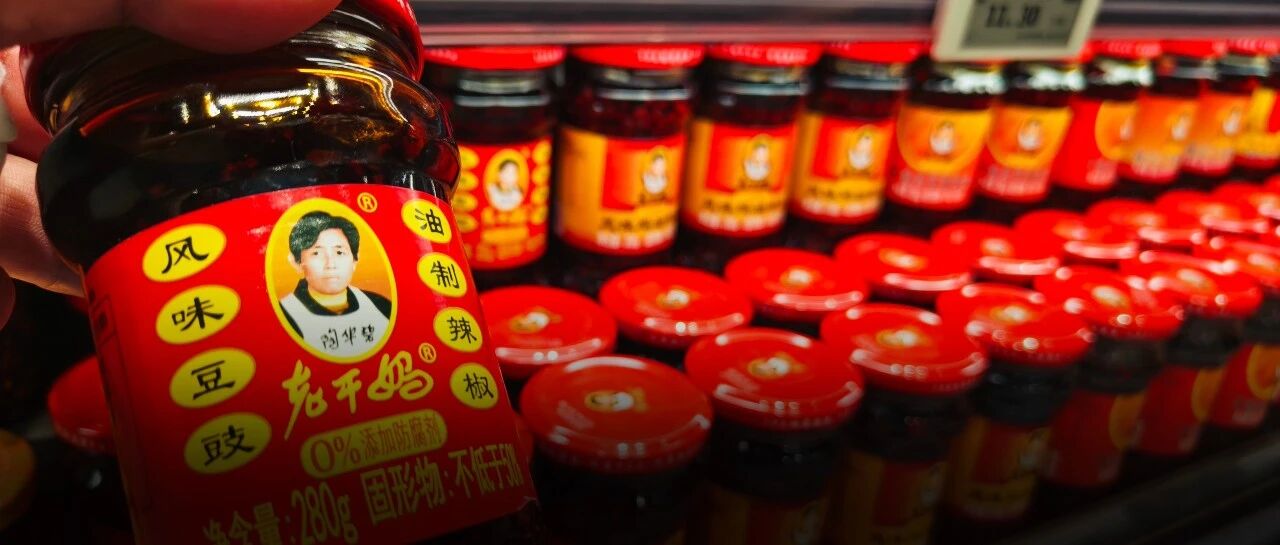
Core Viewpoint - Lao Gan Ma, a well-known Chinese chili sauce brand, has made a significant recovery in revenue, approaching 5.4 billion yuan in 2024, nearly matching its historical peak from 2020, after experiencing a sharp decline in 2021 [6][48]. Revenue Recovery - The company has achieved a "bottom rebound" in revenue over three years, with 2024 revenue nearing 54 billion yuan, almost equal to the historical peak of 54.03 billion yuan in 2020 [6][48]. - Lao Gan Ma holds approximately 20% market share in the Chinese chili sauce market, maintaining its position as the leading brand [8]. Management Transition and Challenges - The founder, Tao Huabi, returned to the front line at the age of 72 to address a crisis caused by her sons' management decisions, which included substituting high-quality Guizhou chili peppers with cheaper alternatives [10][20]. - The decision to change the chili source led to a decline in product quality and a subsequent drop in revenue, with sales falling from 4.5 billion yuan in 2016 to 4.3 billion yuan in 2018 [19]. Quality Control and Brand Integrity - Upon her return, Tao Huabi reinstated the use of Guizhou chili peppers, emphasizing quality over short-term profits, which laid the foundation for the brand's revenue rebound [21][25]. - The commitment to maintaining the original flavor and quality of the product is seen as crucial for consumer loyalty, as the brand's identity is closely tied to its unique taste [24][54]. Market Strategy and Positioning - Lao Gan Ma's conservative approach to marketing and expansion has been effective, focusing on core products and maintaining stable pricing, which has created a strong price anchor in the market [38][46]. - The brand has successfully expanded into over 160 countries, with overseas revenue growth outpacing domestic averages, achieving a year-on-year increase of approximately 30% in 2023 [48][50]. Consumer Connection and Brand Loyalty - The brand's success is attributed to its deep-rooted connection with consumers, who value the familiar taste of Lao Gan Ma as a staple in their diets, reflecting a broader emotional attachment rather than just a preference for flavor [54][56]. - The company's strategy emphasizes the importance of consistency and reliability in a rapidly changing market, focusing on core competencies rather than chasing fleeting trends [46][54].
AI差点骗过全世界,这个8.7万赞的帖子被揭穿后,我开始怀疑一切了
36氪· 2026-01-12 09:30
Core Viewpoint - The article discusses a recent incident involving a purported whistleblower from a food delivery platform, which turned out to be an AI-generated hoax, highlighting the challenges of verifying information in the age of AI [4][6][23]. Group 1: Incident Overview - A user claiming to be a software engineer from a food delivery platform alleged that the company manipulates algorithms to harm consumers and delivery workers [5][8]. - The allegations included tactics such as delaying regular orders to make paid priority orders appear faster and charging a "regulatory response fee" to lobby against driver unions [8][10]. - The whistleblower claimed the platform uses a "Desperation Score" to categorize drivers based on their willingness to accept low-paying orders, which affects their access to higher-paying jobs [8][10]. Group 2: Investigation and Verification Challenges - A journalist contacted the whistleblower for more information, but inconsistencies in the whistleblower's communication raised suspicions about the authenticity of the claims [14][19]. - The whistleblower provided a document claiming to be from Uber's market dynamics team, which contained detailed descriptions of the alleged practices, but also included irrelevant information about regulatory evasion [16][18]. - AI detection tools later confirmed that the employee ID provided by the whistleblower was likely generated or edited by AI, raising further doubts about the legitimacy of the claims [20][24]. Group 3: Broader Implications of AI in Information Verification - The article emphasizes that the rapid advancement of AI tools has made it easier for fraudsters to create convincing false narratives, increasing the difficulty for journalists to verify information [23][25]. - The phenomenon of deepfakes and AI-generated content is leading to a growing distrust in information, as the public may begin to view all information as potentially deceptive [26][28]. - The article concludes that the evolution of deepfake technology is contributing to a future characterized by uncertainty and skepticism towards factual information [28].


年营收超10亿,高瓴投出「中国最大餐酒吧」
36氪· 2026-01-11 23:56
Core Viewpoint - COMMUNE is positioned as a hybrid dining and drinking establishment targeting Generation Z and the new middle class, combining a self-service drink area, a super bar, and dining spaces, reflecting a shift in consumer preferences towards social dining experiences [5][6][24]. Financial Performance - The company’s revenue is projected to grow from 845 million RMB in 2023 to 1.074 billion RMB in 2024, representing a year-on-year increase of 27.1% [11]. - By the first three quarters of 2025, revenue is expected to reach 872 million RMB, showing a 14.2% year-on-year growth [11]. - Adjusted net profit is forecasted to fluctuate, with 73.4 million RMB in 2023, declining to 66.2 million RMB in 2024, and rebounding to 78.6 million RMB in the first three quarters of 2025 [14]. Store Expansion and Operations - The number of COMMUNE stores is set to increase from 94 at the end of 2023 to 110 by the end of 2024, with a total of 112 stores across 40 cities by September 2025 [13]. - The average payback period for a store investment is approximately 17 months, with the break-even point around 3 months [26]. Profitability and Cost Structure - COMMUNE maintains a high gross margin of over 65%, with 2023 reaching 70.5%, which is significantly higher than the average for the restaurant industry [17]. - The company benefits from a product mix of high-margin alcoholic beverages and food, with alcoholic drinks contributing about 45% of revenue, 85% of which are alcoholic beverages [19]. Market Trends and Consumer Behavior - The restaurant industry in China saw a revenue increase to over 5 trillion RMB in 2023, but growth slowed to 5.3% in 2024 [28]. - There is a strategic shift in pricing to adapt to market conditions, leading to a temporary decline in same-store sales, particularly in first-tier cities [29]. - By 2024, food sales are expected to surpass beverage sales for the first time, indicating a shift in consumer preferences towards dining experiences [30]. Future Expansion Plans - The company plans to open 30-40 new stores in 2024, focusing on first and second-tier cities, with a long-term goal of adding 105-135 stores by 2028 [32].

8点1氪:“死了么”APP估值已达1000万元;霍启刚主动公开个人财产;iPhone 4需求激增近1000%
36氪· 2026-01-11 23:56
Core Viewpoint - The "Is It Dead?" app has gained significant attention, achieving a valuation of 10 million RMB, with the founder planning to sell 10% of the company for 1 million RMB, indicating a rapid rise in interest and user engagement [2][4]. Summary by Sections App Overview - The "Is It Dead?" app is designed as a lightweight safety tool for individuals living alone, requiring users to set emergency contacts and check in regularly. If a user fails to check in for several days, an email is automatically sent to their emergency contacts [3][4]. Development and Costs - The app was initiated around mid-2025, with actual development taking less than a month and initial costs reported to be just over 1,000 RMB [3][4]. User Growth - The app's user downloads surged over 100 times in a short period, reflecting a significant increase in popularity and usage [4]. Valuation Insights - The founder, Mr. Guo, acknowledged the varying perceptions of the app's value during its explosive growth phase, with the current valuation set at 10 million RMB based on the planned sale of shares [4].



79元「结婚套餐」爆发,餐企巨头纷纷盯上「小宴会」
36氪· 2026-01-11 23:56
以下文章来源于餐企老板内参 ,作者内参君 餐企老板内参 . 餐饮头部新媒体平台!精准覆盖数百万餐饮产业高质量读者;财经作家吴晓波、源码资本等投资;业务涵盖媒体传播、峰会、培训、游学餐访、中餐出 海、"餐里眼"大数据、"72餐"供应链平台、行研报告等…(更多资讯服务下载:餐饮老板内参APP) 不是规模缩小, 而是价值聚焦。 文 | 内参君 来源| 餐企老板内参(ID:cylbnc) 封面来源 | Unsplash 从场地租赁到情绪服务 10人以下小宴会正在陆续"冒头" 曾经,婚宴是餐饮酒店业的绝对主角。伴随着结婚登记数逐年下降,婚宴的预定量也在递减。一方面,是"五星级酒店8888元一桌的酒席被质疑全是预制 菜",另一方面,餐企巨头们却开始抢滩"小宴会"市场,全国各地,各种"轻量化"的小型宴席暗暗发力。 有意思的是,小宴会并非局限于传统的中餐厅,从热辣的火锅逐渐蔓延到年轻人喜爱的汉堡、奶茶,一场围绕"聚会"展开的餐桌变革正在不知不觉中改写 着餐饮市场,特别是宴会市场的生存规则。 比如,几个月前海底捞在深圳开出首家专属宴会店,宣告全面进入婚宴、升学宴、生日宴、庆功宴、答谢宴以及公司年会等宴会市场,最低档餐标仅需 1 ...


涨价不灵的香奈儿,开始换个姿势「吃老本」
36氪· 2026-01-11 13:35
Core Viewpoint - Chanel is undergoing a significant transformation under the new artistic director Matthieu Blazy, moving away from its traditional designs to embrace a more modern and diverse aesthetic, reflecting a shift in brand strategy amidst a challenging luxury market [5][16][39]. Summary by Sections Design Changes - The Spring/Summer 2026 collection showcased at the Palais de Tokyo marked a departure from Chanel's classic styles, featuring a more casual and modern approach, with the first look inspired by men's tailoring [6][8]. - The iconic tweed suits appeared later in the show, indicating a shift towards a more relaxed and less formal style, moving away from the "elegant socialite" image [8][9]. - Blazy's design philosophy includes a "de-symbolization" of the brand, with a conscious effort to tone down recognizable elements like the double C logo [9][12]. Leadership Transition - Matthieu Blazy, appointed as the artistic director, aims to redefine Chanel's identity by revisiting its roots and incorporating modern elements, contrasting with the previous leadership's approach [12][31]. - The management's concern about Chanel's relevance in contemporary fashion is highlighted by a pivotal conversation between Blazy and chairman Alain Wertheimer, emphasizing the need for modernization [19][21]. Market Performance - Despite a decline in creativity, Chanel's sales surged to nearly $20 billion in 2023, largely due to aggressive price increases, with a reported 16% growth, 9% of which was attributed to price hikes [23][24]. - The brand's pricing strategy has led to significant increases in product prices, such as the Classic Flap bag, which has more than doubled since 2019 [24][26]. Consumer Perception - The brand's recent collections have sparked polarized reactions, with some critics questioning the shift towards a more accessible aesthetic, while others praise the representation of diverse and modern femininity [14][16]. - Social media has amplified concerns regarding product quality, leading to a growing perception of Chanel as relying on its legacy rather than innovation [26][39]. Future Outlook - Chanel is at a critical juncture, with leadership changes and a new creative direction aimed at revitalizing the brand's image and relevance in a competitive luxury market [36][39]. - The company is expected to take a long-term view on its transformation, allowing Blazy the time to implement changes that resonate with contemporary consumers [39].