申万宏源证券上海北京西路营业部

Search documents
早盘直击|今日行情关注
申万宏源证券上海北京西路营业部· 2025-11-19 07:05
Market Overview - The external market continues to weaken, leading to a contraction in the A-share market. Recent adjustments in overseas markets, particularly regarding AI development, have caused significant declines in major US tech companies. Additionally, the expectation for a Federal Reserve rate cut in December has decreased, resulting in a decline in market risk appetite [1] - The A-share market has shown signs of adjustment influenced by related industry chains, with a general trend of high-low switching and a defensive style typical of year-end consolidation, characterized by sector rotation, unclear main lines, and balanced allocation [1] Market Performance - On Tuesday, both markets continued to adjust, with the Shanghai Composite Index falling below the 30-day moving average. The Shenzhen Component Index also remained below its short-term moving averages, with intraday lows approaching the 60-day moving average. The total trading volume for the day was less than 2 trillion yuan, slightly increasing from Monday [1] - Market hotspots were primarily concentrated in the TMT (Technology, Media, and Telecommunications) sector. In terms of investment style, large-cap blue-chip stocks showed relative resilience, while small and mid-cap stocks experienced larger declines [1] Market Dynamics - The Shanghai Composite Index has been fluctuating around the 4000-point mark, showing a rapid decline after reaching a new high last Friday. The Shenzhen Component Index is currently in a consolidation phase, operating below all short-term moving averages. Close attention is needed to see if short-term moving averages can be regained [1]


洞见 | 申万宏源刘健:以“三新”理念把脉“十五五”投资新机遇
申万宏源证券上海北京西路营业部· 2025-11-19 07:05
Core Viewpoint - The article emphasizes the new opportunities in investment during the "14th Five-Year Plan" period, driven by a new factor system, a restructured institutional framework, and an innovative service system in the capital market [1]. Group 1: New Factor System - The new factor system, represented by talent and new assets, is becoming a new driving force for China's economic growth. The "14th Five-Year Plan" highlights the importance of technological innovation and original breakthroughs [2]. - Accumulation of technological factors will enable breakthroughs in future industries such as artificial intelligence, biomedicine, hydrogen energy, nuclear fusion, embodied intelligence, and 6G mobile communication [2]. - Data factors will drive economic growth by transforming consumption channels and habits, leading to new consumption patterns such as service consumption, emotional consumption, and integrated consumption [2]. Group 2: New Institutional Framework - The capital market is expected to enhance its quality and capacity under the guidance of policies aimed at activating the market and coordinating investment and financing functions [3]. - Reforms in the capital market's basic systems will significantly improve market inclusiveness and adaptability, with a focus on deepening reforms in the Sci-Tech Innovation Board, Growth Enterprise Market, and Beijing Stock Exchange [3]. - The formation of a healthy market ecosystem will enhance the attractiveness of the Chinese market, promoting mutual constraints and cooperation among institutional investors, intermediaries, listed companies, and retail investors [3]. Group 3: New Service System - The company is accelerating reforms in its organizational structure, management model, and business system to adapt to changes in the economic landscape, focusing on a comprehensive service system [4]. - In financing services, the company is developing diversified service solutions that encompass venture capital, IPOs, mergers and acquisitions, refinancing, asset securitization, ESG, and strategic consulting [4]. - The investment service aims to meet diverse asset allocation needs of investors with a robust product offering, while trading services are enhancing liquidity support through innovative products like OTC derivatives, market making, ETFs, and carbon finance [4].

数据点评 | 财政支出缘何“骤降”?(申万宏观·赵伟团队)
申万宏源证券上海北京西路营业部· 2025-11-19 07:05
Core Viewpoint - The article discusses the significant decline in fiscal expenditure, analyzing the reasons behind this trend and its implications for the economy [2] Group 1: Fiscal Expenditure Analysis - Fiscal expenditure has dropped sharply, with a year-on-year decrease of 20% in the first quarter [2] - The decline is attributed to a combination of factors, including reduced government investment and a slowdown in local government financing [2] - The article highlights that the decrease in fiscal spending could lead to a contraction in economic growth if not addressed [2] Group 2: Implications for Economic Growth - The reduction in fiscal expenditure may impact infrastructure projects, which are crucial for stimulating economic activity [2] - Analysts suggest that the government may need to implement measures to counteract the negative effects of reduced spending on growth [2] - The article emphasizes the importance of monitoring fiscal policies to ensure they align with economic recovery goals [2]

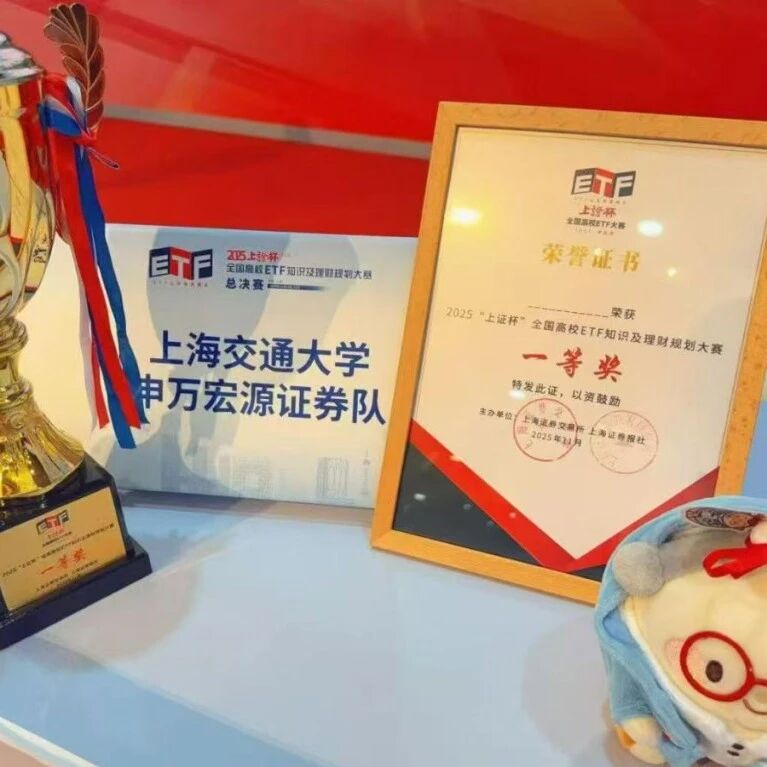
申万宏源证券携手上海交通大学战队摘得2025“上证杯”全国高校ETF知识及理财规划大赛一等奖
申万宏源证券上海北京西路营业部· 2025-11-19 07:05
作为由上海证券交易所与上海证券报社联合主办的行业标杆投教赛事,"上证杯"已成为业内最高规格、最具影响力的投教赛事之一。从4月赛事启动到 11月总决赛,申万宏源证券全程参与战队备战研究、竞赛答题、投资培训、模拟演练答辩辅导。此次申万宏源证券与上海交通大学的合作,既是校企协同 培育高素质金融人才的生动实践,更是公司积极践行"投资者教育纳入国民教育体系"政策要求的具体行动。 未来,申万宏源证券将继续携手各大高校与市场机构,不断创新投资者教育的形式与内容、强化资源支撑,打造更多元、更专业、更贴近青年群体的 投教平台与合作项目,推动投资者教育纳入国民教育体系向纵深发展。 11月15日,2025"上证杯"全国高校ETF知识及理财规划大赛总决赛圆满落幕。由申万宏 源证券与上海交通大学联合组建的"上海交通大学-申万宏源证券队",历经200余天的层层选 拔,从海内外3000余所高校、9万余名参赛学子中突围, 成功斩获全国一等奖 。 来源:申万宏源证券投教基地 AWARD ...
【申万宏源策略】双宽驭险,中期伏波——申万宏源2026年全球资产配置投资策略
申万宏源证券上海北京西路营业部· 2025-11-19 07:05
申万宏源策略 【申万宏源策略】双宽驭险,中期伏波——申万宏源2026年全球资产配置投资策略 原创 阅读全文 ...

新股日历|今日新股/新债提示
申万宏源证券上海北京西路营业部· 2025-11-19 07:05
免责声明 申斤宏源证券 星期三 11月 E S H H E -1874141 0 今日中签缴 .. 0 今日申 .. 今日十一 今日无新股新债 投资有风险,入市需谨慎。本内容不构成任何投资建议。投 资者不应以该等信息取代其独立判断或仅根据该等信息做出 决策。申万宏源对这些信息的准确性或完整性不作保证,亦 不对因使用该等信息而引发或可能引游艇操作器报告圆膏Gr ...

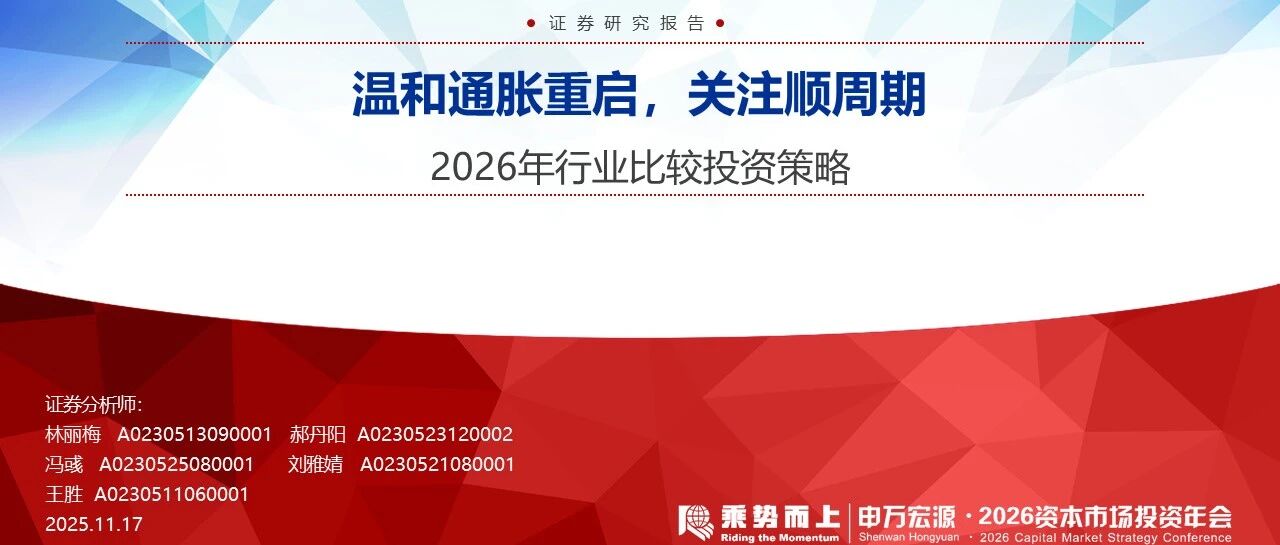
【申万宏源策略】温和通胀重启,关注顺周期——2026年行业比较投资策略
申万宏源证券上海北京西路营业部· 2025-11-18 02:40
Core Viewpoint - The article emphasizes a moderate inflation restart and suggests focusing on cyclical sectors for investment opportunities in 2026 [2] Group 1: Economic Outlook - The article predicts a gradual recovery in economic growth, driven by policy support and consumer demand [2] - Inflation is expected to stabilize around a moderate level, which will influence investment strategies [2] Group 2: Sector Analysis - The cyclical sectors are highlighted as potential beneficiaries of the economic recovery, particularly in industries such as materials and industrials [2] - The article suggests that companies within these sectors may experience improved earnings due to increased demand and pricing power [2] Group 3: Investment Strategy - A focus on value stocks within cyclical sectors is recommended, as they are likely to outperform growth stocks in the current economic environment [2] - The article advises investors to consider companies with strong balance sheets and cash flow generation capabilities [2]
“申”挖数据 | 估值水温表
申万宏源证券上海北京西路营业部· 2025-11-18 02:40
Core Viewpoint - The current valuation levels of the A-share market indicate potential investment opportunities and risks, particularly in the non-bank financial and food and beverage sectors, which are currently undervalued compared to their historical averages [1][6]. Valuation Levels - The current Buffett Indicator for A-shares stands at 89.92%, indicating a relatively high valuation compared to historical data [6][21]. - Major broad market indices have PE (TTM) valuations above 20%, with specific indices like the Shenzhen Component Index and CSI 300 at 80.70% and 86.50% historical percentiles, respectively, suggesting caution due to high valuations [7][19]. - Non-bank financial and food and beverage sectors have PE (TTM) valuations at 5.78% and 14.57% historical percentiles, respectively, making them areas of focus for potential investment [7][31]. Industry Valuation Levels - The steel, coal, electronics, computer, real estate, and retail sectors have PE (TTM) valuations at 81.52%, 81.60%, 86.09%, 95.02%, 98.64%, and 98.97% historical percentiles, indicating higher investment risks in these areas [7][31]. - The food and beverage sector shows a PE (TTM) valuation of 16.52, with a recent increase of 5.99%, suggesting a positive trend [31]. - The banking sector has a low PE (TTM) valuation of 4.31, indicating potential undervaluation compared to other sectors [31]. Market Overview - The total market capitalization for the Shanghai market is approximately 645.14 billion, with an average PE ratio of 16.36 [18]. - The Shenzhen market has a total market capitalization of around 426.13 billion, with an average PE ratio of 31.13, reflecting a significant difference in valuation between the two markets [19].

牛市两段论——申万宏源2026年A股投资策略
申万宏源证券上海北京西路营业部· 2025-11-18 02:40
Core Viewpoint - The article presents a two-stage bull market theory for A-shares in 2026, suggesting a strategic approach to investment during this period [2] Group 1: Market Outlook - The first stage of the bull market is expected to be driven by macroeconomic recovery and policy support, leading to a significant increase in market liquidity [2] - The second stage will likely be characterized by corporate earnings growth and improved fundamentals, which will sustain the market rally [2] Group 2: Investment Strategy - The article emphasizes the importance of sector rotation, recommending investments in cyclical sectors during the initial phase and defensive sectors as the market matures [2] - It highlights the potential for technology and healthcare sectors to outperform in the long term, given their growth prospects and innovation [2] Group 3: Risk Factors - The analysis points out potential risks such as geopolitical tensions and domestic economic challenges that could impact market performance [2] - It also notes the importance of monitoring inflation trends and interest rate movements as critical factors influencing market dynamics [2]

早盘直击|今日行情关注
申万宏源证券上海北京西路营业部· 2025-11-18 02:40
Group 1 - The macroeconomic data released in October indicates that the economic development pattern for the fourth quarter continues to show a trend of high performance earlier in the year followed by a decline [1] - The market's focus is on the domestic economic situation, with limited impact from macro totals due to expectations of policy effects [1] - Recent adjustments in overseas markets, particularly regarding AI development, have led to collective adjustments among US tech companies [1] Group 2 - On Monday, the stock markets experienced fluctuations with a decrease in trading volume, with the Shanghai Composite Index closing below the 20-day moving average [1] - The Shenzhen Component Index performed slightly better than the Shanghai Composite but remained below short-term moving averages throughout the day [1] - Market hotspots were primarily in growth sectors such as military and computer industries, while large-cap blue-chip stocks saw significant declines [1] Group 3 - The Shanghai Composite Index has been oscillating around the 4000-point mark, showing volatility after reaching a new high last week and subsequently declining [1] - The Shenzhen Component Index is in a consolidation phase, also trading below all short-term moving averages [1] - There is a recommendation to pay attention to coal ETFs and rare metal ETFs during this period of market adjustment [1]