半导体芯闻

Search documents
中国台湾半导体,2025年产值年增率达22%以上
半导体芯闻· 2025-08-18 10:48
Group 1 - The core viewpoint of the article highlights the strong growth forecast for Taiwan's semiconductor industry, driven by robust global demand for artificial intelligence applications, with an expected revenue increase of over 22% this year [1][2] - The Industrial Technology Research Institute (ITRI) has revised its revenue forecast for Taiwan's semiconductor industry to NT$6.5 trillion (approximately US$216.6 billion), reflecting a year-on-year growth of 22.2%, up from a previous estimate of 19.1% [1] - TSMC has raised its sales growth forecast from 24%-26% to 30%, attributing this increase to the higher computing power required for emerging AI applications, which has boosted global demand for advanced chips [1] Group 2 - The IC manufacturing sector is projected to achieve a revenue of NT$4.36 trillion, representing a year-on-year growth of 27.5%, surpassing the earlier forecast of 23.1% [1] - The pure wafer foundry business, led by TSMC, is expected to reach a revenue of NT$4.16 trillion, with a year-on-year increase of 28.3% [1] - The IC packaging sector is anticipated to grow by 13.5% to NT$480.3 billion, while the IC testing sector is expected to reach NT$230.5 billion, reflecting a growth of 15.2% [2]


三星HBM3E为何搞不定英伟达?
半导体芯闻· 2025-08-18 10:48
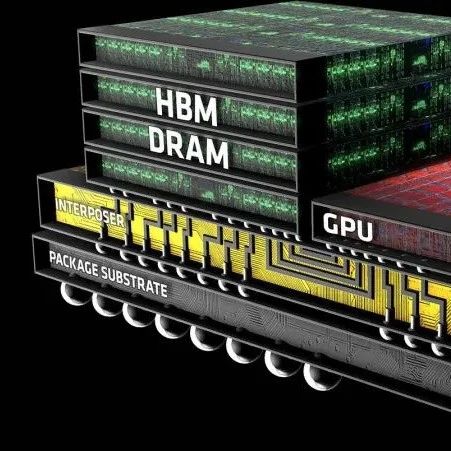
Core Viewpoint - Samsung Electronics is expected to start shipping its fifth-generation high bandwidth memory (HBM3E) products to Broadcom in the second half of this year, but delays have occurred due to quality testing by Nvidia, which has postponed the delivery of 12-layer HBM3E products to its main customers [1][2]. Group 1: Supply Chain Challenges - Samsung has faced three main challenges in supplying Nvidia: it has not met Nvidia's thermal standards, which are twice as strict as Broadcom's; the digital signal quality decreases when Samsung's HBM is connected to Nvidia's NVLink; and Samsung's yield rate is lower compared to competitors [1][2][3]. - The thermal requirements from Broadcom are approximately half of those from Nvidia, allowing Samsung to potentially meet Broadcom's needs more easily [2]. Group 2: Product Design and Performance - Nvidia's AI semiconductors are designed as general-purpose products for a wide range of applications, leading to higher power consumption and heat generation, which can negatively impact performance [2]. - The introduction of NVLink aims to ensure that even with a large number of AI semiconductors installed, each chip can respond quickly to avoid bottlenecks; however, Samsung's HBM has performance issues that affect digital signal quality when connected to NVLink [3]. Group 3: Quality Improvement Efforts - Samsung's lower HBM yield rate is seen as a significant issue that hampers timely delivery and weakens its negotiating position on pricing; the company is reportedly working on redesigning its DRAM products to improve quality and stabilize yield rates [3].

芯片,TOP 20
半导体芯闻· 2025-08-15 10:29
Core Viewpoint - The global semiconductor market is projected to reach $180 billion in Q2 2025, marking a 7.8% increase from Q1 2025 and a 19.6% increase from Q2 2024, continuing a trend of over 18% year-on-year growth for six consecutive quarters [2]. Company Revenue Insights - Nvidia is forecasted to generate $45 billion in revenue for Q2 2025, maintaining its position as the largest semiconductor company globally [5]. - Samsung and SK Hynix follow as the second and third largest companies, with revenue growth rates of 11% and 26% respectively [5]. - Broadcom ranks fourth, while Intel has dropped to fifth place, reflecting a decline in its market position [5]. - The average revenue growth across semiconductor companies for Q2 2025 is 7%, with significant growth seen in memory manufacturers [5][6]. Growth Drivers - Demand for artificial intelligence applications is identified as a key driver of growth for many semiconductor companies [7]. - Companies like Micron and Kioxia expect substantial revenue increases of 20% and 30% respectively in Q3 2025, driven by strong demand for AI memory [6][7]. - STMicroelectronics anticipates a 15% revenue growth, with all markets except automotive showing positive trends [7]. Market Trends and Predictions - The semiconductor market is expected to see double-digit growth for the full year 2025, with predictions ranging from 14% to 16% based on strong performance in the first half of the year [7]. - The WSTS has adjusted its growth forecast for 2025 from 11.2% to 15.4% based on Q2 data [7]. Trade and Tariff Impacts - The uncertainty surrounding tariffs, particularly from the U.S. government, poses challenges for global trade in semiconductors [9]. - Recent agreements have allowed companies like Nvidia and AMD to export certain AI chips to China under specific conditions, highlighting the complexities of trade regulations [9]. - The smartphone sector has already felt the impact of tariffs, with a significant drop in imports and sales in the U.S. market [10][11].


印度首颗芯片,即将推出
半导体芯闻· 2025-08-15 10:29
Group 1 - The Indian Prime Minister Narendra Modi announced that the first domestically produced semiconductor chip will enter the market by the end of the year, highlighting the government's commitment to technological self-sufficiency amid global tariff pressures [2] - The Indian federal cabinet recently approved four new semiconductor manufacturing projects under the Semiconductor Mission plan, with a total investment of approximately 46 billion Indian Rupees [2] - Major global players, including American chip manufacturers Intel and Lockheed Martin, are among the investors in these semiconductor initiatives [2] Group 2 - Six additional semiconductor factories are under construction in states such as Gujarat, Assam, and Uttar Pradesh, with the facilities expected to soon produce India's first "Make in India" chip [2] - These initiatives are a response to the 50% tariff imposed by former U.S. President Donald Trump on Indian imports, which includes a 25% tariff due to India's purchase of Russian oil [2]
专题论坛亮点解读①,2025世界新能源汽车大会邀您9月共聚海南
半导体芯闻· 2025-08-15 10:29
Core Viewpoint - The World New Energy Vehicle Conference (WNEVC) aims to promote global cooperation in the automotive industry, focusing on green and intelligent transformation, with a target of achieving a 50% market share for new energy vehicles by 2035 [2]. Event Information - The 7th WNEVC will be held from September 27-29, 2025, at the Hainan International Convention and Exhibition Center in Haikou, China [3]. - The event is organized by various governmental and scientific bodies, including the China Association for Science and Technology and the Hainan Provincial Government [3]. Forum Highlights - The conference will feature over 20 sessions, including 3 main forums and 15 specialized forums, focusing on topics such as zero-emission commercial vehicles and the integration of smart transportation [2][4]. - A closed-door meeting will be held for policymakers and leaders from global automotive manufacturers to discuss opportunities in the Hainan Free Trade Port [5]. Specialized Forums - A forum on "Zero Emission and Infrastructure Development for Commercial Vehicles" will address the challenges and policies related to achieving zero emissions in commercial transport [6]. - Another forum will focus on the innovation of vehicle platforms and the new opportunities within the supply chain, emphasizing the need for modular and flexible designs [13][20]. Battery and Energy Discussions - A forum dedicated to the sustainable development of power batteries will explore global advancements, policies, and the importance of a circular economy in the battery industry [22][24]. - Discussions will also cover the integration of electric vehicles with smart grids, highlighting the challenges and innovations in vehicle-to-grid technology [17][18]. Low-Altitude Economy and AI Integration - The conference will address the emerging low-altitude economy, particularly the role of flying cars in urban air mobility, and the necessary regulatory frameworks [26][29]. - AI's impact on automotive R&D and production processes will be a key topic, focusing on how AI can enhance efficiency and quality in vehicle development [28][30].

方形基板,台积电官宣入局
半导体芯闻· 2025-08-15 10:29
Core Viewpoint - TSMC has launched a new advanced packaging platform called CoPoS (Chip-on-Panel-on-Substrate), which integrates the advantages of CoWoS and FOPLP, addressing warping and cost issues for large AI chips, positioning it as a key technology for next-generation efficient packaging [2][4]. Group 1: CoPoS Technology Overview - CoPoS technology utilizes a square panel design and replaces traditional circular silicon interposer with materials like glass or sapphire, significantly improving area utilization and yield for large AI and HPC chip applications [2][4]. - The panel sizes for CoPoS include 310×310mm, 515×510mm, and 750×620mm, targeting large-scale AI and HPC chip applications [4][5]. - TSMC plans to establish the first CoPoS experimental line in 2026 and aims for mass production by the end of 2028, with additional facilities in Arizona, USA [2][5]. Group 2: Comparison with CoWoP - CoWoP (Chip on Wafer on PCB) differs from CoPoS in that it uses a PCB instead of a glass substrate, focusing on high-end chip cooling and performance enhancement, while CoPoS emphasizes packaging efficiency and scalability [5]. - CoPoS is expected to significantly increase advanced packaging capacity for high-end AI chips, while CoWoP is more specialized for high-performance GPU chips [5].
央视新媒体揭秘美国芯片如何植入后门
半导体芯闻· 2025-08-15 10:29
Group 1 - The article discusses the U.S. government's implementation of tracking devices in advanced chips to prevent their transfer to China, highlighting the seriousness of this issue [2] - It explains how "backdoors" can be embedded in chips during the design phase using hardware description languages, where seemingly irrelevant lines of code can create hidden vulnerabilities [2] - The manufacturing process is compared to building a house, indicating that third-party foundries can also introduce malicious elements, such as tiny chips for data manipulation or surveillance [2] Group 2 - The video concludes that self-research and development is the best defense against these vulnerabilities, emphasizing the importance of companies like Huawei in this context [3]
AOS eFuse:智能化电源保护,让服务器运行更可靠
半导体芯闻· 2025-08-15 10:29
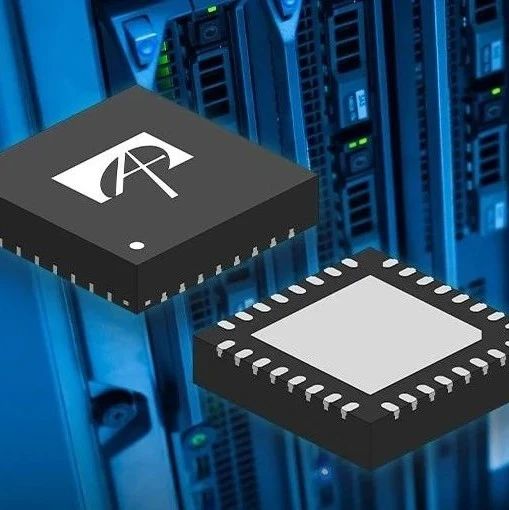
Core Viewpoint - AOSemi has launched the new AOZ17517QI series 60A electronic fuse, designed for optimizing server power supplies, featuring industry-leading performance and a low on-resistance of 0.65mΩ [5][6]. Group 1: Product Overview - The AOZ17517QI series electronic fuse is designed for 12V hot-swappable applications, specifically targeting the power protection needs of servers, data centers, and telecom infrastructure [6]. - The product features a compact 5mm x 5mm QFN package, enhancing system space utilization while providing efficient and reliable power management solutions [6][7]. Group 2: Technical Features - The electronic fuse continuously monitors current through an intelligent power switch, limiting current to safe levels upon detecting overload conditions, thus preventing damage to downstream loads [6][7]. - It incorporates innovative co-packaging technology, integrating high-performance control ICs with high SOA trench MOSFETs, offering superior circuit protection and power management capabilities [7]. - The device supports a wide operating voltage range of 4.5V to 20V and can withstand a maximum absolute voltage of 27V, effectively protecting against transient voltage spikes [7]. Group 3: Protection Mechanisms - The AOZ17517QI series includes multiple protection features such as overcurrent protection (OCP), short-circuit protection (SCP), undervoltage lockout (UVLO), overvoltage clamp (OVP), thermal shutdown protection (TSD), adjustable external soft start, and SOA protection during startup [7]. - The product is particularly suitable for high-reliability systems and telecom applications, where input bus protection is critical, and it replaces traditional hot-swap controllers combined with discrete FETs with advanced eFuse technology [7].

晶圆厂,产能扩充四倍
半导体芯闻· 2025-08-15 10:29
Core Viewpoint - SkyWater Technology's acquisition of Infineon's 200mm wafer fab in Austin, Texas, will quadruple its production capacity, expanding traditional node production from 130nm to 65nm, and is expected to meet the needs of various clients including the U.S. Department of Defense and quantum computing manufacturers [2][4]. Group 1: Acquisition and Capacity Expansion - The acquisition will increase SkyWater's annual wafer production capacity to approximately 400,000 wafers, which is four times its previous capacity [2]. - The deal provides critical processing capabilities, including back-end-of-line (BEOL) technology, essential for connecting various devices on a chip [2]. - SkyWater has signed multiple supply agreements with Infineon, valued at over $1 billion, to produce chips for the next four years [4]. Group 2: Market Dynamics and Strategic Positioning - A significant portion of semiconductor manufacturing capacity has shifted overseas, with 80% to 90% of microcontrollers and embedded electronics produced outside the U.S., primarily in China and Taiwan, creating challenges for U.S. defense and industrial sectors [3]. - The U.S. government is increasingly aware of the need for secure domestic supply chains, as highlighted by ongoing investigations by the Department of Commerce [3]. - SkyWater aims to differentiate itself from larger foundries like TSMC by focusing on technology-as-a-service products, which is gaining attention in the industry [4]. Group 3: Collaboration and Innovation - SkyWater has a long-standing partnership with Google, having developed the first open-source process design kit (PDK) for mixed-signal technology [5]. - The company is positioning itself as a leading foundry for quantum hardware innovation, collaborating with companies like D-Wave and PsiQuantum [5]. - SkyWater's research focuses on superconductors and photonics, working closely with clients to develop custom manufacturing processes that differ from traditional foundry operations [5].


一家新崛起的百亿芯片公司
半导体芯闻· 2025-08-15 10:29
Core Viewpoint - Arista Networks is targeting a revenue milestone of $10 billion, with CEO Jayshree Ullal indicating that the company could achieve this as early as 2026, driven by strong demand for AI-related networking solutions [2][4]. Financial Performance - For the third quarter ending in September, Arista has raised its revenue forecast to $2.25 billion, which is slightly above the previous quarter's $2.21 billion [4]. - In the second quarter, Arista reported revenues of $2.2 billion, a year-over-year increase of 30.4%, with operating profit rising to $986 million, a 41% increase [8]. - The company's product revenue for the June quarter was $1.88 billion, reflecting a 31.9% year-over-year growth [6]. Market Position and Strategy - Arista's strategy involves becoming the preferred hardware platform for critical workloads, allowing customers to install their own Network Operating Systems (NOS) on Arista's machines, which helps differentiate it from competitors [9][11]. - Despite intense competition from Cisco and other suppliers, Arista maintains a strong market position, with significant growth in its data center Ethernet port market share [15][19]. Future Projections - Analysts predict that Arista could generate at least $8.5 billion in revenue by 2025, with service revenue expected to grow at around 35% [12]. - The company is anticipated to benefit from the next wave of AI spending in 2026, which could further enhance its revenue potential [12][21]. Competitive Landscape - Arista has successfully outperformed Cisco in profitability for switches with speeds of 10 Gb/s or faster since mid-2023, indicating a strong competitive edge [19]. - The competitive landscape remains challenging, but Arista's innovation and customer relationships are seen as key factors in maintaining its market position [11].