半导体芯闻

Search documents
日本将扶持半导体
半导体芯闻· 2025-08-19 10:30
Group 1 - The Japanese government plans to support domestic companies in expanding overseas markets for critical materials, focusing on sectors like semiconductors, rare earths, and shipbuilding [1] - A legal amendment will be proposed to include overseas business expansion in the Economic Security Promotion Law, aiming for submission at the regular Diet session in January 2026 [1] - The support will cover procurement of essential minerals, ship repair bases, and the promotion of 5G standards, along with collaboration with like-minded countries and local enterprises [1] Group 2 - The government intends to provide subsidies from the research and testing phase to mass production and commercialization over multiple years [1] - Previously, Japanese companies could only receive government subsidies for initial testing phases in emerging and developing countries, but long-term government involvement is expected to reduce risks for these companies [1] - The Economic Security Promotion Law was enacted under Prime Minister Fumio Kishida in 2022, and the upcoming amendment will broaden support beyond stable procurement of materials to include overseas business activities [1]

英伟达H20的升级版,曝光!
半导体芯闻· 2025-08-19 10:30
Core Viewpoint - Nvidia is developing a new AI chip for China based on its latest Blackwell architecture, which is expected to outperform the currently approved H20 model for sale in China [1][2]. Group 1: Chip Development and Specifications - The new chip, temporarily named B30A, will feature a single-chip design with original computing power potentially half that of Nvidia's flagship B300 accelerator card, which uses a more complex dual-chip configuration [1]. - The B30A will include high-bandwidth memory and Nvidia's NVLink technology for fast data transfer between processors, similar to the features found in the older Hopper architecture-based H20 chip [1]. - Nvidia is also preparing to launch a separate chip, referred to as RTX6000D, specifically for AI inference tasks in China, which will be priced lower than the H20 due to its weaker specifications and simpler manufacturing requirements [3][4]. Group 2: Market Context and Regulatory Environment - China contributed 13% to Nvidia's revenue in the last fiscal year, making access to advanced AI chips a significant issue amid US-China trade tensions [2]. - Nvidia received approval to resume sales of the H20 graphics card only in July 2023, after being ordered to halt sales in April due to export restrictions [2]. - Recent statements from US political figures indicate concerns that even scaled-down versions of flagship AI chips could hinder the US's efforts to maintain its leadership in AI technology [3]. Group 3: Competitive Landscape - Despite concerns, Nvidia believes it is crucial to maintain Chinese developers' interest in its chips to prevent them from fully switching to competitors like Huawei, which has made significant advancements in chip development [3]. - Huawei's latest models reportedly match Nvidia in certain computing capabilities, but analysts note that Huawei lags in software ecosystem support and memory bandwidth [3]. - Chinese state media has raised security concerns regarding Nvidia's chips, complicating the company's efforts to retain market share in China [3].


下周二开幕|《观展攻略》一键收藏!深圳国际电子展暨嵌入式展8月26-28日福田会展中心盛大启幕!
半导体芯闻· 2025-08-19 10:30
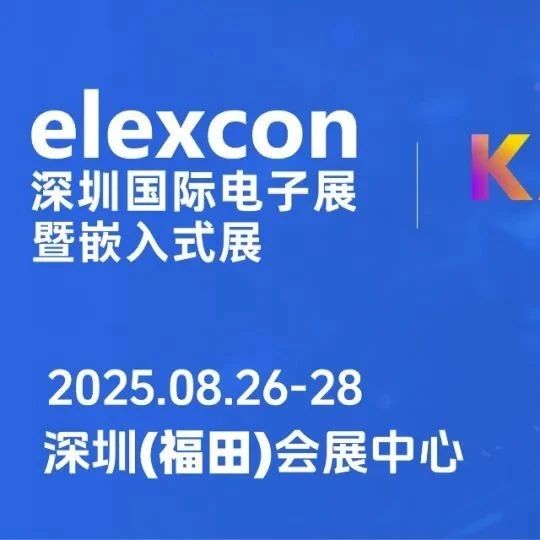
Core Points - The 22nd Shenzhen International Electronics Show and Embedded Expo will take place from August 26 to 28, 2025, at the Shenzhen Convention and Exhibition Center [1][3] - The event will feature over 400 global quality enterprises and more than 30,000 professional visitors, showcasing new products and technologies [3][17] - Key exhibitors include NVIDIA, which will present the Jetson AGX Thor developer kit, and Alibaba's DAMO Academy, which will showcase various high-performance processors [4][18] Event Details - **Date and Time**: August 26 (Tuesday) 9:00-17:00, August 27 (Wednesday) 9:00-17:00, August 28 (Thursday) 9:00-15:00 [3][25] - **Location**: Shenzhen Convention and Exhibition Center, Hall 1 [3][32] - **Scale**: Over 400 exhibitors and 30,000 professional attendees [3][17] Exhibitor Highlights - The event will cover a wide range of embedded technologies, including GPU, AI computing, edge computing, and high-performance electronic components [18] - Notable exhibitors include ADVANTECH, Renesas, Analog Devices, and Kingston, among others [19][20] Conference and Forums - The event will host over 15 high-level forums and feature more than 100 technical experts [24] - Topics will include AI computing, embedded systems, and innovations in automotive electronics [27][39] AI Special Zone - A dedicated AI zone will be set up to showcase AI-related products and components, featuring over 30 leading exhibitors in the AI sector [61][63] - Interactive experiences will be available in areas such as AI toys and robotics [63]
再创新高,中际旭创市值冲上3000亿元
半导体芯闻· 2025-08-19 10:30
Core Viewpoint - The article highlights the strong performance and growth prospects of Zhongji Xuchuang, a leading optical module supplier, driven by the increasing demand for AI infrastructure and capital expenditures from major cloud service providers [4][5]. Financial Performance - As of August 19, Zhongji Xuchuang's market capitalization reached 306.1 billion yuan, with a stock price of 275.50 yuan, marking a historical high [1]. - The company reported a significant increase in net profit expectations for the first half of 2025, projected to be between 3.6 billion to 4.4 billion yuan, representing a year-on-year growth of 52.64% to 86.57% [4]. - The non-GAAP net profit is expected to be between 3.59 billion to 4.39 billion yuan, with a year-on-year growth of 53.89% to 88.18% [4]. Market Trends - The global AI "arms race" continues, with North America's four major internet companies projected to have a total capital expenditure of 95.8 billion USD (approximately 685.8 billion yuan) in Q2 2025, reflecting a year-on-year growth of 64% [4]. - Major companies like Google and Meta have raised their guidance for the year, while Amazon indicated that its Q2 capital expenditure could represent the level for the second half of the year [4]. Demand Outlook - Zhongji Xuchuang has indicated that some customers have begun to release demand guidance for next year, with expectations for overall demand to be better than this year [5]. - The company plans to enhance its efforts in capacity, shipment structure, and yield to meet the anticipated growth in demand for 800G and 1.6T products [5]. Leadership Recognition - Zhongji Xuchuang's CEO, Liu Sheng, was included in the 2025 Forbes China Best CEO list, with the companies led by the 50 CEOs on the list experiencing an average stock price increase of 79% during the performance assessment period [6].


台积电2nm,贵的吓人
半导体芯闻· 2025-08-19 10:30
Core Viewpoint - The competition in the 2nm wafer foundry market is intensifying, with TSMC setting a price of approximately $30,000 per wafer, which is 50-66% higher than the current 3nm process, while Samsung is adopting a lower price strategy to attract customers [1][2]. Group 1: TSMC's Strategy - TSMC plans to start trial production of its 2nm process within 34 months, targeting a monthly capacity of 30,000 to 35,000 wafers, with a long-term goal of reaching 60,000 wafers per month by 2026 [1]. - The initial yield rate for TSMC's 2nm process is around 60%, while the yield for SRAM exceeds 90%, indicating a smooth path to mass production [1]. - TSMC's pricing strategy focuses on maximizing profits by catering to high-performance computing (HPC) and artificial intelligence (AI) customers, such as Apple, NVIDIA, and AMD [1][2]. Group 2: Samsung's Response - Samsung's 2nm process currently has a yield rate of about 40%, and the company is emphasizing its price competitiveness and quick supply response to attract new customers [2][3]. - Samsung has secured a significant contract with Tesla for the production of next-generation AI chips, which is seen as a recognition of its pricing strategy and supply flexibility [2][3]. - The competition in the 2nm era will depend on various factors, including technological strength, pricing, supply speed, and long-term partnerships [3].


台积电和三星,新担忧
半导体芯闻· 2025-08-18 10:48
Core Viewpoint - The U.S. government is considering acquiring shares in Intel to support the struggling chip manufacturer, which may pose challenges for competitors like Samsung Electronics and TSMC [1][2]. Group 1: Government Intervention - Analysts warn that government support for Intel could weaken the market share of overseas competitors [1][2]. - The Trump administration is reportedly reviewing plans to acquire Intel shares using funds from the CHIPS Act, aimed at revitalizing the company [1][2]. - The U.S. Department of Defense has recently provided funding to MP Materials to address strategic weaknesses in rare earth production, indicating a broader trend of government intervention in critical industries [2]. Group 2: Intel's Financial Situation - Intel's foundry business has been operating at a loss since early 2022, with total losses reaching $19.6 billion by Q2 of this year [2]. - The company has been cutting costs and laying off employees to manage its financial difficulties [2]. - A potential equity injection could accelerate the construction of Intel's semiconductor factory in Ohio, which has faced delays due to funding shortages [2]. Group 3: Market Dynamics - In the global foundry chip market, Intel holds almost no market share, with TSMC dominating at 67.6% and Samsung at 7.7% as of Q1 this year [3]. - If the government pressures companies to use Intel chips, it may weaken the overall competitiveness of the U.S. semiconductor industry due to Intel's lower production capacity compared to TSMC [3].

美国实现硅晶圆本地化生产
半导体芯闻· 2025-08-18 10:48
Core Viewpoint - The U.S. chip industry is moving towards self-sufficiency, with GlobalWafers planning to develop silicon wafer production in Texas, reducing reliance on foreign entities like Taiwan [1][2]. Group 1 - GlobalWafers' new factory in Texas will mark the domestic production of silicon wafers, which are essential for chip manufacturing [1]. - The first phase of the Texas facility is expected to achieve a monthly production capacity of 300,000 wafers [1]. - The U.S. has historically depended on companies like Shin-Etsu Chemical and Sumco for silicon wafers, which were then imported for chip production [2]. Group 2 - The establishment of a dedicated wafer production facility in Texas will streamline the supply chain and allow companies like TSMC to source wafers locally, saving time on imports [2]. - Texas was chosen for this investment due to tax incentives and supply chain considerations, indicating a strategic shift in the semiconductor industry towards the U.S. [2]. - The trend shows that the semiconductor industry is increasingly shifting from the East to the West, benefiting the U.S. economy [2].
这些芯片,爆火
半导体芯闻· 2025-08-18 10:48
Core Insights - Data centers are becoming the core engine driving global economic and social development, marking a new era in the semiconductor industry driven by AI, cloud computing, and large-scale infrastructure [1] - The demand for semiconductors in data centers is evolving from simple processors and memory to a complex ecosystem encompassing computing, storage, interconnect, and power supply [1] AI Surge: Arms Race in Data Centers - The explosion of artificial intelligence, particularly generative AI, is the most powerful catalyst for this transformation, with AI-related capital expenditures surpassing non-AI spending, accounting for nearly 75% of data center investments [3] - By 2025, AI-related investments are expected to exceed $450 billion, with AI servers rapidly increasing from a few percent of total computing servers in 2020 to over 10% by 2024 [3] - The global semiconductor market for data centers is projected to reach $493 billion by 2030, with data center semiconductors expected to account for over 50% of the total semiconductor market [3] GPU and ASIC Race - GPUs will continue to dominate due to the complexity and processing demands of AI workloads, with NVIDIA transforming from a traditional chip designer to a full-stack AI and data center solution provider [5] - Major cloud service providers are developing their own AI acceleration chips to compete with NVIDIA, intensifying competition in the AI chip sector [5] HBM Market Growth - The HBM market is experiencing explosive growth, expected to reach $3.816 billion by 2025, with a CAGR of 68.2% from 2025 to 2033 [6] - Key trends in the HBM market include increased bandwidth and capacity, energy efficiency, integration with AI accelerators, and the rise of standardized interfaces [6] Disruptive Technologies - Silicon photonics and co-packaged optics (CPO) are redefining data center performance and efficiency, with industry giants actively investing in this area [8] - The introduction of TFLN modulators is enhancing optical communication capabilities within data centers [9] Next-Generation Data Center Design - The shift to direct current (DC) power supply is becoming essential due to the rising power density demands of AI workloads, with modern AI racks requiring up to 600 kW [11] - Wide bandgap (WBG) semiconductor materials like GaN and SiC are crucial for high-frequency, high-voltage power conversion systems [12] - Liquid cooling technology is projected to grow at a CAGR of 14%, expected to exceed $61 billion by 2029, addressing the cooling challenges posed by high-density AI workloads [12] Advanced Thermal Management - Advanced cooling solutions, including direct chip liquid cooling and immersion cooling, are becoming necessary as traditional air cooling methods are insufficient for high-density AI workloads [13][14] - The industry is at a "thermal tipping point," necessitating fundamental adjustments in data center design to accommodate liquid cooling requirements [15] Future Outlook - The future of data centers will be characterized by increased heterogeneity, specialization, and energy efficiency, with a focus on advanced packaging technologies and comprehensive sensor systems [15]
SK海力士现金流大增
半导体芯闻· 2025-08-18 10:48
Core Viewpoint - SK Hynix has significantly improved its financial stability due to explosive growth in high bandwidth memory (HBM) sales, leading to a substantial increase in cash and cash equivalents while reducing debt [1][2]. Financial Performance - As of the end of the year, SK Hynix's cash and cash equivalents reached 16.9623 trillion KRW, an increase of 2.8060 trillion KRW from the previous year-end [1]. - The cash and cash equivalents grew by over 75% compared to the same period last year, which was 9.6680 trillion KRW [1]. - The company's sales revenue for the first half of the year reached 39.8711 trillion KRW, a 38% increase year-on-year [1]. - Operating profit surged to 16.6534 trillion KRW, marking a 99% increase compared to the previous year [1]. - Cash generated from operating activities amounted to 21.7281 trillion KRW, an 86% increase from 11.6824 trillion KRW in the same period last year [1]. Debt Management - Despite executing 11.2490 trillion KRW in capital investments, nearly double the 5.9670 trillion KRW from the same period last year, SK Hynix managed to reduce its debt significantly [2]. - As of mid-year, the company's debt stood at 21.8410 trillion KRW, down by 842.7 billion KRW from the previous year-end [2]. - Compared to the same period last year, debt decreased by 3.3869 trillion KRW from 25.2279 trillion KRW [2].

处理器芯片,大混战
半导体芯闻· 2025-08-18 10:48
Core Viewpoint - The article discusses the evolving landscape of artificial intelligence (AI) processing solutions, highlighting the need for companies to balance current performance with future adaptability in AI models and methods. Various processing units such as GPUs, ASICs, NPUs, and FPGAs are being utilized across different applications, from high-end smartphones to low-power edge devices [1][12]. Summary by Sections AI Processing Units - Companies are exploring a range of processing units for AI tasks, including GPUs, ASICs, NPUs, and DSPs, each with unique advantages and trade-offs in terms of power consumption, performance, flexibility, and cost [1][2]. - GPUs are favored in data centers for their scalability and flexibility, but their high power consumption limits their use in mobile devices [2]. - NPUs are optimized for AI tasks, offering low power and low latency, making them suitable for mobile and edge devices [2]. - ASICs provide the highest efficiency and performance for specific tasks but lack flexibility and have high development costs, making them ideal for large-scale, targeted deployments [3]. Custom Silicon - The trend towards custom silicon is growing, with major tech companies like NVIDIA, Microsoft, and Google investing in tailored chips to optimize performance for their specific software needs [4]. - Custom AI accelerators can provide significant advantages, but they require a robust ecosystem to support software development and deployment [4]. Flexibility and Adaptability - The rapid evolution of AI algorithms necessitates flexible hardware solutions that can adapt to new models and use cases, as traditional ASICs may struggle to keep pace with these changes [4][5]. - The need for adaptable architectures is emphasized, as AI capabilities may grow exponentially, putting pressure on decision-makers to choose the right processing solutions [4][5]. Role of DSPs and FPGAs - DSPs are increasingly being replaced or augmented by AI-specific processors, enhancing capabilities in areas like audio processing and motion detection [7]. - FPGAs are seen as a flexible alternative, allowing for algorithm updates without the need for complete hardware redesigns, thus combining the benefits of ASICs and general-purpose processors [8]. Edge Device Applications - Low-power edge devices are utilizing MCUs equipped with DSPs and NPUs to meet specific processing needs, differentiating them from high-performance mobile processors [10]. - The integration of AI capabilities into edge devices is becoming more prevalent, with companies developing specialized MCUs for machine learning and context-aware applications [10][11]. Conclusion - The edge computing landscape is characterized by a complex mix of specialized and general-purpose processors, with a trend towards customization and fine-tuning for specific workloads [12].