半导体芯闻

Search documents
深耕中国30年,英飞凌开启“在中国,为中国”本土化战略
半导体芯闻· 2025-06-30 10:07
Core Viewpoint - Infineon has been deeply integrated into the Chinese semiconductor industry for 30 years, marking its significant role in the industry's evolution and its commitment to local development through the "In China, For China" localization strategy [2][8][24]. Group 1: Historical Context and Achievements - Infineon has witnessed and participated in the growth of the Chinese semiconductor industry, celebrating its 30th anniversary in China with a media day in Shanghai [2][3]. - The company has achieved significant milestones, including leading the global MCU market with a market share of 21.3% and maintaining its position as the top player in automotive semiconductors for five consecutive years, with a global market share of 13.5% in 2024 [5][23]. Group 2: Localization Strategy - The "In China, For China" localization strategy is built on four pillars: operational optimization, technological innovation, production layout, and ecosystem co-construction [9][10]. - Infineon's Wuxi factory, established in 1995, has become a key manufacturing base, supporting local business development and achieving a 34% revenue contribution from the Greater China region in the 2024 fiscal year [7][12][24]. Group 3: Technological Innovations - Infineon has made significant technological advancements, including the launch of the world's first 300mm GaN wafer and the thinnest 20μm silicon power wafer, showcasing its commitment to innovation [5][6]. - The company invests 13% of its revenue in R&D, emphasizing its dedication to continuous innovation and maintaining its industry-leading position [6]. Group 4: Business Segments and Future Plans - Infineon's three core business segments—automotive, industrial and infrastructure, and consumer computing and communications—are driving its localization strategy and enhancing its role in China's industrial upgrade [13][24]. - The company plans to expand its local production capabilities, particularly in the automotive sector, with a focus on meeting the needs of local customers and supporting the growth of the electric vehicle market [15][16][19]. Group 5: Sustainability and Market Impact - Infineon has been recognized for its sustainable practices, being included in the Dow Jones Sustainability Index, which reflects its commitment to responsible business operations [5]. - The company's products are widely used in critical sectors such as renewable energy and transportation, contributing to China's green transformation and energy security goals [19][20].



低功耗芯片将成为主流
半导体芯闻· 2025-06-30 10:07
Core Viewpoint - The semiconductor industry is shifting focus from speed and capacity to power efficiency, driven by the increasing power demands of artificial intelligence (AI) applications [1][2]. Group 1: Power Consumption in AI Chips - AI chips are known for their high power consumption, with Nvidia's upcoming B100 chip requiring 1000 watts, while previous models A100 and H100 required 400 watts and 700 watts respectively [1]. - The development of low-power chips is becoming increasingly competitive, as they are essential for devices like smartphones and laptops that need to perform AI computations without internet connectivity [1]. Group 2: Advancements in Low-Power DRAM - Samsung has developed LPDDR5X, a low-power DRAM chip that offers over 30% increased capacity and 25% reduced power consumption compared to its predecessor [2]. - SK Hynix has commercialized LPDDR5T DRAM, which enhances performance by five times and can process 15 full HD movies per second while significantly lowering power usage [2]. - LPDDR stacking technology is being advanced to improve capacity and speed while minimizing power consumption [2]. Group 3: Next-Generation Materials - Development of next-generation materials, such as glass substrates, is underway to enhance semiconductor power efficiency, with the potential to significantly increase data processing speeds without additional power consumption [2][3]. - Companies like SKC and Samsung are investing in glass substrate production, with plans for mass production by 2026 [3]. Group 4: GaN and SiC Technologies - Low-power, high-performance chips based on Gallium Nitride (GaN) and Silicon Carbide (SiC) are being developed as potential alternatives to traditional silicon [4]. - Samsung has established a dedicated GaN semiconductor business team, aiming for mass production by 2025 [4].

CXL,停滞不前
半导体芯闻· 2025-06-30 10:07
Group 1 - The core viewpoint of the article highlights the stagnation of commercialization plans for CXL memory due to insufficient demand, despite technical readiness for mass production [1] - Major manufacturers like Samsung Electronics and SK Hynix are facing ongoing challenges in bringing next-generation memory technologies to market, particularly CXL and PIM [1][2] - The strong demand for High Bandwidth Memory (HBM), driven by NVIDIA's focus on this technology in its accelerator products, has delayed the application of CXL and PIM technologies [2] Group 2 - NVIDIA dominates the AI data center GPU market with an estimated market share of about 92% last year, making it difficult for competitors like AMD and Broadcom to gain market share [2] - Concerns are rising that Chinese companies may achieve commercialization of CXL and PIM technologies first, potentially altering the global competitive landscape [2] - Industry insiders suggest that proactive measures are needed to build an ecosystem conducive to future commercialization opportunities, as the current situation reflects a waiting game among stakeholders [3]

HBM 4,三星拼了
半导体芯闻· 2025-06-30 10:07
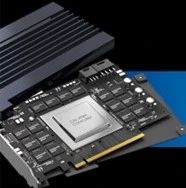
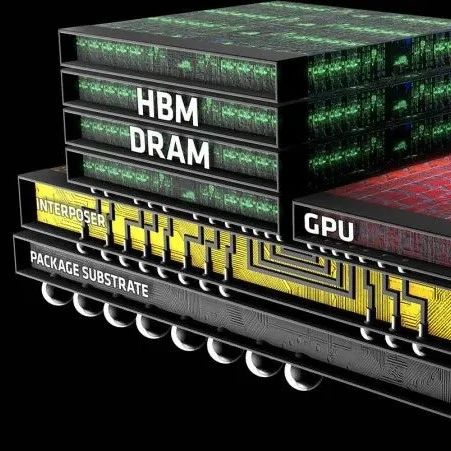
如果您希望可以时常见面,欢迎标星收藏哦~ 来 源: 内容来自 technews 。 根据韩国中央日报报导,韩国三星正加速其位于京畿道平泽的晶圆厂建设,此计划代表着其在经历 数月新厂建设停滞后,三星准备在高频宽频记忆体(HBM)市场中,重新夺回被SK 海力士(SK hynix)和美光(Micron)抢占的市场占比。 报导指出,过去数月,三星电子已陆续获得平泽市政府颁发的关键核准,尤其针对其P4 厂房, 2025 年已取得多个临时使用许可,最近一次是在6 月初获准。这些许可让三星得以在全面竣工 前,对部分场地进行有限度使用,包括安装设备、进行测试营运或允许受限的工作人员进入。 自2024 年初以来,受芯片需求疲软和内部资本配置考量影响,P4 以及邻近的P5 厂房的建设曾一 度暂停。然而,近期P4 厂区的活动显示,三星正积极扩大生产规模,这与其透过下一代HBM4 产 品重夺记忆体市场领导地位的目标高度一致。而且,为了支持HBM4 的生产,并提升目前约40% 的良率,三星正加码投资,以扩张平泽二期与四期以及华城的17 号线的产能。尽管三星电子发言 人拒绝对此计划发表评论,但市场普遍认为这是其争夺HBM4 市场龙头的关 ...
科技巨头,“反击”英伟达
半导体芯闻· 2025-06-27 10:21
Core Viewpoint - The article discusses the increasing competition in the AI chip market, particularly how major tech companies like Google and Meta are accelerating their development of custom chips to reduce reliance on Nvidia's GPUs, with predictions that ASIC shipments will surpass Nvidia's AI GPU shipments as early as next year [1][2]. Group 1: Market Dynamics - Nvidia has historically dominated the AI chip market, holding over 80% market share in AI servers, while ASIC-based servers currently account for only 8% to 11% [2][4]. - Google is expected to ship between 1.5 million to 2 million of its self-developed AI chips (TPUs) this year, while Amazon's AWS is projected to ship 1.4 million to 1.5 million ASICs, bringing their combined shipments close to half of Nvidia's estimated annual GPU shipments of 5 million to 6 million [2][4]. Group 2: Cost Efficiency - The key advantage driving tech giants to develop their own chips is the reduction in Total Cost of Ownership (TCO), with ASICs potentially saving 30% to 50% in TCO compared to GPUs [3]. - Google claims its TPUs can deliver three times the performance of Nvidia GPUs per unit of energy consumed, highlighting the efficiency of custom chips [3]. Group 3: Competitive Landscape - Meta is focusing on launching its new high-performance ASIC chip "MTIA T-V1" in Q4 of this year, aiming to outperform Nvidia's next-generation AI GPU "Rubin" [5]. - Despite ambitious plans, Meta faces production challenges due to limited advanced packaging capacity from TSMC, which can only provide 300,000 to 400,000 units, creating a bottleneck [5]. Group 4: Nvidia's Response - In response to the competitive threat, Nvidia has opened its proprietary "NVIDIA NVLink" communication protocol to facilitate integration with other companies' CPUs or ASICs, aiming to retain its major clients [6]. - Nvidia's established software ecosystem, CUDA, remains a significant barrier for competitors, as it allows AI developers to efficiently build and deploy applications, maintaining Nvidia's competitive edge [6].



英特尔前CEO基辛格:卸任是被逼的
半导体芯闻· 2025-06-27 10:21
Core Viewpoint - The article discusses Pat Gelsinger's transition from Intel CEO to a general partner at Playground Global, emphasizing his focus on hardware investments and the potential of superconducting technology to revolutionize the semiconductor industry [1][2][4]. Group 1: Transition to Playground Global - After leaving Intel, Gelsinger received numerous offers but chose to join Playground Global due to its focus on deep tech and hardware startups, which aligns with his engineering background [5]. - Playground Global's investment strategy is distinct, with 80% of its portfolio concentrated on hardware, contrasting with the typical software-centric focus of most venture capital firms [5]. Group 2: Insights on Semiconductor Industry - Gelsinger predicts a future where traditional computing, AI computing, and quantum computing will work together, indicating a significant shift in the computing landscape [1]. - The investment in Snowcap Compute, a startup specializing in superconducting technology, is highlighted as a potential game-changer for the semiconductor industry [1][2]. Group 3: Gelsinger's Departure from Intel - Gelsinger's departure from Intel was described as a difficult decision, suggesting he was not the one to initiate it, possibly due to external pressures from the Intel board [4]. - His unfinished business at Intel may relate to the Intel Foundry investment plan, which he was unable to complete before leaving [4].


算力需求井喷,英特尔至强6如何当好胜负手?
半导体芯闻· 2025-06-27 10:21
Core Viewpoint - The article discusses the transformation of AI infrastructure, emphasizing the need for a heterogeneous computing architecture that integrates both CPU and GPU resources to meet the demands of large AI models and their applications [2][4][7]. Group 1: AI Infrastructure Transformation - AI large models are reshaping the computing landscape, requiring organizations to rethink their AI infrastructure beyond just adding more GPUs [2]. - The value of CPUs, long underestimated, is returning as they play a crucial role alongside GPUs in AI workloads [3][4]. - A complete AI business architecture necessitates the simultaneous upgrade of both CPU and GPU resources to fulfill end-to-end AI business needs [5][7]. Group 2: Challenges and Solutions - The rapid iteration of large language models presents four main challenges for processors: low GPU computing efficiency, low CPU utilization, increased data movement bandwidth requirements, and GPU memory capacity limitations [5]. - Intel has developed various heterogeneous solutions to address these challenges, including: - Utilizing CPUs in the training and inference pipeline to reduce GPU dependency, improving overall training cost-effectiveness by approximately 10% [6]. - Optimizing lightweight models with the Xeon 6 processor to enhance responsiveness and free up GPU resources for primary models [6]. - Implementing QAT hardware acceleration for KV Cache compression, significantly reducing loading delays and improving user response times [6]. - Employing a sparse-aware MoE CPU offloading strategy to alleviate memory bottlenecks, resulting in a 2.45 times increase in overall throughput [7]. Group 3: Intel's Xeon 6 Processor - Intel's Xeon 6 processor, launched in 2024, represents a comprehensive solution to the evolving demands of data centers, featuring a modular design that decouples I/O and compute modules [9][10]. - The Xeon 6 processor achieves significant performance improvements, with up to 288 physical cores and a 2.3 times increase in overall memory bandwidth compared to the previous generation [12]. - It supports advanced I/O capabilities, including a 1.2 times increase in PCIe bandwidth and the first support for CXL 2.0 protocol, enhancing memory expansion and sharing [13]. Group 4: Cloud and Local Deployment Strategies - The trend of enterprises seeking "local controllable, performance usable, and cost acceptable" AI platforms is emerging, particularly in sectors like finance and healthcare [24]. - Intel's high-cost performance integrated machine aims to bridge the gap for local deployment of large models, offering flexible architectures for businesses [25][26]. - The integrated machine solution includes monitoring systems and software frameworks that facilitate seamless migration of existing models to Intel's platform, ensuring cost-effectiveness and maintainability [28][29]. Group 5: Collaborative AI Ecosystem - The collaboration between Intel and ecosystem partners is crucial for redefining the production, scheduling, and utilization of computing power, promoting a "chip-cloud collaboration" model [17][30]. - The introduction of the fourth-generation ECS instances by Volcano Engine, powered by Intel's Xeon 6 processors, showcases the enhanced performance capabilities in various computing scenarios [18][20].

日本芯片巨头,亏惨了
半导体芯闻· 2025-06-27 10:21
Core Viewpoint - Renesas Electronics has postponed its sales and market capitalization targets for 2030 to 2035 due to a slowdown in the electric vehicle market, necessitating a complete overhaul of its power semiconductor strategy [1][2]. Group 1: Sales and Market Capitalization Targets - The company initially aimed to double its sales to approximately $20 billion and increase its market capitalization sixfold to over ¥10 trillion (around $7 billion) by 2030, but this has now been pushed back to 2035 [1]. - Following the announcement, Renesas's stock price fell by 12%, closing at ¥1735.5 [1]. Group 2: Challenges in Power Semiconductor Development - Renesas had high hopes for silicon carbide (SiC) power semiconductors, which can withstand higher voltages and enhance electric vehicle range, but has now halted the development of SiC chips and some high-voltage silicon power semiconductors [2][3]. - The company had planned to start mass production of SiC chips at its Takasaki plant but has since terminated this initiative due to disappointing electric vehicle sales in Europe and the U.S. [3]. Group 3: Financial Implications and Market Competition - Renesas is expected to incur a loss of ¥250 billion in 2025 due to a deteriorating financial situation at Wolfspeed, with whom it had a 10-year silicon carbide wafer procurement contract [4]. - The company's average net profit over the past three years was approximately ¥270 billion, meaning the anticipated loss could wipe out nearly all profits for that year [4]. Group 4: Strategic Shift and Future Plans - The company plans to "return to basics" by bundling microcontrollers, its core strength, with other chips and software to provide greater value [5]. - Renesas aims to increase its market share in microcontrollers to 10%-15% of total sales in the medium to long term, while also adjusting its operating profit margin target down by 5 percentage points to 25% [6]. - The company intends to increase R&D spending to seek new growth drivers [6].
停更也不行?博通开始清算老客户!
半导体芯闻· 2025-06-27 10:21
Core Viewpoint - Broadcom has initiated audits on former VMware customers who have not renewed their support contracts, following a significant price increase of up to 300% for VMware products due to Broadcom's bundling strategy [1][3][7]. Group 1: Audit Initiation - Broadcom has begun sending "stop and cease usage" letters to VMware users whose support contracts have expired, demanding they stop using all updates and patches released since the termination of their contracts [1][2]. - An audit has been launched for a Dutch software supplier, which has been a VMware customer for about ten years, indicating that Broadcom is actively reviewing compliance with VMware software usage [3][4]. Group 2: Customer Concerns - Customers express concerns about the financial impact of the audits, with some fearing it could affect salary negotiations and lead to layoffs due to budget constraints [5]. - There are reports of companies receiving audit notifications despite having ceased using VMware products, raising questions about the validity of Broadcom's audit process [7][8]. Group 3: Market Reaction - Broadcom's aggressive enforcement of VMware licensing agreements has generated backlash among existing and former customers, with calls for regulatory scrutiny of its practices [9]. - The acquisition of VMware for $69 billion is viewed as a successful transaction, yet the ongoing issues with customer relations and compliance audits may tarnish Broadcom's reputation in the market [9].


超40%的代理AI项目,将被取消
半导体芯闻· 2025-06-27 10:21
Core Insights - Gartner predicts that by the end of 2027, over 40% of agent AI projects will be canceled due to rising costs, unclear business value, or lack of effective risk control [1] - Currently, most agent AI projects are in early experimental or proof-of-concept stages, often driven by hype, leading companies to overlook the true costs and complexities of deploying large-scale AI agents [1] Investment Trends - A survey by Gartner in January 2025 revealed that 19% of participants reported significant investments in autonomous AI, while 42% adopted conservative investments, and 31% were either uncertain or in a wait-and-see mode [1] Market Dynamics - The phenomenon of "agent washing" is prevalent, where existing products are rebranded as autonomous AI without possessing true agent capabilities. Gartner estimates that out of thousands of vendors claiming to offer agent AI solutions, only about 130 have real technical capabilities [2] - Many so-called agent AI projects lack actual business value or return on investment (ROI), as current AI models are not mature enough to autonomously complete complex business objectives [2] Future Potential - Despite initial challenges, the development of agent AI is viewed as a significant leap in AI capabilities and market opportunities. By 2028, it is predicted that at least 15% of daily work decisions will be made by agent AI, a notable increase from 0% in 2024 [2] - Additionally, 33% of enterprise software applications are expected to integrate agent AI by 2028, compared to less than 1% in 2024 [2] Implementation Challenges - Integrating AI agents into traditional systems presents high technical complexity and can disrupt existing workflows, often requiring expensive system modifications [3] - A more ideal approach is to reconstruct workflows from scratch to accommodate agent AI, which can enhance overall productivity rather than just focusing on individual task improvements [4]