半导体芯闻

Search documents
达发的蓝牙芯片,被爆漏洞
半导体芯闻· 2025-07-01 09:54
Core Viewpoint - Multiple vulnerabilities have been discovered in Bluetooth SoC products from Airoha, a subsidiary of MediaTek, exposing various headphone and earbud vendors to potential exploitation [1][2]. Vulnerabilities Overview - The vulnerabilities are identified as CVE-2025-20700, CVE-2025-20701, and CVE-2025-20702, allowing attackers to gain complete control over headphones via Bluetooth without authentication or pairing [1][2]. - Attackers only need to be within Bluetooth range to exploit these vulnerabilities, potentially allowing them to manipulate RAM and flash memory of the devices [1]. Affected Devices - Numerous devices are at risk, including Bose QuietComfort earbuds, Marshall ACTION III, and Sony Link Buds S, with vulnerabilities present in both entry-level and flagship models [2]. - Confirmed vendors affected include Beyerdynamic, Marshall, and Sony, with indications that more devices using these chips are also vulnerable [2]. Remediation Efforts - Airoha has addressed the vulnerabilities in their SDK and released a new version, but individual vendors must build and distribute firmware updates to end-users [2]. - As of now, no fixed firmware versions have been identified [2].


工资最高的芯片公司
半导体芯闻· 2025-07-01 09:54
Core Insights - The article highlights that MediaTek has once again topped the average salary rankings for non-managerial full-time employees in Taiwan for 2024, with an average salary of 4.31 million TWD, marking a 14.8% increase from the previous year [1][2] Salary Rankings - MediaTek leads the salary rankings among all listed companies, being the only company with an average salary exceeding 4 million TWD [1] - Among all listed companies, there are 9 companies with average salaries over 3 million TWD for non-managerial employees, with 8 of them being in the semiconductor industry [1][2] - The top 10 salary list includes companies from various sectors, but the semiconductor industry dominates, with 7 out of 10 being IC design companies [1] Salary Growth - The highest salary growth in the top ten is seen in Ruiding, with a 33.53% increase, followed by Dafa at 27.35% and Realtek at 24.33% [1][2] - TSMC also reported a significant salary increase of 19.32% [1][2] Median Salary Insights - In terms of median salary, MediaTek again ranks first with a median of 3.438 million TWD, followed by Realtek at 3.246 million TWD and Dafa at 3.049 million TWD [4][5] - Only three companies have a median salary exceeding 3 million TWD, indicating a concentration of high salaries within these firms [4] Notable Trends - The only non-semiconductor company in the median salary top 10 is Evergreen Marine, which ranks tenth with a median salary of 2.415 million TWD [5] - Evergreen Marine also recorded the highest growth in median salary at 71.28%, followed by Dafa at 29.91% and Realtek at 25.18% [5]
朱尚祖加盟慧荣
半导体芯闻· 2025-07-01 09:54
Core Viewpoint - SMI (Silicon Motion) has appointed Zhu Shangzu, former co-founder of ZEKU, as Senior Vice President of Platform and Strategy, aiming to enhance interactions with top clients in various markets including PCs, smartphones, automotive, and servers [1]. Group 1: Leadership and Experience - Zhu Shangzu brings 30 years of leadership experience in the semiconductor industry, having started his career at Winbond Electronics and later joining MediaTek in 1999 [1]. - During his tenure at MediaTek, he led the mobile chipset business to exceed $4 billion in annual revenue, contributing to MediaTek becoming the second-largest mobile chip supplier globally [1]. Group 2: Strategic Initiatives - SMI plans to leverage Zhu's extensive experience and network to recruit more R&D talent and establish a new firmware R&D center in mainland China [1]. - Zhu will also serve on SMI's Capital Committee, participating in strategic investments and acquisitions, as well as assisting in post-acquisition integration and leadership [1]. - He will provide guidance on SMI's long-term business strategy, product portfolio expansion, and artificial intelligence initiatives [1].
中国大陆晶圆代工,将跃居全球最大
半导体芯闻· 2025-07-01 09:54
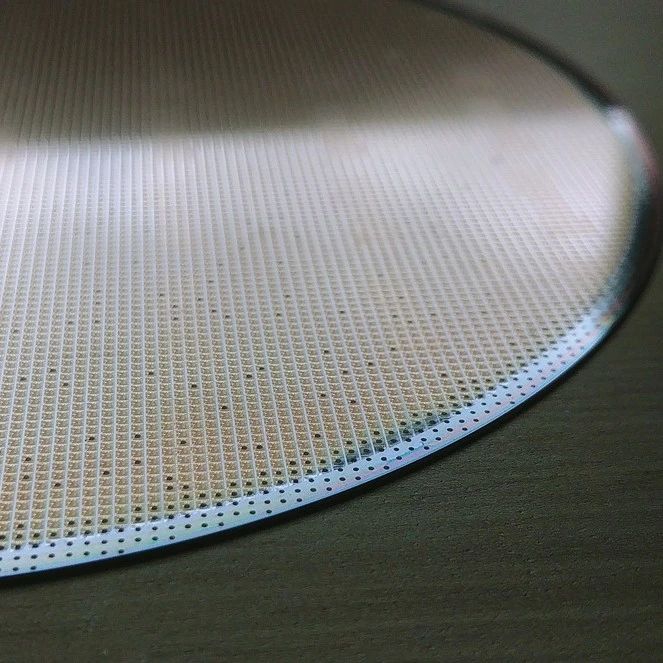
Group 1 - The core viewpoint of the article is that China is projected to become the largest semiconductor production center, holding 30% of global foundry capacity by 2030, surpassing Taiwan's current 23% [1][2] - China's semiconductor production is expected to reach 8.85 million wafers per month in 2024, a 15% increase from the previous year, and is projected to grow to 10.1 million wafers by 2025 [1] - The Chinese government is heavily investing in domestic semiconductor manufacturing to achieve self-sufficiency, which includes the construction of 18 new wafer fabs [1] Group 2 - The United States is the largest consumer of wafers, accounting for approximately 57% of global demand, but only has about 10% of global production capacity [2] - Other regions like Japan and Europe are meeting their domestic wafer needs, while Singapore and Malaysia account for about 6% of global foundry capacity, primarily serving the needs of the US and China [2] - The report does not account for the ongoing construction of wafer fabs in the US, including significant projects by TSMC, Intel, and others, which will increase US production capacity [2] Group 3 - The article highlights that despite China's potential production capacity, the technological capabilities of its fabs compared to Western counterparts remain uncertain due to US export controls on advanced chip manufacturing technology [2] - China is investing billions to fill gaps in its semiconductor industry, particularly in areas like lithography tools and electronic design automation (EDA) software [2]
印度首家晶圆厂:28nm,5 万片
半导体芯闻· 2025-07-01 09:54
Core Viewpoint - The establishment of Tata Electronics' semiconductor manufacturing plant in Dholera, Gujarat, marks a significant step towards India's self-sufficiency in semiconductor production, with an investment of ₹910 billion (approximately $11 billion) [1][5]. Group 1: Investment and Infrastructure - The Dholera plant will process up to 50,000 wafers per month, focusing on 28nm, 40nm, and 90nm process nodes, which are still in demand for power chips, automotive MCUs, and industrial applications [2]. - The Indian government has invested ₹760 billion in the "Semiconductor India Program," laying the groundwork for this initiative, with Tata's plant being the first major outcome [4]. Group 2: Technological Collaboration - Tata's collaboration with Taiwan's Powerchip Semiconductor Manufacturing Corporation (PSMC) and Japan's Tokyo Electron ensures access to mature intellectual property and world-class machinery for the plant [2][3]. - The Dholera facility is designed to be an AI-driven factory, utilizing machine learning for yield optimization and predictive maintenance, which is a first for Tata [2]. Group 3: Strategic Implications - The Dholera plant signifies a shift in India's semiconductor landscape, moving from reliance on foreign fabs to establishing a vertically integrated semiconductor supply chain within India [3][5]. - The plant is expected to produce sample chips by the end of 2025, aligning with India's ambitions in AI, telecommunications, and military-grade electronics [3]. Group 4: Future Plans - Tata plans to build two additional wafer fabs in Gujarat over the next five to seven years, along with an OSAT (Outsourced Semiconductor Assembly and Test) facility in Assam [2][5]. - The establishment of these facilities is not just about manufacturing but also about creating a sustainable ecosystem for semiconductor production in India [2][4].
营收四亿,利润一亿,沁恒微冲刺IPO
半导体芯闻· 2025-07-01 09:54
Core Viewpoint - Nanjing Qingqin Heng Microelectronics Co., Ltd. (referred to as "Qingheng Micro") has released its prospectus for an initial public offering on the Sci-Tech Innovation Board, highlighting its unique approach to integrated circuit design through self-developed IP systems and a focus on core technology research [1][2]. Financial Performance - Qingheng Micro's revenue is projected to grow from 238.26 million yuan in 2022 to 396.80 million yuan in 2024, with net profit increasing from 59.10 million yuan to 103.99 million yuan during the same period [1]. - The company has maintained profitability while many in the industry face losses due to intense competition [1]. Product Overview - The main business of Qingheng Micro includes the research, design, and sales of interface chips and interconnected MCU chips, which are essential for information exchange and connectivity in electronic devices [3][4]. - The company focuses on USB, Bluetooth, and Ethernet interfaces, with USB being its primary revenue source, accounting for 52.38% of total revenue in 2024 [8]. Technology and Innovation - Qingheng Micro has developed a proprietary IP system that includes processor, PHY, controller, and protocol stack technologies, allowing for a more integrated and efficient chip design process [4][17]. - The company’s self-developed "Qingke" series of processors has shipped over 100 million units, demonstrating competitive performance against mainstream foreign processors [6][12]. Market Applications - The primary application areas for Qingheng Micro's products include industrial control and connectivity (52.60% of revenue), IoT networking (25.54%), and computer and mobile peripherals (21.86%) [15]. - The company’s products are designed to meet the growing demand for connectivity and digitalization in various sectors [9][20]. Future Plans and Funding - Qingheng Micro plans to raise funds through its IPO to invest in three key projects: USB chip development, network chip development (including Bluetooth and Ethernet), and full-stack MCU chip development, with a total investment of approximately 931.54 million yuan [28][29]. - The company aims to enhance its core technology and expand its product offerings in high-speed USB, Ethernet, and low-power wireless communication technologies [29][30].

报名中 | 聚焦接口与安全IP,这场技术研讨会不容错过!
半导体芯闻· 2025-06-30 10:07
Core Viewpoint - The semiconductor industry faces critical challenges in data transmission speed and security, driven by the explosive growth of AI, connected vehicles, 5G, and IoT, leading to increased demand for high-performance computing and low-power chips [1] Group 1: Industry Challenges and Innovations - The bottlenecks in memory bandwidth and data processing security are becoming increasingly prominent [1] - Interface IP and security IP technologies are identified as core drivers for breakthroughs in the industry, directly impacting chip performance, compatibility, and attack resistance [1] - Rambus, established in 1990, is a pioneer in this field, redefining data transmission standards between memory and systems with innovative high-speed interface technologies [1] Group 2: Rambus Solutions - Rambus offers solutions such as DDR memory interfaces, HBM3/4, and PCIe 5/6, significantly enhancing performance limits in data centers and edge computing [1] - The company provides a range of security IP solutions, including root of trust technology, security protocol engines, inline cryptographic engines, and post-quantum cryptography accelerators [1] - These comprehensive security and interface IP solutions contribute to a robust product portfolio for Rambus [1] Group 3: Upcoming Event - Rambus will host a technology discussion on July 9, 2025, in Beijing, focusing on AI and automotive sectors, featuring industry partners and technical experts [2][3] - The morning session will cover the latest interface and security IP solutions for AI and advanced applications, including quantum-safe encryption and various memory technologies [6] - The afternoon session will delve into automotive safety solutions, addressing trends and challenges faced by hardware and software designers in smart connected vehicles [7]


PCIe,进入光时代
半导体芯闻· 2025-06-30 10:07
Core Viewpoint - The development of Artificial Intelligence (AI) has increased the demand for faster data transmission, which is reflected in the upcoming release of PCI Express 7.0, set for June 11, 2025, targeting data-driven applications such as AI/machine learning, 800G Ethernet, cloud computing, and quantum computing [1][4]. Group 1: PCIe 7.0 Features - PCIe 7.0 will feature a data rate of 128.0G transfers per second (GT/s) and a bidirectional rate of up to 512GB/s in a 16-lane configuration, utilizing PAM4 signaling and Flit-based encoding for improved power efficiency [1][4]. - The new version maintains backward compatibility with previous PCIe generations and continues the tradition of doubling I/O bandwidth every three years [1][4]. Group 2: Market Drivers and Applications - The primary driver for PCIe 7.0 improvements is to meet the bandwidth demands of large-scale data centers, high-performance computing (HPC), and other data-intensive markets adopting AI [4][5]. - The automotive sector is also a focus for PCI-SIG, with expectations that the industry will shift towards PCIe due to performance needs [5]. Group 3: Optical Solutions and Compliance - PCI-SIG has introduced the industry's first standard-based "optical-aware retimer" solution, which standardizes optical PCIe architecture for easier migration to existing PCIe 6.0 designs and devices [5]. - Compliance testing for PCIe 6.0 is ongoing, with a goal to have an integrator list by the end of 2025, while PCIe 8.0 is also in development [6].
晶圆大厂发9000万奖金
半导体芯闻· 2025-06-30 10:07
Core Insights - The company World Advanced has reported growth in revenue and profit for the first half of the year despite challenges posed by the Trump 2.0 policies, and plans to distribute bonuses to employees ranging from NT$10,000 to NT$35,000, totaling approximately NT$90 million [1][2] Group 1: Employee Initiatives - The company is implementing a "Family Care Enhancement Plan" which includes extending maternity leave to 14 weeks, increasing childbirth subsidies to NT$10,000 per child, and introducing paid childcare leave for employees with children under three years old [1][2] - The recent family day event attracted over 1,500 employees and their families, emphasizing the company's commitment to a supportive work-life balance [2] Group 2: Financial Performance - The company has seen healthy growth in USD revenue due to customers preparing for tariff uncertainties, with expectations for moderate growth in the second half of the year [2] - The appreciation of the New Taiwan Dollar (approximately 12% this year) has been a significant factor, but effective hedging strategies have minimized the impact on the company's financials [2] Group 3: Expansion Plans - Construction of the new factory in Singapore is progressing well, with expectations to begin operations in Q4 2023 and start customer sampling in H2 2026 [3] - The potential bankruptcy of Wolfspeed could positively impact World Advanced if customers seek alternative sources, although revenue contributions from silicon carbide (SiC) and gallium nitride (GaN) remain limited [3]

紫光展锐,IPO
半导体芯闻· 2025-06-30 10:07
Core Viewpoint - Unisoc plans to go public on the Sci-Tech Innovation Board, aiming for profitability by 2025, following its recent transformation into a joint-stock company [1][2]. Group 1: Company Developments - Unisoc has completed its shareholding reform and changed its name to Unisoc (Shanghai) Technology Co., Ltd. [1] - The company has secured approximately 4 billion yuan in a new round of equity financing in September 2024 and nearly 2 billion yuan in equity capital increase in November 2024 [1]. - The first shareholders' meeting was successfully held in December 2024, marking a new phase in its IPO preparations [1]. Group 2: Financial Performance - In 2024, Unisoc achieved a revenue of 14.5 billion yuan, representing an 11% year-on-year increase, and set a historical record [2]. - The company shipped over 1.6 billion chips in 2024, increasing its market share in the smartphone chip market to 13% [2]. Group 3: Product Development and Market Expansion - Unisoc's 5G product sales reached a record high in 2024, with an 82% year-on-year growth [2]. - The company has conducted 5G field tests in 116 countries and shipped 5G mobile phones to 85 countries, achieving certification from 56 telecom operators [2]. - During MWC 2025, Unisoc launched its latest 5G SoC chip, T8300, which is already featured in Nubia's latest smartphone [2].