半导体芯闻

Search documents
台积电首席科学家:长期遏制中国行不通
半导体芯闻· 2025-05-26 10:48
Core Viewpoint - The article discusses the insights of H.-S. Philip Wong, TSMC's Chief Scientist, on the future of semiconductor technology and the challenges posed by U.S. policies towards China’s semiconductor industry [1][2]. Group 1: Background of H.-S. Philip Wong - H.-S. Philip Wong was born in Hong Kong and earned his Ph.D. in Electrical Engineering from Lehigh University after graduating from the University of Hong Kong [2]. - Before joining Stanford University, he led advanced semiconductor research at IBM and is known for creating the world's first carbon nanotube computer in 2013 [2]. Group 2: TSMC's Research and Development Strategy - Wong emphasized the importance of having a forward-looking research team that can identify valuable technologies, even if they are not developed in-house [3]. - He formed a small team with members from universities, other companies, and TSMC, focusing on close interaction with the external research community [3]. Group 3: Challenges in Semiconductor Manufacturing - Wong pointed out that the importance of lithography technology is decreasing, suggesting that future advancements may not rely heavily on extreme resolution [4]. - He noted that the manufacturing process has become overly time-consuming, with the entire process taking up to seven months, and emphasized the need to reduce cycle times [5]. Group 4: U.S. Policies and China's Semiconductor Industry - Wong expressed skepticism about the long-term effectiveness of U.S. strategies to contain China's semiconductor industry, suggesting that these policies may inadvertently create a market for domestic Chinese equipment manufacturers [6][7]. - He observed that while the quality of Chinese research papers has improved significantly in the past 5 to 10 years, Chinese universities still struggle to establish new research directions [7].


存储路线图,三星最新分享
半导体芯闻· 2025-05-26 10:48
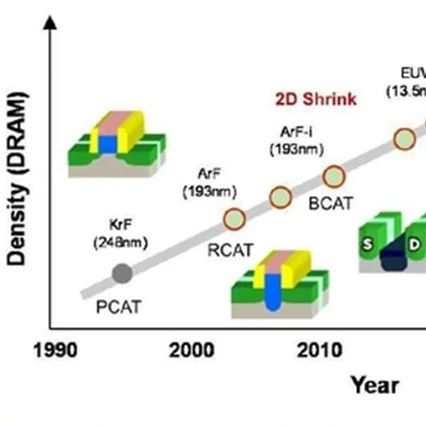
Core Viewpoint - Samsung Electronics presented the evolution of next-generation DRAM and NAND flash memory at the "IMW 2025" event, highlighting advancements in memory density and architecture [1][10]. DRAM Evolution - The evolution of DRAM units has transitioned from planar n-channel MOS FETs in the 1990s to advanced structures that mitigate short-channel effects and leakage currents. The area of DRAM units has been reduced from "8F2" to "6F2," achieving a 25% reduction in unit area while maintaining the same processing dimensions [1][3]. - The current 10nm generation DRAM units maintain the "6F2" layout but are expected to shift to a "4F2" layout in the next generation, referred to as "0A" generation, due to limitations in maintaining the existing structure [3][5]. 3D DRAM Development - Samsung is exploring 3D DRAM technology, which involves vertically stacking longer DRAM units to increase memory capacity. This approach aims to enhance memory density significantly [7][9]. NAND Flash Memory Evolution - NAND flash memory has evolved from planar structures to 3D configurations, allowing for increased charge storage and reduced interference between adjacent cells. The number of stacked layers in 3D NAND has grown from 32 layers in the early 2010s to over 300 layers by the mid-2020s, significantly increasing density and capacity [11][13]. - Challenges similar to those faced by planar NAND persist, including difficulties in etching deeper holes for unit string channels and increased interference due to reduced spacing between storage holes. Innovations such as using ferroelectric films in charge trap cells are being explored to mitigate these issues [14][17]. Future Innovations - Various companies and experts shared advancements in memory technologies, including imec's pure metal gate technology for 3D NAND reliability and NEO Semiconductor's 3D X-DRAM technology, which resembles 3D NAND structures [18][19].
独家 | Arm芯片大拿James加盟知合计算
半导体芯闻· 2025-05-23 10:26
Core Insights - James, the head of Alibaba's Tsinghua Unigroup, has joined local RISC-V chip company Zhihe Computing as CTO, which is expected to accelerate the commercialization of high-performance RISC-V chips [1] - Zhihe Computing, established in October 2022, focuses on developing high-performance "unified push" RISC-V chips, aiming for global leadership in general computing performance and cost-effective AI computing power [1] Group 1 - James has nearly 30 years of experience in the chip industry, having worked at Intel, MIPS, Huawei, and Alibaba, with a strong focus on Arm chip development [1] - During his tenure at Huawei, James led the development of Huawei's self-developed high-performance CPU core project, known as "Taishan" [1] - Zhihe Computing's core team includes industry leaders and experienced professionals from renowned companies like Alibaba, Intel, AMD, and MediaTek [2] Group 2 - The company has completed multiple rounds of financing, attracting strategic investors including leading industry capital and state-owned capital [2] - Key shareholders of Zhihe Computing include Huaden International, Dinghui Investment, Source Code Capital, and Shanghai Artificial Intelligence Fund [2]
PCIe 6.0硬盘,首次亮相
半导体芯闻· 2025-05-23 10:26
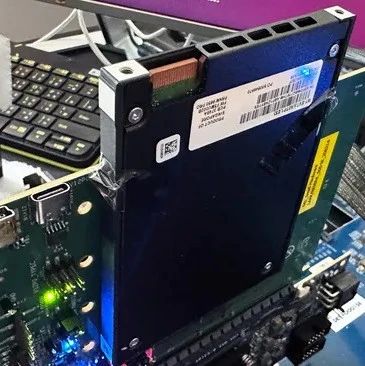
Core Insights - The article discusses the introduction of PCIe 6.0 SSDs, highlighting a specific model from Micron that can achieve read/write speeds of up to 30.25 GB/s, showcasing advancements in storage technology [1][2]. Group 1: PCIe 6.0 Technology - The PCIe 6.0 interface is expected to enhance data transfer speeds significantly, with the Micron 9650 Pro SSD serving as a key testing platform for companies like Astera Labs [1]. - Although Nvidia's Blackwell GPU supports PCIe 6.0, no CPU platforms currently support this technology, limiting its immediate application [2]. - PCIe 6.0 switches can facilitate direct communication between AI GPUs and SSDs, bypassing the CPU, which is crucial for certain AI systems [2]. Group 2: Product Development and Testing - The certification timeline for PCIe 6.0 devices has been postponed to the second half of 2025, affecting the availability of compatible GPUs and SSDs [3]. - The Micron 9650 Pro SSD is currently in the EVT3 stage, indicating it has undergone multiple engineering validation tests, with most hardware issues resolved [3]. - EVT3 is close to the final version, allowing for performance validation and compatibility testing, although it remains in pre-production [3][4]. Group 3: Future Steps and Market Implications - Micron's strategy regarding the certification of the 9650 Pro SSD remains unclear, whether they will wait for PCI-SIG's interoperability testing or initiate their own certification process [4]. - The development process includes DVT (Design Validation Testing) and PVT (Production Validation Testing), which are essential for ensuring product reliability before market release [4].

激光雷达大厂裁员,CEO离职
半导体芯闻· 2025-05-23 10:26
Group 1 - Luminar, a leading US lidar company, is undergoing a new round of layoffs and restructuring, following the recent dismissal of its founder and former CEO, Austin Russell [1][2] - In 2024, Luminar has already reduced its workforce by approximately 30%, resulting in an additional cash expenditure of $4 million to $6 million (approximately 28.88 million to 43.32 million RMB) [1] - The latest layoffs, initiated on May 15, are expected to incur cash expenses of $4 million to $5 million (approximately 28.88 million to 36.10 million RMB), with related costs to be recorded in Q2 to Q3 of this year [1] Group 2 - The recent layoffs are part of a series of upheavals, including the board's decision to replace Russell as CEO and chairman due to a moral investigation, although further details were not disclosed [2] - Following the leadership change, board member Jun Hong Heng also resigned, with the company stating that his departure was not due to any disagreements regarding operations or management [2] - Luminar went public in 2021 through a merger with Gores Metropoulos Inc., achieving a valuation of $3.4 billion after completing a $250 million financing prior to the SPAC merger [2]

芯片相争,终端得利?
半导体芯闻· 2025-05-23 10:26
Core Viewpoint - Qualcomm is making significant strides in the PC market with its Snapdragon X series processors, supported by major OEMs like Dell, HP, and Lenovo, and has secured over 85 design orders, expecting to exceed 100 by next year [1][2]. Group 1: Qualcomm's PC Market Strategy - Qualcomm's acquisition of Nuvia aims to enhance CPU performance and power efficiency in personal computers [1]. - The introduction of the Dell Pro Max Plus laptop featuring Qualcomm's AI 100 PC inference card marks a notable advancement, being the first workstation with an enterprise-level independent NPU [1][2]. Group 2: Technical Specifications and Innovations - The Dell Pro Max Plus utilizes two Cloud AI 100 processors, providing a total of 32 AI cores and 64 GB of LPDDR4x memory, capable of performing over 450 8-bit integer operations per second within a thermal range of 75 watts [2]. - This setup allows for rapid and secure device inference for large AI models, including those with up to 109 billion parameters, indicating a shift towards alternatives to traditional power-hungry GPUs [2]. Group 3: Competitive Landscape - The PC market has evolved significantly over the past decade, with increased competition from AMD, Nvidia, Qualcomm, and Apple, moving away from Intel's dominance [3]. - Dell's leadership emphasizes the benefits of competition in the semiconductor market, aiming to provide customers with the best components available [3].


台积电,强烈抗议!
半导体芯闻· 2025-05-23 10:26
如果您希望可以时常见面,欢迎标星收藏哦~ 来源:内容来自半导体新闻综合 ,谢谢 。 据报道,台积电已发出抗议信,称其亚利桑那州晶圆厂的运营可能因美国关税政策而受到干扰。据 报道,他们表示,如果关税生效,台积电的制程成本将不可避免地上升,美国客户的需求将放缓, 这将影响正在推进的耗资超过100万亿韩元的亚利桑那工厂的建设进度。据透露,戴尔、HPE等美 国服务器公司也表达了与台积电一致的立场。 据台媒23日报道,台积电亚利桑那州公司向美方传达了公司在关税问题上的立场。据《经济日 报》报道,台积电致函称,"关税可能会提高最终用户产品的价格,减少对那些产品及其所含半导 体部件的需求,并使亚利桑那州晶圆厂的建设和运营计划变得不确定","我们敦促美国政府不要对 美国以外生产的半导体征收关税或其他限制"。 台积电2020年至今宣布的对美投资额为1650亿美元。台积电最初决定投资650亿美元在美国亚利桑 那州建设三家工厂,在美国关税政策公布后,台积电宣布计划在美国额外投资1000亿美元建设生 产设施。 台积电似乎在努力提高盈利能力,其亚利桑那州工厂过去四年累计亏损 394.52 亿新台币且关税负 担不断增加之际,做出了这一强 ...
碳化硅市场,依旧繁荣
半导体芯闻· 2025-05-23 10:26
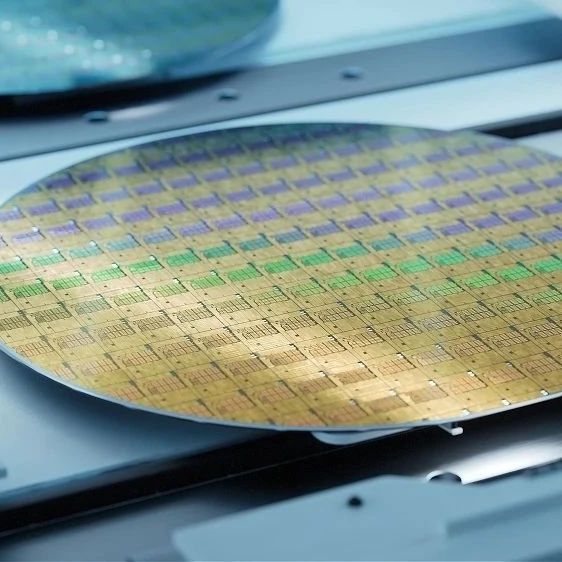
Core Insights - The global silicon carbide (SiC) wafer market is projected to grow from 143.6 billion yen in 2024 to 619.5 billion yen by 2035, representing an increase of approximately 4.3 times [1] - In 2024, the demand for SiC power semiconductors is expected to slow down, but sales volume is anticipated to increase by 81.9% year-on-year, primarily driven by Chinese wafer manufacturers [1] - The 6-inch wafer currently dominates the market, accounting for over 90% of sales, while the demand for 4-inch wafers is declining [2] Group 1 - The SiC power semiconductor market is expected to see a sales volume and revenue growth of about 20% year-on-year in 2025, despite a decline in prices due to the influx of cheaper products [1] - The diamond wafer market is projected to take off starting in 2026, with the market size expected to reach 4.6 billion yen by 2035 [3] - The commercialization of 2-inch diamond wafers is anticipated to accelerate the development of the diamond power semiconductor market [3] Group 2 - The aluminum nitride (AlN) wafer samples have begun shipping, and the application range is expanding, with full-scale production expected in the future [3] - The germanium wafer is planned to be developed as a 6-inch epitaxial wafer, with sales expected to begin around 2030 [3] - The silicon wafer market is expected to stabilize from 2025 onwards after a contraction in 2024, with the 6-inch wafer's practicality driving growth in GaN and gallium oxide wafer markets [3]
苹果代工厂,全力搞芯片
半导体芯闻· 2025-05-23 10:26
如果您希望可以时常见面,欢迎标星收藏哦~ UTAC成立于1997年,总部位于新加坡,提供半导体芯片的封装与测试服务,其应用涵盖消费电 子、计算设备、安全设备及医疗领域。 除新加坡外,该公司还在泰国、中国和印尼设有生产基地,并拥有覆盖美国、欧洲和亚洲的全球销 售网络。其客户主要包括"无晶圆厂"公司(即将芯片制造外包的公司)、集成器件制造商和晶圆代 工厂。 UTAC未披露其财务表现,但消息人士称,其年度息税折旧摊销前利润(EBITDA)估计约为3亿 美元。 参考链接 由于信息尚属机密,两位消息人士均拒绝具名。富士康对此拒绝置评,UTAC、Wise Road和杰富 瑞尚未立即回应置评请求。 近年来,全球芯片制造业受到国家安全和技术竞争的影响,尤其是在中美之间。传统上,半导体依 赖高度全球化的制造供应链,但美国已采取措施限制中国大陆获取先进芯片和高端制造工具, 消息人士表示,由于UTAC在中国大陆的业务,该公司预计将吸引非美国的财务型和战略型竞购 者。 富士康是苹果公司的主要供应商,也是全球最大的电子产品代工制造商。根据其官网,近年来富士 康已将业务拓展至半导体制造,作为其长期增长战略的一部分。 来源:内容 编译自路 ...
英伟达,如何捍卫AI王座?
半导体芯闻· 2025-05-23 10:26
美国对高科技出口的限制已导致英伟达在中国市场份额下滑,公司不得不撤出原有芯片并推出符合 美国政策的性能下降版本。 与此同时,微软和谷歌母公司Alphabet等云计算巨头也已暗示将削减AI支出。尽管黄仁勋在过去 一个月宣布了在海湾地区数千亿美元规模的合作项目,但分析师表示此类大单将越来越罕见。 "每个国家都能像沙特那样宣布建设一个100亿美元、甚至500亿美元的数据中心吗?当然不可 能。"Seaport Research分析师Jay Goldberg说,"他们正在耗尽显而易见的交易机会。" 当路透社询问英伟达将如何应对AI支出放缓时,黄仁勋回应道:"AI基础设施正在全球范围内建 设……这也是我到处旅行的原因之一……AI基础设施将成为社会的一部分。" 新增长路径 在Computex上,黄仁勋展示了英伟达一条不依赖于主权数据中心大单的新增长路径:通过新技 术,进一步扩大其在AI市场的掌控力。 如果您希望可以时常见面,欢迎标星收藏哦~ 来源:内容编译自路透 ,谢谢 。 英伟达CEO黄仁勋周五离开台北,结束了一周在中国台湾科技业界的"膜拜"之旅,并传递出这位 美国AI芯片之王在如何保持其领先地位方面一个微妙但关键的信息 ...