半导体芯闻

Search documents
昆仑芯将赴港上市
半导体芯闻· 2025-12-16 10:57
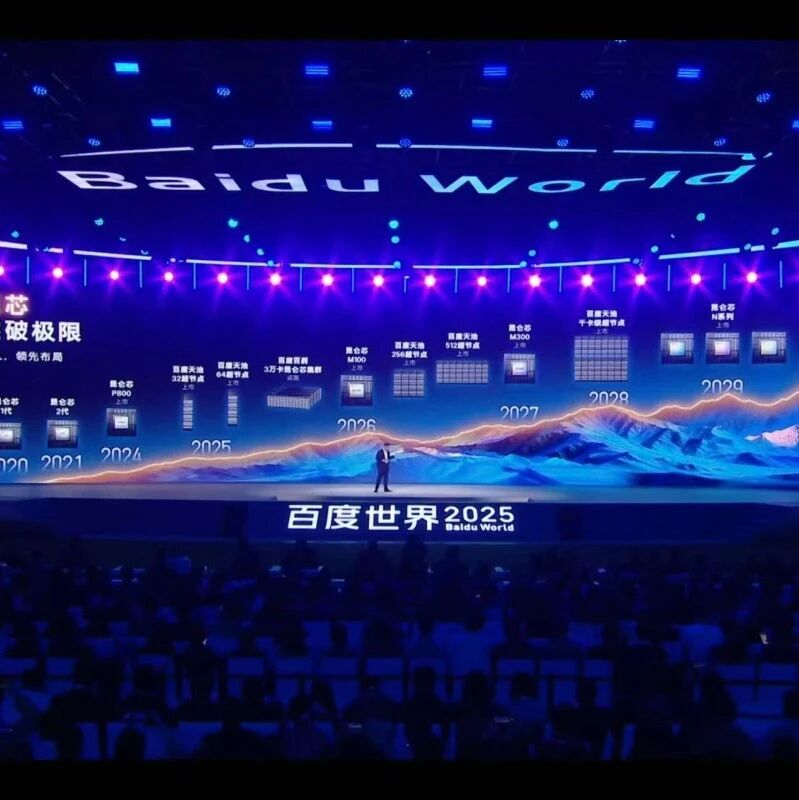
Core Viewpoint - Kunlun Core, a self-developed chip project under Baidu, is accelerating its path to IPO following its upcoming share reform [1][3]. Group 1: Company Overview - Kunlun Core was established in 2011 and began independent financing in 2021, with Ouyang Jian as CEO [1]. - Baidu is the controlling shareholder of Kunlun Core, which has completed six rounds of financing, the latest in July this year [1]. Group 2: Product Development - The main product of Kunlun Core is the P800 chip, set to launch in 2024, which has been validated within Baidu's operations [1]. - In the first half of this year, Baidu activated a 30,000-card cluster based on the P800 chip, achieving high cost-performance in training a multimodal model [1]. Group 3: Future Product Roadmap - Kunlun Core plans to release the M100 chip in 2026, optimized for large-scale inference scenarios, and the M300 chip in 2027, aimed at ultra-large multimodal model training and inference [1][3]. - Baidu will launch the "Tianchi 256 Super Node" in the first half of 2026, which supports 256 interconnected cards, enhancing total interconnect bandwidth by four times and improving performance by over 50% compared to the previous model [3]. - The "Tianchi 512 Super Node" is expected in the second half of 2026, supporting 512 interconnected cards and capable of training trillion-parameter models [3]. Group 4: Long-term Vision - According to Baidu's roadmap, Kunlun Core anticipates launching a new generation of N series chips by 2029 and achieving a million-card Kunlun Core single cluster by 2030 [4].


三星制定芯片新战略
半导体芯闻· 2025-12-16 10:57
Core Viewpoint - Samsung Electronics is focusing on expanding its role in the artificial intelligence supply chain and enhancing its semiconductor business, particularly in high-bandwidth memory and wafer foundry services, as part of its strategic plan for 2026 [1][2]. Group 1: Strategic Developments - Samsung held a global strategy meeting to outline its development roadmap for 2026, following significant leadership changes [1]. - The company plans to allocate 60% of its high-bandwidth memory (HBM) capacity to ASIC customers by 2026, with its latest HBM4 chips undergoing quality certification by NVIDIA [2]. - Samsung is preparing to launch its $37 billion factory in Taylor, Texas, in 2026, which will utilize advanced 2nm technology, marking a critical component of its foundry strategy [2]. Group 2: Competitive Positioning - Samsung's wafer foundry division is under scrutiny as it aims to close the technology gap with TSMC, which holds over 70% of the global foundry market share, while Samsung currently has an 8% market share [2]. - The upcoming Galaxy S26 series is set to feature the new Exynos 2600 processor, developed using Samsung's 2nm process, although production yield remains a concern [3]. - Samsung's consumer electronics division is increasing investments in AI-driven features to maintain competitiveness against rising pressure from Chinese brands [3]. Group 3: Partnerships and Collaborations - Samsung's leadership, including Chairman Lee Jae-Yong, is engaging with key industry figures like Elon Musk and AMD's CEO to discuss semiconductor collaborations and enhance Samsung's position as a critical chip supplier in the U.S. [1].
AI芯片竞争,再起波澜
半导体芯闻· 2025-12-16 10:57
如果您希望可以时常见面,欢迎标星收藏哦~ 过去十年,NVIDIA 一直主导着用于机器学习/人工智能领域的高性能计算机芯片市场。 英伟达凭借其专有的CUDA软件和快速创新,已成为人工智能处理器的代名词。该公司市值预计将 在2025年短暂达到5万亿美元。2025年2月至10月期间,支持人工智能发展的硬件(包括半导体芯 片和网络连接)的收入达到1478亿美元。 英伟达最新、最强大的处理器"Grace Blackwell"系列一经推出便迅速售罄,但其市场主导地位正 在逐渐消退。随着行业向更加专业化的硬件方向发展,英伟达如今面临的挑战不再仅仅局限于与一 家公司竞争,而是来自多个方面。 NVIDIA 的强劲销售和高利润率主要得益于有限的产量稀缺,高端芯片的主要瓶颈在于台积电在 芯片封装(CoWoS)先进封装方面的产能有限。 英伟达正在利用大部分有限的产能,但半导体供应的竞争正在加剧:作为唯一制造商的台积电计划 到 2026 年将其产能扩大到每月 10 万片晶圆。随着供应限制的缓解,谷歌和 AMD 等公司将从中 受益。 随着业界从试验大规模基础模型转向优先发展大规模、高性价比的推理,NVIDIA 面临着巨大的 风险。 主要 ...


加速头部主动降噪品牌BRISONUS规模化,苏州国芯加码华研慧声
半导体芯闻· 2025-12-16 10:57
近 日 获 悉 , 华 研 慧 声 ( 苏 州 ) 电 子 科 技 有 限 公 司 获 得 苏 州 国 芯 科 技 股 份 有 限 公 司 (688262.SH)的新一轮战略投资。本次资金将重点用于加速车载主动降噪解决方案规划化 落地,以及推进AI声学算法及应用的研发。围绕多场景、个性化的智能座舱声学需求,构建 以"声学场景"为核心的AI智能声学系统,实现从算法模型到硬件系统的全链路升级。 作为国内领先的系统级车载声学解决方案提供商,华研慧声自成立以来,持续深耕汽车座舱空间声 学主动控制技术,以"3D主动降噪"和"空间沉浸音频"双轮驱动,以"海量数据+定制化算法"产品方 案,打造"无界声"声学品牌,逐步构建商业护城河。早在2022年,华研慧声已获得苏州国芯科技 Pre-A轮战略投资,双方由此开启在智能声学方向的深度协作,共同推动国产高性能车载音频DSP 芯片(CCD5001)研发及量产落地。 过去三年,华研慧声凭借持续的创新投入与扎实的客户服务,为上汽智己、奇瑞汽车、吉利汽车、 一汽集团、小鹏汽车、福特、大众等国内外优质OEM提供数十款车型开发。2024年6月,华研慧声 自主研发的RNC路噪主动降噪技术,作为 ...
HBM 4,正式供货
半导体芯闻· 2025-12-16 10:57
Core Insights - Samsung Electronics and SK Hynix are supplying the sixth-generation high bandwidth memory (HBM4) to Nvidia, with final sample delivery expected in Q1 next year [2][3] - Both companies are in the final stages of quality verification, indicating a significant step towards formal contract signing [2][4] Group 1: Supply Chain Developments - SK Hynix has established a mass production system for HBM4 chips and is in the final adjustment phase to meet Nvidia's requirements [3] - The negotiations regarding the total supply volume and contract pricing for HBM4 have been framed, with SK Hynix agreeing to meet Nvidia's maximum capacity needs [3] - Samsung Electronics is also nearing the end of negotiations for HBM4 chip supply, likely becoming the second-largest supplier after SK Hynix [4] Group 2: Competitive Landscape - Samsung is expanding its HBM4 production capacity to regain competitiveness in the market, while Micron is expected to lag behind due to technical challenges [4] - Micron's performance in HBM4 is reportedly inferior to its competitors, which may hinder its position in the supply chain [4]
余承东出任华为董事长
半导体芯闻· 2025-12-16 10:57
股东信息显示,该公司由华为终端(深圳)有限公司全资持股。而华为终端(深圳)是华为投资控 股有限公司的控股子公司,后者持股比例为67.95%,受益人为任正非,法定代表人为赵明路。 如果您希望可以时常见面,欢迎标星收藏哦~ 天眼查工商信息显示,12月12日,华为终端有限公司发生工商变更,郭平卸任董事长,由余承东 接任。同时,多位高管发生变更,法定代表人则由赵明路变更为魏承敏。 | 变更记录 46 2 ● | | | | | 变更项目 ▼ | 变更时间 ▼ | 한 음반 | 2天眼查 | | --- | --- | --- | --- | --- | --- | --- | --- | --- | | 序号 | 变更日期 | 变更项目 | | 变更前 | 变更后 | | | » | | 1 | 2025-12-12 | 负责人变更(法 定代表人、负责 人、首席代表、 合伙事务执行人 | 赵明路 | | 魏承敏 | | | | | | | 等变更) | | | | | | | | 2 | 2025-12-12 | 联络员备案 | 王海彬 | | 李田丽 | | | | | 3 | 2025-12-12 | | 余承东 ...
英特尔,叫板博通
半导体芯闻· 2025-12-16 10:57
Core Insights - Intel's AI strategy is focusing on two main areas: ASIC and edge AI, aiming to regain competitiveness in the AI sector where it lags behind Nvidia and AMD [2][4] - The establishment of the Central Engineering Group (CEG) is intended to consolidate engineering talent and enhance the company's capabilities in ASIC and design services [4][5] Group 1: AI Strategy and Market Position - Intel has acknowledged its shortcomings in AI strategy, with former CEO Pat Gelsinger admitting that the company's approach has not been satisfactory [2] - The company is developing a power-optimized GPU for inference as part of its edge AI strategy, with products like Meteor Lake and Lunar Lake aimed at enhancing mobile SoC performance [2][3] - Intel's new ASIC department, led by Srini Iyengar, aims to provide customized chips for specific workloads, competing with established solutions like Google's TPU and Amazon's Trainium [3][4] Group 2: ASIC Business Development - The ASIC business is expected to play a crucial role in Intel's operations, with plans to offer a "one-stop" solution for customers seeking custom AI chips [4][6] - Intel's CEG will lead the development of ASIC and design services, expanding the application of its core x86 IP and leveraging its design advantages [5][6] - The company aims to differentiate itself by providing internal foundry services, which is a unique offering compared to competitors like Broadcom and Marvell [6][7] Group 3: Future Prospects and Challenges - If executed effectively, the custom chip business could become a significant revenue stream for Intel, positioning it as a system foundry responsible for every supply chain segment [7] - The competitive landscape in the AI market is intense, with companies like Broadcom continuously evolving, posing challenges for Intel to capitalize on this opportunity [7]

内存将再涨价40%,手机涨价潮来了
半导体芯闻· 2025-12-16 10:57
这是由于特定芯片短缺和半导体供应链瓶颈造成的,这些因素推高了零部件价格。 全球数据中心的持续建设推高了对英伟达(Nvidia)开发系统的需求。而这又使用了 SK 海力士和 三星设计的组件——这两家公司是所谓的内存芯片的最大供应商。 然而,一种名为动态随机存取存储器(DRAM)的特定组件,不仅用于人工智能数据中心,对智 能手机也至关重要。由于需求超过供应,DRAM价格今年已大幅上涨。 Counterpoint公司表示,对于售价低于200美元的低端智能手机,其物料清单成本自年初以来上涨 了20%至30%。物料清单成本是指生产一部智能手机所需的全部成本。 如果您希望可以时常见面,欢迎标星收藏哦~ Counterpoint Research 周二在一份报告中表示,人工智能厂商推动的内存芯片短缺可能会导致智 能手机在 2026 年价格上涨,出货量下降。 根据 Counterpoint 的预测,2026 年智能手机出货量可能会下降 2.1%,而此前的预测是持平或正 增长。 出货量不等同于销量,但它可以衡量需求,因为它跟踪了发送到商店等销售渠道的设备数量。 与此同时,Counterpoint 表示,智能手机的平均售价在 2 ...

IT公司,进军芯片
半导体芯闻· 2025-12-15 10:17
如果您希望可以时常见面,欢迎标星收藏哦~ Virtusa通过收购 SmartSoC Solutions,明确进军半导体领域,将芯片设计和集成电路工程业务纳 入其产品组合。随着市场对人工智能驱动型硬件的需求持续飙升,此次收购将 Virtusa 的业务范围 从软件和云服务扩展到芯片领域。 "我对这项技术能为我们的客户带来的益处感到非常兴奋。借助 Virtusa 的云和应用层服务,我们 能够提供从芯片到云的解决方案,帮助客户更快地将产品推向市场,"SmartSoC Solutions 北美首 席执行官兼首席商务官 Scott Houghton 表示。 两家公司携手合作,旨在满足半导体和人工智能技术领域日益增长的需求,因为芯片设计正成为超 越传统硅供应商的一项日益重要的战略能力。 (来源: 编译自eenews ) 点这里加关注,锁定更多原创内容 *免责声明:文章内容系作者个人观点,半导体芯闻转载仅为了传达一种不同的观点,不代表半导体芯闻对该 观点赞同或支持,如果有任何异议,欢迎联系我们。 推荐阅读 该新闻凸显了IT服务公司如何与芯片设计生态系统建立更紧密的联系。它也强调了半导体工程、 人工智能基础设施和云平台之间日益 ...
ASML CEO:中国绝不接受卡脖子
半导体芯闻· 2025-12-15 10:17
Group 1 - ASML's CEO, Christoph W. F., highlighted the contradictions in the West's export restrictions on lithography machines to China, emphasizing the need for a "subtle balance" in technology export policies [2] - Currently, ASML is prohibited from exporting all EUV lithography equipment and the most advanced DUV lithography equipment to China, creating a significant technological gap, with the equipment available to China being eight generations behind the latest technology [2] - The CEO warned that excessive restrictions could push China to fully develop its own technology, potentially leading to a strong competitor for the West in the long run [3] Group 2 - The ongoing technological competition surrounding lithography machines reflects a strategic struggle amid the restructuring of the global technology supply chain [3] - The article suggests that while technology barriers may slow down development, they cannot stop a nation's determination to achieve technological independence [3] - The ultimate outcome of the technological gap will depend on the strength of research and development capabilities and industry resilience [3]