半导体芯闻

Search documents
这类芯片,ST已经交付50亿颗
半导体芯闻· 2025-12-15 10:17
Core Insights - STMicroelectronics has delivered over 5 billion RF antenna chips to SpaceX for the Starlink satellite network, with the potential to double the delivery quantity in the next two years [3][4] - The growth of space contracts has become a driving force for STMicroelectronics' specialized chip business, shifting from government-led projects to a rapidly growing commercial market [3] - The demand for specialized chips capable of handling high data transmission rates and surviving harsh space environments is increasing, driven by companies like SpaceX, Eutelsat's OneWeb, and Amazon's LEO network plans [3] Company Developments - Since the collaboration began around 2015, STMicroelectronics has supplied over 5 billion RF front-end modules or antenna components to SpaceX [4] - Starlink operates in over 150 markets and has approximately 8 million users [4] - STMicroelectronics is set to provide upcoming inter-satellite laser links for SpaceX and is collaborating with European companies like Thales and Eutelsat on projects, including the EU's planned Iris 2 satellite constellation [4]



NPU,大有可为
半导体芯闻· 2025-12-15 10:17
Core Viewpoint - The rise of artificial intelligence (AI) is driving the demand for new specialized computing hardware, specifically Neural Processing Units (NPUs), which are expected to significantly enhance PC shipment growth and performance in AI tasks [3][9]. Group 1: Evolution of Processing Units - CPUs have been the backbone of computing since the 1950s, evolving to handle a wide range of tasks across various devices [4]. - The introduction of GPUs in the 1990s marked a shift towards parallel processing capabilities, which became crucial for handling large datasets and AI workloads [4][10]. - NPUs are emerging as a new category of processors designed specifically for AI workloads, evolving alongside GPUs but with a more integrated development path [5][10]. Group 2: NPU Integration and Performance - Major companies like Intel, AMD, and Qualcomm are integrating NPUs into their processors to meet the growing demands of AI applications, with minimum performance requirements set at 40 TOPS for AI tasks [9][18]. - The integration of NPUs is expected to enhance energy efficiency and reduce costs in devices, particularly in smartphones and PCs [8][9]. - The competition among high-end PC processors is intensifying, with companies striving to exceed the performance benchmarks set by Microsoft for AI capabilities [9][18]. Group 3: Future of AI Workloads - As NPUs become more prevalent, the balance of AI workloads is expected to shift from GPUs to NPUs, with predictions indicating that most AI-related tasks on PCs will eventually be handled by NPUs [19]. - The collaboration between CPUs, GPUs, and NPUs is essential for optimizing AI applications, with each type of processor playing a specific role in handling different aspects of AI workloads [16][19]. - The demand for more powerful and efficient NPUs is anticipated to grow as AI technology continues to advance, driving further innovation in NPU design and capabilities [15][19].



总投资252亿,粤芯四期:完成备案
半导体芯闻· 2025-12-15 10:17
如果您希望可以时常见面,欢迎标星收藏哦~ 据"看黄埔"公众号消息,粤芯半导体技术股份有限公司目前已完成12英寸集成电路数模混合特色 工艺生产线项目(四期项目)备案。 据悉,项目位于广州市黄埔区九龙镇广州市凤凰五路26号,总投资252亿元。项目建筑面积210000 平方米,占地面积60000平方米,年产48万片12英寸晶圆,计划于2029年底建成。 值得一提的是,日前,粤芯半导体技术股份有限公司已经在广东证监局完成IPO辅导备案,募集资 金将重点投向特色工艺研发、碳化硅等第三代半导体布局及产能升级,进一步巩固其在模拟芯片代 工领域的优势地位。 据了解,粤芯深耕180-40nm成熟制程,专攻高压、车规等模拟芯片特色工艺。目前,粤芯已建成 区域产能最大的12英寸芯片生产平台,一期、二期项目实现合计月产8万片晶圆的量产能力,三期 投产后总产能将进一步提升至12万片/月,为物联网、汽车电子、工业控制等关键领域提供核心支 撑。 点这里加关注,锁定更多原创内容 *免责声明:文章内容系作者个人观点,半导体芯闻转载仅为了传达一种不同的观点,不代表半导体芯闻对该 观点赞同或支持,如果有任何异议,欢迎联系我们。 推荐阅读 10万亿 ...
美国芯片巨头,大举投资越南
半导体芯闻· 2025-12-15 10:17
Core Insights - Vietnam is emerging as a potential hub for semiconductor design, driven by the growth of artificial intelligence and supply chain restructuring, according to Marvell, a major player in the semiconductor industry [2] - The country has historically been limited to assembly and testing in the chip industry, but recent investments from various companies are shifting this focus towards chip substrates, software, and integrated circuits [2][3] - Marvell's expansion in Vietnam is supported by a strong local talent pool in STEM fields, which is crucial for integrated circuit design [2][4] Group 1: Investment and Growth Opportunities - Marvell has set ambitious growth targets in Vietnam, with employee numbers expected to reach 800 by 2027, surpassing the initial goal of 500 by 2026 [2] - The Vietnamese government is encouraging the establishment of a "small high-tech" wafer factory, which could produce basic silicon chips for household appliances, requiring a more modest investment of $1 billion [4] - Marvell aims to capture 20% of the custom chip market, currently dominated by Broadcom, with 73% of its revenue coming from clients like Amazon benefiting from AI-driven demand [4] Group 2: Challenges and Limitations - Vietnam faces significant challenges, including restrictions on certain chip exports imposed by the U.S. to prevent technology from reaching China, which complicates operations for companies like Marvell [3] - The country also suffers from shortages in energy and training, which hinder its ability to compete with wealthier nations like India and Malaysia in the semiconductor sector [3] - Despite these obstacles, Marvell believes there is still room for growth in Vietnam, particularly due to the country's lower wage costs compared to the U.S. [3][4]

HBM 4,新标准
半导体芯闻· 2025-12-15 10:17
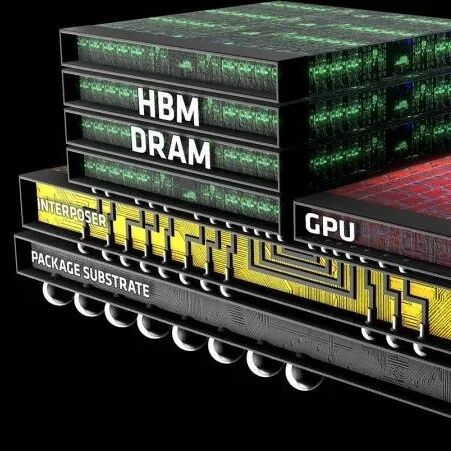
Core Viewpoint - The semiconductor industry is developing a new type of High Bandwidth Memory (HBM) called SPHBM4, which aims to reduce design complexity and manufacturing costs while maintaining performance similar to existing HBM products. This development could significantly impact companies like Samsung Electronics and SK Hynix, as well as the broader ecosystem including TSMC and NVIDIA [3][6]. Group 1: SPHBM4 Development - JEDEC is in the final stages of developing the SPHBM4 standard, which utilizes the same DRAM as HBM4 but serializes I/O pins at a 4:1 ratio, reducing the number of I/O pins from 1024 to 512 while still supporting the same bandwidth [3][4]. - The SPHBM4 standard is expected to be released in the coming months, according to Eliyan, a U.S. semiconductor startup that supports the new standard [4][5]. Group 2: Technical Aspects - SPHBM4's performance relies on stable interconnect technology that can achieve over four times the transmission speed per I/O pin, which is crucial for its operation [4]. - The introduction of SPHBM4 will necessitate a redesign of the substrate chip responsible for memory controller functions, as the I/O pin count will be significantly reduced [5]. Group 3: Packaging and Cost Implications - The intermediary layer, which connects HBM and the printed circuit board (PCB), can simplify connections due to the reduced number of I/O pins, allowing for the use of organic intermediary layers instead of more expensive silicon layers [5]. - The adoption of organic intermediary layers is expected to lower packaging manufacturing costs while allowing for more flexible designs, potentially increasing overall storage capacity [5]. Group 4: Market Uncertainty - The commercialization of SPHBM4 remains uncertain, as the standard is still under development and may undergo changes or even be rejected by the JEDEC board [6]. - Major tech companies are currently focused on enhancing both the speed and density of HBM, indicating that SPHBM4 may be one of several attempts to reduce manufacturing costs for AI accelerators based on HBM technology [6].

芯片行业,前所未见
半导体芯闻· 2025-12-15 10:17
如果您希望可以时常见面,欢迎标星收藏哦~ 来自 AMD、英伟达、博通和主要研究公司的越来越多的预测表明,在人工智能基础设施建设规模 比该行业历史上任何一次扩张都大数倍的推动下,半导体市场将在本十年结束前突破万亿美元大 关。 Creative Strategies 的最新分析将这种转变称为"千兆周期"(Gigacycle),并指出人工智能前所 未有的需求规模正在同时重塑计算、内存、网络和存储的经济格局。2024 年全球半导体收入约为 6500 亿美元,但目前多项预测显示,2028 年或 2029 年将突破万亿美元大关。人工智能是造成这 一预测上调的主要原因。 AMD首席执行官苏姿丰(Lisa Su)近期上调了公司长期预期,称到2030年人工智能硬件市场规模将 达到1万亿美元,并预测AMD整体复合年增长率将达到35%,数据中心业务的复合年增长率将达到 60%左右。她还公开反对近几个月来盛行的人工智能泡沫论调。 与此同时,英伟达给出了更为宏大的预期,在2026年第二季度财报电话会议上,该公司将未来五 年人工智能基础设施市场规模描述为3万亿至4万亿美元。这一数字基于超大规模数据中心、自主 人工智能项目和企业集群的系统 ...


全球TOP 10晶圆厂:中国大陆三家入选
半导体芯闻· 2025-12-12 10:24
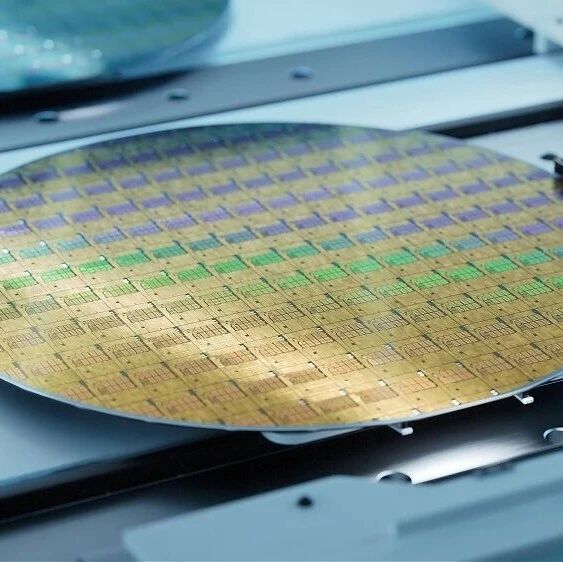
Group 1 - The global wafer foundry industry is expected to see a revenue increase of 8.1% quarter-on-quarter, reaching approximately $45.1 billion in Q3 2025, driven by demand for AI high-performance computing (HPC) and new consumer electronics chips [3] - Despite the positive outlook for Q3 2025, there are concerns about potential geopolitical disruptions affecting demand in 2026, leading to a more conservative supply chain outlook for mainstream terminal demand [3] - TSMC's market share increased to 71% in Q3 2025, supported by strong demand from Apple for iPhone and NVIDIA's Blackwell platform, with both wafer shipments and average selling prices rising [3] Group 2 - UMC's capacity utilization slightly improved in Q3 2025 due to demand for mature process ICs from smartphones and PCs, resulting in a market share of 4.2% [4] - GlobalFoundries experienced a slight decrease in market share to 3.6% despite a small increase in shipments, attributed to a one-time adjustment in average selling prices [4] - The "China for China" trend benefited Hefei Jinghe, which saw increased demand for DDIC, CIS, and PMIC, allowing it to surpass Tower Semiconductor in rankings [4]
业者呼吁:警惕高通这桩RISC-V收购
半导体芯闻· 2025-12-12 10:24
Core Viewpoint - The acquisitions of RISC-V companies by major players like Qualcomm and Meta signify a natural progression in the RISC-V ecosystem, highlighting the importance of strategic positioning and influence in the evolving landscape of RISC-V technology [3][8]. Group 1: Impact of Qualcomm's Acquisition of Ventana - Qualcomm's acquisition of Ventana strengthens its control over RISC-V standard-setting, which could significantly influence the future ecosystem of RISC-V both globally and in China. This consolidation allows Qualcomm to lead strategic direction, certification standards, and technical guidelines simultaneously [3][4]. - The governance structure of the RISC-V International (RVI) allows for significant disparities in actual influence during technical discussions, with companies like Ventana and Qualcomm having a more substantial voice compared to Chinese enterprises, which need to enhance their participation in standard-setting processes [4][5]. Group 2: Strengthening of Open Source Community Influence - The acquisition enhances Qualcomm's influence in key open-source communities, which is critical for the development of the RISC-V software ecosystem. Qualcomm's experience in upstreaming software could lead to increased support for RISC-V projects, potentially establishing a new technical organization similar to Linaro in the U.S. or Europe [5][6]. - Chinese companies must recognize the importance of contributing to and maintaining a voice in international open-source communities to avoid marginalization. Despite some progress, overall contributions from Chinese organizations remain insufficient and are trending downward [6][7]. Group 3: Uncertainty for Domestic RDSA Industry Alliance - Ventana's active role in the Chinese market and its involvement in founding the RDSA Industry Alliance raises questions about the future of this alliance following the acquisition. The legacy of Ventana in China may face uncertainties [7]. Conclusion - The trend towards RISC-V becoming a global open standard is inevitable, with major tech companies increasing their investments. Domestic RISC-V companies must acknowledge these changes and actively respond to the intensifying competition while emphasizing the importance of upstream contributions and long-term investments [8].

国微芯:从繁星点点到星链成河
半导体芯闻· 2025-12-12 10:24
Core Viewpoint - The article emphasizes the significant advancements made by Guowei Chip Technology in the EDA (Electronic Design Automation) sector, highlighting its transition from single-point tools to comprehensive solutions that cater to various stages of the semiconductor design and manufacturing process [3][5][7]. Group 1: Company Overview - Guowei Chip Technology is recognized as an innovative player in the domestic semiconductor industry, focusing on building a comprehensive platform that integrates EDA and chip design services [3][5]. - The company has developed a range of products, including formal verification, physical verification, reliability platforms, and PDK automation development verification platforms [5][7]. Group 2: Product Development - Guowei Chip has expanded its offerings from single-point tools to a systematic solution that covers design, manufacturing, mask, and equipment processes [7]. - The company has introduced various static analysis tools, including CDC, RDC, and Lint, alongside functional verification tools like FPV, CC, and UNR to enhance the chip design process [7][9]. Group 3: Market Positioning - Guowei Chip differentiates itself by understanding and addressing the specific pain points of domestic customers, which has allowed it to establish a foothold in the competitive EDA market [9][10]. - The company has invested in the development of the MDC (Mask Data Calculation) software to improve the domestic mask manufacturing capabilities, reflecting its commitment to localization [9][10]. Group 4: Collaboration and Ecosystem - The company emphasizes deep collaboration with equipment manufacturers, mask factories, and wafer fabs to accurately understand customer needs and enhance product offerings [9][10]. - Guowei Chip aims to contribute to the semiconductor ecosystem by integrating various tools into systematic solutions, thereby enhancing the overall efficiency and effectiveness of the domestic semiconductor industry [12].
中国存储,全球第二
半导体芯闻· 2025-12-12 10:24
如果您希望可以时常见面,欢迎标星收藏哦~ 在本文中,我们将探讨中国半导体存储器市场和中国半导体制造商的分析结果。 首先,我们将考察中国的半导体存储器市场。就2024年DRAM市场和NAND闪存市场的区域份额 (基于总部所在地)而言,预计中国将位居第二(美洲在这两个市场中均将位居第一)。 Yole Group 还分析了主要 DRAM 和 NAND 闪存供应商在中国市场的销售额占比(2024 年)。 三星电子、SK 海力士和美光科技在三大 DRAM 公司中,中国市场的销售额占比最高,其次是 SK 海力士,最后是美光。即使是占比最高的三星,其在中国市场的销售额也仅占 30% 左右,并 不算高。与此同时,中国DRAM公司将其所有 DRAM 产品都销往中国。 有趣的是,这六大公司合计占据了约25%的NAND闪存市场份额。中国闪存公司也将其所有NAND 闪存产品都销往中国。 Yole Group 估计,中国将占 DRAM 市场 26% 的份额(价值 250 亿美元),以及 NAND 闪存市 场 33% 的份额(价值 220 亿美元)。其中,NAND 闪存的份额最大。 如果简单地将DRAM和NAND闪存的总价值加起来,全球 ...