半导体芯闻

Search documents
芯片短缺,本田停产
半导体芯闻· 2025-12-18 10:24
本田此前曾表示预计从11月底开始恢复正常生产,但此次停产无疑是一次挫折。最新的停产措施 表明,供应限制问题依然存在,这使得恢复产量和稳定库存的努力更加复杂。 然而,这些停产也可能促使人们重新审视潜在的需求状况。在亚洲部分地区,由于借贷成本上升、 消费者支出谨慎以及经济增长势头不平衡,汽车需求有所疲软。在此背景下,暂时停产可以起到双 重作用:既能帮助制造商管理库存,又能使产量更贴近销售趋势。虽然本田并未明确指出需求疲 软,但持续存在的供应问题与更具挑战性的需求环境之间的重叠表明,此次停产可能反映的是更广 泛的调整,而不仅仅是物流中断。 该消息令投资者情绪承压,媒体报道后,本田股价在东京交易时段下跌约1.5%。市场反应反映 出,人们担心持续的供应限制——加上需求疲软——可能会在新的一年里继续抑制盈利增长势头。 中国市场对本田而言依然至关重要,无论从销量还是生产规模来看都是如此,因此其合资工厂的停 产尤其引人注目。更广泛地说,这一事件凸显了全球汽车制造商即便在通过优先生产高利润车型和 调整生产组合来适应市场变化的同时,仍然面临着供应瓶颈和周期性需求风险的双重挑战。 针对多个地区工厂临时停产的情况,本田方面此前回应称 ...



光模块,卖爆了
半导体芯闻· 2025-12-18 10:24
Group 1 - The core viewpoint of the article highlights the unprecedented capital expenditures by major tech companies, with Alphabet, Amazon, Meta, and Microsoft setting records in Q3 2025, while Oracle's capital expenditure decreased by 6% quarter-over-quarter but increased by 269% year-over-year [1] - The total capital expenditure of these five companies exceeded $307 billion in the first nine months of 2025, creating significant pressure on the supply chain, with demand for many products, including optical modules, exceeding supply by two times or more [1] - TSMC plans to double its 2nm chip production capacity next year and is also increasing its 3nm chip capacity, contributing to Nvidia's record revenue of $57 billion in Q3, a 62% year-over-year increase and a 22% quarter-over-quarter increase [1] Group 2 - Broadcom reported record revenue of $18 billion, a 28% year-over-year increase and a 13% quarter-over-quarter increase, significantly exceeding its September guidance [2] - AI-related order backlog for Broadcom exceeds $73 billion, with plans for delivery within the next 18 months [2] - AMD reported revenue of $9.2 billion, a 36% year-over-year increase and a 20% quarter-over-quarter increase, also surpassing its August guidance [2] Group 3 - Optical module suppliers exceeded expectations, with Acacia Technologies achieving nearly $1.43 billion in revenue in Q3 2025, a 57% year-over-year increase and a 27% quarter-over-quarter increase [2] - Coherent's revenue reached a historical high of $1.58 billion, a 17% year-over-year increase and a 3% quarter-over-quarter increase [2] - LightCounting forecasts that sales of optical modules and related products will exceed $23 billion in 2025, a 50% increase from 2024, with Ethernet optical module sales expected to reach $17 billion, a 60% increase from the previous year [2] Group 4 - AEC sales also reached a new high last quarter, with Credo's revenue at $268 million, a 272% year-over-year increase and a 20% quarter-over-quarter increase [3] - The AEC product line remains the fastest-growing segment for Credo, with four hyperscalers contributing over 90% of total revenue [3]

蔚来公布,缺芯了
半导体芯闻· 2025-12-17 10:31
Core Viewpoint - NIO has announced a change in the technical solution for the rear entertainment expansion feature of the new ES8 due to a shortage of supply for the required chips, effective from December 22, 2025, to ensure vehicle delivery [1] Group 1: Changes in Features - The new ES8 will no longer support local video playback via USB drives, although lossless music playback and wireless screen mirroring will remain unaffected [1] - The ability to output the vehicle's screen to an external display via the USB-C port in the armrest will also be discontinued, but data input and wired screen mirroring will still be supported, with a maximum resolution of 1080P [1] Group 2: Compensation Measures - NIO will provide a one-time compensation of 15,000 points to users who lock in the new ES8 with the new technical solution before December 31, 2025, credited to the primary user's account within three days of vehicle delivery [1] - Users can opt for the original technical solution after chip supply improves by paying 12,000 points or 1,200 yuan for retrofitting [1] Group 3: Chip Development and Strategy - NIO's founder, Li Bin, announced the successful application of the self-developed 5nm automotive-grade intelligent driving chip, Shenji NX9031, in multiple models, marking a significant milestone in NIO's chip strategy [7] - The Shenji NX9031 chip is noted for its high performance, equivalent to four NVIDIA Orin-X chips, and is designed to support long-term upgrades of intelligent driving algorithms and software [10] - NIO aims to ensure that its intelligent driving chips can operate safely under extreme conditions and provide high bandwidth and processing power for a decade [8] Group 4: Challenges and Achievements - NIO faced significant challenges during the chip development process, including the abrupt termination of a partnership, but managed to overcome these obstacles and advance the project ahead of schedule [9] - The successful first-time tape-out of the Shenji NX9031 chip is a notable achievement, as it is the first automotive-grade 5nm chip to be mass-produced and deployed in vehicles [10] - NIO's commitment to self-research and development in chip technology is seen as a long-term strategy to enhance competitiveness in the automotive industry [11]


存储缺货,OPPO急了
半导体芯闻· 2025-12-17 10:31
Group 1 - The article highlights the increasing demand for low-power double data rate (LPDDR) memory, driven by the smartphone and AI server markets, leading companies like Samsung and SK Hynix to seek long-term agreements (LTA) for supply [1][2] - Oppo has recently proposed an LTA to Samsung and SK Hynix, requesting a guaranteed supply of LPDDR memory for at least four to six quarters, which is unusual as contracts are typically signed on a quarterly basis [1][2] - The memory shortage is affecting not only the Greater China smartphone industry but also major players like Samsung's MX division and Apple, who are struggling to fully mitigate the aggressive price increases from memory manufacturers [2][3] Group 2 - Memory manufacturers are planning to increase their share of high-value LPDDR server shipments starting in the first half of next year, as the demand for energy-efficient LPDDR rises with the AI industry's shift towards inference [2] - Samsung plans to begin shipping SOCAM2 products based on 1b (5th generation 10nm) DRAM in the first quarter of next year, while SK Hynix expects to start mass production of SOCAM2 products based on 1c (6th generation 10nm) DRAM in the second quarter [3] - The limited capacity of suppliers is expected to trigger a significant price increase for general DRAM in the first quarter of next year, as major smartphone manufacturers are actively procuring LPDDR [3]

AI芯片散热,中山大学团队发布新方案
半导体芯闻· 2025-12-17 10:31
Core Insights - The article discusses the development of a novel thermal interface material (TIM) that meets the stringent cooling requirements of AI chips, achieving a total thermal resistance of 1.8 mm²K/W, which is significantly lower than traditional materials [1][2][10] - The research highlights the effectiveness of a two-step ultrasonic-polishing treatment that enhances the thermal performance of graphite-silicone composite materials, making them comparable to liquid metal in terms of heat dissipation [2][3][10] Group 1: Thermal Resistance and Performance - The newly developed TIM exhibits an ultra-low thermal resistance of 1.8 mm²K/W at 50 psi, which is the lowest reported for solid-state thermal pads, second only to liquid metal [2][3] - The thermal conductivity of the material is measured at 460 W/mK, with a high compression strain of 45% under 50 psi pressure, demonstrating excellent thermal cycling stability [2][3] - The performance of the TIM in actual gaming laptop cooling tests is comparable to that of liquid metal, maintaining CPU temperatures around 86 °C [3][8] Group 2: Manufacturing Process and Advantages - The ultrasonic treatment creates micro and nano-scale defects in the graphite sheets, optimizing the contact between the TIM and the surfaces it interfaces with, thus enhancing heat dissipation [6][10] - The polishing process further reduces surface roughness from 34.5 μm to 11.1 μm, improving the overall thermal contact performance [6][10] - The manufacturing technique is noted for its simplicity, efficiency, low cost, and potential for industrialization, making it a viable option for mass production [2][3]

DRAM,突破10nm
半导体芯闻· 2025-12-17 10:31
Core Viewpoint - Samsung and its Advanced Technology Research Institute announced a new DRAM technology for manufacturing below 10nm, utilizing a Cell-on-Peri (CoP) architecture that stacks memory cells on top of peripheral circuits, enhancing storage density and efficiency while addressing high-temperature challenges [1][2]. Group 1: Technology Overview - The new CoP architecture differs from traditional methods by placing the surrounding transistors above the memory cells, which mitigates damage during high-temperature stacking processes [1]. - Samsung's technology is named "High-Temperature Resistant Amorphous Oxide Semiconductor Transistor for CoP Vertical Channel DRAM below 10nm" [1]. - The vertical channel transistors, with a channel length of 100nm, can withstand temperatures up to 550 degrees Celsius, maintaining performance stability [2]. Group 2: Performance and Stability - In high-temperature and high-pressure tests, the threshold voltage drift was only -8mV, indicating a stable operational lifespan exceeding 10 years [2]. - The high thermal stability of the transistors is attributed to their ability to suppress ion migration at the channel-electrode interface [2]. - During aging tests, the transistors exhibited minimal degradation in drain current, demonstrating robust performance [2]. Group 3: Development Stage and Future Applications - The technology is currently in the research and development phase and is expected to be applied in future DRAM processes below 10nm (0a and 0b nodes) [2].

思尔芯迈入国产EDA发展新征程
半导体芯闻· 2025-12-17 10:31
Core Viewpoint - The article highlights the strategic investment in SiErXin Technology Co., Ltd. by the Greater Bay Area Fund and Huada Jiutian Technology Co., Ltd., aimed at accelerating the development of domestic digital EDA tools and enhancing innovation and ecosystem collaboration in the industry [1][2]. Group 1: Investment and Strategic Collaboration - The joint investment from the Greater Bay Area Fund and Huada Jiutian is intended to deepen industry collaboration and promote the rapid development of domestic digital EDA [1]. - Li Ke, head of the investment department at the Greater Bay Area Fund, praised SiErXin's 21 years of commitment to domestic EDA and its solid technical foundation, product layout, and global customer base [1]. - SiErXin's CEO, Lin Junxiong, views this investment as a significant milestone, providing confidence and motivation to expand market opportunities, particularly in high-end CPU, AI chips, and GPU design markets [1]. Group 2: Company Background and Achievements - SiErXin, established in 2004, is the first domestic digital EDA supplier, covering various tools and services including architecture design, software simulation, hardware simulation, and EDA cloud [2]. - The company has established partnerships with over 600 domestic and international enterprises, serving sectors such as AI, high-performance computing, and 5G communications [2]. - SiErXin has built a global R&D and market service network with branches in cities like Beijing, Shenzhen, and Tokyo, and has received multiple honors, including recognition as a national "little giant" enterprise [2].


两家芯片公司,挣翻了
半导体芯闻· 2025-12-17 10:31
如果您希望可以时常见面,欢迎标星收藏哦~ 尽管存在对"人工智能泡沫论"的担忧,三星电子和SK海力士明年的盈利预测仍在不断上调。此 前,市场普遍预期两家公司合计年度营业利润将超过150万亿韩元,其中三星电子为83万亿韩元, SK海力士为75万亿韩元。然而,由于海外市场研究机构预测明年存储器价格上涨趋势将更加明 显,市场预期两家公司的营业利润均可能接近100万亿韩元。 截至17日,主要市场研究公司对明年DRAM和NAND闪存价格的预测汇总显示,DRAM和NAND 闪 存 价格预 计 将 继 续 上 涨 15% 至20% 。TrendForce 将DRAM 平均 售 价 (ASP) 的 涨 幅 设 定 为 8% 至 15%,并预测供应短缺情况可能会根据供需状况而加剧。Counterpoint Research则指出,由于人 工智能数据中心投资增加以及内存供应恢复正常化进程的延迟,DRAM价格明年可能每年上涨高 达20%。 也有观点认为,NAND闪存供应短缺问题十分严重。由于NAND闪存利润下滑,三星电子和SK海 力 士 已 连 续 数 年 削 减 生 产 线 , 并 调 整 了 资 本 投 资 方 向 , 将 重 ...
这家芯片初创公司,要单挑英伟达
半导体芯闻· 2025-12-17 10:31
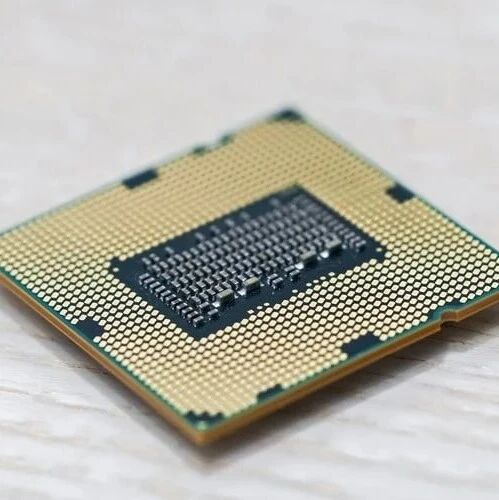
韩国人工智能半导体初创公司Rebellion首席执行官朴成铉周二表示,该公司希望与英伟达"正面竞 争"。当天,该公司庆祝成立五周年,并表示其估值已达到约2万亿韩元(约15亿美元),达到了 通常用于"独角兽"地位的门槛。 "即使为此付出生命,我也想和英伟达同台竞技,正面交锋,"朴在首尔以南城南市Rebellion总部 举行的媒体日活动上说道。 Rebellion成立于2020年,定位为一家专注于推理(即运行人工智能服务所需的计算)而非大规模 模型训练的人工智能芯片制造商。该公司表示,已通过在电信、公共部门和企业市场等具有实际流 量的服务中部署其芯片,积累了"真实世界"的应用案例。 高管们表示,随着人工智能服务的普及和推理能力成为关键战场,人工智能半导体领域的竞争格局 正在发生变化,能效和运营成本的重要性与原始性能不相上下。该公司指出,谷歌将其张量处理单 元(Tensor Processor Unit,TPU)扩展到大规模云服务等举措表明,为内部使用而开发的专用人 工智能芯片可以应用于商业服务。 Rebellion表示,公司希望通过从一开始就专注于推理优化设计,在并非完全由英伟达主导的市场 中脱颖而出。Park表 ...

芯片设备,大卖
半导体芯闻· 2025-12-17 10:31
Group 1 - The global semiconductor market is expected to grow at a compound annual growth rate (CAGR) of 8% and exceed $1 trillion by 2029, driven primarily by artificial intelligence (AI) [2] - AI-related semiconductors are projected to grow at a CAGR of 16%, accounting for half of the market share by 2030 [2] - The semiconductor manufacturing equipment market is forecasted to reach $108 billion in annual shipments by October 2025, representing a 15.7% increase from the previous year, with Taiwan and South Korea showing significant growth rates of 108% and 25% respectively [2] Group 2 - The Japanese semiconductor market has shown a robust year-on-year growth of 27%, while the Chinese market declined by 4%, which was better than SEMI's expectations [3] - The global semiconductor manufacturing equipment market is projected to reach a record $133 billion by the end of 2025, a 13.7% increase from the previous year, with further growth expected to $1,450 billion in 2026 and $1,560 billion in 2027 [3] - Wafer fabrication equipment is expected to reach $115.7 billion, growing by 11% year-on-year, driven by AI demand in DRAM and HBM sectors [3] Group 3 - In the backend equipment sector, semiconductor test equipment sales are expected to grow by 48.1% to $11.2 billion by 2025, while assembly and packaging (A&P) equipment sales are projected to increase by 19.6% to $6.4 billion [4] - Significant growth in front-end process investments in Japan is anticipated from 2026 to 2030, reaching $18 billion, with logic-related investments expected to account for about 50% of total investments [4] - The current memory shortage is influenced by the high demand for HBM memory in AI servers, which is affecting the supply of consumer-grade memory and standard DRAM, with tight conditions expected to persist until 2026 [4]