半导体芯闻

Search documents
陈立武:英特尔将重新聚焦这两大业务!
半导体芯闻· 2025-10-28 10:34
Core Insights - Intel's CEO Pat Gelsinger is focused on refocusing the company on engineering and technology after a period of complacency and mismanagement [1][3] - Gelsinger attributes the company's decline in the semiconductor market to excessive management layers [1][3] - The company is exploring opportunities in artificial intelligence and its nascent foundry business, which is currently lagging behind competitors like TSMC [3] Financial Performance - Intel's Q3 earnings exceeded analyst expectations, leading to a temporary surge in stock price, although it later retreated due to ongoing challenges [3] - Despite being the largest PC processor manufacturer, Intel is falling behind Nvidia in capitalizing on the booming AI market [3] Strategic Moves - Gelsinger's tenure has faced challenges, including pressure from former President Trump regarding investments in China [3] - A significant investment from the U.S. government, acquiring 10% of Intel, was part of an initiative to revive key manufacturing sectors [3] - Gelsinger successfully communicated his strategic vision for Intel to Trump, which helped secure the investment [3]



传Skyworks有意收购Qorvo
半导体芯闻· 2025-10-28 10:34
Core Viewpoint - Skyworks Solutions is in talks to acquire competitor Qorvo, which supplies RF chips to Apple and other smartphone manufacturers [1][3]. Group 1: Company Overview - Skyworks Solutions has a market capitalization of $11.26 billion and employs over 10,000 people as of 2024 [2]. - Qorvo's market capitalization is $8.54 billion, with its stock closing at $92.13 on Nasdaq [1][2]. Group 2: Market Dynamics - Skyworks predicts that its revenue and profit for the fourth quarter will exceed Wall Street expectations due to stable demand for its analog chips [3]. - Qorvo has appointed industry veterans Richard Clemmer and Christopher Koopmans as independent directors amid pressure from activist investor Starboard Value, which has increased its stake in Qorvo to approximately 8.9% [3].

高通后来居上,力压NVIDIA?
半导体芯闻· 2025-10-28 10:34
Core Viewpoint - Qualcomm has officially entered the AI data center market with the launch of its AI200 chip series, aiming to challenge NVIDIA's dominance in this rapidly growing sector [1][2]. Group 1: Product Launch and Market Entry - Qualcomm's new AI200 series chips are set to ship next year, with the first customer being the AI startup Humain in Saudi Arabia, which plans to deploy systems with a total capacity of 200 megawatts by 2026 [1][2]. - The AI200 products will be available in various forms, including standalone chips, expansion cards for existing devices, and complete rack servers provided directly by Qualcomm [2][3]. - The new chips are built on neural processing units (NPU) originally designed for smartphones, aimed at accelerating AI-related computations with low power consumption [3][4]. Group 2: Financial Impact and Market Potential - Qualcomm's stock surged 11% to $187.68, marking its highest level since July 2024 and the largest single-day gain since April of this year [2]. - Analysts suggest that even capturing a small portion of the AI accelerator market, valued at over $500 billion, could generate billions in additional revenue for Qualcomm [2][5]. - The growth in AI-related business may help offset the loss of Apple's orders, which historically contributed about 20% of Qualcomm's revenue [5]. Group 3: Competitive Landscape - NVIDIA remains at the forefront of AI computing, with its data center revenue expected to exceed $180 billion this year, surpassing the total revenue of all chip manufacturers, including Qualcomm [4]. - Qualcomm's new chips are designed to handle "inference" tasks, providing computational power for AI services after large language models have been trained [5].

八年,1600亿,一场国产大硅片的“硬核”马拉松
半导体芯闻· 2025-10-28 10:34
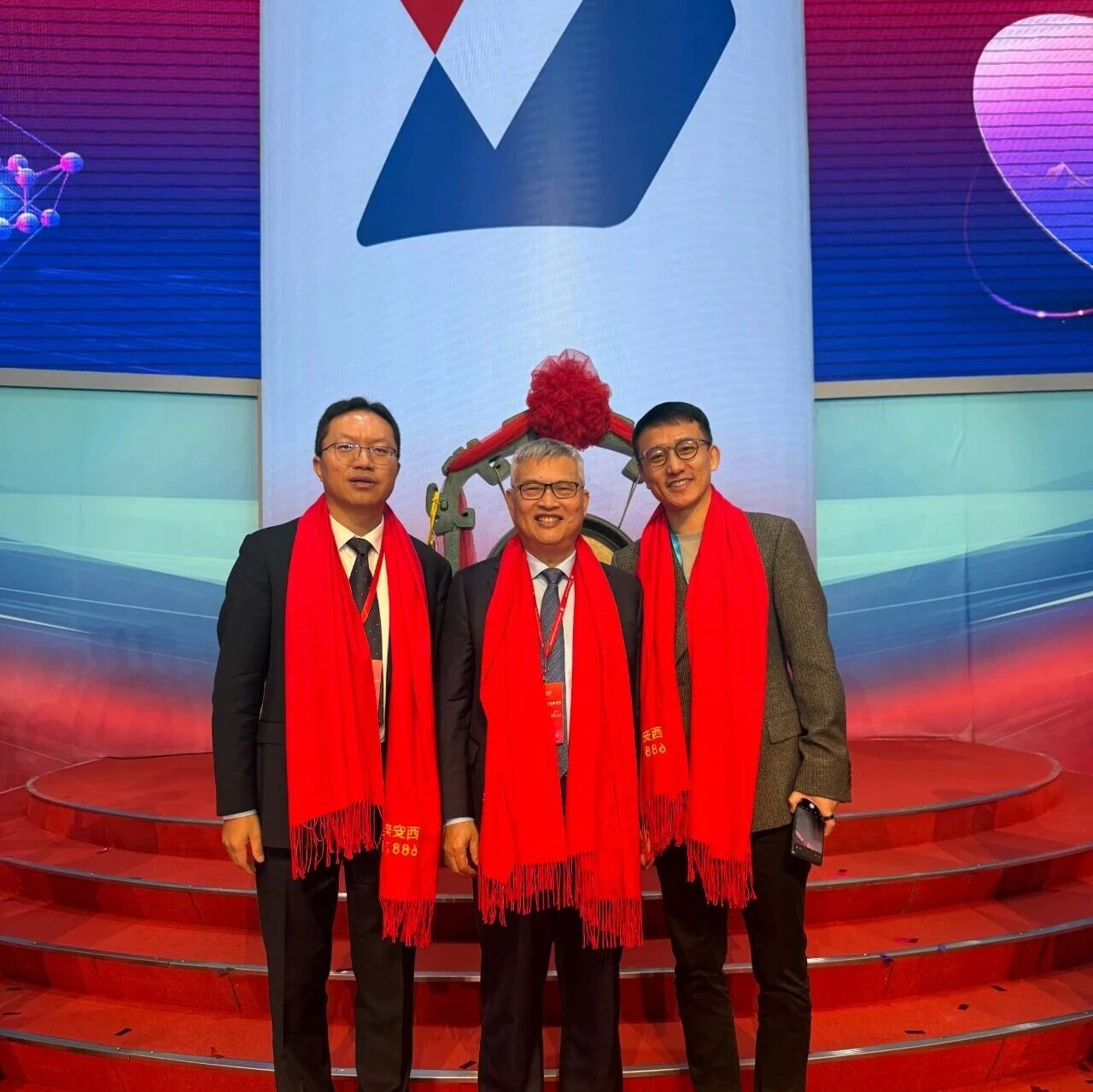
Core Viewpoint - The successful listing of Xi'an Yiswei Materials Technology Co., Ltd. on the Sci-Tech Innovation Board marks a significant milestone for the domestic semiconductor industry, enhancing the localization rate of 12-inch silicon wafers and providing a model for other tech companies in rapid development [1][3]. Group 1: Company Overview - Xi'an Yiswei's stock surged by 461% on its debut, reaching a market capitalization of 160 billion yuan, making it the first unprofitable company to go public after the "Eight Policies" were released [1]. - The company is positioned as a leader in the domestic 12-inch silicon wafer market, with a production capacity of 710,000 wafers per month, accounting for over 30% of the total domestic capacity [4]. Group 2: Investment Journey - The investment journey began in early 2019 when Sun Dafei and his team from Sanhang Capital and Zhonghang Capital invested in Yiswei Technology, which later evolved into Xi'an Yiswei Materials [3][5]. - Over the years, the company has undergone multiple rounds of financing, with a total investment exceeding 20 billion yuan and 10 billion yuan raised through financing [9]. Group 3: Market Context - The 12-inch silicon wafer market has been dominated by five international giants, holding a 92% market share, highlighting the significance of Xi'an Yiswei's entry into the market [4]. - The demand for 12-inch silicon wafers has surged due to the growth of AI computing power and the proliferation of electric vehicles, with domestic production capacity expected to reach 2.35 million wafers per month by 2024 [4]. Group 4: Technological Development - Xi'an Yiswei established a team of 20 Japanese and Korean experts in 2018 to cover all process stages, which has been crucial for its technological advancement and competitive edge in the market [4]. - The company has faced numerous challenges, including industry cycles and customer trust, but has demonstrated resilience and commitment to the semiconductor sector [9][10].
欧洲陷入芯片战争,束手无策
半导体芯闻· 2025-10-28 10:34
Core Viewpoint - The article discusses the strategic vulnerabilities faced by Europe in the artificial intelligence (AI) infrastructure sector due to increasing export restrictions from the US and China, which threaten Europe's ambitions in AI development [1][2]. Group 1: Dependency on AI Chips - Europe is heavily reliant on the US for advanced AI chips, particularly GPUs, with NVIDIA controlling 80% to 90% of the global AI GPU market [4][6]. - The rapid establishment and competitiveness of European AI factories depend on the continuous and sufficient supply of NVIDIA GPUs, which is expected to face shortages and delays [4][6]. - The US government's recent legislative measures may prioritize domestic orders over European needs, exacerbating supply chain vulnerabilities for Europe [6][10]. Group 2: Dependency on Rare Earth Elements - China dominates the global rare earth element (REE) supply chain, controlling approximately 70% of mining and 90% of processing, which is critical for AI chip production [9][11]. - Recent Chinese export restrictions on rare earth elements have led to significant declines in exports, impacting the supply chain for AI chips [9][10]. - The ongoing geopolitical tensions and trade restrictions between the US and China create a self-reinforcing cycle that could further hinder Europe's access to essential materials for AI development [14][18]. Group 3: European Response and Future Outlook - The EU is investing heavily in AI infrastructure, aiming to establish at least 15 AI factories by the end of next year, including five super factories with significant processing capabilities [2][19]. - However, the EU's efforts may be undermined by its dual dependency on the US for AI chips and China for rare earth elements, making it difficult to achieve its AI ambitions [15][19]. - Long-term strategies include developing a domestic supply of critical materials and investing in research to create alternatives to rare earth elements, although these efforts face significant challenges [19][20].


AI编写芯片代码,时机已到?
半导体芯闻· 2025-10-28 10:34
Core Insights - The semiconductor industry is facing complex challenges, including lengthy delivery cycles exceeding 20 weeks and intricate design processes that hinder innovation and market responsiveness [1] - Artificial intelligence (AI) technologies, such as large language models (LLM) and multi-agent systems, are fundamentally transforming electronic design automation (EDA) by automating the generation of register transfer level (RTL) designs and improving verification processes [1][2] AI's Role in Chip Design Automation - AI can accelerate RTL design, traditionally a manual process taking months, by identifying RTL fragments and marking inconsistencies, thus enhancing efficiency and reducing manufacturing risks [2] - The use of generative AI with specialized agents for various tasks improves efficiency and provides early risk warnings for procurement teams, allowing for better optimization of the physical supply chain [2] Verification and Operational Impact - Verification consumes up to 70% of chip design time, and multi-agent verification frameworks (MAVF) can reduce human effort by 50% to 80% while surpassing manual accuracy [4] - Predictable verification helps procurement teams reduce delivery cycle buffers, allowing for more strategic planning and contract negotiations [5] Industry Insights and Strategic Implications - AI-driven design efficiency offers procurement and supply chain teams key advantages, such as improved predictability in foundry operations and enhanced facility utilization [7][8] - The integration of AI into design and supply chain operations is crucial for companies to gain a competitive edge in the semiconductor market [13] Future Outlook - The next significant step involves full-chip integration and automated debugging, which can accelerate tape-out cycles and provide clearer insights for supply chain planners [10] - Despite challenges such as data requirements and potential risks associated with AI-generated code, the integration of AI into EDA workflows is expected to enhance operational efficiency and risk management [10] Conclusion - AI is driving operational transformation in semiconductor design, with advancements in RTL generation, module-level verification, and predictive analytics shortening design cycles and improving foundry scheduling [11] - Companies that effectively integrate AI into their design and supply chain operations will achieve significant competitive advantages, leading to faster and more efficient chip development [13]

EUV光刻机,很难被颠覆
半导体芯闻· 2025-10-28 10:34
Group 1 - The article discusses the ongoing debate about Nano Imprint Lithography (NIL) potentially disrupting Extreme Ultraviolet (EUV) lithography, highlighting that while NIL has interesting applications, it currently does not match the capabilities of EUV [1][27] - NIL technology was invented in 1996 and commercialized in 2001, with Canon acquiring Molecular Imprints Inc. in 2014 to position NIL as a successor to DUV lithography [4][6] - Canon's NIL technology, known as J-FIL, involves a unique process of applying photoresist and imprinting patterns, which theoretically offers advantages in speed and cost compared to EUV [7][12][25] Group 2 - The NIL process involves creating a master template, which is then used to produce working templates for wafer patterning, with significant challenges related to the durability and defect rates of these templates [14][29] - Key challenges for NIL include the lifespan of masks, overlay accuracy, mask pattern roughness, and customer feedback indicating that NIL is not yet ready for advanced chip manufacturing [29][35] - Despite theoretical advantages in resolution and cost, practical issues such as mask durability and defect rates hinder NIL's competitiveness against EUV technology [27][29][35]

史上最大芯片交易,全靠几个人拍板?
半导体芯闻· 2025-10-27 10:45
Core Insights - OpenAI's CEO Sam Altman and his executive team have led a series of complex partnership deals worth up to $1.5 trillion, closely tying the company's fate to several major tech giants [1] - Altman bypassed traditional investment banking and legal teams, negotiating directly with companies like NVIDIA, Oracle, AMD, and Broadcom for long-term agreements related to chip and computing infrastructure [1][2] - The partnerships are structured to stimulate chip manufacturing and R&D capacity, with financial details to be finalized later, allowing for flexibility in procurement during financial constraints [2][3] Partnership Dynamics - The negotiation approach relies heavily on internal team members rather than external advisors, simplifying the process and reducing resistance [4] - Notable partnerships include a $1 trillion investment from NVIDIA in exchange for $350 billion in chip purchases, and a $300 billion, five-year agreement with Oracle [4][5] - OpenAI's collaboration with CoreWeave began with a $11.9 billion computing supply agreement, which later expanded to $22 billion, significantly increasing CoreWeave's stock price [3] Executive Team Contributions - Key figures in the negotiation process include Greg Brockman, CFO Sarah Friar, and Peter Hoeschele, who have been instrumental in executing Altman's vision [2][3] - Sarah Friar, with a background in finance and previous roles at Goldman Sachs and Nextdoor, plays a crucial role in ensuring the financing of these deals [3] - The internal team is focused on achieving Altman's ambitious goal of "1 gigawatt per week" in computing power, with a dedicated team handling the execution details of various agreements [3]


数据中心,涨疯了
半导体芯闻· 2025-10-27 10:45
Core Insights - The article discusses the significant increase in AI-related spending, particularly in data center systems and enterprise software, driven by the GenAI trend and inflationary pressures [1][2][5][7]. IT Spending Forecasts - Gartner predicts that global IT spending will exceed $6 trillion by 2026, with a notable increase in spending on data center systems, enterprise software, IT services, devices, and communications services [2][5]. - The projected IT spending for 2025 is $5.54 trillion, reflecting a 10% growth from 2024, and aligns closely with earlier forecasts for 2026 [5][11]. Data Center Systems - Data center systems spending is expected to reach $489.45 billion in 2025, growing by 46.8%, and $582.45 billion in 2026, with a growth rate of 19% [2][7]. - The spending for data center systems in 2024 is projected to be $333.4 billion, which is double the pre-pandemic levels, indicating a 40.3% increase from 2023 [7][9]. Enterprise Software and IT Services - Enterprise software spending is forecasted to grow from $1.24 trillion in 2025 to $1.43 trillion in 2026, with growth rates of 11.9% and 15.2% respectively [2][4]. - IT services spending is expected to increase from $1.72 trillion in 2025 to $1.87 trillion in 2026, with growth rates of 6.5% and 8.7% [2][4]. Inflation Impact - The article highlights that inflation has a significant cumulative effect on spending, with adjustments showing that the apparent increase in spending may be less than it seems when accounting for inflation [9][11]. - Even after adjusting for inflation, the increase in data center systems spending from 2019 to 2026 is projected to be 2.55 times, indicating robust growth despite inflationary pressures [9][11].

“HBM版”NAND,终于来了!
半导体芯闻· 2025-10-27 10:45
Core Viewpoint - SK Hynix has unveiled its AI product strategy, including the next-generation NAND storage called "HBF" (High Bandwidth Flash), aimed at maximizing performance through vertical stacking of NAND flash technology [1][2]. Group 1: AI Product Strategy - The company introduced the "AIN (AI-NAND) Family" product lineup to meet the rapidly growing demand for NAND storage products capable of efficiently processing massive amounts of data in the AI inference market [1][2]. - The AIN series focuses on optimizing performance, bandwidth, and density to enhance data processing speed and storage capacity [1][2]. Group 2: AIN Product Details - AIN P (Performance) is designed for large-scale AI inference environments, significantly improving processing speed and energy efficiency by minimizing bottlenecks between AI computation and storage. Samples are expected by the end of 2026 [2]. - AIN D (Density) targets low-power, low-cost storage for large data volumes, aiming to increase QLC-based TB-level SSD capacities to PB-level while maintaining SSD speed and HDD cost-effectiveness [2]. - AIN B (Bandwidth) utilizes vertical stacking of NAND to expand bandwidth, representing the company's HBF technology [2]. Group 3: Collaboration and Ecosystem Development - SK Hynix initiated research on AIN B to address memory capacity shortages, focusing on combining high-capacity, low-cost NAND with HBM stacking structures. The company is exploring collaborative deployment of AIN B with HBM for various applications [3]. - To promote the AIN B ecosystem, SK Hynix signed a memorandum of understanding with SanDisk in August and hosted the "HBF Night" event during the OCP summit, inviting representatives from major global tech companies [3]. Group 4: Future Outlook - The president of SK Hynix emphasized the company's commitment to becoming a core player in the AI memory market by continuing to collaborate with customers and partners in the next-generation NAND storage sector [4]. - SK Hynix is advancing its HBM production capabilities with the M15X factory, which is set to focus on mass production of next-generation HBM products, ensuring no supply shortages by the end of next year [5].