半导体芯闻

Search documents
存储双雄,挣翻了
半导体芯闻· 2025-10-30 10:34
Group 1 - The storage chip industry is entering a long-term boom period driven by the demand from AI companies like Nvidia and OpenAI [1] - TrendForce estimates that DRAM revenue will reach a record approximately $231 billion in 2024, quadrupling from the low point in 2023 [1] - Samsung reported a 21% year-on-year increase in net profit for Q3, reaching about $8.6 billion, with its chip division achieving record quarterly revenue [1] Group 2 - SK Hynix announced a record profit with a net profit increase of over 100% year-on-year, reaching approximately $8.8 billion, and stated that the memory market has entered a "super boom cycle" [1] - Micron Technology reported a net profit increase of over three times, reaching $3.2 billion for the latest quarter [1] - Storage chips account for about one-quarter of global chip sales, with logic chips, including AI-specific chips from Nvidia, being another major category [4] Group 3 - There is a surge in demand for High Bandwidth Memory (HBM), which is essential for training AI models, as it stacks multiple layers of DRAM and works with GPUs [5] - OpenAI signed a letter of intent with Samsung and SK Hynix to collaborate on advanced storage chips for its Stargate infrastructure project, with a monthly demand for DRAM wafers reaching up to 900,000, more than double the current HBM capacity [5] - Traditional memory chips are also in high demand for AI tasks, particularly for inference applications, as major data center companies are purchasing these chips for conventional servers [6]


这个高中生,要挑战台积电
半导体芯闻· 2025-10-29 10:40
Core Viewpoint - The article discusses the emergence of Substrate, a startup founded by James Proud, which aims to revolutionize semiconductor manufacturing by developing a new, cost-effective lithography technology that could challenge the dominance of ASML and TSMC in the industry [1][4][19]. Group 1: Company Overview - Substrate has raised over $100 million from investors, including notable figures like Peter Thiel, and is valued at over $1 billion [4]. - The company plans to establish a manufacturing facility in the U.S. to reduce reliance on overseas suppliers, aligning with national security priorities [4][19]. - Substrate's technology involves using particle accelerators to create a new type of lithography tool, which could potentially lower manufacturing costs by half [1][3]. Group 2: Technology and Innovation - The startup aims to combine proprietary particle accelerators with custom lithography machines to achieve high-resolution microchip layers comparable to those produced by leading semiconductor manufacturers [1][13]. - Substrate claims its machines can print features at 12 nanometers, matching the capabilities of ASML's latest high-NA EUV machines [13][15]. - The company has demonstrated its system at U.S. national laboratories, achieving complex patterns on wafers [14]. Group 3: Challenges and Industry Reception - Despite significant funding and ambitious plans, Substrate faces skepticism from government scientists and the semiconductor industry regarding its ability to replicate the complex supply chain within three years [4][8]. - Concerns have been raised about the reliability of using a single particle accelerator as a light source for multiple tools, which could lead to factory downtime if it fails [8]. - The company has encountered challenges in securing government funding, with initial requests for over $1 billion from the CHIPS Act being rejected [8]. Group 4: Future Plans and Goals - Substrate aims to establish a vertically integrated foundry in the U.S. for custom semiconductor production, requiring significant capital investment potentially in the range of billions of dollars [19][20]. - The company is in discussions with Texas A&M University to build a particle accelerator and factory, with an estimated investment of around $10 billion [20]. - Proud emphasizes the need for innovative solutions in semiconductor manufacturing, stating that creating a better alternative is essential for the industry's future [21].


黄仁勋:希望特朗普帮帮忙
半导体芯闻· 2025-10-29 10:40
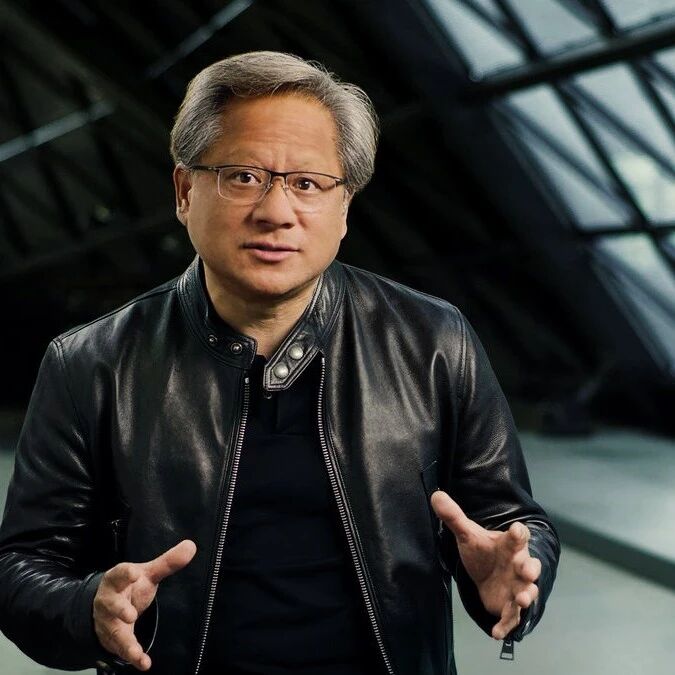
Core Insights - The article highlights NVIDIA's advancements in AI technology and its collaborations with major companies like Uber, Palantir, Amazon, and Microsoft, emphasizing the significance of domestic manufacturing in the U.S. [1][2] - NVIDIA's CEO Jensen Huang showcased the capabilities of the Blackwell GPU, which has seen substantial demand, with 6 million units shipped and 14 million units ordered, translating to potential sales of $500 billion [1][2] - Huang's remarks reflect a strategic push for U.S. manufacturing and a desire to reduce reliance on foreign products in the AI sector [2][3] Group 1 - Huang praised the Blackwell GPU's computational power and highlighted the integration of 72 GPUs in a single server rack, weighing 3,000 pounds and costing millions [1] - The company has begun mass production of Blackwell chips in Arizona, although not all production processes are completed in the U.S. [1][2] - Huang expressed concerns about the U.S. potentially losing its market in AI technology due to reliance on foreign products and called for solutions from government officials [2][3] Group 2 - NVIDIA's partnerships include collaborations with Lucid Motors for autonomous driving and Eli Lilly for supercomputing in drug development [3] - The company is investing $1 billion in Nokia to integrate AI into 6G wireless networks, showcasing its commitment to enhancing energy efficiency in data centers [3][4] - Huang indicated the intention to hold annual AI conferences in Washington, reflecting a growing influence in the tech policy landscape [5]
苹果这款芯片,全面取代高通
半导体芯闻· 2025-10-29 10:40
Core Insights - The iPhone 17 series will be the last to use Qualcomm's 5G modem chips, as Apple plans to switch to its self-developed C2 modem chips for the iPhone 18 series, expected to enter mass production in 2026 [1][2] - The C2 modem will be manufactured using TSMC's 4nm "N4" process, rather than the latest 2nm technology, indicating Apple's cautious approach to adopting cutting-edge manufacturing processes for this category of chips [1][2] - The C2 modem will support both mmWave and Sub-6GHz dual-mode 5G networks, which is expected to significantly enhance network speeds compared to the previous C1 and C1X modems [2] Summary by Sections iPhone 17 and 18 Series - iPhone 17 will be the last model to feature Qualcomm's 5G modem chips, with a complete transition to Apple's self-developed C2 chips planned for the iPhone 18 series [1] - The development of the C2 modem began shortly after the release of the iPhone 16e, with mass production anticipated in 2026 [1] Manufacturing Process - The C2 modem will utilize TSMC's 4nm process, as opposed to the more advanced 2nm process, which Apple has secured over half of the initial capacity for [1][2] - Analysts suggest that there is limited incentive for Apple to switch to 3nm or 2nm processes for the C2 modem, as the performance gains may not justify the costs [2] Performance and Features - The C2 modem will provide significant advantages over the C1 and C1X modems by supporting dual-mode 5G networks, which is expected to improve network speeds [2] - TSMC's N4 process offers approximately 5% performance improvement and a 6% increase in transistor density compared to the previous N5 node [2]


内存芯片,告罄!
半导体芯闻· 2025-10-29 10:40
Core Viewpoint - SK Hynix has achieved record quarterly performance in Q3 2023, driven by surging demand in the high bandwidth memory (HBM) market, particularly due to AI market growth [1][2]. Group 1: Financial Performance - In Q3 2023, SK Hynix reported a consolidated operating profit of 11.3834 trillion KRW, a 62% year-on-year increase [2]. - Sales in Q3 2023 reached 24.4489 trillion KRW, reflecting a 39% year-on-year growth [2]. - The company anticipates further growth in Q4 2023, with expectations of DRAM and NAND shipments increasing by over a single-digit percentage compared to the previous quarter [3]. Group 2: Market Position and Strategy - SK Hynix has completed supply negotiations for HBM4 with major clients, including Nvidia, and plans to start shipments in Q4 2023 [1][2]. - The company is confident in maintaining its leading position in the emerging HBM4 market, despite competition from Samsung and Micron [2]. - SK Hynix's strategy includes expanding the production capacity of next-generation 10nm-class DRAM, with plans for 1c DRAM to account for half of its total DRAM production capacity by the end of next year [5]. Group 3: Future Outlook - The semiconductor market is expected to continue its growth trajectory, driven by increased investments in AI infrastructure by major tech companies [4]. - SK Hynix predicts that the demand growth rate for DRAM will rise from the teens this year to over 20% next year, while NAND demand growth is also expected to remain strong [4].

国产 SPAD-SoC 首上车,阜时科技引领激光雷达革命
半导体芯闻· 2025-10-29 10:40
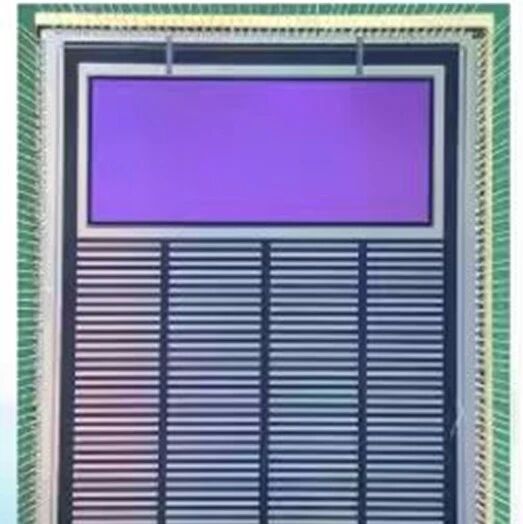
Core Viewpoint - The article highlights the advancements and significance of the SPAD-SoC chip technology developed by Fushi Technology in the field of solid-state LiDAR, emphasizing its potential to revolutionize the automotive industry and enhance smart driving capabilities [1][2][3]. Group 1: Fushi Technology's Innovations - Fushi Technology has focused on machine vision technology since its establishment in 2017, leading to the development of the SPAD-SoC chip, which positions the company at the forefront of the solid-state LiDAR market [1]. - The company has achieved breakthroughs in the "transmission-reception-algorithm" chain, establishing a solid foundation for long-range solid-state LiDAR technology [1][2]. - Fushi Technology is the first domestic company to implement the SPAD-SoC chip in vehicles and has received AEC-Q100 certification for automotive reliability [3]. Group 2: Market Potential and Growth - The global automotive LiDAR market is projected to grow from $861 million in 2024 to $3.804 billion by 2030, with a compound annual growth rate (CAGR) of 28% [2]. - The importance of SPAD-SoC as a core component in LiDAR systems is underscored, as it enables high-precision distance measurement even with weak light [2][3]. Group 3: Technical Advancements - The FL6031 chip, developed by Fushi Technology, is the first mass-produced high-resolution large-area SPAD chip in China, integrating multiple functions into a single chip [3][4]. - The design of the large-area SPAD-SoC chip involves balancing light sensitivity and power consumption, which is a significant technical challenge [4]. Group 4: Industry Impact - Fushi Technology's "Omni-directional Light Control™" technology represents a significant advancement in solid-state LiDAR, eliminating mechanical components and enhancing reliability [6][11]. - The new technology allows for programmable deflection of laser beams without moving parts, improving system longevity and reducing costs [11][12]. - The company aims to continue enhancing the integration of its "Omni-directional Light Control™" technology with the SPAD-SoC chip to accelerate the industrialization of solid-state LiDAR [12].
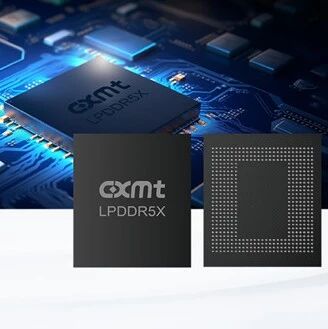
长鑫存储:已量产 LPDDR5X 产品
半导体芯闻· 2025-10-29 10:40
Core Insights - Changxin Storage has officially announced the mass production of its LPDDR5X memory products, which are designed for flagship smart devices and offer significant improvements in capacity, speed, and power consumption compared to the previous generation [1][3]. Group 1: Product Features - The LPDDR5X memory features two single-chip capacities of 12Gb and 16Gb, with a maximum speed of 10667Mbps, representing a 66% increase over the previous LPDDR5 generation and achieving international mainstream standards [1][3]. - The power consumption of LPDDR5X has been reduced by approximately 30%, while maintaining backward compatibility with LPDDR5 [1][3]. Group 2: Packaging Innovations - Changxin Storage has introduced the uPoP® packaging technology, which meets the dual demands of lightweight and high performance for high-end smartphones, significantly enhancing user experience and helping devices overcome performance bottlenecks [3]. - The LPDDR5X series includes packaging options ranging from 12GB to 32GB, with transmission speeds covering the full range from 8533Mbps to 10667Mbps, with the mainstream version at 9600Mbps already meeting the performance needs of domestic flagship smartphones [3]. Group 3: Future Developments - The company is developing an ultra-thin LPDDR5X packaging product with a thickness of only 0.58mm, which, if mass-produced, would become the thinnest product of its kind globally, providing crucial technical support for the lightweight design of smartphones and AR devices [3]. - Changxin Storage has established a mass production system covering multiple product series, including DDR4 and LPDDR5, and is expanding its presence in various fields such as consumer electronics, servers, and industrial control [3].
德国芯片,短缺严重
半导体芯闻· 2025-10-29 10:40
Group 1 - The core issue highlighted is the increasing material shortages faced by German electronics and optics manufacturers due to tightening global regulations on rare earth elements, with 10.4% of companies reporting supply bottlenecks in October, up from 7.0% in July and 3.8% in April [1] - The Ifo Institute indicates that only 5.5% of companies in the entire manufacturing sector reported supply issues, suggesting that the problem is more acute in the electronics and optics sectors [1] - The German automotive industry is experiencing significant supply chain disruptions, with Volkswagen warning of potential production halts due to ongoing supply chain issues, although current chip shortages have not yet impacted production [1] Group 2 - The semiconductor and raw material issues are occurring in a year marked by plummeting industry profits and frequent layoffs, highlighting the broader challenges faced by European suppliers reliant on internal combustion engine technologies [2] - The disparity in supply chains for electric vehicle components, such as magnets, chips, and batteries, poses a significant threat to Germany's automotive industry and its overall prosperity [2] - Despite efforts to diversify procurement in the semiconductor sector following the 2021 chip shortage, risks remain, as the complexity of modern vehicles now requires thousands of different semiconductors [2]
全国首个汽车芯片标准验证平台落子深圳!
半导体芯闻· 2025-10-29 10:40
Core Viewpoint - The 2025 Automotive Chip Ecological Conference marks the launch of China's first comprehensive standard verification public service platform for automotive-grade chips, aiming to accelerate the domestic production process of high-end automotive chips during the 14th Five-Year Plan period [2][5][7]. Group 1: Conference Overview - The conference was held in Pingshan and focused on three core topics: standard leadership, testing certification, and ecological collaboration [5][7]. - Over 300 guests from automotive and chip companies, industry organizations, and research institutions attended the event [5][7]. - The establishment of the China Automotive Chip Standard Testing and Certification Alliance was announced, along with the signing of strategic cooperation agreements with 18 leading industry chain enterprises [11][12]. Group 2: Industry Development - The conference aims to address the "bottleneck" issues in automotive-grade chips and enhance the self-sufficiency of China's automotive chip industry [7][8]. - The establishment of the first comprehensive automotive chip standard verification public service platform is expected to improve the quality and application of domestic automotive chips [8][10]. - The conference highlighted the importance of collaboration among central enterprises, local governments, and the industry chain to enhance technological independence [7][12]. Group 3: Technological Advancements - The conference introduced two breakthrough technologies: HSMT (High-Speed Media Transport) and RISC-V architecture, which will accelerate the autonomous replacement of core hardware in smart vehicles [12][11]. - The certification of automotive-grade chips for functional safety, information security, and reliability was awarded to leading enterprises, indicating China's capability for independent certification [12][11]. Group 4: Pingshan's Role - Pingshan is positioned as a national base for new energy vehicles and a semiconductor cluster, facilitating the establishment of national automotive chip platforms [13][15]. - The region has developed a comprehensive automotive innovation ecosystem through the integration of policy, infrastructure, innovation, industry, talent, and funding chains [13][22]. - Pingshan has attracted over 200 semiconductor companies and more than 300 new energy vehicle enterprises, fostering a collaborative environment for the automotive chip industry [22][23].


三星加速追赶,台积电毫不在意
半导体芯闻· 2025-10-28 10:34
Core Viewpoint - TSMC remains confident in its leading position in semiconductor manufacturing despite competition from Samsung and Intel, as it continues to excel in 2nm and 3nm processes [2][3] Group 1: Competition and Market Dynamics - TSMC's chairman, Tzu-Hsien Tung, acknowledges that while Samsung is gaining more business in the U.S., TSMC does not feel threatened by this shift [2] - There are rumors that U.S. companies may prefer Samsung, but Tung denies any crisis, asserting that major chip companies still rely on TSMC's capabilities [2] - Elon Musk has praised Samsung's Texas facility, suggesting a potential boost for Samsung in the foundry sector, but Tung believes this discussion is common in the thriving semiconductor industry [2] Group 2: Taiwan's Role in AI Supply Chain - Taiwan has integrated itself into the U.S.-led AI supply chain by supplying semiconductors and critical hardware, despite competition from Japan and South Korea [3] - The U.S. is currently leading in global AI investment, followed by mainland China, with Taiwan's position in AI infrastructure remaining strong [3] - The long-term technological competition between the U.S. and China poses a greater challenge than competition from Samsung or Intel [3] Group 3: AI Model Development - The development of large AI models is limited to a few countries with the necessary funding and talent, with Taiwan playing a crucial role in this ecosystem [3] - The supply chain connecting Japan, South Korea, and Taiwan is still vital, especially as both China and the U.S. pursue their own AI technology stacks [3]