半导体芯闻

Search documents
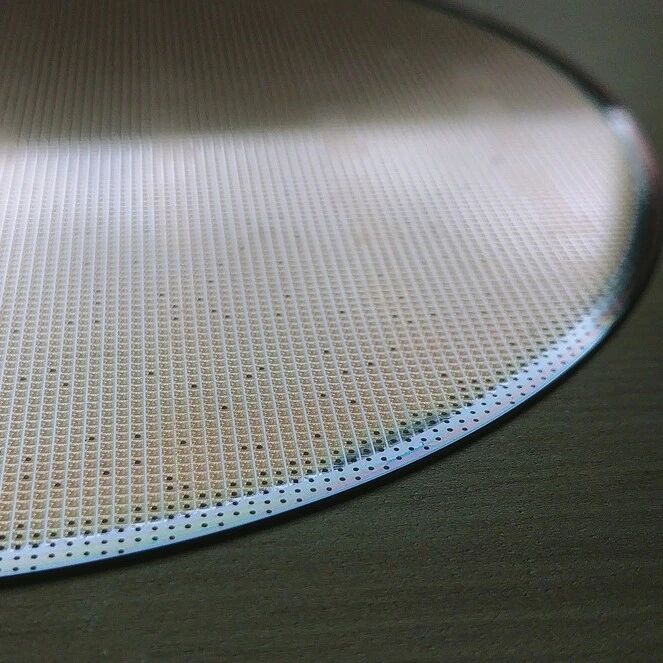
总投资超50亿元,全国首条8英寸MEMS晶圆全自动生产线投产
半导体芯闻· 2025-10-16 10:43
Group 1 - The article highlights the successful launch of China's first fully automated 8-inch MEMS wafer production line, marking a significant milestone in the domestic semiconductor industry [1] - The project, led by Anhui Huaxin Micro-Nano Integrated Circuit Co., has a total investment of 5.06 billion yuan and covers an area of approximately 79 acres with a building area of about 60,000 square meters [1] - Once fully operational, the production line is expected to have a monthly capacity of 30,000 wafers, positioning it as the largest MEMS fully automated wafer production line in China [1] Group 2 - The article mentions the broader context of the semiconductor industry, including significant investments and market dynamics, although specific details are not provided in the excerpts [2] - It references notable figures in the industry, such as Huang Renxun and Jim Keller, discussing technological advancements and future prospects for chip technologies [2] - The mention of the global market's highest-valued chip companies indicates ongoing competitive pressures and shifts within the semiconductor sector [2]

台积电,挣疯了
半导体芯闻· 2025-10-16 10:43
Core Viewpoint - TSMC reported a record net profit of NT$452.3 billion for Q3 2025, driven by strong demand from AI investments and major clients like Apple, despite facing challenges from U.S. tariffs and geopolitical tensions [1][2][11]. Financial Performance - Q3 revenue reached NT$989.92 billion, a 30.3% year-on-year increase, with a net profit growth of 39.1% [1][11]. - The gross margin for Q3 was 59.5%, with an operating margin of 50.6% and a net profit margin of 45.7% [11]. - TSMC has revised its full-year revenue growth forecast to 34-36%, up from nearly 30% previously [2][11]. Capital Expenditure - TSMC's capital expenditure for 2025 is projected to be between $40 billion and $42 billion, with an average of $41 billion, reflecting an increase from the previous average of $40 billion [3][12]. - Capital expenditures for Q3 were $9.7 billion, bringing the total for the first three quarters to $29.39 billion [3][12]. AI Market Outlook - TSMC's chairman emphasized the ongoing strong demand for AI-related products, with expectations of maintaining a compound annual growth rate of around 40% for AI business [5][6][9]. - The company is adapting to the evolving AI landscape by enhancing its production capabilities and collaborating closely with clients [9][10]. Global Strategy - TSMC's global expansion strategy is based on customer demand, geographical flexibility, and government support [12]. - The company is accelerating the introduction of advanced processes in its Arizona facility and expanding its operations in Japan and Germany [13][12]. Advanced Process Development - TSMC's 2nm process is set to enter trial production in Q4 2025, with mass production expected next year [13]. - The company is also focusing on advanced packaging technologies to meet increasing demand [13].

全球首款!我国芯片研制获重大突破
半导体芯闻· 2025-10-16 10:43
Core Insights - The article highlights a significant breakthrough in smart photonics technology achieved by Professor Fang Lu's team at Tsinghua University, with the development of the world's first sub-angstrom snapshot spectral imaging chip named "Yuheng" [1][4]. Group 1: Technological Advancements - The "Yuheng" chip measures approximately 2 cm x 2 cm x 0.5 cm and operates within a wide spectral range of 400-1000 nanometers, achieving sub-angstrom spectral resolution and tens of millions of pixels spatial resolution in snapshot spectral imaging [4]. - The chip's snapshot spectral imaging capability enhances resolution by two orders of magnitude, overcoming the long-standing bottleneck of balancing spectral resolution and imaging throughput [4][6]. Group 2: Applications and Implications - The "Yuheng" chip addresses challenges related to resolution, efficiency, and integration in spectral imaging systems, making it applicable in various fields such as machine intelligence, airborne remote sensing, and astronomical observation [6]. - For astronomical observations, the chip can capture the complete spectrum of nearly 10,000 stars per second, potentially reducing the survey period for the Milky Way's 100 billion stars from thousands of years to under ten years [6].
深圳发力半导体,首期50亿
半导体芯闻· 2025-10-16 10:43
10月16日,在2025湾区半导体产业生态博览会(深圳)(下称"湾芯展")举办的第二届湾区半导 体投融资战略发展论坛上,深圳市半导体与集成电路产业投资基金(下称"赛米产业基金")揭牌启 动。 如果您希望可以时常见面,欢迎标星收藏哦~ 来源:内容来自上海证券报。 支持半导体与集成电路产业发展,深圳又有新动作。 王新东介绍,该基金属于深圳"20+8"产业政策的一部分。今年5月,该基金已在深圳市龙岗区完成 工商登记注册。同时,该基金采取"双GP"模式,由深创投担任管理人,深创投、深重投共同作为 基金普通合伙人。 赛米产业基金揭牌现场。上证报记者 杨仪 摄 据悉,该基金首期规模为50亿元,以半导体装备和零部件、芯片设计、先进封装为重点投资方 向,以投资初创期和成长期企业为主,基金存续期为10年。 深圳市创新投资集团党委委员、副总裁王新东表示:"半导体行业资金密集、技术密集,需要长期 投入才能突破,这是我们的投资方向。" 具体来看,在半导体装备和零部件领域,赛米产业基金致力于协助龙头企业并购装备以保持领先, 协助高潜质企业横向、纵向整合成为大平台,核心装备重点投资,查漏补缺突破先进制程。 芯片设计领域,赛米产业基金将布 ...

“三高”并举,ICCAD Expo 2025值得期待!
半导体芯闻· 2025-10-16 10:43
Core Insights - The ICCAD-Expo 2025 is set to be a premier event in the integrated circuit design industry, showcasing the latest achievements and providing a platform for elite professionals to connect and collaborate [2][19]. - The event will feature over 300 exhibitors, including leading companies such as TSMC, SMIC, Alibaba Damo Academy, and many others, covering the entire industry chain from EDA to manufacturing [3][19]. - High-profile guests, including industry leaders and executives, will present key reports and insights on the current state and future trends of the integrated circuit design industry [7][8]. Group 1: Event Overview - ICCAD-Expo 2025 aims to create a high-level exchange, procurement, and cooperation platform for industry elites [2]. - The event has a long-standing reputation, having been held for 31 years, and is recognized for its significant impact on the industry [2]. - The expected attendance includes over 8,000 industry professionals and more than 2,000 IC design companies, ensuring a highly specialized audience [15][19]. Group 2: Exhibitors and Participants - The expo will host a diverse range of exhibitors, including top-tier companies from both domestic and international markets, covering various segments of the IC industry [3][19]. - Notable exhibitors include TSMC, SMIC, and other leading firms, indicating a strong representation of the industry's core capabilities [3]. - The event will facilitate direct interactions between exhibitors and decision-makers, enhancing opportunities for collaboration and business development [17][19]. Group 3: Keynote Speakers and Forums - The event will feature the release of the "Current Status and Development Report of China's Integrated Circuit Design Industry" by Professor Wei Shaojun, a prominent figure in the semiconductor industry [7][8]. - Executives from leading companies will present on various topics related to technology and development in the semiconductor field, fostering discussions that could drive industry advancements [8][11]. - The high-level forums will provide insights into the latest trends and innovations, contributing to the overall knowledge exchange within the industry [8][19].
商务部:中方坚决反对荷兰干预安世半导体运营
半导体芯闻· 2025-10-16 10:43
Core Viewpoint - The Chinese semiconductor industry association opposes Dutch authorities' interference in Nexperia's operations, emphasizing that such actions violate market principles and harm the business environment [1][2]. Group 1: Government Response - The Chinese government firmly opposes the Netherlands' broad interpretation of "national security" and administrative intervention in corporate affairs, stating it undermines contractual spirit and market principles [1]. - The Chinese government highlights that the Dutch court's recent documents reveal communications between the U.S. and the Netherlands regarding "penetration rules," which included demands to change Nexperia's CEO and adjust governance structures to avoid sanctions [1]. Group 2: International Trade Relations - The Chinese government urges the Netherlands to maintain independence and respect for objective facts, advocating for the correction of erroneous practices to protect Chinese investors' legitimate rights [2]. - The Chinese government warns that the U.S. "penetration rules" significantly disrupt international trade order and threaten the stability of global supply chains, labeling the Netherlands' actions as a clear example of harm to Chinese enterprises [1].

SK海力士利润:狂涨
半导体芯闻· 2025-10-16 10:43
Core Insights - Samsung Electronics announced a surprising performance for Q3, confirming a prosperous period for memory semiconductors, with SK Hynix expected to achieve a record 12 trillion KRW in Q3 [1] - SK Hynix maintains high profitability centered around high bandwidth memory (HBM) due to investments in AI infrastructure, with general memory prices rising further boosting its performance [1] - Securities firms have raised their earnings forecasts for SK Hynix ahead of its Q3 earnings announcement, with expectations of record quarterly operating profit [1] Group 1 - SK Hynix's operating profit for Q3 is estimated to reach between 10 to 11 trillion KRW, marking the highest quarterly profit in the company's history [1] - Kiwoom Securities predicts that the price increase for general DRAM and NAND will exceed initial estimates, particularly for PC DRAM, which is expected to rise by 20% to 30% compared to the previous quarter [2] - Samsung Electronics reported Q3 revenue of 86 trillion KRW and operating profit of 12.1 trillion KRW, representing year-on-year growth of 8.7% and 31.8%, respectively, exceeding market expectations by nearly 2 trillion KRW [2] Group 2 - Despite a decline in prices for the fifth-generation HBM (HBM3E) products starting in Q3, SK Hynix is expected to remain profitable due to the transition to the next generation HBM4 and the favorable market conditions from rising general DRAM prices [2] - SK Hynix holds approximately 60% of the global HBM market share as of Q2, with continued growth in HBM shipments for AI servers into Q3 [2] - Analysts predict that SK Hynix's HBM sales will exceed planned figures for Q3, indicating strong demand in the market [2]
英伟达的噩梦?OpenAI自研芯片曝光
半导体芯闻· 2025-10-15 10:47
Core Insights - OpenAI is collaborating with Arm to develop a new CPU for its custom AI accelerator designed in partnership with Broadcom, marking a significant step for Arm in the data center market [1][2] - The custom AI accelerator, expected to begin production by the end of 2026, aims to achieve approximately 10 gigawatts of computing power between 2026 and 2029 [1] - OpenAI's CPU project could generate potential revenues in the billions, providing substantial benefits to SoftBank, which holds nearly 90% of Arm's shares [2] Group 1 - Arm is not just providing architecture licensing but is also designing and manufacturing CPUs, viewing the collaboration with OpenAI as a key opportunity to expand its server business [2] - OpenAI's total planned data center computing power has reached 26 gigawatts, with potential investments exceeding $1 trillion for custom chip deployments, including partnerships with Nvidia and AMD [2] - The collaboration with Broadcom may enhance OpenAI's negotiating power with Nvidia, which currently dominates the AI training market with its H100 and upcoming Blackwell GPUs [3] Group 2 - The custom AI accelerator has been in development for about 18 months and is expected to alleviate GPU supply constraints faced by AI labs over the past year [3]




设备巨头,冲向1纳米
半导体芯闻· 2025-10-15 10:47
Core Viewpoint - Tokyo Electron is advancing its semiconductor manufacturing equipment capabilities with a new R&D building in Kumamoto, aiming to lead in next-generation semiconductor technology with a target of achieving a 1-nanometer process [1][2]. Group 1: Investment and Infrastructure - The new R&D facility in Kumamoto has a total investment of approximately 47 billion yen and covers an area of about 27,000 square meters, expected to be operational by spring 2026 [2]. - The R&D capacity of the new facility will be four times that of the previous level, featuring clean rooms that simulate the latest semiconductor manufacturing environments [2]. Group 2: Technology and Market Position - Tokyo Electron specializes in the development and manufacturing of Coater-Developer equipment, which is critical for applying photoresist materials on silicon wafers, holding a de facto monopoly in the advanced process field [3]. - The company is collaborating with ASML and imec to push the boundaries of semiconductor technology, aiming to overcome physical limits as the industry approaches the challenges posed by Moore's Law [4]. Group 3: Strategic Development and Environmental Focus - Tokyo Electron is enhancing its global R&D network to maintain close cooperation with semiconductor manufacturers, focusing on technology development over the next 10 to 15 years [5]. - The company is also prioritizing research in reducing chemical and water usage, as well as energy consumption, to lower the manufacturing costs of advanced semiconductors [5]. - Despite holding a leading position in the front-end semiconductor manufacturing processes, competition in the etching equipment sector is intensifying, prompting the company to strengthen its R&D capabilities [6].

英特尔,重返AI市场
半导体芯闻· 2025-10-15 10:47
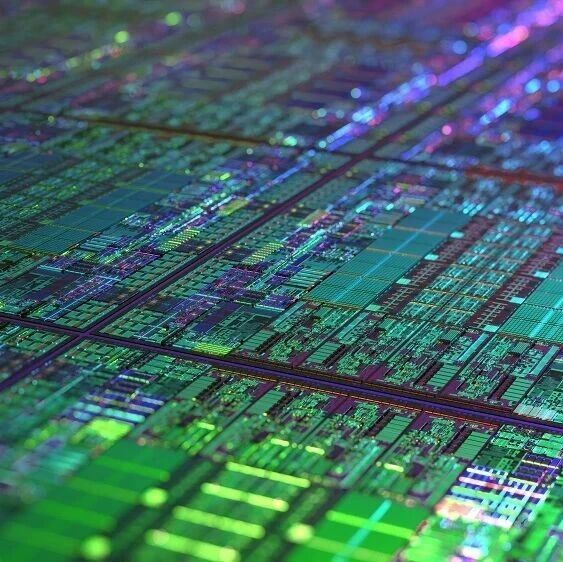
如果您希望可以时常见面,欢迎标星收藏哦~ 来源: 内容编译自 reuters 。 英特尔于周二宣布,将推出一款面向数据中心的新型人工智能芯片,计划于明年上市。此举是该公 司为打入 AI 芯片市场而采取的新一轮举措。 英特尔首席技术官萨钦・卡蒂(Sachin Katti)周二在开放计算峰会(Open Compute Summit)上 表示,这款新型图形处理器(GPU)将针对能效进行优化,并支持多种用途,例如运行人工智能 应用程序或执行推理任务。 卡蒂表示:"这凸显了我此前谈到的核心方向 —— 推理任务,既要针对人工智能进行优化,也要 为实现业内最佳的令牌经济性、最佳的每美元性能而优化。" 在开发大型 AI 模型(如 ChatGPT 所使用的模型)的市场中,英伟达一直占据主导地位。陈立武 此前表示,英特尔计划将设计重点放在开发适用于运行这类 AI 模型的芯片上 —— 这类模型在幕 后支撑着 AI 软件的运行。 卡蒂称:"我们不会试图为所有工作负载开发芯片,而是会将重心越来越多地放在推理任务上。" 他还表示,英特尔采取了开放且模块化的策略,客户可将不同供应商的芯片进行灵活组合使用。 这款名为 "新月岛"(Cresc ...