半导体芯闻

Search documents
免费注册参会!全程线上!第十一届国际光互连论坛!学术大牛云集!
半导体芯闻· 2025-10-15 10:47
Core Viewpoint - The 11th International Photonic Interconnect Forum will be held online on October 29, 2025, focusing on advancements in photonic technology and its integration with microelectronics, which is seen as a key direction in the post-Moore's Law era [3]. Group 1: Event Details - The forum is organized by the IEEE EDA Committee Guangzhou Branch and co-hosted by the École Polytechnique de Montréal and Hong Kong University of Science and Technology (Guangzhou) [3]. - It will feature 16 invited experts from prestigious institutions such as the National University of Singapore, University of Texas, École Polytechnique de Montréal, and University of Cambridge, who will discuss various aspects of photonic technology [3][6]. Group 2: Technological Significance - Photonic integration combines photonics and microelectronics, enabling enhanced computing power, higher data throughput, and lower energy consumption [3]. - This technology has broad application prospects in fields such as artificial intelligence, data centers, quantum computing, cloud computing, and communication networks [3].


昂瑞微IPO,成功过会
半导体芯闻· 2025-10-15 10:47
Core Viewpoint - Beijing Angrui Microelectronics Technology Co., Ltd. has successfully passed the listing review by the Shanghai Stock Exchange, moving one step closer to going public [1] Group 1: Company Overview - The company specializes in the research and development of RF front-end chips, RF SoCs, and related modules, which are critical components in wireless communication systems [2] - Angrui Micro has made significant breakthroughs in key areas such as 5G high-integration modules, achieving performance levels that are domestically leading and internationally advanced [2] - The company has successfully broken the monopoly of international manufacturers on 5G L-PAMiD module products, leading to large-scale applications in flagship models of mainstream smartphone brands [2] Group 2: Financial Performance - In 2024, the company achieved a revenue of 2.1 billion yuan, with a compound annual growth rate (CAGR) of over 50% in revenue over the past three years, indicating a significant enhancement in operational capabilities [2] Group 3: Future Strategy - The company aims to become a world-class chip company in the RF and analog fields, focusing on deepening core technology accumulation, strengthening R&D system construction, and expanding into high-end application markets [3] - Angrui Micro is committed to promoting the localization of RF front-end chips and global expansion, striving for a leap from domestic leadership to international excellence [3]

三星内存,重大升级
半导体芯闻· 2025-10-15 10:47
Core Viewpoint - Samsung Electronics aims to achieve a bandwidth exceeding 3 TB/s for its upcoming HBM4E memory, set for mass production in 2027, marking a significant advancement in high-bandwidth memory technology [1][3]. Group 1: HBM4E Development - Samsung has set a target pin speed of over 13 Gbps for HBM4E, which translates to a total bandwidth of 3.25 TB/s, 2.5 times that of the current HBM3E [1][3]. - The company has increased the HBM4E bandwidth target by 25% compared to last year's plan, which was initially set at 2.5 TB/s with a pin speed of 10 Gbps [2][3]. - The energy efficiency of HBM4E is expected to be more than double that of HBM3E, which currently operates at 3.9 pJ per bit [1]. Group 2: Competitive Landscape - The semiconductor industry anticipates that the bandwidth for the next-generation HBM4E will exceed initial expectations, with Samsung being the first among memory manufacturers to propose a target bandwidth above 3 TB/s [3]. - Nvidia, a major customer, has requested increased bandwidth for its next-generation AI accelerator, prompting Samsung to enhance its HBM4 specifications [2][3]. Group 3: Other Developments - Samsung introduced its first LPDDR6 product, targeting a pin speed of 10.7 Gbps and a total bandwidth of 114.1 GB/s, with a 20% improvement in energy efficiency over LPDDR5X [3]. - The company is progressing towards the completion of its 2 nm process technology, with plans for mass production by the end of the year [4]. - Samsung is collaborating with the Korean AI chip startup Rebellions on the development of the REBEL-CPU, which aims for a target operating frequency of 3.5-4.0 GHz [4].

苹果芯片,制程落后?
半导体芯闻· 2025-10-15 10:47
Core Insights - Apple is expected to announce its next-generation M5 processor this week, which will be manufactured using TSMC's 3nm "N3E" process node [1] - The upcoming M6 processor is anticipated to debut in 2026 and will likely be Apple's first laptop chip based on 2nm technology, indicating a move towards more advanced process nodes [1] - The M5 processor will compete with Qualcomm's newly released Snapdragon series and MediaTek's next-generation processors, although these competitors are utilizing the more advanced TSMC N3P process [1][2] Cost Considerations - Apple may have opted for the N3E process for the base M5 chip due to cost considerations, while the higher-end M5 Pro and M5 Max versions are expected to use the more advanced N3P process [2] - TSMC is reportedly planning to increase the pricing for 3nm wafers, with costs ranging from $25,000 to $27,000 per wafer, which could influence Apple's decision on chip manufacturing [1] Performance Expectations - The base version of the M5 chip is expected to have less powerful performance compared to the M5 Pro and M5 Max, which are projected to be released in early 2026 [1]


ASML三季度财报,透露关键信息!
半导体芯闻· 2025-10-15 10:47
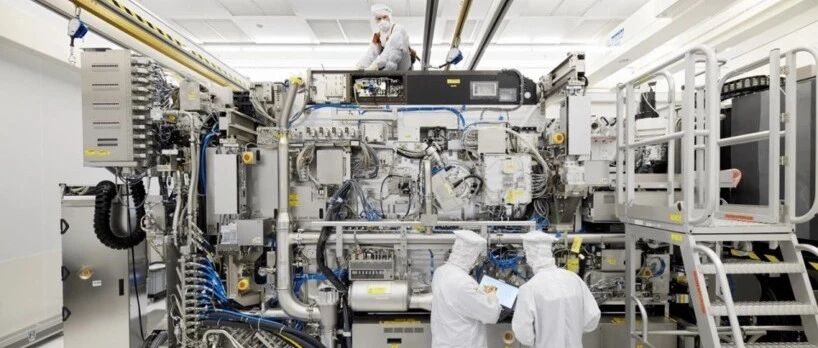
Core Viewpoint - ASML's Q3 2025 financial results show strong performance with net sales of €7.5 billion and a net profit of €2.1 billion, reflecting robust demand for advanced lithography equipment, particularly in the EUV segment, which accounted for €3.6 billion in new orders [1][2][19]. Financial Performance - Q3 2025 net sales reached €7.5 billion, with net system sales at €5.6 billion and installed base management sales at €2.0 billion [2]. - Gross margin stood at 51.6%, and operating margin was 32.8%, with net income as a percentage of total net sales at 28.3% [2]. - Earnings per share (basic) were €5.49, and net bookings totaled €5.4 billion, including €3.6 billion from EUV bookings [2][19]. Product Mix Changes - The product structure showed a shift, with EUV system net sales percentage decreasing from 48% to 38%, while ArFi system sales increased from 43% to 52%, indicating a shift in customer investment strategies [2][5]. - A total of 66 new lithography systems and 6 used systems were sold, with a notable decrease in EUV system sales, reflecting a focus on DUV equipment [5]. Market Dynamics - The sales distribution by region saw significant changes, with mainland China’s market share rising from 27% to 42%, making it ASML's largest market, while Taiwan's share fell from 35% to 30% [6]. - This shift is driven by Chinese customers' strong equipment purchasing intentions in response to potential export control policies [6]. End-Use Applications - The sales structure by end-use applications showed a decline in logic chip sales from 69% to 65%, while storage chip sales increased from 31% to 35% [7]. - New orders reflected this trend, with logic chip orders dropping from 84% to 53% and storage chip orders rising from 16% to 47% [10]. CEO Insights - CEO Christophe Fouquet highlighted three positive trends: sustained AI-related investments, broader customer benefits from AI, and the increasing importance of lithography in overall semiconductor manufacturing investments [12][13]. - He acknowledged challenges in the Chinese market but expressed confidence in long-term growth prospects driven by AI and advanced packaging technologies [12][19]. CFO Commentary - CFO Roger Dassen confirmed that Q3 financial performance met expectations, with a forecast for Q4 2025 net sales between €9.2 billion and €9.8 billion [16][18]. - He emphasized the strategic importance of AI in enhancing product performance and internal development efficiency, reflecting ASML's commitment to integrating AI technologies [17][18]. Future Outlook - ASML maintains a long-term revenue target of €44 billion to €60 billion by 2030, requiring a compound annual growth rate of 6.3% to 13.1% from the projected €32.5 billion in 2025 [19]. - The company remains optimistic about its strategic position in the semiconductor manufacturing value chain, bolstered by advancements in technology and emerging applications [19].

中国对安世实施出口管控
半导体芯闻· 2025-10-14 12:14
刚刚,安世官网发布新闻稿表示荷兰企业商会于2025年10月7日举行紧急听证会后,初步认定存在充分理由怀疑Nexperia在前首席执行官张学政领导下的 管理是否健全。企业商会裁定,作为一项立即措施,张学政已被暂停董事职务。因此,张学政不再担任Nexperia首席执行官。 此外,企业商会裁定,闻泰科技股份有限公司("闻泰科技")间接持有的Nexperia股份的几乎所有投票权均已置于企业商会任命的独立管理人的管理之 下。 展望未来,首席财务官 Stefan Tilger 将担任临时首席执行官,Achim Kempe 将继续担任首席运营官,首席法律官 Ruben Lichtenberg 将与企业商会 任命为非执行董事的 Guido Dierick 一起担任 Nexperia Holding BV 和 Nexperia BV 的法定董事。 荷兰政府命令 由于同样存在严重的管理缺陷,荷兰经济事务部发现Nexperia在欧洲的业务正受到不可接受的损害。这一情况引发了荷兰政府对欧洲产业关键半导体产品 供应的担忧。 张学政作为首席执行官和(间接)股东的行为,以及对荷兰和欧洲半导体产品供应的担忧,最终导致荷兰政府根据《货物供应法 ...


闷声发大财的芯片玩家
半导体芯闻· 2025-10-14 10:26
Core Insights - Astera Labs has seen its stock price surge by 250% over the past six months, making its co-founders billionaires amid the AI infrastructure boom [1] - The company focuses on connectivity technology to enhance AI infrastructure, with significant revenue growth projected [2] - Astera Labs' revenue has increased over 11 times from $35 million in 2021 to an expected $396 million in 2024, with profitability anticipated in 2025 [2] Company Background - The co-founders, Jitendra Mohan and Sanjay Gajendra, previously worked at Texas Instruments and National Semiconductor before founding Astera Labs in 2017 [3] - They identified a gap in connectivity technology that was not keeping pace with advancements in AI and machine learning [3] - The company raised $50 million in 2021 at a valuation of $950 million and later secured $150 million in 2022, increasing its valuation to $3.2 billion [3] Financial Performance - Astera Labs went public in March 2024, raising $820 million and achieving a market capitalization of approximately $6 billion [3] - The current market valuation has soared to $34 billion, with the co-founders holding about 4% of the shares, valued at $1.5 billion each [4] - The co-founders have sold over $200 million worth of stock since the IPO [4]

Microchip 发布3nm芯片
半导体芯闻· 2025-10-14 10:26
Group 1 - Microchip Technology Inc. launched the Switchtec Gen 6 switch series, the first in the market to utilize 3nm technology and support PCIe 6.0 standards, aimed at next-generation AI infrastructure [1] - The new switches can provide up to 160 channels of connectivity, doubling the bandwidth of the previous generation to 64 Gbps per channel, enhancing efficiency in compute-intensive data centers [1] - Following the announcement, Microchip's stock price increased by over 6% during trading [1] Group 2 - The Switchtec Gen 6 series includes advanced integrated security features, such as post-quantum cryptography-based trusted hardware anchors and CNSA 2.0 compliant secure boot [1] - Enhanced features of PCIe 6.0 include FLIT mode, lightweight error correction, and dynamic resource allocation, improving system stability and reliability [1] - The product comes with the ChipLink software suite, a graphical diagnostic and configuration tool for detailed monitoring via in-band PCIe connections or auxiliary channels [2]

Chiplet黑科技,全球首个货架芯粒市场发布
半导体芯闻· 2025-10-14 10:26
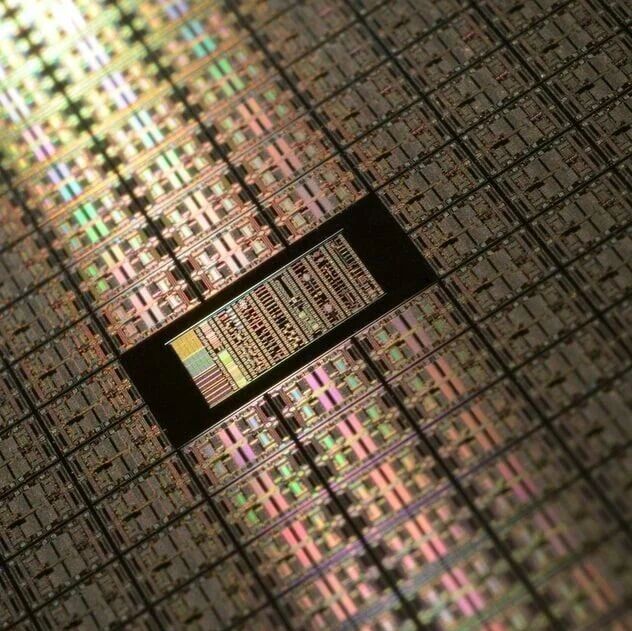
Core Viewpoint - The article highlights the launch of the third Integrated Chip and Chiplet Conference, showcasing North Polar Xiongxin's innovative shelf chiplet solutions aimed at reducing costs and enhancing efficiency in high-end chip production, while addressing the industry's growing demand for flexible and adaptable technologies [1][6]. Group 1: Product Innovations - North Polar Xiongxin introduced a "function decoupling, flexible integration" shelf chiplet solution, combining a general-purpose HUB Chiplet with functional Chiplets to overcome traditional ASIC SoC development challenges such as long cycles, high costs, and significant risks [3][6]. - The HUB Chiplet features a 12-core ARM Cortex A72 CPU, PCIe 5.0 support, and high-speed interconnect capabilities, while the functional Chiplets cover GPU and NPU categories, with GPU chiplets offering 1.3 TFLOPS computing power and NPU chiplets achieving 50 TOPS [3][4]. Group 2: Technical Advancements - The PB-Link automotive-grade chiplet interface developed by North Polar Xiongxin supports 8 channels at 32 Gbps transmission bandwidth, with a bit error rate of less than 10^-15, and is compatible with various packaging technologies [4][11]. - The company has validated multiple packaging solutions, including configurations like 1-to-6 and 4-to-10, achieving over 90% efficiency in large model runs, thus ensuring robust application stability [5][13]. Group 3: Market Positioning - The global integrated circuit industry is shifting from "size reduction" to "heterogeneous integration," with chiplet technology being pivotal in addressing high-end chip development bottlenecks [6]. - North Polar Xiongxin aims to build a collaborative ecosystem among IC designers, IP providers, and packaging companies, allowing for the direct procurement of standardized IP chips and customized solutions without the need for repeated investments [6][19]. Group 4: Future Developments - The company plans to launch the world's only HUB+FPGA prototype verification platform in December, which integrates a 12-core ARM Cortex A72 processor and an 80 TOPS high-performance reconfigurable co-accelerator, providing comprehensive support from solution validation to mass production [5][14]. - North Polar Xiongxin's shelf chiplet solutions are expected to significantly reduce traditional chip development NRE costs to one-fifth or one-tenth, thereby shortening product time-to-market and lowering innovation barriers for enterprises [5][19].

AI芯片,要到顶了?
半导体芯闻· 2025-10-14 10:26
Group 1 - The peak of the AI semiconductor cycle is expected to arrive in 2028, with Samsung Electronics and SK Hynix's performance projected to more than double compared to current levels [1] - NVIDIA's CEO Jensen Huang mentioned that data center investments could reach $1 trillion (approximately 1427 trillion KRW) by 2028, indicating a significant focus on AI semiconductor investments [1] - The performance of semiconductor stocks is unlikely to decline by 2028, and any potential downturn may only occur after the semiconductor sector enters a consolidation phase [1] Group 2 - The semiconductor market is currently dominated by commodity DRAM, but HBM and advanced foundry services are expected to take center stage starting next year [2] - HBM is transitioning from a commodity to a customized product based on orders, indicating a structural growth shift in the semiconductor industry [2] - AI server memory is predicted to account for 70% of the entire DRAM market next year, despite a slowdown in consumer demand [2]