半导体行业观察

Search documents
中美都对安世实施出口管制
半导体行业观察· 2025-10-14 12:28
Core Viewpoint - Nexperia is facing significant governance and operational challenges, leading to interventions from both the Dutch government and the Enterprise Chamber due to concerns over management practices and the impact on semiconductor supply in Europe [1][2][10]. Group 1: Governance Issues - The Dutch Enterprise Chamber provisionally identified valid reasons to doubt the sound management of Nexperia under former CEO Zhang Xuezheng, resulting in his suspension from the board [1][7]. - The Enterprise Chamber has placed nearly all voting rights of Nexperia shares, held indirectly by Wingtech Technology Co. Ltd., under the management of an independent administrator [8]. Group 2: Interim Management - CFO Stefan Tilger has been appointed as the interim CEO, while Achim Kempe continues as COO, and Ruben Lichtenberg serves as the statutory director alongside non-executive director Guido Dierick [9]. Group 3: Government Intervention - The Dutch Ministry of Economic Affairs has issued an emergency order prohibiting Nexperia from relocating company parts, firing executives, or making other decisions without explicit government permission for one year, aimed at ensuring business continuity and protecting economic security [10][12]. Group 4: Export Control Measures - The U.S. Bureau of Industry and Security has expanded export control restrictions to entities at least 50% owned by those on the U.S. Entity List, indirectly affecting Nexperia due to its ownership by Wingtech, which was listed last December [14]. - The Chinese Ministry of Commerce has also issued export controls prohibiting Nexperia China and its subcontractors from exporting specific components, prompting Nexperia to seek exemptions and engage with authorities to mitigate impacts [15].


中国半导体协会:郑重声明
半导体行业观察· 2025-10-14 05:03
Core Viewpoint - The Chinese semiconductor industry expresses serious concern over the intervention of the Dutch government in the operations of Nexperia, a subsidiary of member company Wingtech Technology, emphasizing the need for a fair and non-discriminatory business environment [1][5]. Group 1 - The industry firmly supports member companies in defending their legitimate rights and maintaining a stable global supply chain [1][5]. - There is a strong opposition to the misuse of the "national security" concept, which leads to selective and discriminatory restrictions on Chinese enterprises' overseas branches [2][5]. - Discriminatory measures against specific companies are seen as detrimental to the open, inclusive, and collaborative global semiconductor ecosystem, and the industry strongly opposes such actions [3][5].


AI芯片功耗走向5000W,液冷势在必行
半导体行业观察· 2025-10-14 01:01
Core Viewpoint - The article discusses the urgent need for advanced cooling technologies in data centers due to the increasing power density of computer chips, particularly driven by artificial intelligence applications. Traditional fan-based cooling methods are becoming inadequate as chip power consumption rises significantly, necessitating a shift towards liquid cooling solutions [2][3][20]. Group 1: Current Challenges in Data Centers - The average power density of racks is currently around 8 kW, but it is expected to rise to 100 kW for AI applications, creating a pressing need for improved cooling methods [3]. - The power consumption of GPUs has escalated dramatically, with the latest models reaching up to 1200 watts, and projections suggest future chips may exceed 2000 watts [2][3]. Group 2: Liquid Cooling Technologies - Liquid cooling is seen as the future for AI-focused data centers, with various methods being explored, including single-phase direct chip cooling, two-phase direct chip cooling, single-phase immersion cooling, and two-phase immersion cooling [4][5][10][12][15]. - Single-phase direct chip cooling involves circulating a coolant, typically a water and glycol mixture, directly over the hottest chips to absorb heat [5][7]. - Two-phase direct chip cooling utilizes the latent heat of vaporization, allowing a special dielectric fluid to boil and absorb heat more efficiently than single-phase methods [8][10]. Group 3: Immersion Cooling Techniques - Single-phase immersion cooling involves submerging servers in a dielectric fluid, which can lead to significant energy savings and a dust-free environment [12][14]. - Two-phase immersion cooling is emerging as a promising technology, where servers are submerged in a boiling liquid, providing up to 100 times the cooling capacity of single-phase methods [15][17]. - The total cost of ownership for two-phase immersion cooling systems is estimated to be lower than that of single-phase systems due to reduced power requirements and simplified mechanical systems [18]. Group 4: Industry Outlook - The demand for cooling technologies is expected to grow alongside the increasing power requirements of AI systems, with industry experts emphasizing the need for continued innovation in cooling solutions [19][20]. - Companies are actively researching and developing new cooling technologies to address the challenges posed by high-density computing environments [20].

CPO,重要里程碑
半导体行业观察· 2025-10-14 01:01
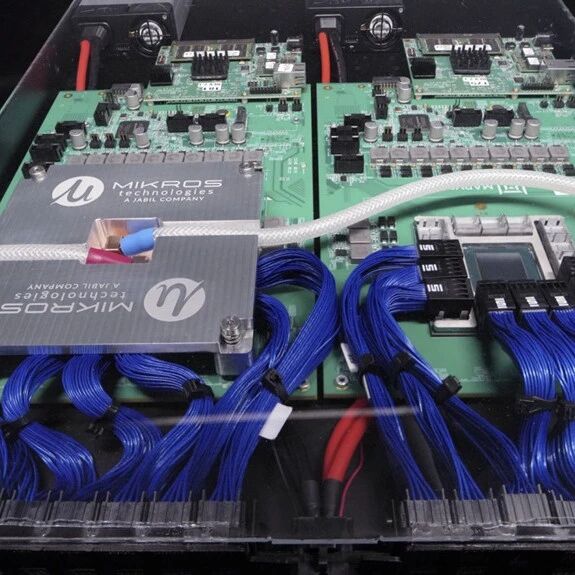
Core Viewpoint - Broadcom has launched its Tomahawk 6 - Davisson (TH6-Davisson) product, a co-packaged optical (CPO) Ethernet switch that offers an impressive 102.4 Tb/s, marking a significant advancement in next-generation networking [1] Group 1: CPO Technology and Its Advantages - CPO technology addresses the challenges of interconnecting thousands of GPUs in large-scale AI clusters by moving switches to the end of racks, creating a consistent low-latency network structure [2] - Traditional pluggable optical modules have limitations, including significant electrical losses, which can reach approximately 22 dB at 200 Gb/s channels, necessitating complex compensation and increasing power consumption to 30W per port [4] - CPO integrates the optical conversion engine alongside the switch ASIC, reducing electrical loss to 4 dB and power consumption to 9W per port, simplifying optical interconnect implementation [6] Group 2: Performance Metrics and Comparisons - Nvidia claims that by integrating the optical engine directly into the switch chip, its CPO technology improves power efficiency by 3.5 times and signal integrity by 64 times compared to traditional pluggable modules [8] - Broadcom's new TH6-Davisson switch, featuring 16 optical engines, achieves a power reduction of approximately 70% compared to previous models, supporting 800 Gb/s traffic with only 5.5W of power [15][14] Group 3: Industry Impact and Future Developments - The CPO technology is seen as a potential breakthrough in the industry, fundamentally redefining the boundaries of switches and enabling more efficient connections in AI clusters [20] - Broadcom is currently developing its fourth-generation CPO, aiming for a transmission speed of 400G per channel, indicating ongoing advancements in this technology [23] - Nvidia plans to introduce its CPO-based optical interconnect platform for Ethernet and InfiniBand technologies, with significant performance improvements expected for AI clusters [24][25]

汇编才是最懂芯片的
半导体行业观察· 2025-10-14 01:01
Core Viewpoint - The article discusses the evolution and significance of assembly language in programming, highlighting its historical context and the recent resurgence of interest in low-level programming due to advancements in artificial intelligence and hardware efficiency [2][3][7]. Group 1: Historical Context of Assembly Language - Assembly language was created in the 1940s, with the first language developed by Kathleen Booth, which was a complex system of codes that required translation into binary [4]. - The development of the Apollo 11 guidance computer utilized assembly language, showcasing its critical role in significant technological achievements [5]. - Chris Sawyer, the developer of "Rollercoaster Tycoon," exemplifies the dedication to using assembly language for its efficiency and control over hardware [3][6]. Group 2: Modern Applications and Resurgence - Recent advancements in AI, such as DeepSeek's work with Nvidia chips, demonstrate the practical applications of assembly language in optimizing performance by manipulating data at a low level [7]. - DeepMind's research in teaching machines assembly language to improve C language functions indicates a growing recognition of the value of low-level programming in enhancing computational efficiency [7]. - The article emphasizes that despite the complexity of modern machines, humans still retain the ability to optimize and control them through foundational programming languages like assembly [8].

超600家半导体企业齐聚深圳,同期论坛议程公布
半导体行业观察· 2025-10-14 01:01
Core Points - The second Greater Bay Area Semiconductor Industry Ecosystem Expo (Bay Area Chip Expo 2025) will be held from October 15-17, 2025, at the Shenzhen Convention and Exhibition Center, featuring over 60,000 square meters of exhibition space and more than 600 semiconductor companies [1][35] - The event is expected to attract over 60,000 professional attendees and will include numerous industry experts and scholars [1] Event Overview - The expo will host over 30 concurrent activities, including forums and summits focused on various semiconductor technologies and innovations [1][35] - Key events include the Opening Ceremony and Semiconductor Industry Summit on October 15, and the Chip Conference and China Top 10 Chip Science Progress Award Ceremony on October 15-16 [5][7] Forum Details - Various forums will take place, such as: - International Advanced Lithography Technology Symposium on October 14-15 [6] - Semiconductor Core Components Forum on October 15 [11] - Compound Semiconductor Industry Summit on October 15 [14] - AI Chip & Computility Industry Development Summit on October 16 [23] - Investment & Strategy Forum on October 16 [28] - The forums will cover topics like chiplet design, edge AI, and semiconductor materials and processes [12][19][24] Registration and Participation - Pre-registration is encouraged to avoid on-site queues, and various forums require registration for participation [2][6] - The event aims to foster collaboration and innovation within the semiconductor industry, showcasing advancements and investment opportunities [42]

半导体业务强势复苏,三星利润大涨
半导体行业观察· 2025-10-14 01:01
Core Viewpoint - Samsung Electronics' semiconductor division has shown a strong recovery in Q3 2023, with preliminary sales increasing by 8.72% year-on-year to 86 trillion KRW and operating profit rising by 31.81% to 12.1 trillion KRW, exceeding market expectations [1][2]. Group 1: Financial Performance - The operating profit has rebounded to around 10 trillion KRW for the first time in five quarters, marking the highest value since Q2 2022 [1]. - Compared to Q2 2023, where a 1 trillion KRW loss was recorded due to unsold memory inventory, the operating profit growth represents a 158.55% increase [1]. - The semiconductor business (DS division) is expected to generate around 5 trillion KRW in operating profit, significantly higher than the 400 billion KRW in Q2 2023 [1]. Group 2: Market Dynamics - The semiconductor industry is entering an "early semiconductor super cycle," driven by a surge in demand, particularly for AI accelerators and high-bandwidth memory (HBM) [3]. - The average fixed trading price for general PC DRAM products (DDR4 8Gb) rose by 10.53% in September, reaching $6.3, the highest since January 2019 [4]. - Analysts predict that Samsung Electronics will capture 32% of the DRAM market and 30% of NAND flash production by 2026, positioning it as a major beneficiary of the memory super cycle [4]. Group 3: Business Developments - Samsung Electronics has passed NVIDIA's HBM3E quality tests and is negotiating supply volumes, enhancing its competitive position against SK Hynix [5]. - The company is expanding its high-performance DRAM supply through participation in OpenAI's Stargate project, which is expected to significantly boost HBM sales [6]. - The foundry business is showing signs of recovery, with new customer orders focusing on 8-4nm processes, and the production of the Exynos 2600 processor is expected to increase utilization rates [7]. Group 4: Product Performance - The smartphone business contributed positively to Q3 performance, with the Galaxy Z Fold7 performing well in markets like the U.S. [8]. - Samsung Display's profits are estimated to reach around 1 trillion KRW, as the company begins supplying OLED panels for Apple's iPhone 17 [8]. - Despite challenges in the home appliance and TV sectors due to tariffs and logistics costs, overall performance is expected to improve, with projected operating profit for 2026 raised by 36% to 73 trillion KRW [8].

先进封装推动,后端芯片设备增长迅猛
半导体行业观察· 2025-10-14 01:01
Core Viewpoint - The semiconductor backend equipment market is entering a new era, transitioning from cost-sensitive processes to advanced packaging technologies and increasingly complex semiconductor devices. The market size is expected to grow from $6.9 billion in 2025 to $9.8 billion by 2030, with a compound annual growth rate (CAGR) of 7.1% [1]. Market Dynamics: Transformation through Complexity - The semiconductor manufacturing industry is rapidly evolving, with the backend being central to this transformation. Factors such as chip architecture, heterogeneous integration, and the rise of High Bandwidth Memory (HBM) are driving demand for new equipment [2]. Backend Semiconductor Equipment: Growth Prospects by Segment - Core backend equipment segments include die bonders, flip chip bonders, thermal compression bonders (TCB), hybrid bonding, wire bonding, wafer thinning, cutting, and metrology and inspection. Advanced technologies like TCB and hybrid bonding are key to driving significant changes, while traditional solutions like wire bonding still hold market potential [5][6]. TCB: Rapid Rise - TCB is gaining prominence due to its critical role in advanced packaging, especially in HBM integration. Revenue is expected to reach approximately $1.1 billion by 2030, with a CAGR of 13.4%. The no-adhesive TCB technology reduces contamination and enhances reliability, with suppliers like Hanmi, ASMPT, Kulicke & Soffa (K&S), and BESI actively expanding in this area [6]. Hybrid Bonding: Disruptive Technology - Hybrid bonding is one of the most disruptive backend technologies today, enabling ultra-fine pitch below 5 µm without solder bumps, essential for AI, HPC, and chip-based designs. The market for this segment is projected to reach about $477 million by 2030, with a CAGR of 24.6%. Industry leaders like TSMC, Intel, and Samsung are early adopters, while BESI's strategic partnerships position it at the forefront of equipment innovation [7]. Die Attach and Flip Chip Bonder - Traditional die attach machines continue to evolve, offering ±1 µm placement accuracy and enhanced thermal control. By 2030, revenue from die attach machines is expected to reach $912 million, driven by automotive, consumer electronics, and industrial applications [7]. Flip Chip Bonder - Flip chip bonders are crucial for both traditional and advanced high-density packaging, with market size projected to exceed $662 million by 2030. Innovations like no-adhesive processes and ultra-fine pitch interconnects are enhancing I/O density and electrical performance [8]. Wire Bonding - Despite its maturity, wire bonding technology has broad application prospects, particularly in cost-sensitive and traditional applications. Advances in ultra-fine wire (<15 µm), copper bonding, and advanced loop control are driving its evolution. K&S is expected to maintain a strong market position, with revenue projected to grow slightly to about $994 million by 2030 [8]. Wafer Thinning and Cutting - The demand for thinning and cutting technologies is strong due to shrinking device sizes and the surge in wafer-level packaging. By 2030, the wafer thinning market is expected to grow to over $890 million, driven by ultra-thin grinding (<50 µm) and plasma-assisted dry thinning technologies [11]. The cutting market is projected to reach approximately $2 billion, with laser and plasma cutting gaining popularity for their precision and reduced debris [11]. Metrology and Inspection - Metrology and inspection equipment ensure yield, reliability, and compliance with strict quality standards, especially in automotive and HPC sectors. By 2030, this field's revenue is expected to grow to about $850 million, driven by defect classification and high-resolution optics [12]. Key Market Participants and Investments - The growth of backend equipment technology is supported by strategic investments from OSAT suppliers and IDM manufacturers. Leading OSAT firms like ASE, Amkor, JCET, and SPIL are expanding capacity to meet advanced packaging demands, while foundries and IDM manufacturers are investing heavily in HBM, chiplets, and hybrid bonding technologies [19]. Equipment suppliers like K&S, BESI, ASMPT, DISCO, and Hanmi are driving technological advancements and expanding product offerings [19]. Conclusion - The backend equipment market is expected to exceed $9 billion by 2030, driven by a 7.1% CAGR and transformative packaging technologies. While traditional processes remain vital, TCB, hybrid bonding, wafer thinning, and advanced cutting technologies are propelling market growth. This evolution reflects a broader industry shift towards HPC, AI, automotive, and 5G applications, emphasizing performance, density, and reliability [21].
我国科学家研究的芯片,突破世纪难题
半导体行业观察· 2025-10-14 01:01
Core Insights - The research team from Peking University has achieved a breakthrough in high-precision, scalable analog matrix equation solving, published in Nature Electronics, marking a significant advancement in analog computing technology [1][2] - This innovation demonstrates that analog computing can efficiently and accurately address core computational problems in modern science and engineering, potentially disrupting the long-standing dominance of digital computing [2][3] Group 1: Key Innovations - The first key innovation is the use of resistive random-access memory (RRAM), which allows for precise control of resistance states and retains data without power, enabling it to function as both a memory and a computing unit [4] - The second key innovation stems from a foundational discovery in 2019, where the team designed an analog circuit capable of solving matrix equations in a single step, significantly compressing traditional iterative algorithms [5] - The third key innovation is the "bit slicing" technique, which breaks down 24-bit precision into multiple 3-bit segments for processing, allowing for a more sophisticated and efficient analog computation [5] Group 2: Practical Implications - The breakthrough allows for solving matrix equations with 24-bit precision in just a few iterations, drastically reducing the computational steps required for complex tasks, such as 6G signal detection [7] - In the AI field, this advancement could alleviate the "computational bottleneck" faced by large models, enabling faster and more efficient training processes [7] - The technology also addresses critical challenges in 6G communication, enhancing signal detection capabilities while significantly reducing energy consumption [8]
博通100亿美金的神秘客户,另有其人?
半导体行业观察· 2025-10-14 01:01
Core Insights - OpenAI is not the $10 billion mystery client mentioned by Broadcom in its September earnings call, as clarified by Broadcom's president Charlie Kawwas [1] - OpenAI and Broadcom are collaborating to develop and deploy a custom AI accelerator with a capacity of 10 terawatts over the next four years [2][3] - OpenAI's valuation stands at $500 billion, making it the most valuable startup globally, with over 800 million weekly active users [4] Group 1: Partnership Details - OpenAI and Broadcom have been working together for 18 months and plan to deploy custom chip racks starting in late next year, with the project expected to be completed by 2029 [2] - The new agreement is valued at several billion dollars, although specific financial terms have not been disclosed [3] - Broadcom's stock rose nearly 10% following the announcement of this partnership [3] Group 2: Market Context and Implications - OpenAI has signed several multi-billion dollar agreements with companies like AMD, Nvidia, and CoreWeave to enhance its computing capabilities [1] - The demand for AI products is rapidly increasing, prompting OpenAI to seek new large data centers globally to meet this demand [5] - OpenAI aims to build 250 terawatts of new computing capacity by 2033, which could cost over $1 trillion at current standards [5][6] Group 3: Financial Performance and Projections - Broadcom's CEO indicated that a $10 billion custom AI chip order has boosted the company's revenue forecast for AI products next year [2] - OpenAI is projected to generate $13 billion in revenue this year, necessitating exponential sales growth to cover its computing expenses [3] - The AI infrastructure spending wave is expected to require $2 trillion annually by 2030, surpassing the combined revenues of major tech companies [6]