半导体行业观察

Search documents
全球半导体市值TOP100,中国表现几何?
半导体行业观察· 2025-12-22 01:49
Core Viewpoint - The semiconductor secondary market is experiencing significant fluctuations, with key manufacturers successfully launching IPOs, notable mergers failing, and the market capitalization of a few giants repeatedly reaching new heights. This article emphasizes the need to analyze the current industry landscape and the role of Chinese companies within the global semiconductor market [1]. Group 1: Market Capitalization Overview - As of mid-December 2025, there are 35 companies from China (17 from mainland China, 16 from Taiwan, and 2 from Hong Kong) in the global top 100 semiconductor companies by market capitalization, accounting for approximately 35% of the total [1]. - Notably, companies like Moore Threads and Muxi, which recently completed their IPOs, have market capitalizations of approximately 470 billion USD and 440 billion USD respectively, indicating their potential to rank among the top 25 globally [2]. Group 2: Major Players and Their Market Dynamics - The top three companies, Nvidia, Broadcom, and TSMC, have market capitalizations exceeding 1 trillion USD, reflecting their significant control over the semiconductor industry [5]. - Nvidia's market capitalization is approximately 4.26 trillion USD, marking it as the highest in the semiconductor sector and the world, driven by its pivotal role in AI computing [5]. - Broadcom's market capitalization is around 1.7 trillion USD, supported by its strategic positioning in custom AI ASICs and networking chips [5]. - TSMC holds a market capitalization of about 1.5 trillion USD, recognized for its advanced manufacturing capabilities [6]. Group 3: Storage and Memory Sector - The market capitalization of major memory companies has surged, with SK Hynix at approximately 258.6 billion USD (up 218%), Micron at about 271.4 billion USD (up nearly 175%), and Samsung at around 475.5 billion USD (almost doubling) [7]. - This growth indicates a shift in the value logic of DRAM, as high-bandwidth memory (HBM) becomes essential for high-performance computing systems [7]. Group 4: Equipment and Measurement Companies - Equipment and measurement companies are experiencing significant growth, with ASML at approximately 419.5 billion USD (up nearly 50%), and both Applied Materials and Lam Research surpassing 200 billion USD [8]. - The increasing complexity of manufacturing processes in the AI era is driving demand for advanced equipment and measurement solutions [9]. Group 5: Design Companies and Market Differentiation - Design companies are showing varied performance, with AMD at approximately 343.1 billion USD (up nearly 69%), while Qualcomm's growth is more modest at around 192.4 billion USD (up about 10%) [10]. - This differentiation reflects the varying market expectations and growth potential across different segments of the semiconductor design landscape [10]. Group 6: Chinese Semiconductor Landscape - Chinese companies are diversely positioned within the semiconductor industry, with 17 companies from mainland China primarily focused on manufacturing, equipment, and design [14]. - Taiwan's companies, such as TSMC and MediaTek, play a central role in the global semiconductor supply chain, while mainland China's companies are increasingly establishing their presence in critical segments [13][14]. - The recent IPOs of Moore Threads and Muxi highlight the growing importance of AI computing capabilities within China's semiconductor sector [15]. Group 7: Hong Kong's Role in the Semiconductor Market - Companies from Hong Kong, such as ASMPT and Silicon Motion, serve as connectors between global supply chains and capital markets, playing a stabilizing role in the semiconductor ecosystem [16].



MicroLED,生死时刻
半导体行业观察· 2025-12-22 01:49
Core Insights - The validation phase for MicroLED technology is taking longer than expected, with Apple canceling its smartwatch project in 2024 marking a significant setback [1] - Despite a recovery in momentum anticipated for 2025, the pace of development is noticeably slowing, leading to more pragmatic expectations regarding the technology's applications and challenges [1] - MicroLED is currently in its incubation stage, with the first small-batch commercial products expected to launch in 2025, specifically a smartwatch display for Garmin and an external display for Sony-Honda electric vehicles, both produced by AUO [1] Industry Dynamics - The supply chain landscape is becoming clearer, with most leading display manufacturers either controlling or forming alliances with MicroLED chip manufacturers [3] - The transition of large-size TFT-based displays and LED-on-Silicon (LEDoS) is evolving into two increasingly independent supply chains and technology platforms, yet they face common fundamental technical challenges such as yield and efficiency of ultra-small chips [3] - Initial funding for startups is projected to grow by 10-15% in 2025, although this is below the peak levels seen in 2023, indicating a cautious investment environment [3] Technical Challenges - Achieving mass production capabilities is essential for MicroLED to gain legitimacy among potential customers, but premature investment poses risks of obsolescence [3] - MicroLED must deliver differentiated performance while keeping costs comparable to OLED, with key challenges including chip cost, performance, and manufacturing infrastructure [4] - For AR applications, LED-on-Si currently meets high brightness, high resolution, low power consumption, lightweight, and small size requirements, but it has not yet reached an ideal state [4]

存储大缺货,IDM也要找代工
半导体行业观察· 2025-12-22 01:49
Core Viewpoint - The semiconductor industry is experiencing a significant shortage in storage capacity, leading to soaring prices. Major companies like Micron and SanDisk are seeking partnerships with Powerchip Semiconductor Manufacturing Corporation (PSMC) to quickly ramp up production capacity in response to high demand [1][2]. Group 1: Company Collaborations - Micron is in discussions with PSMC to utilize its newly completed facility, which has the potential to add 40,000 to 50,000 wafers per month, to meet urgent production needs [1][2]. - There are at least three collaboration models being discussed between Micron and PSMC: a pure foundry model, a technology transfer model, and a distribution model that allows PSMC to retain a portion of the produced wafers for its own sales [2][3]. Group 2: Industry Trends - The global semiconductor industry is intensifying competition, particularly among South Korean manufacturers like Samsung and SK Hynix, who are accelerating their storage production to meet the rising demand from AI servers [4]. - Samsung is increasing the utilization of its DRAM and NAND flash production lines and plans to resume construction at its Pyeongtaek plant, aiming for mass production by 2028 [4]. - SK Hynix is preparing to launch its new M15X plant focused on DRAM and AI-oriented storage products, with plans to complete a new wafer fab by 2027 [4]. - The global DRAM market is projected to reach $170 billion by 2026, up from $100 billion in 2024, highlighting the growing importance of production capacity as a competitive factor [4].

英伟达入股英特尔,美国核准
半导体行业观察· 2025-12-21 03:58
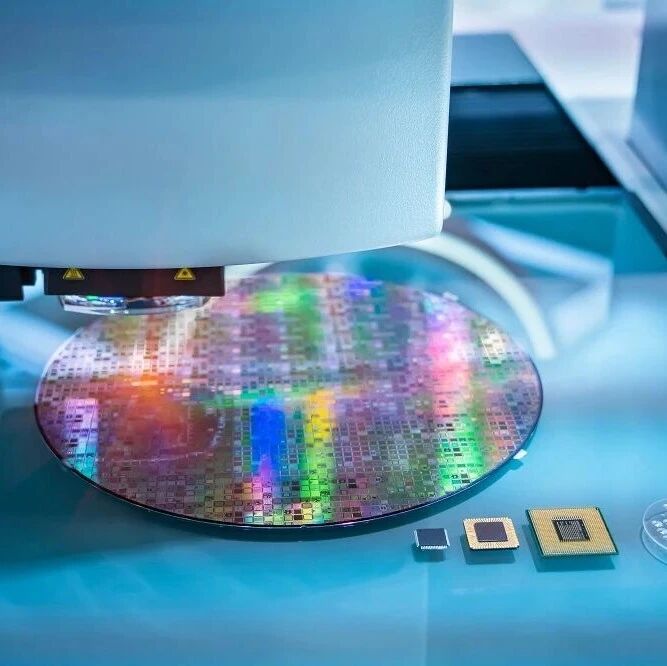
Group 1 - The core viewpoint of the article is that the FTC has approved a $5 billion partnership agreement between Nvidia and Intel, indicating that the transaction does not immediately raise antitrust concerns [1][2] - Nvidia will purchase Intel stock at a price of $23.28 per share to jointly develop AI and chip technologies for next-generation personal computing products and data centers [1] - The agreement aims to integrate Nvidia's GPU technology with Intel's CPU technology, competing against rivals like TSMC and AMD [1] Group 2 - Nvidia currently holds approximately 85-95% of the data center GPU market, and completing the deal with Intel would further solidify its market position [1] - The FTC's approval contrasts with its previous rejection of Nvidia's $40 billion acquisition of ARM in 2022, suggesting a shift in regulatory stance [1][2] - Analyst Stacy Rasgon noted that Nvidia's current trading price is about 13% discounted compared to the Philadelphia Semiconductor Index, making it an attractive investment opportunity [2]

打不过台积电,怎么办?
半导体行业观察· 2025-12-21 03:58
Core Viewpoint - TSMC has solidified its position as the core pillar of the global foundry market, capturing over 70% market share and achieving a revenue of $33.063 billion in Q3 2025, reflecting a 9.3% quarter-on-quarter growth [1][2]. Group 1: TSMC's Market Position - TSMC's revenue growth is significantly higher than its competitors, with a market share increase to 71% [1]. - The overall foundry market is growing, but TSMC is capturing the most substantial portion of this growth [1][2]. - Other foundry players, such as Samsung and SMIC, are struggling to close the gap in market share despite their revenue increases [2]. Group 2: Intel's Strategic Shift - Intel is aggressively transforming its strategy, focusing on advanced technology and ecosystem restructuring to regain competitiveness in the foundry market [3][4]. - The 14A process node is central to Intel's strategy, utilizing High-NA EUV technology to enhance power efficiency and chip density [4][5]. - Intel's EMIB technology is emerging as a viable alternative to TSMC's CoWoS packaging, addressing the demand for advanced packaging solutions [6][7]. Group 3: Customer Acquisition and ASIC Business - Intel has made significant strides in securing major clients, including Apple, which is expected to utilize Intel's 18A-P process for its M-series chips [8][9]. - Intel is establishing a dedicated ASIC department to provide customized chip solutions, leveraging its manufacturing capabilities to attract clients [10][11]. Group 4: Samsung's 2nm Strategy - Samsung is betting heavily on its 2nm process technology, aiming to turn its foundry business profitable by 2027 [12][13]. - The yield rate for Samsung's 2nm process has improved from 50% to a target of 70%, which is crucial for attracting major clients [13][21]. - Samsung has secured contracts with Tesla and Qualcomm, indicating a successful shift in its client base [14][15]. Group 5: UMC's Differentiation Strategy - UMC is focusing on mature processes and high-value applications, avoiding the high-risk advanced process competition [22][23]. - UMC has made significant progress in advanced packaging, securing a partnership with Qualcomm for high-performance chips [24]. - UMC is also entering the silicon photonics market through collaboration with IMEC, aiming to capture the next-generation high-speed connectivity applications [25][26]. Group 6: GlobalFoundries' Focus on Specialty Processes - GlobalFoundries is concentrating on mature and specialty processes, with a clear strategy to establish a unique position in specific markets [29][30]. - The acquisition of Advanced Micro Foundry enhances GlobalFoundries' capabilities in silicon photonics, positioning it as a leader in this field [31][32]. - GlobalFoundries is also acquiring MIPS to strengthen its computing capabilities, providing clients with ready-to-use IP modules [33][34]. Group 7: European Expansion and Local Manufacturing - GlobalFoundries plans to invest €1.1 billion to expand its Dresden facility, aiming to meet the growing demand for secure and differentiated technology in Europe [35][36]. - The company is also exploring partnerships for local manufacturing in the U.S. to address the increasing demand in key industries [27][37]. Conclusion - The foundry market is evolving, with TSMC maintaining a dominant position while competitors like Intel, Samsung, UMC, and GlobalFoundries are carving out their niches through strategic adjustments and technological advancements [38].

2026年恐爆发史上最严重存储芯片短缺
半导体行业观察· 2025-12-21 03:58
Core Viewpoint - Micron Technology's recent financial report indicates a significant shift in the semiconductor industry, predicting a severe shortage of storage chips by 2026, potentially surpassing the supply crisis experienced during the COVID-19 pandemic [1]. Group 1: Micron's Performance and Market Outlook - Micron's latest quarterly performance exceeded market expectations, with a year-over-year revenue increase of 57% and a gross margin recovery to 56% [1]. - The company forecasts a 132% year-over-year revenue growth for the current quarter, with gross margins projected to reach 68%, nearing Nvidia's leading position in the chip industry [1]. Group 2: Impact of AI on Storage Demand - The AI investment boom has disrupted the traditional cyclical nature of the storage industry, with AI servers requiring substantial storage capacity, such as Nvidia's DGX GB300 server using up to 20TB of high-bandwidth memory (HBM) [2]. - The global server market saw a 61% year-over-year growth in Q3, reaching $112 billion, driven by rapid capital expenditures in AI data centers [2]. Group 3: HBM and DDR Supply Constraints - Micron has sold out its HBM capacity for the 2026 fiscal year, with 2027 orders also filling up quickly, while SK Hynix and Samsung are in similar situations [3]. - The production of HBM is displacing traditional DDR capacity, with a ratio of 1GB of HBM requiring the sacrifice of 3GB of DDR, further tightening supply [3]. Group 4: Competitive Landscape and Market Pressures - OpenAI's partnership with Samsung and SK Hynix for its $500 billion Stargate AI data center plan reserves over one-third of global storage capacity, intensifying competition for other customers [4]. - The consumer electronics market is also driving demand for storage, with high-end smartphones and laptops requiring increased storage capacity [5]. Group 5: Future Market Challenges - Storage prices are expected to rise by approximately 50% in Q4 and an additional 40% in the first half of 2026, putting pressure on smartphone manufacturers, particularly smaller brands [7]. - Counterpoint Research has downgraded its forecast for global smartphone shipments in 2026 due to anticipated storage shortages and rising prices, indicating a potential repeat of the supply challenges faced during the pandemic [7].

三星,超越美光
半导体行业观察· 2025-12-21 03:58
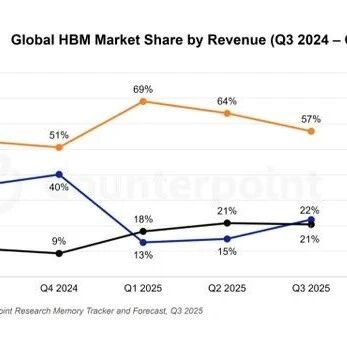
Group 1 - Samsung Electronics surpassed Micron Technology to reclaim the second position in the high bandwidth memory (HBM) market in Q3, with a market share of 22%, up from 15% in the previous quarter, while Micron's share was 21% [1][3] - SK Hynix maintained the top position in the HBM market with a 57% share, although this was a decrease from 64% in the previous quarter, indicating a weakening of its dominance [3] - In the overall DRAM market, SK Hynix held a 34% share, while Samsung closely followed with 33%, marking a significant recovery for Samsung from 32% in Q2 [3] Group 2 - The DRAM market experienced a 26% growth quarter-over-quarter due to historical price increases and supply shortages caused by production cuts from the three major memory manufacturers [3] - Analysts expect intensified competition in the HBM4 market next year, with Samsung expanding HBM3E production capacity and accelerating the development of next-generation products [4]
光计算芯片,我国重大突破
半导体行业观察· 2025-12-21 03:58
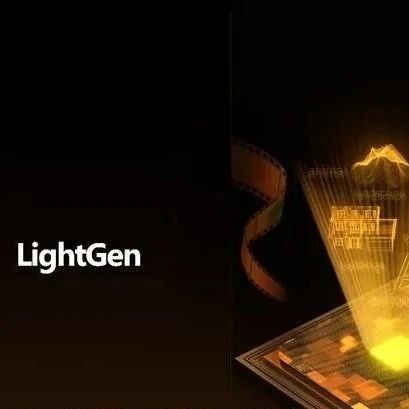
Core Viewpoint - The article discusses the significant advancements in optical computing technology, specifically the LightGen chip developed by Shanghai Jiao Tong University, which addresses the growing demand for computational power and energy efficiency in large-scale generative AI models [5][12]. Group 1: Breakthroughs in Optical Computing - The LightGen chip represents a major breakthrough in the field of optical computing, enabling the support of large-scale semantic visual generation models [5]. - It integrates over a million optical neurons on a single chip and employs all-optical dimension conversion, which are recognized as key bottlenecks in the industry [9]. - The chip achieves a closed-loop process of "input-understanding-semantic manipulation-generation," allowing it to "understand" and "cognize" semantics [9]. Group 2: Performance Evaluation - LightGen chip demonstrates a significant performance leap, achieving two orders of magnitude improvement in computational power and energy efficiency compared to leading digital chips, even with less advanced input devices [11]. - Theoretical calculations suggest that with cutting-edge input devices, the chip could achieve a seven-fold increase in computational power and an eight-fold increase in energy efficiency [11]. Group 3: Implications for AI Development - The advancements in LightGen are crucial for the practical application of next-generation computing chips in modern AI, particularly for high-latency and energy-intensive tasks like large-scale generative models [12]. - This development opens new pathways for exploring faster and more energy-efficient generative intelligent computing [12].
AMD Zen6 架构细节曝光
半导体行业观察· 2025-12-21 03:58
Core Insights - AMD has released a document detailing the architecture of its Zen 6 CPUs, indicating a complete redesign rather than an evolution from Zen 5, with a focus on throughput and performance [1][3] - The Zen 6 architecture supports up to 256 cores and utilizes TSMC's 2nm process technology, featuring an eight-slot dispatch engine and simultaneous multithreading (SMT) [1][2] Performance Characteristics - The design allows two hardware threads to dynamically compete for shared dispatch resources, which may result in lower single-thread performance compared to Apple's CPUs under certain conditions, but it is expected to unleash high performance in specific scenarios [2] - Zen 6 enhances visibility into vector and floating-point execution, emphasizing its capability for intensive mathematical workloads, although it does not directly confirm performance superiority in AVX-512 [2][6] Architectural Focus - Zen 6 is characterized as AMD's first microarchitecture designed from the ground up specifically for data center applications, with uncertain retention of features in consumer products [3] - The architecture supports full-width AVX-512 execution for various data formats, including FP64, FP32, FP16, and BF16, and maintains high throughput that necessitates merged performance counters for accurate measurement [6]


2030年美国先进产能占全球28%,中国台湾仍是首位
半导体行业观察· 2025-12-21 03:58
Group 1 - The core viewpoint of the article highlights the global semiconductor industry's shift towards regional diversification, driven by geopolitical factors, with the U.S. expected to capture 28% of the global advanced process capacity by 2030 [1] - The semiconductor industry is recognized as a strategic resource, with the U.S. pushing for domestic manufacturing, while China, Japan, the EU, and India are also intensifying their semiconductor development efforts [1] - TSMC is continuing to strengthen its presence in Taiwan, contributing to the growth of Taiwan's semiconductor industry [1] Group 2 - According to IDC, Taiwan's foundry capacity is projected to grow at a compound annual growth rate (CAGR) of approximately 2.8% from 2025 to 2029, while the U.S. is expected to see a CAGR of 8.4% due to TSMC's expansion in Arizona and increased capital expenditures from Samsung and Intel [1] - Japan's foundry capacity is anticipated to grow at a CAGR of 10% due to TSMC's expansion in Kumamoto and contributions from Rapidus, while the EU's foundry capacity is expected to grow at a CAGR of about 6.3% [1] - By 2030, China's semiconductor mature process capacity is projected to account for 52% of the global mature process capacity, surpassing Taiwan's 26%, making China the largest supplier in this segment [2]