半导体行业观察

Search documents
模拟IC走出谷底! ADI、TI接力涨价
半导体行业观察· 2025-12-21 03:58
Group 1 - The global analog chip market is showing clear signs of recovery, with major players like Analog Devices, Inc. (ADI) and Texas Instruments (TI) implementing price increases of approximately 15% and 10% to over 30% respectively, indicating a new cycle in the analog IC industry [1] - ADI's price adjustment is attributed to rising costs in raw materials, labor, energy, and logistics, as well as ongoing global inflation pressures [1] - The demand for high-power and high-current components is expected to increase significantly due to the construction of AI data centers, which is driving a structural reversal in the analog IC market [1] Group 2 - Silicon Labs remains confident in its long-term growth prospects, particularly in the automotive and data center sectors, with new products such as Power ICs for autonomous driving and mid-to-high-end MCUs set to enter mass production next year [2] - The company anticipates that revenue from data centers will account for 4% to 5% of its total revenue next year, driven by the introduction of many new products [2] - The overall market demand and outlook for next year remain uncertain, with concerns about storage prices potentially dampening end-user purchasing [2]



印度芯片,真干成了?
半导体行业观察· 2025-12-20 02:22
Core Viewpoint - India is emerging as a potential player in the semiconductor industry, with significant investments and government support, but challenges remain in manufacturing capabilities and supply chain resilience [1][11][18]. Group 1: Market Growth and Strategic Importance - India's semiconductor market is valued at approximately $38 billion in 2023, expected to grow to $45-50 billion by the end of 2025, and further expand to $100-110 billion by 2030, potentially accounting for about 10% of global consumption [1][11]. - The Indian government launched the Indian Semiconductor Mission (ISM) in December 2021, with a budget of $10 billion to build a self-sufficient semiconductor ecosystem [11][16]. Group 2: Key Developments with Major Companies - Apple is in preliminary discussions with CG Semi for chip packaging and assembly collaboration in India, indicating a shift in its supply chain strategy [2][3]. - Intel is also focusing on India's packaging and manufacturing systems, establishing a strategic alliance with Tata Group to enhance local semiconductor capabilities [5][9]. Group 3: Manufacturing and Infrastructure Initiatives - Major projects under the ISM include a $2.56 billion packaging and testing facility by Micron in Gujarat and a $10.37 billion collaboration between Tata Electronics and PSMC for a foundry [11][12]. - Tata Group plans to invest approximately $14 billion in two semiconductor factories, with one in Gujarat for wafer manufacturing and another in Assam for OSAT [8][9]. Group 4: Challenges and Future Outlook - Over 90% of India's semiconductor demand is currently met through imports, making the country vulnerable to global supply chain disruptions [11]. - While India is making strides in semiconductor packaging, it still faces significant challenges in achieving stable production and supply chain integration, with a timeline of 5-8 years for full-scale wafer production [14][18].


英特尔晶圆代工,命悬一线
半导体行业观察· 2025-12-20 02:22
Core Viewpoint - Intel, once the largest semiconductor company globally, has faced significant challenges and a substantial decline in market value due to delays in chip manufacturing processes and competition from TSMC. The company aims to regain its position by launching the 18A chip process and attracting external clients for its foundry services [1][2][3]. Group 1: Current Developments - Intel has begun mass production of its 18A chips, which it claims will help turn the tide for the company [1]. - The company is currently focused on securing external clients for its foundry services, with its only major customer being itself at this time [1][3]. - The new chip manufacturing facility, Fab52, located in Chandler, Arizona, is expected to play a crucial role in attracting clients and improving production capabilities [1][5]. Group 2: Challenges and Competition - Intel's 18A process has faced issues with yield rates, as some wafers have defects, which is a common challenge in advanced manufacturing processes [2]. - The company has lost significant market share to TSMC, which has become the leader in advanced process nodes, and has been outsourcing some of its chip production to TSMC [7]. - Intel's past decisions, such as delaying the adoption of expensive EUV lithography equipment, have contributed to its struggles in keeping up with competitors [6]. Group 3: Financial Support and Investments - The U.S. government has invested $8.9 billion in Intel, acquiring a 10% stake in the company, as part of the CHIPS Act aimed at boosting domestic semiconductor manufacturing [5][13]. - Nvidia has also invested $5 billion in Intel, although it has not committed to using Intel's foundry services [5][13]. - The financial backing from the government and private investors is seen as a lifeline for Intel as it attempts to regain its footing in the semiconductor industry [13]. Group 4: Future Outlook - Intel's leadership under CEO Lip-Bu Tan emphasizes a more cautious approach to spending and a focus on market demand before revealing details about future process nodes [11]. - The company is working to improve its yield rates and defect density, with the goal of establishing itself as a reliable foundry for external clients [9]. - There are discussions about potentially separating Intel's foundry business into an independent entity to enhance its chances of success in attracting external clients [12]. Group 5: Technological Advancements - The 18A process utilizes RibbonFET technology, which improves power efficiency by fully surrounding transistors, resulting in over a 15% performance increase per watt compared to Intel's third-generation processors [10]. - Intel's advanced packaging technology is also highlighted as a significant advantage, helping to address power consumption issues in data center chip manufacturing [10]. - The Chandler facility is designed to operate sustainably, using nearly 100% renewable energy and implementing water recycling systems [10].


粤芯,冲刺科创板
半导体行业观察· 2025-12-20 02:22
Core Viewpoint - Yu Xin Semiconductor Technology Co., Ltd. has officially received approval for its IPO application on the Shenzhen Stock Exchange, aiming to raise 7.5 billion yuan, with Guotai Junan Securities as the sponsor [1][2]. Company Overview - Yu Xin Semiconductor, established in 2017, focuses on providing 12-inch wafer foundry services and specialized process solutions for domestic and international chip design companies [4][5]. - The company has developed a comprehensive technology matrix covering various fields, including consumer electronics, industrial control, automotive electronics, and artificial intelligence [2][5]. Financial Performance - The company reported revenues of 1.545 billion yuan in 2022, 1.044 billion yuan in 2023, 1.681 billion yuan in 2024, and 1.053 billion yuan in the first half of 2025. The revenue for 2024 shows a significant increase of 61.09% compared to 2023 [3][4]. Shareholder Information - Major shareholders include Yu Xin Zhong Cheng, Guangdong Semiconductor Fund, and several other investment institutions, with notable ownership stakes [3]. Technological Advancements - Yu Xin Semiconductor has achieved significant breakthroughs in silicon photonics technology, becoming one of the few foundries in China capable of providing integrated circuit, power device, and optoelectronic fusion services [6][7]. - The company plans to enhance its technological advantages and transition from consumer-grade wafer foundry to industrial-grade and automotive-grade processes, focusing on applications in artificial intelligence and near-memory computing [5][6]. Market Opportunities - The global silicon photonics market is projected to reach $10.26 billion by 2029, with a compound annual growth rate of nearly 40% from 2023 to 2029, indicating substantial market potential for Yu Xin Semiconductor [6][7]. Strategic Importance - As the first 12-inch wafer manufacturing enterprise in Guangdong Province, Yu Xin Semiconductor plays a crucial role in the development and security of the semiconductor industry in the Guangdong-Hong Kong-Macao Greater Bay Area [7].
存储市场需求,吓人
半导体行业观察· 2025-12-20 02:22
Core Insights - The total addressable market (TAM) for HBM memory is expected to grow significantly, with projections indicating a market size of $100 billion by 2028, reflecting a compound annual growth rate (CAGR) of over 40% from previous estimates [6][7] - The demand for high-performance memory and storage solutions is being driven by the expansion of AI data centers, with server sales expected to grow nearly 10% by 2025 [2][3] - Micron Technology is increasing its capital expenditures to $20 billion in 2026 to meet the rising demand for DRAM and HBM memory, with new facilities planned to come online by 2027 and 2030 [3][11] Market Dynamics - The HBM market is experiencing explosive growth, with Micron's forecasts indicating a TAM of $35 billion in 2025, rising to $100 billion by 2030, with a CAGR of 23.2% [5][6] - The overall DRAM industry is expected to see a bit shipment growth of around 20% in 2025, while NAND shipments are projected to grow by over 10% [3] - Micron's NAND storage business surpassed $1 billion for the first time in Q1 2026, indicating strong demand across data centers [2] Financial Performance - In Q1 2026, Micron reported revenues of $13.64 billion, a year-over-year increase of 56.7%, with net income reaching $5.24 billion, also reflecting a significant increase [10][11] - The data center business generated $7.66 billion in revenue, marking a 55.1% increase, with operating income nearly doubling compared to the previous year [16][18] - Micron's gross margins for cloud memory and core data center segments have shown substantial improvement, indicating a tightening supply in the DRAM and flash memory markets [14] Competitive Positioning - Micron is strategically positioned to capture a significant share of the HBM market, with expectations of achieving approximately 25% market share, translating to around $139 billion in revenue over the next six years [7][8] - The company is leveraging its technological advantages and U.S.-based operations to establish a dominant market presence in the rapidly growing HBM segment [16] - The competitive landscape is intensifying, with other companies also investing heavily in memory solutions, but Micron's unique positioning may allow it to capitalize on the growing demand for AI-related memory products [18]

半导体材料,不容忽视
半导体行业观察· 2025-12-20 02:22
Core Viewpoint - The semiconductor industry is undergoing a transformation towards 3D integration and larger substrates, fundamentally changing the role of materials in packaging. Materials that once served structural and electrical insulation purposes are now critical factors limiting device performance [1][15]. Group 1: Material Challenges - Modern packaging materials include a wide variety of polymers, adhesives, advanced dielectric materials, thermal interface materials, and composite laminates, which are more numerous than in previous generations [1]. - Many of these new materials lack sufficient long-term reliability data, leading to potential failure modes that may only become apparent after field cycling or PCB-level assembly [1][2]. - The transition to 3D architectures significantly expands the demand for advanced packaging materials, particularly for high-frequency AI applications that require specific dielectric constants and loss tangent values [1][2]. Group 2: Reliability Risks - Reliability risks often manifest after assembly, as polymers, adhesives, and bonding films continue to evolve, leading to issues such as loss of adhesion, relaxation after curing, swelling due to moisture absorption, and material migration within adhesive layers [2][5]. - The complexity of modern systems necessitates materials with precisely controlled dielectric properties, flow, and curing characteristics, as well as predictable thermomechanical stress behavior on large panels [2][5]. Group 3: Process Optimization - The industry is responding to these challenges through stricter process controls, system-level material specifications, and collaborative optimization strategies, treating films, interfaces, and deposition methods as unified reliability controls rather than independent variables [1][5]. - Early collaboration with stakeholders during material selection is crucial to ensure that materials possess the required chemical and physical properties [3][4]. Group 4: Mechanical Performance - As the number of materials increases, advanced packaging structures behave like composite materials, with each layer having distinct thermal expansion coefficients, viscoelastic responses, and curing characteristics [5][6]. - Mechanical stability is no longer a fixed attribute of layered structures but a dynamic target influenced by residual stresses generated during lamination and curing processes [5][6]. Group 5: Thermal Management - The rising power density in devices necessitates new thermal interface materials (TIMs) that can effectively manage heat dissipation while maintaining mechanical stability [9][10]. - The selection of TIMs is critical, as interface thermal resistance depends on wetting properties, void tendencies, and bonding layer thickness, which can significantly impact device reliability [9][11]. Group 6: Future Directions - The future of reliability in advanced packaging materials lies in viewing materials and processes as a unified system, with a focus on controlling variables at the nanoscale to enhance predictability and performance [12][15]. - The industry is encouraged to adopt a holistic approach to material selection, process conditions, and evolving stress fields to improve reliability and performance in larger panel sizes and higher stacking structures [15].
颠覆冯·诺依曼架构,这款AI处理器能效提升100倍!
半导体行业观察· 2025-12-20 02:22
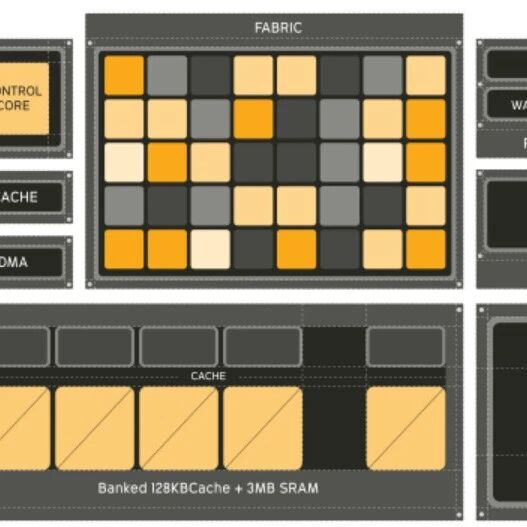
Core Viewpoint - Efficient Computer has developed a general-purpose processor, Electron E1, which claims to be a true alternative to traditional von Neumann architecture, offering significantly higher energy efficiency compared to conventional low-power processors [1][2]. Group 1: Product Features - The Electron E1 processor features a 128kB ultra-low-power cache, 3MB SRAM, and 4MB MRAM for non-volatile storage, achieving 21.6 GOPS at 200MHz in high-power mode and 5.4 GOPS at 50MHz in low-power mode [2]. - The processor utilizes Efficient Fabric, a proprietary spatial data flow architecture, which minimizes the energy consumption typically associated with data movement between memory and processing cores in traditional systems [1][4]. Group 2: Architectural Innovation - The Fabric architecture fundamentally rethinks how computations are executed, reducing the need for data transfer between memory and processing units, a common inefficiency in traditional von Neumann architectures [2][4]. - Each computing unit in the grid is activated only when its input is available, contrasting with the continuous instruction cycles and indirect data transfers typical of traditional CPU pipelines [4]. Group 3: Market Applications - The Electron E1 is particularly suited for applications requiring long battery life and efficient performance in power-constrained environments, such as drones and industrial sensors, indicating the company's aim to integrate AI into the physical world [5]. - Efficient is collaborating with BrightAI for the initial deployment of Electron E1, enabling real-time AI computations at the edge and reducing reliance on high-energy cloud computing for tasks like signal processing and AI inference [5]. Group 4: Development and Future Outlook - Efficient recently released an evaluation kit (EVK) for early developers and cloud users, providing a ready-to-use platform for creating, testing, and optimizing software for the processor [6]. - The founding team of Efficient has a decade-long research collaboration with Carnegie Mellon University, positioning the company to lead the transition to a post-von Neumann era of general-purpose computing that is faster and more energy-efficient than current market offerings [6].
非GPU赛道,洗牌
半导体行业观察· 2025-12-20 02:22
Core Viewpoint - The rise of non-GPU chip forces is unstoppable, indicating a significant shift in the global computing power industry, traditionally dominated by NVIDIA GPUs [1][6]. Group 1: Recent Developments in the Computing Power Industry - Shanghai's leading GPU company, Muxi Co., recently listed on the STAR Market, with its stock price surging by 687.79% to a market cap of 329.88 billion yuan [1]. - Google’s TPU has secured orders worth over 100 billion yuan, breaking the GPU monopoly in the computing power market, while Broadcom's CEO revealed a total order of 21 billion USD (approximately 148.6 billion yuan) from Anthropic [2]. - In China, the computing power industry is also heating up, with AI chip company Qingwei Intelligence securing over 2 billion yuan in financing, supported by a rare investment lineup [2]. Group 2: Market Trends and Dynamics - The global computing power market is experiencing a transformation, with the long-standing NVIDIA GPU monopoly beginning to loosen [2][6]. - The demand for general computing power has led to NVIDIA GPUs dominating the market, but alternatives like Google’s TPU and Amazon’s Trainium3 are starting to replace GPUs in specific scenarios [2][8]. - By the first half of 2025, non-GPU computing cards are expected to account for 30% of the domestic market [2]. Group 3: Investment Movements - Intel is reportedly planning to acquire AI chip unicorn SambaNova for 1.6 billion USD (approximately 11.29 billion yuan) to regain competitiveness in the AI era [3]. - Non-GPU unicorn Groq has raised over 3 billion USD (approximately 21.3 billion yuan) in funding over the past two years [3]. Group 4: Industry Structure and Future Directions - The computing power industry is expected to face path differentiation, driven by demand, technology, and ecosystem development [8][10]. - The need for efficient computing solutions is pushing companies to seek alternatives to the traditional GPU-centric model, especially as AI applications diversify across various industries [8][9]. - The traditional von Neumann architecture is facing challenges, necessitating architectural innovations to overcome performance limitations [9]. Group 5: Non-GPU Market Growth - Gartner predicts that by 2027, the demand for AI inference applications will lead to AI accelerators (typically non-GPU AI-specific chips) surpassing GPU shipments [16]. - In the first half of this year, China's non-GPU chip market has shown significant growth, with projections indicating a market share of nearly 50% by 2028 [16]. Group 6: Domestic Chip Companies and Their Strategies - Key players in the domestic non-GPU sector include Kunlun Chip, Cambricon, and Qingwei Intelligence, each representing different technological routes [25][29]. - Cambricon and Kunlun Chip focus on ASIC routes, while Qingwei Intelligence emphasizes reconfigurable computing architectures [29][30]. - The ASIC architecture, exemplified by Google’s TPU, offers high performance and efficiency, but requires significant time and resources for customization [30][31]. Group 7: Reconfigurable Computing Advantages - Reconfigurable computing is gaining momentum, addressing the inefficiencies of GPUs and the rigidity of ASICs, thus balancing performance and cost [32][37]. - Qingwei Intelligence's reconfigurable chips have achieved over 30 million units shipped, with significant orders expected in the coming years [32]. - The technology supports efficient inter-chip communication, avoiding bandwidth bottlenecks and communication delays inherent in traditional architectures [33]. Group 8: Conclusion - The AI computing power landscape is evolving towards a diversified and heterogeneous integration, with GPUs maintaining dominance in general-purpose applications while non-GPU routes rapidly rise in AI inference and specialized computing needs [39][41].

收紧!台积电出口禁令或将升级
半导体行业观察· 2025-12-20 02:22
Core Viewpoint - Taiwan is considering new export regulations that would restrict TSMC from exporting technologies that are more advanced than two generations behind its leading-edge processes, potentially slowing TSMC's expansion in the U.S. market [1][3]. Group 1: New Export Policy - The new export policy is based on the government's "N-2 rule," which allows only the export of technologies that are two generations behind Taiwan's leading technology. This is a shift from the previous "N-1 rule," which permitted exports of technologies at least one generation behind [3]. - Under the new rule, if TSMC develops a 1.2nm or 1.4nm manufacturing process, only its 1.6nm products would qualify for export [3]. Group 2: TSMC's Manufacturing Capabilities - TSMC's Fab 21 in Arizona can currently produce chips using N4/N5 processes, while in Taiwan, TSMC has multiple fabs capable of 3nm manufacturing and is set to begin mass production of 2nm chips [4]. - Although Fab 21 currently meets the N-2 rule, future production using 3nm processes at the second phase of Fab 21 may not comply with the new regulations, as 3nm is only one generation behind [4]. Group 3: R&D and Workforce - A significant portion of TSMC's R&D personnel remains in Taiwan, ensuring that future process developments are rooted locally, despite the company's overseas capacity and R&D centers [4]. - The concentration of engineers and scientists in Taiwan is seen as a protective measure for intellectual property and human capital in the semiconductor industry [4]. Group 4: Investment Scrutiny - Any future investments by TSMC in the U.S. will be subject to current legal reviews, with projects exceeding certain thresholds requiring scrutiny by an investment committee [5].
万字拆解371页HBM路线图
半导体行业观察· 2025-12-19 09:47
Core Insights - The article emphasizes the critical role of High Bandwidth Memory (HBM) in supporting AI technologies, highlighting its evolution from a niche technology to a necessity for AI performance [1][2][15] - A comprehensive roadmap for HBM development from HBM4 to HBM8 is outlined, indicating significant advancements in bandwidth, capacity, and efficiency over the next decade [15][80] Understanding HBM - HBM is designed to address the limitations of traditional memory types, such as DDR5, which struggle to meet the high data transfer demands of AI applications [4][7] - The architecture of HBM utilizes a 3D stacking method, significantly improving data transfer efficiency compared to traditional flat layouts [7][8] HBM Advantages - HBM offers three main advantages: superior bandwidth, reduced power consumption, and compact size, making it essential for AI applications [11][12][14] - For instance, training a model like GPT-3 takes 20 days with DDR5 but only 5 days with HBM3, showcasing the drastic difference in performance [12] HBM Generational Upgrades - HBM4, expected in 2026, will introduce customizable base dies to enhance memory performance and capacity, addressing mid-range AI server needs [17][21] - HBM5, anticipated in 2029, will incorporate near-memory computing capabilities, allowing memory to perform calculations, thus reducing GPU wait times [27][28] - HBM6, projected for 2032, will focus on high throughput for real-time AI applications, with significant improvements in bandwidth and capacity [32][35] - HBM7, set for 2035, will integrate high-bandwidth flash memory to balance high-speed access with large storage needs, particularly for multimodal AI systems [41][44] - HBM8, expected in 2038, will feature full 3D integration, allowing seamless interaction between memory and GPU, crucial for advanced AI applications [49][54] Industry Landscape - The global HBM market is dominated by three major players: SK Hynix, Samsung, and Micron, which collectively control over 90% of the market share [81][84] - The demand for HBM is projected to grow significantly, with the market expected to reach $98 billion by 2030, driven by the increasing need for high-performance computing in AI [80] Future Challenges - The HBM industry faces challenges related to cost, thermal management, and ecosystem development, which must be addressed to facilitate widespread adoption [86] - Strategies for overcoming these challenges include improving yield rates, expanding production capacity, and innovating cost-reduction technologies [86]