国家能源局

Search documents
2025年我国风电太阳能发电新增装机超4.3亿千瓦 再创历史新高
国家能源局· 2026-02-12 02:47
Core Viewpoint - In 2025, China's wind and solar power generation will achieve significant advancements, with a total installed capacity exceeding 430 million kilowatts, marking a historical high and a year-on-year growth of 22.0% [2] Group 1: Installed Capacity Growth - The newly added installed capacity for wind power will reach 120 million kilowatts, while solar power will contribute 318 million kilowatts [2] - Cumulative installed capacity for wind and solar power will reach 1.84 billion kilowatts, accounting for 47.3% of total capacity, surpassing thermal power for the first time [2] Group 2: Renewable Energy Consumption - The "green content" of electricity consumption continues to improve, with wind and solar power generation increasing by 25% year-on-year, contributing to a 22% share of total electricity generation [2] - The share of renewable energy in total electricity generation will approach 40%, driven by the growth in wind and solar power [2] Group 3: Development Achievements - Since the 14th Five-Year Plan, the development speed of new energy represented by wind and solar has been unprecedented, with cumulative installed capacity reaching 3.4 times that of the end of 2020 [2] - The contribution of the energy transition has become increasingly prominent, with the share of electricity generation from renewables increasing by over 12 percentage points [2] - The successful completion of the 14th Five-Year Plan's targets lays a solid foundation for achieving carbon peak by 2030 and the self-contribution goals by 2035 [2]

2025年可再生能源并网运行情况
国家能源局· 2026-02-12 02:47
Core Viewpoint - The article emphasizes the rapid growth and significant achievements in renewable energy in China, highlighting the country's commitment to carbon neutrality and the development of a robust renewable energy system by 2025 [2]. Group 1: Renewable Energy Capacity - The installed capacity of renewable energy has reached a new high, with over 60% of total capacity coming from renewable sources. Wind and solar power alone contributed over 430 million kilowatts of new capacity, surpassing thermal power for the first time [3]. - By the end of 2025, the total installed capacity of renewable energy is expected to reach 2.34 billion kilowatts, a 24% increase year-on-year, accounting for approximately 60% of the total installed power capacity in the country [3]. Group 2: Renewable Energy Generation - The generation of renewable energy continues to grow, with nearly 40% of total electricity consumption coming from green energy. In 2025, renewable energy generation is projected to be 3.99 trillion kilowatt-hours, a 15% increase year-on-year, representing 38% of total electricity generation [4]. - The increase in renewable energy generation has fully covered the growth in overall electricity consumption, with new renewable energy generation reaching 519.3 billion kilowatt-hours [4]. Group 3: Hydropower - In 2025, the newly added hydropower capacity is 12.15 million kilowatts, with a total installed capacity of 450 million kilowatts by the end of the year [5]. - The hydropower generation is expected to reach 1.46 trillion kilowatt-hours, with an average utilization of 3,367 hours for large-scale hydropower plants [5]. Group 4: Wind Power - Wind power capacity saw a significant increase, with 120 million kilowatts added in 2025, marking a 51% year-on-year growth. The total installed wind power capacity reached 640 million kilowatts by the end of the year [6]. - Wind power generation is projected to be 1.13 trillion kilowatt-hours, reflecting a 13% increase, with an average utilization rate of 94% [6]. Group 5: Solar Power - Solar power capacity increased by 317 million kilowatts in 2025, a 14% year-on-year growth, with total installed capacity reaching 1.2 billion kilowatts [7]. - Solar power generation is expected to be 1.17 trillion kilowatt-hours, a 40% increase, with an average utilization rate of 95% [8]. Group 6: Biomass and Thermal Power - Biomass power saw an addition of 151,000 kilowatts in 2025, with a total installed capacity of 4.743 million kilowatts, and generation reaching 224.7 billion kilowatt-hours, a 7% increase [8]. - Thermal power capacity increased significantly, with 940,000 kilowatts added, resulting in a total capacity of 1.82 million kilowatts and generation of 1.6 billion kilowatt-hours, a 32% increase [8].
李强主持国务院第十八次专题学习
国家能源局· 2026-02-11 14:51
李强指出,要深刻认识和把握人工智能发展态势,推动人工智能全链条突破、全场景落地,更大释放发展潜能。要持续夯 实技术底座,推进算法创新,加大高质量数据供给,提升大模型性能,前瞻布局新技术新路径。要大力推进规模化商业化 应用,促进人工智能终端和服务消费,建设人工智能应用中试基地,发展壮大智能体产业,拓展更多高价值应用场景。要 加快培育产业生态,优化智算资源布局,加大数、算、电、网等资源协同,推进软硬件适配,形成产业链上下游贯通发展 的格局。要积极推动开放合作,扩大国际技术交流和应用开发,构建开源技术体系和开源社区。要坚持统筹发展和安全, 加强人工智能治理,完善相关法律法规、政策制度、应用规范、伦理准则,为人工智能应用筑牢安全保障。 李强强调,实施好"人工智能+"行动,需要充分激发全社会的活力和创造力。要构建开放包容的发展环境,支持企业锐意创 新、积极探索,让新生事物在市场竞争中孕育壮大。要强化公共服务和要素保障,破除体制机制障碍,帮助企业解决实际 困难。要加强人才培养使用,尤其要造就一批优秀的复合型人才,为推进"人工智能+"提供有力支撑。 (来源:新华社) 2月11日,国务院以深化拓展"人工智能+"、全方位赋能千 ...

能源开新局丨国家能源局总工程师刘德顺:谱写“十五五”高水平能源科技自立自强新篇章
国家能源局· 2026-02-11 11:19
Core Viewpoint - The article emphasizes the importance of advancing energy technology and innovation during the "14th Five-Year Plan" period to establish a strong energy nation and achieve high-quality development in the energy sector [4][5][6]. Group 1: Strategic Goals and Framework - The "14th Five-Year Plan" outlines the strategic task of building an energy powerhouse, aiming to establish a new energy system by the end of the period [5][6]. - The focus will be on enhancing the overall effectiveness of the energy technology innovation system and optimizing the energy industry [8]. Group 2: Key Initiatives and Actions - The article highlights three critical areas for energy technology innovation: strengthening original innovation, promoting the integration of technology and industry, and developing new production capacities tailored to local conditions [6][8]. - Specific actions include advancing major technological equipment, implementing national technology projects, and promoting energy efficiency improvements [9]. Group 3: Future Directions and Challenges - The energy sector faces both opportunities and challenges, including the need for green and low-carbon technology innovations and the integration of artificial intelligence into energy production and consumption [7][8]. - The article stresses the importance of maintaining a competitive edge in global energy technology through disruptive innovations and strategic planning [7].
2025年全国油气勘探开发十大标志性成果
国家能源局· 2026-02-11 11:09
Core Insights - The article highlights the significant achievements in oil and gas exploration and development in China, with record production levels and strategic advancements in various regions by 2025 [3][4][5][6][7][8][9][10][11][12][13][14] Group 1: National Production Achievements - In 2025, domestic crude oil production reached 216 million tons, a historical high, while natural gas production exceeded 260 billion cubic meters, marking a significant milestone with a total equivalent production surpassing 200 million tons [3] - The cumulative newly proven geological reserves of oil and gas from 2019 to 2025 exceeded 10 billion tons and 10 trillion cubic meters, respectively, reinforcing the foundation for sustained production [3] Group 2: Regional Developments - The Ordos Basin achieved an oil and gas equivalent production of over 100 million tons in 2025, with crude oil production stabilizing at 38 million tons and natural gas production nearing 80 billion cubic meters [4] - The Sichuan Basin's natural gas production surpassed 80 billion cubic meters, contributing over 40% to the national total, with shale gas production around 27 billion cubic meters [5] Group 3: Marine Oil and Gas Production - Marine crude oil production exceeded 66 million tons, with natural gas production around 30 billion cubic meters, leading to a total marine oil and gas equivalent production of 90 million tons [6][7] Group 4: Shale Oil Development - By 2025, three national-level shale oil demonstration zones were established, significantly enhancing production capacity and supporting the national crude oil output [8] Group 5: Deep Earth Exploration - Major advancements in deep earth exploration were reported, with significant drilling achievements in the Tarim Basin, including the first discovery of oil and gas at depths exceeding 10,000 meters [9] Group 6: Technological Innovations - The industry is advancing towards high-end technology with the development of core equipment for exploration and production, including the first domestically produced high-precision seismic source and automated drilling rigs [10] Group 7: Intelligent Operations - China National Offshore Oil Corporation's "Deep Sea One" project is leading in digital transformation, becoming a model for intelligent operations in deep-water oil and gas production [11] Group 8: Clean Energy Integration - Sinopec's Victory Oilfield has innovated a clean energy utilization model, achieving significant energy savings and promoting the integration of geothermal energy with oil and gas production [12][13] Group 9: Green Transformation Initiatives - The "Honggang Model" developed by China National Petroleum Corporation in Jilin Oilfield demonstrates a successful path for green transformation, significantly increasing oil production while reducing carbon emissions [14]



国务院办公厅关于完善全国统一电力市场体系的实施意见
国家能源局· 2026-02-11 09:59
国务院办公厅关于完善全国统一电力市场体系的实施意见 国办发〔2026〕4号 各省、自治区、直辖市人民政府,国务院各部委、各直属机构: 为进一步深化电力体制改革,加快健全适应新型能源体系的市场和价格机制,完善全国统一电力市 场体系,在全国范围内有效实现电力资源市场化配置,经国务院同意,现提出以下意见。 一、总体要求 以习近平新时代中国特色社会主义思想为指导,深入贯彻党的二十大和二十届历次全会精神,完整 准确全面贯彻新发展理念,按照构建全国统一大市场、深化电力体制改革、建设新型电力系统要 求,坚持全国统一、畅通循环,着力打破市场分割、破除区域壁垒,促进市场高效联通和有机衔 接,统筹推动电力市场供需高水平动态平衡,着力扩大规模、改善结构、拓展功能,健全统一开 放、竞争有序、安全高效、治理完善的电力市场体系,在确保电力系统安全可靠运行的基础上,实 现市场运行畅通有序、交易规则统一高效、利益分配公平合理,为保障能源安全、经济社会发展和 绿色低碳转型提供有力支撑。 到2030年,基本建成全国统一电力市场体系,各类型电源和除保障性用户外的电力用户全部直接参 与电力市场,市场化交易电量占全社会用电量的70%左右。跨省跨区和省 ...

习近平总书记向全国各族人民拜年!
国家能源局· 2026-02-10 13:15
习近平总书记向全国各族人民拜年! 中华民族传统节日春节即将到来之际, 习近平总书记在北京考察并看望慰问基层干 部群众,向全国各族人民和香港同胞、澳门 同胞、台湾同胞、海外侨胞拜年!祝愿海内 外中华儿女在农历马年龙马精神、身体健 下 申 申 申 申 申 申 申 申 申 申 申 申 申 (来源:新华社、中国新闻网) 点击 关注 ...
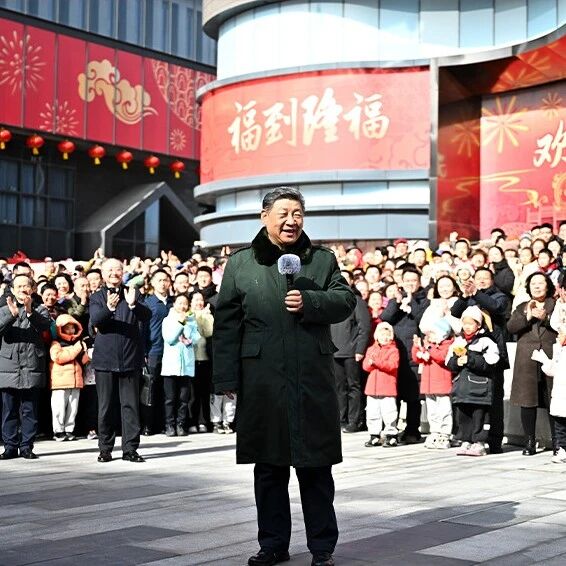
习近平春节前夕在北京看望慰问基层干部群众 向全国各族人民致以美好的新春祝福
国家能源局· 2026-02-10 13:15
Core Viewpoint - The article highlights Xi Jinping's visit to Beijing before the Spring Festival, emphasizing the importance of grassroots support, technological innovation, and social welfare, particularly in elderly care and community services [2][3][5][6]. Group 1: Technological Innovation - Xi Jinping visited the National Information Innovation Park, focusing on advancements in information technology, artificial intelligence, and robotics, expressing confidence in China's technological self-reliance [2]. - He encouraged technology workers to cultivate a sense of patriotism and contribute to the modernization of China through innovation [2]. Group 2: Elderly Care Services - The "Wu Lao·Xin Jie" elderly care service area has implemented barrier-free and age-friendly renovations, providing diverse services for the elderly [3]. - Xi Jinping visited a community dining hall, inquiring about meal services for the elderly and emphasizing the societal responsibility to respect and assist the elderly [3]. - He also engaged with elderly individuals participating in cultural activities, promoting the idea of active aging and well-being [3]. Group 3: Community Engagement and Cultural Heritage - During his visit to the Spring Festival market, Xi Jinping interacted with citizens, sharing personal anecdotes and purchasing local specialties, which reflects the cultural significance of the festival [4][5]. - The lively atmosphere of the market and community celebrations was highlighted, showcasing the importance of cultural traditions in fostering community spirit [5]. Group 4: Urban Development and Governance - Xi Jinping acknowledged the achievements of Beijing's municipal government and emphasized the need for strategic urban development aligned with national modernization goals [6]. - He stressed the importance of high-quality development, urban governance, and public safety, advocating for a comprehensive approach to city management that includes disaster preparedness and environmental sustainability [7][8].

国家能源局赴12398能源监管热线中心召开春节期间民生用能保障等工作座谈会
国家能源局· 2026-02-10 12:37
宋宏坤一行实地查看了12398热线中心工作现场,听取了 12398热线投诉举报 新制度 实施一年来 投诉举报处理情况的汇报, 就做好春节期间民 生用能保障、 12398热线投诉举报等工作,与国家能源局相关司、部分派出机构和电网企业有关负责同志进行深入座谈交流。 宋宏坤指出, 12398热线是国家能源局联系群众、服务民生的 重要 窗口 。 12398热线 新制度 运行 一年以来,总体运转 平稳有效 ,投诉举报办 理 效能显著提 升 , 民生纽带 作用 有效巩固 , 热线的公信力和社会认可度 进一步增强。 下一步,各单位 要深入研究制度运行中的堵点难点 , 不断健全投诉处理机制,优化投诉工作流程,推动制度运行更加规范;要坚持和发展新时代 "枫桥经验",不断提升基层治理水平,着力强化投诉处 理质效;要强化科技赋能,积极推进大数据、人工智能等技术应用,提升热线服务智能化水平。 宋宏坤强调,各单位要 充分认识春节期间做好保暖保供工作的重要意义,对于人民群众的用能诉求,要 加强服务引导,优化人员配置, 提高处理 效率,提升工作质量, 着力解决好人民群众用能急难愁盼问题 ; 要进一步完善应急预案,提高应急处置能力 , 加强 ...
能源强国建设“大家谈”︱国家能源集团:坚定不移担当能源强国建设主力军
国家能源局· 2026-02-10 07:05
Core Viewpoint - The article emphasizes the strategic importance of building an energy powerhouse in China, highlighting it as essential for national security, high-quality development, and international competitiveness in the evolving global energy landscape [3][4][6]. Group 1: Importance of Energy Powerhouse - Energy is a crucial material foundation and driving force for economic and social development, recognized as a "national priority" [4]. - The goal of building an energy powerhouse was first proposed in the 2021 Central Economic Work Conference and has since been integrated into national planning, reflecting a deep understanding of energy development dynamics [4][5]. - The construction of an energy powerhouse is seen as a core foundation for national security, aiming to create a self-sufficient and efficient energy supply system to ensure stability in economic and social operations [4][5]. Group 2: Dimensions of Energy Powerhouse Construction - The construction of an energy powerhouse is viewed as a transition from "scale expansion" to "quality and efficiency" in energy development, focusing on a shift from high-carbon to clean and low-carbon energy [5][6]. - It is essential to enhance security capabilities, green development, innovation-driven growth, energy service capabilities, and international influence to effectively respond to global energy challenges [6][7]. Group 3: Role of State-Owned Enterprises - The State Energy Group is committed to leading the construction of an energy powerhouse, aligning with the spirit of the 20th National Congress and subsequent meetings [7][8]. - The company aims to strengthen political leadership, ensure safety in energy supply, and promote green and low-carbon transitions while enhancing innovation and international cooperation [8][9][10]. Group 4: Future Directions and Goals - The company plans to build a modern energy system by 2030, focusing on energy security, green transformation, technological innovation, and institutional reforms [11]. - The commitment to international cooperation and risk management is emphasized, with a focus on enhancing core competitiveness in global energy markets [10][11].