声动活泼

Search documents
潮流中起伏的雪地靴品牌 UGG,离「增长永动机」还有多远? | 声动早咖啡
声动活泼· 2026-02-04 09:04
Core Viewpoint - UGG has successfully transformed from a seasonal winter brand to a year-round fashion staple, leveraging trends and strategic marketing to regain market relevance and drive sales growth [3][7][12]. Group 1: Brand History and Development - UGG originated in Australia as a type of sheepskin boot, gaining popularity in the 1970s among surfers for its warmth and moisture-wicking properties [4]. - The brand was founded in the U.S. by Brian Smith in 1978, who recognized the potential market in the U.S. compared to Australia [4][5]. - UGG was sold to Deckers Outdoor Corporation in 1995 for approximately $15 million, which helped expand its market presence through significant marketing investments [6]. Group 2: Marketing and Brand Positioning - Deckers invested millions in marketing UGG, transforming it into a fashionable brand, especially after endorsements from celebrities like Oprah Winfrey and Beyoncé [6][7]. - The brand faced challenges in the early 2010s due to declining sales and competition from counterfeit products, leading to a perception of being outdated [7][12]. - UGG's resurgence during the COVID-19 pandemic was driven by increased demand for comfortable footwear, with sales rising nearly 13% year-over-year by March 2021 [7][8]. Group 3: Product Strategy and Innovation - UGG has adapted its product offerings to include various styles beyond winter boots, such as sandals and clothing, aiming to become a year-round brand [14]. - The brand has focused on appealing to younger consumers by embracing Y2K fashion trends and collaborating with independent designers [9][10]. - Deckers has implemented a strategy to enhance brand exclusivity by limiting distribution channels and managing inventory more strictly [10][11]. Group 4: Market Challenges and Future Outlook - Despite recent growth, UGG is projected to experience moderate single-digit revenue growth in the 2026 fiscal year, a slowdown compared to previous double-digit growth [12]. - The brand faces ongoing challenges from counterfeit products and a consumer culture that favors cheaper alternatives, which could impact its market share [13]. - UGG's reliance on seasonal sales remains significant, with 50% of annual revenue generated during the winter months [14].



塔利班关闭学校之后,阿富汗女孩的四年|声东击西
声动活泼· 2026-02-03 11:29
过去一周,一则关于「阿富汗永久禁止女性上学」的消息在国内互联网上被广泛地传播、讨论。但事实 上,这并非什么「新政」,而是一则由不同的来源拼接而成的「旧闻」。 但这则消息背后依然有令人心碎的真相: 从 2021 年 9 月开始,随着塔利班关闭了国内的女子中学和大学, 阿富汗就已经成为了全球唯一一个禁止女性接受高等教育的国家。220 万个本该在教室里读书的女孩,被迫 留在了围墙之内。 这些被残忍剥夺了教育权的女孩在过去四年多的时间里都过着怎样的生活?她们的未来又通向何处? 其实从去年十月开始,我们就在尝试通过北京探月学校的一个线上项目去和阿富汗的女孩取得联系,并最 终在十二月和两位阿富汗女孩 —— 17 岁的 Qudsia 和 20 岁的 Razia 进行了一次远程通话。 在对话中,我们进入了她们的人生,并试图去理解, 当一个女孩的未来被政策性地「抹除」,当受教育的 权利从一种理所当然的日常,变成了一种需要去「潜行」和「争夺」的稀缺资源时,一个女孩要如何在重 重阻碍中,为自己重新搭建一个未来的可能性。 以下是两位女孩的讲述。 本文整理自播客「声东击西」第 378 期 本期人物: Razia,生活在喀布尔的阿富汗女 ...

「抠出」极致性价比的萨莉亚,为何今天在中国市场也难赚钱了? | 声动早咖啡
声动活泼· 2026-02-02 09:06
Core Viewpoint - The article discusses the challenges faced by Salia, a popular low-cost Western restaurant chain in China, as it experiences a slowdown in growth despite its historical success and cost-cutting strategies [3][6][11]. Group 1: Company Background and Growth - Salia was founded in the late 1960s in Japan, initially struggling with high prices and low customer traffic until it adopted a low-cost model, which became its brand identity [4]. - The company expanded into China in 2003, quickly growing its presence in major cities like Shanghai and Beijing, capitalizing on the demand for affordable Western dining [5][6]. - In the 2023 fiscal year, Salia reported a nearly 30% increase in overall revenue, with the Chinese market contributing about 80% of its overseas earnings [6]. Group 2: Recent Challenges - Despite previous growth, Salia's revenue in China only increased by 6.3% in the 2025 fiscal year, with significant profit declines in major cities like Beijing, Shanghai, and Guangzhou [6][9]. - The company has faced rising operational costs, leading to price increases on menu items, which have eroded its competitive pricing advantage [7][8]. - The saturation of the market in first-tier cities has resulted in intense competition among Salia's own stores, negatively impacting profitability [9][11]. Group 3: Market Dynamics - The Chinese restaurant industry is experiencing a slowdown, with the market size expected to grow only 3.5% by 2025, significantly lower than previous years [10]. - Salia's reliance on external suppliers in China contrasts with its successful vertical supply chain in Japan, limiting its ability to control costs and quality [10]. - The rise of new competitors offering similar value propositions has intensified the competitive landscape, challenging Salia's market position [11].

请回答「Knock Knock 世界」NO. 260201
声动活泼· 2026-02-01 13:11
以下文章来源于十分之一信箱 ,作者十分之一编辑部 十分之一信箱 . 与少年读者一起阅读、交流正在发生的大事件。 朋友们,周日好。二月的第一天,南方的同学们应该也已经考完试,正式进入假期了吧?你们都在哪里玩呢?如果你那儿下雪了,别忘了把好奇心团成一个雪球丢 给「Knock Knock 世界」。 人类究竟应该怎么活着? A:多亏假期赋予我们的闲暇,可以思考这些问题。 假如 AI 有了意识会发生什么? A:会不会思考自己究竟应该怎么「活着」? 为什么特朗普对格陵兰岛感兴趣?美国怎么能随便说要将某个地区纳入美国? 美国为什么想占领格陵兰?丹麦人有没有反抗? A:其实我们第 8 期《雪橇犬被裁员、特朗普想占岛,格陵兰岛正面临哪些危机》就讲过特朗普想要占 有格陵兰岛的原因。不过这一次少年听友们在「为什么」之外又提出了角度不一的问题,很有意思。感 觉我们可以接着写。 梵蒂冈是以欧洲最小的国家,连它的卫队都只有一百多人,他凭什么能存活在战火 纷飞的欧洲大陆上到了科技发达,现代教会仍然手握重权? 我知道中国的很多历史,但元朝时期算是中国的吗? 最近总是能听说欧洲非洲等地频发蝗灾,可为什么自从古代以来就一直在频发的中国近些年都没 ...
频繁推出山姆同款,沃尔玛调整自有品牌沃集鲜有何目的? | 声动早咖啡
声动活泼· 2026-01-30 09:04
Core Viewpoint - Walmart's private label brand "Wojixian" is rapidly expanding, introducing nearly a thousand new products, and is increasingly resembling products from its subsidiary Sam's Club, raising questions about brand differentiation and internal competition [3][4][12]. Group 1: Brand Development and Strategy - Wojixian was launched in 2019 as Walmart China's private label and initially had only a few dozen products, but has since entered a phase of rapid expansion [3][5]. - The brand's strategy includes offering products similar to popular items from Sam's Club, such as snacks and beverages, but with adjustments in flavor, specifications, and pricing [4][6]. - Walmart aims to attract middle-class families and single consumers by providing lower-priced alternatives to Sam's Club products [6][12]. Group 2: Market Performance and Challenges - Walmart China reported a nearly 22% year-on-year increase in net sales, with Sam's Club experiencing double-digit growth, while Walmart supermarkets are facing a decline in store numbers, dropping from 420 in 2019 to under 280 by the end of last year [5][8]. - The shift in consumer preferences from low prices to value-for-money has pressured traditional hypermarkets, prompting Walmart to innovate its store formats and product offerings [5][6]. - Wojixian's product offerings are based on high-frequency, high-demand items that have been validated within the Sam's Club ecosystem, indicating a strategic alignment with successful market trends [8][10]. Group 3: Competitive Landscape - The overlap in product offerings between Wojixian and Sam's Club may dilute the unique value proposition of Sam's Club, which is built on exclusivity and high quality [12][13]. - Consumer feedback suggests that while Wojixian offers lower-priced alternatives, there are concerns regarding the quality and taste compared to Sam's Club products, which could impact long-term brand loyalty [13][12]. - The shared supply chain between Walmart and Sam's Club allows Wojixian to leverage established suppliers, reducing costs and improving product quality control [10][11].


F1 赛事迎来凯迪拉克和奥迪,主流车企为何纷纷入局 F1? | 声动早咖啡
声动活泼· 2026-01-28 09:03
Core Viewpoint - The article discusses the transformation of Formula 1 (F1) from a "money-burning black hole" to an attractive platform for major automotive manufacturers, highlighting the reasons behind their return to the sport after previous exits [3]. Group 1: Reasons for Automotive Manufacturers Leaving F1 - After 2000, the budget and scale of F1 teams ballooned, becoming a financial burden for manufacturers, with top teams spending up to hundreds of millions of dollars annually [5]. - For instance, Toyota's annual budget in F1 reached $400 million, yet they never won a race, which made it difficult for them to justify such spending during financial downturns [5]. - The FIA has warned about the unsustainable "arms race" in F1, leading to several manufacturers exiting the sport during economic crises [5]. Group 2: Evolution of F1 Technology and Its Impact - Many technologies used in consumer vehicles originated in F1, but the gap between F1 and consumer car technology has widened due to the complexity and high costs of modern F1 cars [6][7]. - F1's strict regulations on technology have stifled innovation that could benefit consumer vehicles, with some executives stating that F1 lacks relevance to the consumer market [7]. Group 3: Recent Trends in F1 Attracting Manufacturers - In recent years, more automotive manufacturers are rejoining F1, driven by new engine regulations that increase the electrification of racing, aligning with the industry's shift towards electric vehicles [8]. - Honda's return to F1 is motivated by the opportunity to develop engineers with expertise in electrification, while Audi sees the enhanced electric systems in F1 as a key factor for their participation [8]. Group 4: Financial Changes in F1 - F1 has introduced a "budget cap" to limit team spending to around $140 million, making participation more financially manageable and increasing competitiveness among teams [9]. - This budget cap contrasts sharply with previous seasons where top teams spent over $440 million, allowing for a more sustainable financial environment [9]. Group 5: Growing Popularity and Financial Valuation of F1 - The popularity of F1 has surged, particularly among younger audiences, partly due to media portrayals like Netflix's "Drive to Survive," which has attracted over 300 brands for sponsorship since 2020 [10]. - The average valuation of F1 teams is projected to reach $3.6 billion by 2025, reflecting a nearly 90% increase from 2023, indicating a shift in the financial landscape of the sport [10].

缺雪的南方城市,为何滑雪场生意越来越热闹? | 声动早咖啡
声动活泼· 2026-01-26 09:05
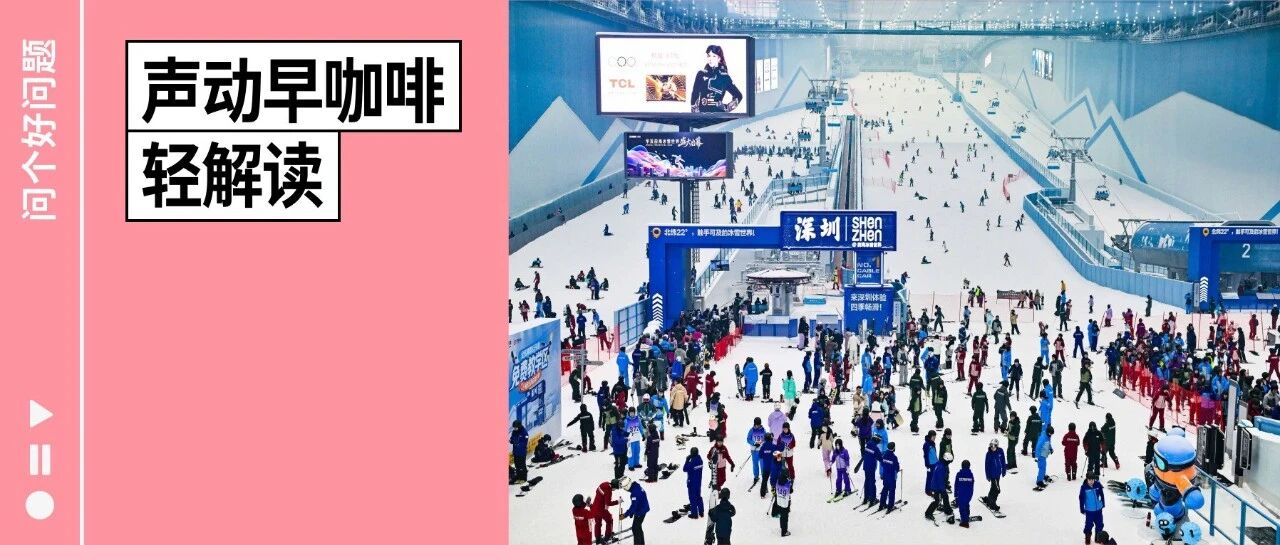
Core Viewpoint - The article discusses the rapid growth of the indoor snow sports economy in southern China, highlighting how cities with little to no snowfall are becoming significant players in the ice and snow consumption market, driven by strong consumer spending power and innovative facility designs [4][5][6]. Group 1: Market Growth and Consumer Trends - Southern cities are emerging as active participants in the ice and snow economy, with over 563 million visits to indoor snow venues in 2024-2025, accounting for over 21% of total visits nationwide [4]. - The largest indoor ski resort, Shenzhen Qianhai Ice and Snow World, opened in September last year, attracting over 5,000 visitors daily within six months of operation [4]. - The target demographic includes affluent parents, with 19% of ice and snow consumers being families, as skiing is seen as a valuable investment in children's development [6]. Group 2: Economic Structure and Spending Patterns - The primary expenses in the ice and snow sector include ticket prices, which are around 420 yuan for four hours, and coaching fees ranging from 200 to 600 yuan per hour [5]. - Indoor ski resorts are integrated into larger commercial complexes, offering additional attractions such as water parks and hotels, thus enhancing the overall consumer experience [7]. - The trend of combining skiing with other leisure activities is evident, as facilities aim to extend the consumer experience beyond just skiing [8]. Group 3: Operational Challenges and Industry Dynamics - Indoor ski resorts face higher operational costs compared to outdoor resorts, with energy costs potentially accounting for nearly half of total operational expenses [11]. - The investment return period for indoor ski resorts is longer, estimated at 10-15 years, compared to 5-8 years for outdoor resorts [11]. - Despite the growth, some indoor ski resorts have exited the market, indicating the challenges in converting casual visitors into long-term customers [12]. Group 4: Policy and Industry Support - The Chinese government has introduced policies to promote the development of the ice and snow industry, including financial incentives to reduce operational costs for southern venues [9]. - The domestic production of snow equipment is increasing, with over 90% of conveyor belts and more than 60% of snow-making machines now produced locally, which is expected to lower costs [10].
请回答「Knock Knock 世界」NO. 260125
声动活泼· 2026-01-25 10:03
Core Viewpoint - The article discusses various societal issues and trends affecting youth, including the decline of educational institutions, the impact of gaming culture, and the importance of diverse reading materials for children [4][5][6][7][8][10][11]. Group 1: Educational Institutions and Trends - There is a noticeable trend of educational institutions closing down, raising questions about the reasons behind this phenomenon and the increased marketing of tutoring courses [4]. - The article highlights the shift in focus from traditional educational methods to more engaging and interactive learning experiences, as seen in the popularity of podcasts designed for youth [12][14]. Group 2: Youth Behavior and Culture - The normalization of inappropriate language among children during online gaming raises concerns about the lack of control from gaming companies [5]. - The article emphasizes the importance of allowing children to explore different types of literature, suggesting that both illustrated books and text-heavy books can coexist in a child's reading journey [7]. Group 3: Health and Safety Concerns - The tragic incident of a student dying after an extended gaming session underscores the critical importance of heart health and the potential dangers of excessive gaming [11]. - The article also touches on the societal implications of missing children notices found on packaging, prompting discussions about child safety and awareness [6]. Group 4: Podcast Initiative - The "Knock Knock World" podcast is introduced as a platform aimed at engaging youth with global events and diverse perspectives, with a subscription model priced at 365 yuan per year [12][15]. - The podcast is set to launch in March 2026, with a focus on providing fresh content three times a week, indicating a commitment to regular engagement with its audience [12][14].

被调侃「地铁里的骆驼比沙漠还多」,户外品牌骆驼还要面临哪些考验? | 声动早咖啡
声动活泼· 2026-01-23 10:05
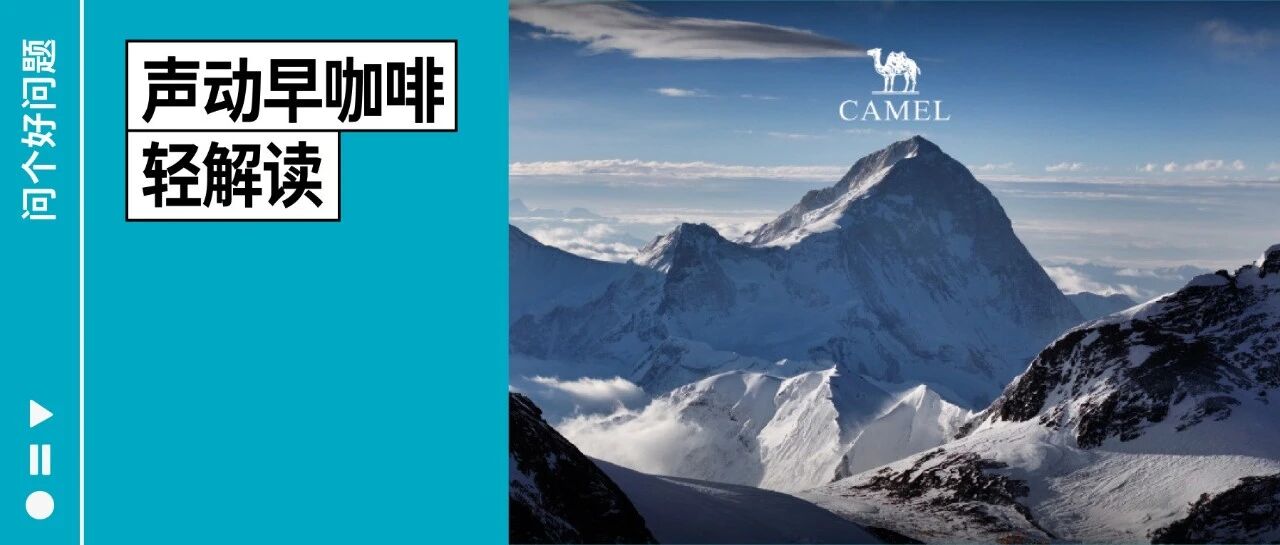
Core Viewpoint - The article discusses the remarkable growth of the Camel brand in the outdoor apparel market, highlighting its transition from a shoe manufacturer to a leading outdoor clothing brand in China, particularly in the casual wear segment [4][5]. Group 1: Sales Performance and Market Position - Camel achieved significant sales milestones, with over 100 million yuan in sales within 30 minutes during the Double Eleven shopping festival, and it ranked first in the domestic outdoor apparel market with sales reaching 5.6 billion yuan in 2024 [4][5]. - The brand's popularity has surged, with a notable presence in urban settings, indicating a shift in consumer behavior towards casual outdoor wear [4][5]. Group 2: Target Market and Consumer Behavior - The outdoor consumer base in China is broad, with a significant portion of buyers seeking stylish and affordable outdoor products rather than high-performance gear [6][7]. - Approximately two-thirds of consumers wearing outdoor jackets do so in everyday settings, with only about 16% using them for hardcore outdoor activities [5][6]. Group 3: Marketing and Brand Strategy - Camel has effectively positioned its products in the mid-to-low price range, with popular items like jackets priced between 400 to 600 yuan, appealing to students and young professionals [7][8]. - The brand has invested heavily in e-commerce and social media marketing, leveraging platforms like Douyin (TikTok) and collaborating with numerous influencers to drive sales [8][9]. Group 4: Challenges and Future Directions - Camel faces challenges in transitioning to a higher-end market segment, as it launched a new sub-brand, Himalaya, targeting professional outdoor activities with prices ranging from 1,000 to 5,000 yuan [11]. - Quality concerns and counterfeit products have emerged as significant issues, with reports of poor product quality and a proliferation of imitation goods in the market [12][13].
曾经依赖经销商的贵州茅台,为何开始加码直销? | 声动早咖啡
声动活泼· 2026-01-21 10:04
Core Viewpoint - Moutai is facing challenges such as price inversion and high inventory, prompting the company to reclaim pricing power through direct online sales channels [3][4][5] Group 1: Market Dynamics - Moutai has historically maintained a high-end image through controlled distribution and pricing strategies, contrasting with competitors like Wuliangye, which diluted its brand through extensive sub-branding [4] - The decline in government and business consumption of liquor has shifted focus towards younger consumers, who prefer other alcoholic beverages like beer and cocktails, leading Moutai to explore new product lines aimed at this demographic [5][8] - The actual market price of Moutai products has seen significant fluctuations, with the price of a bottle of Flying Moutai dropping from 2320 yuan to below 1499 yuan within a year, indicating a broken supply-demand balance [5][6] Group 2: Strategic Adjustments - Moutai has shifted to a direct sales model via its "i Moutai" platform, allowing the company to bypass traditional distributors and directly engage with consumers, thus addressing issues like price inflation and inventory management [5][6] - The company has announced the cessation of forced distribution of non-standard products, aiming to regain pricing authority and focus on best-selling items, which may lead to short-term revenue impacts but is intended to strengthen brand integrity [6][7] - Moutai's product strategy includes a pyramid structure, with Flying Moutai at the base and premium products at the top, enhancing the perceived value of older Moutai products in the collector's market [7] Group 3: Consumer Engagement - The "i Moutai" platform has seen rapid user growth, with over 2.7 million new users registered shortly after the launch of Flying Moutai, indicating a successful strategy to engage consumers and boost sales [7] - Despite efforts to broaden the consumer base, there are concerns about whether ordinary consumers, especially younger ones, will be willing to spend significant amounts on Moutai products, which could dilute the brand's high-end image [8]