日经中文网

Search documents
资金远离日本国债,10年后付息利率增至3倍
日经中文网· 2026-01-20 08:00
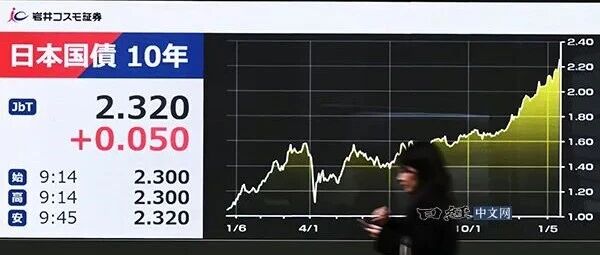
Core Viewpoint - Japan's long-term interest rates are rising, with the 10-year government bond yield reaching 2.27%, leading to concerns about the sustainability of government finances as the cost of servicing debt increases [2][4][5]. Group 1: Government Debt and Interest Rates - The average interest rate on government bonds for the fiscal year 2024 is projected to be 0.75%, but as low-rate bonds mature, new bonds will be issued at market rates, which are expected to be around 2% [2][5]. - Estimates suggest that by 2026, the average interest rate on government debt will exceed 1%, reaching 1.65% by 2030 and 2.16% by 2035, nearly three times the 2024 level [5]. - The Ministry of Finance is cautious about rising interest payments, predicting that by 2028, interest expenses will double from 7.9 trillion yen in 2024 to 16.1 trillion yen [7][8]. Group 2: Economic Implications - The rising interest rates could lead to a deterioration in the ratio of government debt to nominal GDP, which was previously as high as 258% in 2020 [8]. - The nominal GDP is expected to grow at a rate of 2.4% to 2.7% from 2027 to 2035, but if long-term interest rates remain around 2.5%, the gap between nominal growth and government bond rates will narrow [8]. - The current environment of competing tax cuts among political parties may hinder the return of funds to Japanese government bonds, maintaining pressure on fiscal sustainability [8].

日经BP精选——中国车载AI持续进化:人才循环与自主生态
日经中文网· 2026-01-20 02:48
Core Viewpoint - The article discusses the advancements in AI technology within the automotive industry, particularly focusing on China's XPeng Motors and its AI assistant "Xiao P," which enhances user interaction and driving safety through intelligent features [5][6]. Group 1: AI Technology in Automotive - XPeng Motors has developed an AI assistant named "Xiao P," which is designed to be more human-like and understanding, offering features such as demand reasoning, thoughtful reminders, and an encyclopedia function [5]. - The intelligent reasoning capability allows the AI to infer user needs based on voice commands, such as adjusting the air conditioning when a user mentions feeling cold [5]. - The thoughtful reminder feature can provide precise services based on simple instructions, enhancing user experience and convenience [5]. Group 2: Market Differentiation and IT Ecosystem - Chinese automotive manufacturers have been early adopters of AI technology, focusing on creating differentiated human-machine interaction interfaces (HMI) to stand out against foreign competitors [5]. - The development of AI in vehicles is part of a broader strategy to enhance market attention through innovation while advancing electrification [5]. - The unique characteristic of these Chinese automotive AI systems is their continuous upgrade based on a self-sustained IT ecosystem, which includes cloud technology and widely used applications like WeChat [6].


俄罗斯:若美国取得格陵兰将“名留史册”
日经中文网· 2026-01-20 02:48
俄罗斯总统普京(右)与总统新闻秘书佩斯科夫(2025年12月,莫斯科,Reuters) 围绕丹麦自治领地格陵兰岛,欧美之间的对立加剧,俄罗斯对此表示欢迎。俄方高官接连发 表煽动北大西洋公约组织分裂的言论。俄罗斯总统新闻秘书佩斯科夫1月19日称,如果美国总 统特朗普取得格陵兰岛,"将名留世界史"…… 围绕丹麦自治领地格陵兰岛,欧美之间的对立加剧,俄罗斯对此表示欢迎。俄方高官接连发 表煽动北大西洋公约组织(NATO)分裂的言论。俄罗斯总统新闻秘书佩斯科夫1月19日称, 如果美国总统特朗普取得格陵兰岛,"将名留世界史"。 欧美对立,对俄罗斯而言是削弱北约的良机 "跨大西洋联盟的崩塌。终于有了一个值得在达沃斯论坛讨论的话题",1月17日,在特朗普表 示将对反对其取得格陵兰的欧洲8国加征关税后,俄罗斯总统特别代表德米特里耶夫在社交平 台X(原推特)上难掩喜色。 以挑衅性言论著称的俄罗斯联邦安全会议副主席梅德韦杰夫也发文讽刺称,"欧洲国家会以在 北约框架内防务为由,受到关税惩罚"。 围绕格陵兰的对立,对致力于削弱北约的俄罗斯而言是一次良机。试图以武力改变现状将降 低国际社会对美国的信任,也可能成为俄罗斯为其侵乌战争及单方 ...

日本众院选举2月8日投票,高市赌上首相去留
日经中文网· 2026-01-20 02:48
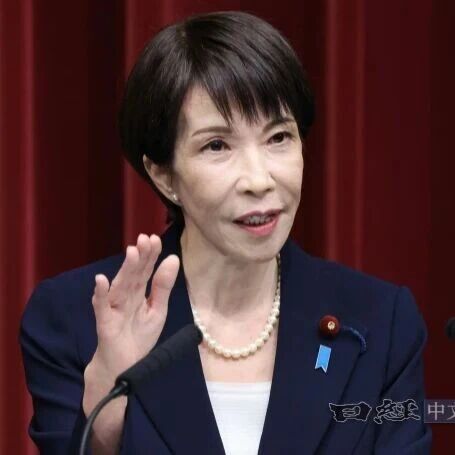
Core Viewpoint - The article discusses the announcement by Japanese Prime Minister Sanae Takaichi regarding the dissolution of the House of Representatives and the upcoming elections, emphasizing the need for political stability to implement fiscal reforms and strengthen diplomatic efforts [2][4]. Group 1: Election Announcement and Goals - Takaichi announced the dissolution of the House of Representatives on January 19, with the election schedule set for January 27 for announcements and February 8 for voting [2]. - The goal for the ruling party is to secure more than half of the seats in the election, with Takaichi stating that her continuation as Prime Minister will depend on the public's decision [4]. - This election marks the first House of Representatives election in over a year since October 2024, with a total of 465 seats contested [5]. Group 2: Fiscal Policies and Budget Implications - Takaichi plans to implement "responsible active fiscal" measures and strengthen security policies, indicating a significant policy shift including new economic and fiscal policies [5]. - The dissolution of the House of Representatives may complicate the passage of the 2026 budget, potentially requiring a temporary budget to be drafted [5]. - Takaichi aims to achieve free high school education and free school meals starting from April 2026, contingent on gaining public trust in the elections [5]. Group 3: Tax and Social Security Reforms - Takaichi mentioned that tax reductions, particularly on consumption tax, are included in the coalition agreement with the Japan Innovation Party, which she personally supports [6]. - She did not specify the sources of funding for these reforms but suggested considering adjustments to subsidies and tax measures [6]. - Takaichi expressed intentions to promote discussions on social security reforms through a bipartisan "National Conference" [6][7]. Group 4: Economic Management and International Relations - Takaichi emphasized the need to lower the debt-to-GDP ratio to ensure fiscal sustainability and market trust [7]. - She criticized excessive austerity and insufficient future investments, stating that such trends would end under her administration [7]. - Regarding Japan-China relations, Takaichi acknowledged the need for continued communication with China while maintaining a focus on national interests [7].
中日对立直击日本百货商场
日经中文网· 2026-01-20 02:48
日经汇总了日本65家上市零售企业2025年12月至2026年2月的营业利润预期,结果百货商场预计利润下 降24%。对于百货商场来说,中国游客一直是购买高档化妆品、手表和珠宝等商品意愿强烈的"优质客 户"…… 中国政府呼吁本国公民避免前往日本的举措正在直击日本百货商场的业绩。6家日本百货商场的2025年 12月~2026年2月营业利润预计将同比下降24%。业内普遍认为,中国游客减少的状况将长期持续,必 须开拓中国以外的客源,并通过加薪带动日本国内消费回暖。 大阪市的黑门市场以往总是挤满海外游客。自中国政府2025年11月中旬呼吁本国公民避免前往日本以 来,中国游客的身影明显减少。东京都内数一数二的旅游景点浅草寺也一样,来自欧美的访日游客十分 引人注目。往年12月~2月正值春节期间,是中国游客扎堆的时期,但今年的景象大不相同。 大阪市中央区的大丸百货心斋桥店 J Front社长小野圭一警惕地表示:"中国呼吁谨慎赴日的影响很可能会长期持续"。中日之间的航班持续 减少,各百货商场对2025年12月~2026年2月的业绩预期持悲观态度。J Front因上年同期有准备金转 回,受其反作用影响,12月~2月的营业利润将同比 ...

中国发往美国的集装箱运量2025年减少8.8%
日经中文网· 2026-01-20 02:48
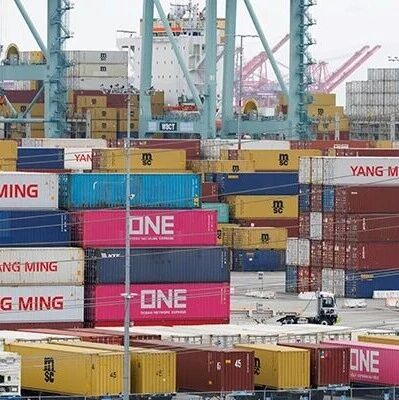
Core Viewpoint - The article highlights a significant decline in container shipments from China to the United States, driven by escalating trade tensions and changing shipping patterns, with Southeast Asian countries like Vietnam experiencing growth in their shipping volumes [2][4][6]. Group 1: Container Shipping Trends - In 2025, container shipments from Asia to the U.S. decreased by 0.6% year-on-year, totaling 19.284 million TEUs [4]. - Shipments from China, which account for over half of the total, fell by 8.8% compared to the previous year [4][6]. - The share of Chinese shipments in the total from Asia to the U.S. dropped to 52.5%, a decrease of 4.7 percentage points from the previous year [6]. Group 2: Regional Performance - Southeast Asia saw an increase in shipping volumes, with Vietnam's shipments rising by 33%, surpassing South Korea to become the second-largest exporter in Asia [6][7]. - Thailand and Malaysia also reported growth in shipments, with increases of 12% and 57%, respectively [6]. Group 3: Impact of Trade Policies - The slowdown in shipments began after the announcement of large-scale reciprocal tariffs by the U.S. in April 2023, with a temporary recovery in May when tariffs were briefly lowered [6]. - However, this recovery was short-lived, leading to a decline in shipments for four consecutive months from September to December, with double-digit negative growth [6]. Group 4: Future Outlook - The demand for Southeast Asian shipping is expected to continue growing as the U.S. shifts its procurement sources away from China [7]. - The overall global container shipping volume is projected to exceed the previous year, with a 5% year-on-year increase reported from January to November 2025 [8]. - Despite the decline in shipments to the U.S., there has been an increase in logistics to Europe, Asia, and Africa [8].
冈部彻:日本应建立可借给盟国的稀土国家储备
日经中文网· 2026-01-19 08:00
Core Viewpoint - Japan's strategies to secure rare earth supplies are ineffective against China's overwhelming price advantage, necessitating significant reserves to mitigate dependency on Chinese exports [2][6]. Group 1: China's Dominance in Rare Earths - China possesses vast reserves of rare earth minerals and low extraction costs, making it the most competitive supplier globally [4]. - Even with high-quality rare earth sources in Australia and the U.S., the cost of transporting and processing in China remains lower, reinforcing China's market position [4]. - China's production of electric vehicles (EVs) has shifted its focus from export markets to domestic consumption, allowing it to impose stricter export controls without economic repercussions [5]. Group 2: Japan's Dependency and Strategies - Japan's reliance on Chinese rare earths has decreased from 90% in 2012 to 70%, but efforts to diversify sources have not yielded significant results [6]. - The Japanese government is advised to maintain reserves equivalent to one year's global demand to support allies in times of need [10]. - Japanese companies have reportedly made adequate preparations for potential supply disruptions from China [10]. Group 3: Recycling and Alternatives - Recycling rare earths in Japan is costly and generates waste, making it less economically viable compared to direct procurement from China [8]. - Japan has advanced technology in rare earth recycling and alternative materials, which could contribute to global efforts in this field [9]. Group 4: Future Supply Dynamics - The global supply of rare earths is not at risk of depletion, with land-based reserves sufficient for over 1,000 years, even if the U.S. were to supply the market [12].

中国总人口连降4年,2025年出生人口创新低
日经中文网· 2026-01-19 08:00
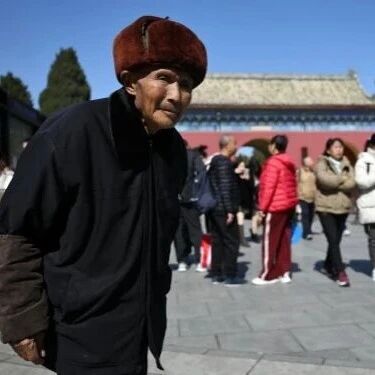
2025年的出生人数低于此前最少的2023年的902万人,首次跌破800万人。 在中国,受1980年代计划生育政策的影响,很多家庭认为"一个孩子就足够了"。政府在 2016年和2021年分别允许生育第二胎和第三胎。地方政府也出台生育奖励政策,但仍无法扭 转少子化趋势。 日本经济新闻(中文版:日经中文网)盐崎健太郎 北京报道 2025年的出生人数低于此前最少的2023年的902万人,首次跌破800万人…… 1月19日,中国国家统计局公布的数据显示,2025年底的总人口为14亿489万人,比2024年 底减少339万人。总人口数连续4年下降。2025年的出生人数减少162万人,降至792万人, 刷新了1949年建国以来的新低。 在天坛公园散步的老人(2025年3月,北京) 版权声明:日本经济新闻社版权所有,未经授权不得转载或部分复制,违者必究。 日经中文网 https://cn.nikkei.com 视频号推荐内容: ...
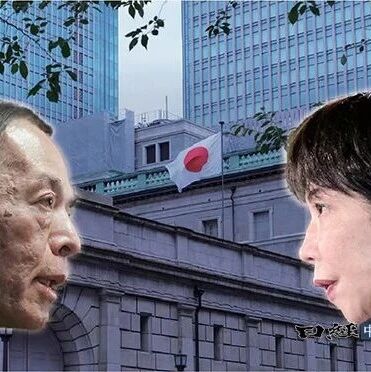
日本央行下次加息可能在6~7月?
日经中文网· 2026-01-19 08:00
Core Viewpoint - The article discusses the potential impact of Japan's political environment on the Bank of Japan's (BOJ) interest rate decisions, particularly in light of the upcoming House of Representatives election and the implications of a possible dissolution of the House in January 2025 [2][4]. Group 1: Political Environment and BOJ Actions - The BOJ typically avoids taking action before national elections to maintain its independence and avoid political interpretations of its policies [4][5]. - The decision to dissolve the House of Representatives in January 2025 could create a favorable environment for the BOJ to raise interest rates in June or July, as it would eliminate concerns about overlapping election schedules [5][7]. - Historical patterns indicate that the BOJ has never changed its policy right before a House election since the current Bank of Japan Act was implemented in 1998 [4]. Group 2: Interest Rate Predictions - The likelihood of an interest rate hike in June or July 2025 is supported by the expected outcomes of spring labor negotiations, which will clarify wage increases [5]. - Market predictions suggest a 28% probability for a rate hike in June and a 30% probability in July, totaling nearly 60% [5]. - There is a possibility that the BOJ may need to raise rates earlier if the yen depreciates significantly due to political factors, particularly if inflationary pressures increase [7]. Group 3: Historical Context - The article draws parallels between the current situation and the past, specifically referencing the January 1990 dissolution of the House and subsequent interest rate hikes by the BOJ [8][9]. - In 1990, the BOJ raised rates in March following a similar political scenario, suggesting that the current environment may allow for similar actions post-election [9].
中朝贸易总额两年来首次转为正增长
日经中文网· 2026-01-19 03:03
Group 1 - The total trade volume between China and North Korea in 2025 increased by 26% year-on-year, reaching $2.73487 billion, recovering to levels similar to those before the COVID-19 pandemic in 2019 [2][4] - In 2025, China's exports to North Korea grew by 25% year-on-year, amounting to $2.29469 billion, while imports from North Korea increased by 27%, totaling $440.18 million [4] - The growth in exports from China to North Korea was particularly notable in medical-related products, coinciding with the completion of several large hospitals in Pyongyang, which are considered key projects [4][5] Group 2 - In 2025, every month saw a year-on-year increase in trade between China and North Korea, contrasting sharply with 2024, where 11 out of 12 months experienced negative growth [4] - The rapid improvement in China-North Korea relations in 2025 is marked by a significant increase in trade, reversing the cooling trend observed in 2024 due to North Korea's deepening military cooperation with Russia [2]