日经中文网

Search documents
中国开源AI模型崛起,占全球份额15%
日经中文网· 2026-01-19 03:03
本调查由AI工具平台美国OpenRouter和美国风险投资公司a16z汇总。衡量以中美为中心的AI 模型的输入输出量,算出了AI利用的份额。 DeepSeek和Qwen(千问)等中国的开源模型开始普及 中国企业开发的生成式AI在2025年11月的全球市场份额约为15%,与1年前的1%相比大幅 增长。据称中国企业的AI模型的4成被用于编程和设计等高级业务。日本企业开发AI时也在用 中国的开源模型…… 中国企业开发的生成式AI的利用正在扩大。以2025年1月备受瞩目的DeepSeek为首,向外部 公开技术的开源模型崛起。中国企业开发的生成式AI在2025年11月的全球市场份额约为 15%,与1年前的1%相比大幅增长。作为日本AI开发基础的存在感也将提高。另一方面,日 本对中国生成式AI过度依赖的风险也浮出水面。 日本企业开发AI时也在使用中国的开源模型。 在AI模型评分中,在日本企业开发的前10个模型中,包括新兴的ABEJA的模型在内,有6个 是以DeepSeek 和Qwen为基础开发的。日本国立情报学研究所(NII)的日本国产AI开发项 目"LLM-jp"也把Qwen用于整理学习数据。 日本开发AI时依赖海外开 ...


中国2025年GDP实际增长5.0%
日经中文网· 2026-01-19 03:03
Group 1 - The core viewpoint is that despite the sluggish real estate sector leading to insufficient domestic demand, China has still achieved the government's growth target of around 5% for GDP in 2025, with the actual growth rate remaining stable at 5.0% compared to 2024 [1] - The nominal GDP growth rate for 2025 is projected to be 4.0%, which is a slowdown from 4.2% in 2024, indicating ongoing deflationary pressures as nominal growth has been lower than real growth for three consecutive years [3] - The actual GDP growth for the last quarter of 2025 (October to December) is expected to be 4.5%, surpassing market predictions of 4.4%, while the growth for July to September was recorded at 4.8% [3] Group 2 - The seasonally adjusted quarter-on-quarter growth rate is 1.2%, an increase from 1.1% in the previous quarter, translating to an annualized growth rate of approximately 4.9% based on practices in developed countries [5] - The nominal GDP growth for the last quarter of 2025 is projected to be 3.8% [5]
美国施压之下,苦闷的欧洲进退维谷
日经中文网· 2026-01-19 03:03
Core Viewpoint - The article discusses the escalating tensions between the United States and Europe, particularly regarding President Trump's decision to impose tariffs on imports from eight European countries until Greenland is acquired, which has led to a unified European opposition and potential retaliatory measures [2][4]. Group 1: U.S. Actions and European Responses - President Trump announced tariffs on imports from eight European countries, linking them to the acquisition of Greenland, which has been met with widespread European disapproval and consideration of countermeasures [2][4]. - European leaders, including Swedish Prime Minister Kristersson, emphasized solidarity among allies and are consulting with non-EU countries like the UK and Norway for a joint response [6]. - The European Union convened an emergency meeting to discuss strategies against the U.S. actions, indicating a serious diplomatic crisis [6]. Group 2: Implications for NATO and Security - The U.S. aims to secure Greenland for strategic reasons, including countering China and Russia, while European nations are concerned about the implications for NATO and their own security [6][9]. - There are fears that the U.S. might leverage military power in this context, with discussions about the potential for the U.S. to withdraw from NATO, which would significantly impact European defense [7][9]. - The reliance of Europe on U.S. military support for countering Russian threats is highlighted, particularly in the context of aid to Ukraine [10]. Group 3: Economic and Trade Consequences - The article notes that European nations are unlikely to compromise on the Greenland issue, as Denmark and Greenland have firmly stated they will not sell the territory [11]. - There are growing calls within the EU to suspend the 2025 EU-U.S. trade agreement, with proposals to activate the EU's "Anti-Coercion Instrument" (ACI) to impose sanctions on U.S. goods and services [11][12]. - The ACI, designed to counter economic coercion, is now being considered as a tool against the U.S., marking a significant shift in EU-U.S. trade relations [11].

FT中文网精选——展望2026:劳动“回归”的中国经济
日经中文网· 2026-01-19 03:03
Group 1 - The core viewpoint of the article is that the record trade surplus of over $1 trillion in China for 2025 is not primarily due to enhanced export competitiveness or global supply chain restructuring, as commonly suggested [6][7]. - The trade surplus increased by over 20% year-on-year, which is significantly higher than market expectations, indicating an unusual economic trend [6]. - The article challenges the notion that increased trade surplus should correlate with rising employment and wages, as there is no substantial evidence of such changes in the labor market [7]. Group 2 - The nominal exchange rate of the Chinese yuan showed a slight depreciation in 2025, contradicting the expectation that a stronger trade surplus would lead to currency appreciation [7]. - The article suggests that significant changes in industrial upgrading and technological advancement cannot occur within a single year, indicating the need for alternative explanations for the trade surplus [7].
必和必拓高管这样看2026年的铜市场
日经中文网· 2026-01-18 00:33
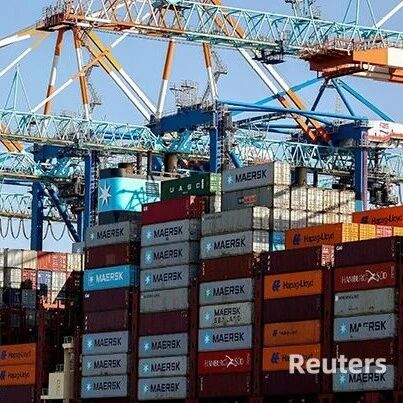
Group 1 - The core viewpoint is that despite the downturn in China's real estate sector, strong performance in electric vehicles (EVs), renewable energy, and machinery is beneficial for copper demand [2][5] - The international price of copper is at a record high, driven by the need for infrastructure in renewable energy and data centers for artificial intelligence (AI), leading to expectations of supply shortages [2][6] - Major economies like the US and China are expected to maintain strong GDP growth, with India projected to experience robust growth, supporting strong copper demand through 2026 [4] Group 2 - Although China's real estate industry is struggling, growth in manufacturing is offsetting this decline, positively impacting copper demand [5] - Speculative funds are flowing into the copper market due to anticipated demand from data centers, which are still in the early stages but will significantly increase copper demand in the next 10-15 years [6] - Current global copper demand is around 25-26 million tons, with an expected increase of 10 million tons by 2035, but achieving a 70% increase in supply by 2050 is challenging due to insufficient investment [7] Group 3 - Existing mines are facing declining ore grades, but some are improving production efficiency, having increased copper output by 30% over the past three years [8]


“日本制造”该如何升级?
日经中文网· 2026-01-18 00:33
Group 1 - The core viewpoint is that Japanese companies are caught between the dominance of American tech giants like GAFAM and Nvidia, and the overwhelming industrial productivity of China, raising questions about potential breakthroughs for Japan [1] - Toyota is preparing to develop and produce its luxury electric vehicle brand "Lexus" in Shanghai, China, with plans to start production in 2027, shifting from its initial consideration of Japan for this project [3] - The development cycle for electric vehicles in Japan is traditionally 4-5 years, while Chinese manufacturers can produce new models in just 1.5 years using AI and digital twin technology, highlighting the competitive advantage of Chinese firms [3] Group 2 - In the field of robotics, Japan is no longer seen as a leader, with China operating 202,000 industrial robots, which is 4.4 times more than Japan, indicating a significant shift in industrial capabilities [5] - Japan has a wealth of manufacturing data that, if effectively utilized, could help regain its competitive edge in industrial robotics and manufacturing [5] - The semiconductor industry is critical for Japan, with the company Rapidus aiming to start mass production of 2-nanometer AI semiconductors by the second half of 2027, emphasizing the importance of maintaining competitiveness in this sector [7]


本田SUV+露营拖车=会移动的旅馆
日经中文网· 2026-01-18 00:33
Group 1 - The article discusses Honda's innovative approach by combining SUVs with camping trailers, creating a mobile lodging experience for consumers [2] - This initiative aims to cater to the growing demand for outdoor activities and travel, particularly in the post-pandemic era, where people are seeking safe and flexible vacation options [2] - Honda's strategy reflects a broader trend in the automotive industry towards multifunctional vehicles that enhance lifestyle experiences [2] Group 2 - The mobile lodging concept is positioned to attract families and outdoor enthusiasts, tapping into a market that values convenience and adventure [2] - The collaboration between Honda and camping trailer manufacturers is expected to enhance product offerings and expand market reach [2] - This move aligns with Honda's commitment to innovation and sustainability, as it seeks to provide eco-friendly travel solutions [2]


丰田靠bZ4X在日本EV市场翻盘
日经中文网· 2026-01-18 00:33
Core Viewpoint - Toyota's electric vehicle "bZ4X" has achieved significant sales success in Japan, with over 10,000 orders within three months of its launch, indicating a turnaround in the company's position in the EV market [2][4]. Group 1: Sales Performance - The new bZ4X model received approximately 11,000 orders by the end of December 2025, significantly exceeding Toyota's sales target of 1,700 units per month [4]. - In the October to December 2025 period, bZ4X's cumulative sales reached 3,448 units, making it the top-selling EV in Japan, surpassing competitors like Honda's "N-ONE e:" and Nissan's "SAKURA" [4]. Group 2: Vehicle Features - The bZ4X boasts a maximum range of 746 kilometers, which is considered the highest in Japan, alleviating concerns about range for daily use [6]. - The starting price of the bZ4X is 4.8 million yen (approximately 213,000 RMB), which is 700,000 yen (about 31,000 RMB) lower than the previous model [6]. Group 3: Infrastructure and Support - Toyota is enhancing its charging infrastructure by installing fast charging stations, aiming to have around 500 stations by the end of 2025, an increase of 115 stations from 2024 [6]. - The company has also introduced a new charging service called "TEEMO," allowing users to search and reserve charging stations from various partners, thus addressing the infrastructure challenges that have hindered EV adoption [7]. Group 4: Market Dynamics - The expansion of EV options in the Japanese market is attracting more consumer interest, contributing to the overall growth of the EV sector [7]. - Competitors like Nissan are also launching new EV models, such as the updated "LEAF," which has a maximum range of 702 kilometers and a starting price of 5.18 million yen (approximately 229,000 RMB) [6]. - The Japanese government plans to increase EV subsidies, with the bZ4X eligible for up to 1.3 million yen (about 58,000 RMB) in subsidies, further stimulating market competition [7].

2025中国车市:新势力猛追,比亚迪放缓
日经中文网· 2026-01-17 00:33
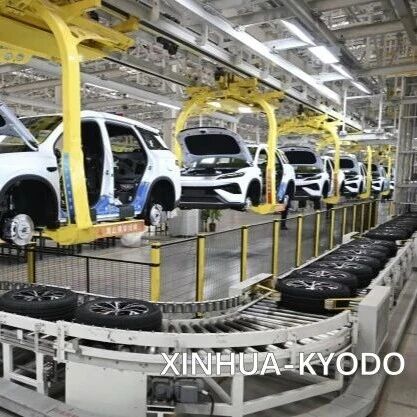
Core Viewpoint - The article highlights the significant growth of the new energy vehicle (NEV) market in China, with domestic brands capturing a dominant market share while foreign brands lag behind in electrification efforts [4][6]. Group 1: NEV Sales Growth - NEV sales reached 16.49 million units, growing by 28.2%, accounting for 47.9% of total vehicle sales, an increase of 7 percentage points [4][6]. - Pure electric vehicles (EVs) saw a growth of 37.6%, reaching 10.62 million units, while plug-in hybrid vehicles (PHVs) grew by 14%, totaling 5.86 million units [4][6]. Group 2: Market Share Dynamics - Domestic brands now hold 69.5% of the passenger car market share, up by 4.3 percentage points from 2024, while foreign brands have seen declines, with German brands at 12.1% (down 2.5 points) and Japanese brands at 9.7% (down 1.5 points) [6][9]. - Notable declines in sales were observed for Honda, with a 20% drop in annual sales, indicating challenges for Japanese brands [6]. Group 3: Emerging Players and Competition - New entrants like Leap Motor and Xiaomi have shown remarkable growth, with Leap Motor's sales doubling to 590,000 units, and Xiaomi delivering 410,000 vehicles since its entry into the market in March 2024 [6][8]. - The competition is intensifying, with established players like BYD experiencing a slowdown, projecting only an 8% growth in 2025, while state-owned enterprises like Guangzhou Automobile Group face declining sales [7][8]. Group 4: Future Outlook - The China Association of Automobile Manufacturers predicts that new car sales (including exports) will reach 34.75 million units in 2026, a modest increase of 1% from 2025 [8]. - Domestic sales growth is expected to slow to 0.2%, reaching 27.35 million units, with challenges arising from reduced tax incentives for NEV purchases [9]. - The competitive landscape is characterized by aggressive pricing strategies, which may lead to industry consolidation and the exit of weaker players [9].


36氪精选:募资23亿,礼来、淡马锡护航这家AI公司上市
日经中文网· 2026-01-17 00:33
Core Viewpoint - The article discusses the successful IPO of Insilico Medicine, highlighting the growing acceptance and potential of AI in drug discovery and development, marking a critical point for AI-driven pharmaceutical innovations [5][7]. Group 1: IPO and Market Reception - Insilico Medicine's IPO raised approximately HKD 2.3 billion, the highest for a pre-revenue biotech firm in Hong Kong in 2025, with a subscription rate exceeding 1,400 times [5][7]. - The company attracted significant interest from major investors, including Eli Lilly and Temasek, with cornerstone investors accounting for about 39% of the shares [5][6]. Group 2: AI Drug Discovery Platform - Insilico's core platform, Pharma.AI, enables efficient drug discovery, reducing the time from target identification to preclinical candidate selection to 1-1.5 years, which is about one-third of traditional methods [9][10]. - The platform has demonstrated the ability to generate viable preclinical candidates at a cost of USD 200-300 million, significantly lower than traditional approaches [10]. Group 3: Clinical Pipeline and Development - Insilico has developed over 20 clinical/IND-stage assets, showcasing the platform's capability in drug development [11]. - The company plans to allocate nearly half of the IPO proceeds to advance its core pipeline in clinical trials [12]. Group 4: Business Model and Revenue Streams - Insilico's business model includes self-developed pipelines, AI+CRO services, and software sales, with drug discovery and pipeline development expected to generate significant revenue [17][18]. - Revenue from drug discovery and pipeline development is projected to grow from USD 28.6 million in 2022 to USD 79.7 million in 2024, constituting 92%-95% of total revenue [18][19]. Group 5: Strategic Partnerships and Collaborations - The company has established direct BD collaborations and partnerships with major pharmaceutical companies, enhancing its revenue through upfront and milestone payments [21]. - Insilico's collaboration with Exelixis on a drug targeting BRCA-mutant tumors has become a significant revenue source, contributing over 60% of total revenue in the respective periods [21]. Group 6: Financial Performance and Future Outlook - Insilico's net losses are projected to decrease from USD 70.8 million in 2022 to USD 22.7 million in 2024, indicating an improving financial outlook [22]. - The company aims to develop 4-5 preclinical candidates annually and advance 1-2 projects into clinical development, reflecting its growth strategy [16].