日经中文网

Search documents
日企海外产汽车返销日本数量将创30年来新高
日经中文网· 2025-12-05 02:51
Core Viewpoint - Honda and Suzuki are significantly increasing imports of vehicles from India to Japan, driven by lower labor costs and changing production strategies in the automotive industry [2][4]. Group 1: Import Trends - The sales of "reverse imports" (vehicles imported back to Japan) are projected to reach their highest level in 30 years by 2025, with a year-on-year increase of 19% in the first 11 months of 2025, totaling 102,332 units [2]. - Honda plans to import the Indian-made SUV "WR-V" starting in 2024, with reverse imports expected to reach 35,043 units in the same period [5]. - Suzuki will begin importing the Indian-made SUV "Fronx" in October 2024, with reverse imports increasing ninefold compared to the same period in 2023, reaching 39,009 units [7]. Group 2: Cost Competitiveness - Labor costs in India are significantly lower, with average monthly wages for factory workers in New Delhi at 37,583 rupees (approximately 2,958 RMB), compared to 295,849 yen (approximately 13,500 RMB) in Tokyo, making Indian production about one-fifth the cost of Japan [7]. - The depreciation of the yen has not deterred the increase in reverse imports, as the cost competitiveness of Indian manufacturing remains strong [4][8]. Group 3: Market Dynamics - India is projected to become the third-largest automotive market in the world by 2024, with sales expected to reach 5.22 million units, surpassing Japan's 4.42 million units [7]. - Japan's automotive sales are expected to decline for six consecutive years, falling below 5 million units by 2025 due to a decreasing population [8]. - The Japanese government is considering simplifying certification procedures for U.S. vehicles to increase imports from the U.S. following tariff negotiations [8].




日本最早2026年度成立国家情报局
日经中文网· 2025-12-05 02:51
Core Viewpoint - Japan plans to establish a "National Intelligence Agency" by the fiscal year 2026 to enhance its intelligence collection and analysis capabilities, responding to increasing domestic calls for measures against foreign espionage [2][4]. Group 1: Establishment of the National Intelligence Agency - The National Intelligence Agency will consolidate intelligence collected by various ministries and serve as a command center under the Prime Minister's Office [2][5]. - The core components of the proposed legislation include upgrading the Cabinet Intelligence and Research Office to the National Intelligence Agency, creating a new position for the agency's director, and establishing a National Intelligence Meeting involving the Prime Minister [2][4]. Group 2: Rationale and Objectives - The initiative to create the National Intelligence Agency is driven by rising domestic demands to address foreign espionage activities, including concerns over the spread of misinformation and election interference [4][5]. - The agency will work alongside the National Security Secretariat (NSS), which is responsible for foreign and security policy, to strengthen Japan's overall intelligence framework [5][7].

中国在存储半导体领域提高存在感
日经中文网· 2025-12-05 02:51
Core Insights - Yangtze Memory Technologies Co., Ltd. (YMTC) aims to achieve a 15% market share in the NAND flash memory sector by the end of 2026, with its sales share surpassing 10% for the first time [2][5][6] - The company has improved its technology significantly, with a stacking layer count of approximately 270 layers, comparable to Samsung Electronics, and has adopted cost-reduction methods not yet utilized by competitors [4][6] - The Chinese semiconductor industry is gaining traction, supported by government policies encouraging domestic semiconductor use, which is impacting competitors like Kioxia Holdings [2][5] Market Position and Growth - YMTC's NAND flash memory market share reached 10% in Q1 2025 and increased to 13% by Q3 2025, closing in on Micron Technology [5][6] - The company is expected to exceed a 10% market share for the entire year, with projections indicating a potential 15% share by the end of 2026 [5][6] - In the DRAM sector, Changxin Memory Technologies (CXMT) has also expanded its market share from 6% in 2024 to 8% in Q3 2025, positioning itself as the fourth largest globally [6] Competitive Landscape - Chinese manufacturers are offering NAND products at prices 10-20% lower than those from other countries, which may lead to increased adoption of Chinese semiconductors [9][10] - Despite advancements, Chinese companies like YMTC and CXMT lag in high-performance memory technologies, such as High Bandwidth Memory (HBM), where they are five years behind competitors like SK Hynix [9] - The U.S. government has imposed restrictions on YMTC, limiting its ability to procure necessary production equipment, which may hinder its international expansion [9][10] Future Outlook - Analysts predict that if the current price advantage persists, other countries may gradually increase their adoption of Chinese memory semiconductors [10] - The growth of China's smartphone market, projected to reach 286 million units in 2024, could further bolster the domestic semiconductor industry's position [9]

中国苹果概念股股价涨幅超过苹果
日经中文网· 2025-12-04 08:13
Core Viewpoint - The stock prices of Apple-related companies listed in mainland China and Hong Kong have shown strong performance, driven by the success of the new "iPhone 17" and a shift in business models towards profitability in the AI sector, contrasting with Apple's modest stock price increase of only 14% from late 2024 to December 2, 2025 [2][10]. Group 1: Financial Performance - Foxconn Industrial Internet (FII) reported a strong financial performance for Q3 2025, with revenue reaching 243.1 billion yuan, a 42% year-on-year increase, and net profit surpassing 10.3 billion yuan, up 62% [2]. - The revenue from AI servers using GPUs increased fivefold, while revenue from high-speed data communication network devices for AI data centers surged 27 times [5]. - Luxshare Precision, another Apple supplier, saw its revenue grow by 31% year-on-year to 96.4 billion yuan for Q3 2025, with net profit increasing by 25% to 3.9 billion yuan, largely attributed to AI-related factors [8]. Group 2: Business Model Shifts - Companies in the Apple supply chain are increasingly focusing on AI-related businesses to mitigate risks associated with dependency on Apple contracts, which can be terminated unexpectedly [9]. - Industrial Internet's strong performance in AI servers is partly due to the challenges posed by U.S. semiconductor export restrictions, leading to a restructuring of supply chains [7]. - Blue Glass Technology is attempting to reduce its reliance on Apple by diversifying into AI-equipped automotive smart cockpits, with its revenue from non-Apple related businesses growing to nearly 10% [9]. Group 3: Market Dynamics - The competitive landscape in AI investments between the U.S. and China is benefiting companies integrated into the global supply chain, as they adapt to the changing market conditions [2]. - The departure of Apple's AI department head raises questions about Apple's future profitability in AI, while companies that have already pivoted towards AI are receiving positive market feedback [10].



日经平均股价大涨1163点,重回5万点以上
日经中文网· 2025-12-04 08:13
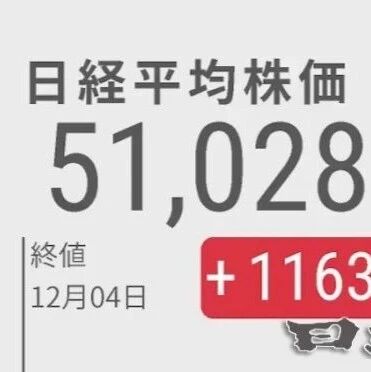
尽管市场对高市扩张性财政政策持警惕态度,日本国内利率有所上升,但高支持率所支撑的稳定政权预 期仍托举股市行情…… 12月4日,日本东京股市的日经平均指数持续上涨,收盘报51028. 42点,较前一交易日上涨 1163.74点(涨幅2.33%)。市场对人工智能(AI)的关注依旧高涨,半导体关联及工业机 器人股纷纷走高。尽管市场对日本首相高市早苗扩张性财政政策持警惕态度,日本国内利率 有所上升,但高支持率所支撑的稳定政权预期仍托举股市行情。东证股价指数(TOPIX)也 刷新了11月13日创下的历史最高点。 在当日的债券市场中,日本国债遭抛售,作为长期利率指标的新发行10年期国债收益率一度 升至1.935%,为2007年7月以来的最高水平。以往利率上升局面往往伴随对财政恶化的担 忧,使股价同步下跌,但4日却呈现利率上涨与股市上涨并存的情况,东证主板市场约8成股 票上涨。 日本Resona控股的策略师武居大晖指出:"高市就任日本首相以来,股价对利率的敏感度正 有所下降"。他表示:"目前政权支持率较高,市场关注的是经济政策的执行力以及稳健的企 业业绩"。根据日本经济新闻与东京电视台于11月底实施的舆论调查,内阁支持率达 ...
高市政府计划26年全面解禁防卫装备出口
日经中文网· 2025-12-04 08:13
澳大利亚决定采购日本的"最上"型护卫舰 日本防卫装备品的出口目前仅限于救援、运输、警戒等无杀伤能力的"5类别",坦克及战斗机 等目前原则上无法出口。高市早苗政府计划在2026年上半年取消这一"5类别"的限制。这将 为日本防卫产业带来利好。日本国内也有谨慎意见…… 日本政府自岸田文雄政权下的2023年度起开始大幅增加防卫费。这是鉴于日本周边的国家安 全保障环境急剧恶化而采取的举措。日本防卫企业的业绩增长,很大程度上得益于日本政府 的方针。 瑞典斯德哥尔摩国际和平研究所(SIPRI)12月1日发布了全球防务企业前100强在2024年的 销售额报告。日本企业中有三菱重工和川崎重工等5家公司上榜,销售额比2023年增长了 40%。创下主要国家中最高增幅。 日本高市早苗政府计划在2026年上半年取消防卫装备品的出口仅限于无杀伤能力的"5类 别"这一条件。此举旨在通过向同盟国和志同道合的国家提供装备,来强化国家安全保障领域 的合作。这一举措不仅有助于日本国内防卫产业扩大市场,还能通过企业之间的竞争和合 作,为可应用于民用领域的新技术的诞生创造机会。 日本自民党安全保障调查会于12月1日召开了以撤销5类别的装备出口限制条件 ...

日企等要组团量产人形机器人,追赶中企
日经中文网· 2025-12-04 02:37
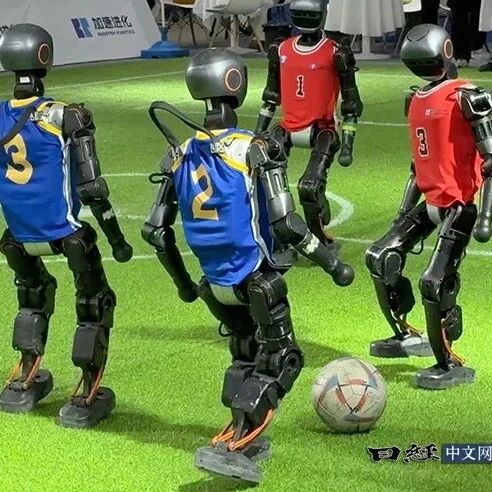
Core Viewpoint - China is leading in the development of humanoid robots, with Japanese companies now collaborating to catch up and aim for mass production by 2027 [2][5]. Group 1: Development Collaboration - A consortium including 13 companies, such as Renesas Electronics and Murata Manufacturing, has been formed to advance humanoid robot development, targeting mass production by 2027 [2]. - The Kyoto Humanoid Robot Association (KyoHA) has welcomed new members like Renesas and Sumitomo Heavy Industries, aiming to produce prototypes by March 2026 and achieve mass production within 2027 [2][5]. Group 2: Technical Specifications - Two models of humanoid robots are planned for development by the end of 2026: one for disaster response, approximately 250 cm tall and capable of lifting over 50 kg, and another for research, standing 160-180 cm tall to enhance agility [4]. Group 3: Core Technologies - Companies will leverage their core technologies for the project, with Murata supplying sensors and communication components, Mabuchi Motor providing motors, and Renesas producing microcontrollers for robot functionality [5]. Group 4: Intellectual Property and Funding - Patents generated during the joint development will belong to the participating companies, and funding will be shared among them, with further details to be announced [7]. Group 5: Market Potential and Future Applications - Morgan Stanley predicts that the annual sales of humanoid robots could reach $5 trillion by 2050, with expectations of $3 billion by 2025, driven by labor shortages [7]. - Humanoid robots are anticipated to replace essential workers and be utilized in various sectors such as healthcare, construction, and manufacturing, with generative AI enhancing their capabilities [7]. Group 6: Japan's Position and Government Support - Japan has not been a significant player in humanoid robot research recently, with calls for strengthening the domestic supply chain to avoid potential industrial impacts [8]. - The Japanese government aims to develop autonomous general-purpose humanoid AI robots by 2030, supported by funding through the Moonshot Research and Development Program [8].
FT中文网精选:当欧洲发现自己在人工智能竞赛中选错赛道
日经中文网· 2025-12-04 02:37
编者荐语: 日本经济新闻社与金融时报2015年11月合并为同一家媒体集团。同样于19世纪创刊的日本和英国的两家 报社形成的同盟正以"高品质、最强大的经济新闻学"为旗帜,推进共同特辑等广泛领域的协作。此次, 作为其中的一环,两家报社的中文网之间实现文章互换。 在一场旷日持久的奔跑中,快到人工智能全球顶级监管的终点了,欧盟发现选错赛道 了——当裁判岂有未来,当选手才是王道。 文丨FT中文网专栏作家 张冬方 当中美人工智能发展得如火如荼时,欧洲扔掉脖子上挂了多年的裁判哨,准确上场比赛了。 19日,欧盟委员会公布了名为 "数字综合计划"(以下简称"综合计划")的改革方案,将《人 工智能法》的全面实施推迟至2027年。除了针对人工智能,该方案还包括简化欧盟《通用数 据保护条例》和非个人数据规则。 阅读更多内容请点击下方"阅读原文" (本文由FT中文网提供) 以下文章来源于FT中文网 ,作者张冬方 FT中文网 . 英国《金融时报》集团旗下唯一的中文商业财经网站,旨在为中国商业菁英和决策者们提供每日不可或 缺的商业财经资讯、深度分析以及评论。 资料图 ...

投资资金涌入黄金白银
日经中文网· 2025-12-04 02:37
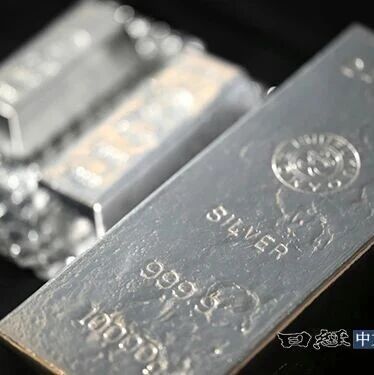
Group 1 - Silver prices have surged, with the London spot price increasing by 5.8% on November 28, reaching $56.52 per ounce, more than double the price at the beginning of the year [2] - The rise in precious metals, including gold, is attributed to worsening investor sentiment and expectations of interest rate cuts by the Federal Reserve [2][9] - The supply shortage of silver in London has eased but remains a concern, with market valuations still considered high [4][5] Group 2 - Gold prices also reached a near one-month high, with the London spot price hitting $4264.29 on December 1 [8] - Predictions suggest that silver prices could reach around $70 per ounce by 2026, with potential for even higher prices under certain conditions [5] - The market is witnessing a shift of funds from overvalued AI stocks to precious metals, as investors adopt a risk-averse stance [10][12] Group 3 - The expectation of interest rate cuts by the Federal Reserve has increased, with nearly 90% of the market anticipating a rate cut during the upcoming FOMC meeting [9] - The trend of funds moving from AI stocks to precious metals is seen as a response to the volatility in AI-related investments [10][12] - The perception of gold and silver as "safe assets" is driving increased buying activity, particularly in the context of market uncertainty [12]