日经中文网

Search documents
日本将构建600公里量子加密通信网络
日经中文网· 2025-11-30 00:30
Core Viewpoint - Japan is advancing the development of a quantum encryption communication network connecting the major urban areas of Tokyo, Nagoya, and Osaka, aiming for practical application by 2030 [2][5]. Group 1: Network Construction - The quantum encryption communication network will span approximately 600 kilometers and is expected to be completed by the end of the 2026 fiscal year, with practical experiments starting as early as the 2027 fiscal year [2][4]. - The network will be operated by the National Institute of Information and Communications Technology (NICT) under the Ministry of Internal Affairs and Communications, in collaboration with leading companies in communication technology such as Toshiba and NEC [4]. Group 2: Funding and Budget - The supplementary budget for the fiscal year 2025 will include hundreds of billions of yen allocated for the development of this technology [4]. Group 3: Application and Security - The network is intended for use in fields requiring high confidentiality, including the transmission of personal genomic information from medical institutions, confidential financial data, and diplomatic information from embassies [5]. - Quantum encryption communication utilizes photons to transmit encryption keys, making it theoretically unbreakable as any unauthorized attempt to intercept the information alters the state of the photons [5]. Group 4: Technological Context - The push for quantum encryption technology is driven by the anticipated advent of quantum computers around 2030, which could easily break conventional encryption methods, highlighting the need for domestically developed secure technologies from a national security perspective [5].

日本政府采购将排除未获JIS认证的海外产品
日经中文网· 2025-11-30 00:30
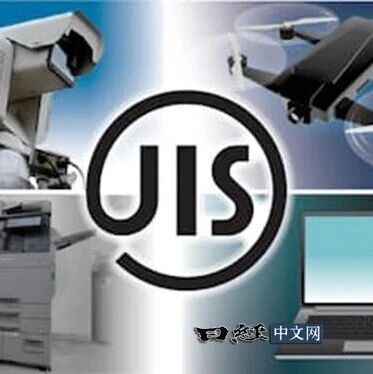
Group 1 - Japan will introduce a new requirement for compliance with Japanese Industrial Standards (JIS) in government procurement qualifications, aimed at reducing risks of information leakage and technology outflow [2][4] - The new standards will include specific clauses to enhance economic security and will be revised as necessary to improve the competitiveness of domestic industries [2][4] - The implementation of this policy will begin in phases starting in 2026, with a focus on identifying applicable products and JIS specifications [4] Group 2 - Companies that find it difficult to obtain JIS certification in the short term will be allowed to self-declare compliance or submit a clear plan for obtaining certification, which will be considered as a positive factor in procurement evaluations [4] - The Ministry of Economy, Trade and Industry of Japan will lead a review of all 11,000 JIS specifications within five years to assess economic security risks and competitive issues in government procurement [6] - If products cannot meet JIS specifications due to a lack of Japanese manufacturers, the government will consider adopting international standards as an alternative [6]
Rapidus挑战1.4纳米半导体壁垒
日经中文网· 2025-11-30 00:30
Core Viewpoint - Rapidus aims to produce cutting-edge 1.4nm semiconductor technology by 2029 and is targeting 2nm production by 2027, but faces significant challenges in scaling and competition with TSMC [2][4][5] Group 1: Production Plans and Investments - Rapidus plans to start construction of its second factory in Chitose, Hokkaido, in 2027, with the goal of producing 1.4nm semiconductors by 2029 [2] - The company has submitted a business plan to the Japanese Ministry of Economy, Trade and Industry, proposing to invest over 3 trillion yen in the development and mass production of 1.4nm and 1nm semiconductors by 2031 [4] - Total investment is expected to exceed 7 trillion yen, with the Japanese government already committing approximately 2.9 trillion yen in support [4][5] Group 2: Funding and Financial Strategy - Rapidus needs to secure around 1 trillion yen in private investment and borrow over 2 trillion yen from private financial institutions before 2031 [5] - The company aims to go public by 2031 to reduce reliance on government funding and ensure the development of its 1.4nm products [5] Group 3: Competitive Landscape - The production capacity of Rapidus's first factory is expected to be between 25,000 to 30,000 wafers, while TSMC's main factory is projected to exceed 100,000 wafers, highlighting the scale challenge [8] - Rapidus is currently collaborating with AI semiconductor design company Tenstorrent, but needs to demonstrate production capabilities to attract more clients [7][8] - The Japanese government is actively supporting Rapidus in customer acquisition, indicating a strategic push to enhance domestic semiconductor capabilities [8][9] Group 4: Technological Development - The company is focusing on developing 2nm technology, with a target to start mass production by 2027, which is critical for its competitive positioning [5][7] - Rapidus employs a "single wafer" manufacturing process that allows for high-speed processing, claiming to be 2-3 times faster than TSMC during mass production [7]


日本严查外国人医疗欠费,超1万日元或被拒入境
日经中文网· 2025-11-30 00:30
Core Viewpoint - Japan is intensifying scrutiny on foreign nationals regarding unpaid medical bills, with amounts exceeding 10,000 yen potentially leading to entry denial into the country [2] Group 1 - The Japanese government has implemented stricter regulations to ensure that foreign visitors settle their medical expenses before entering the country [2] - The new policy aims to address the rising issue of unpaid medical bills by foreign nationals, which has become a significant concern for the healthcare system [2] - Foreign nationals with outstanding medical debts will face increased barriers to entry, reflecting Japan's efforts to protect its healthcare resources [2]

日本老字号玉之井醋设合资公司再闯中国市场
日经中文网· 2025-11-29 00:33
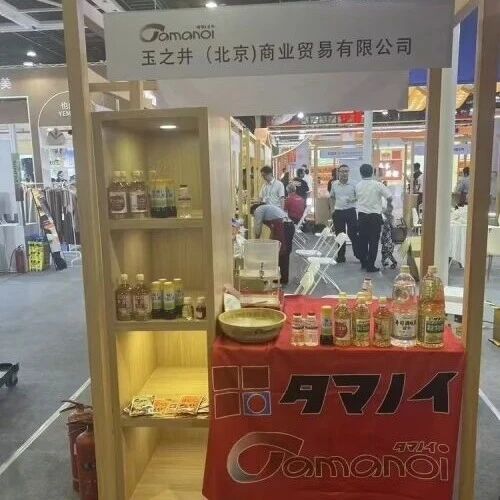
Core Viewpoint - Tamanoi Vinegar, a long-established Japanese vinegar manufacturer, is expanding its sales of vinegar-related products in China through a joint venture with Dalian Tianpeng Food, aiming to develop products that cater to local consumer preferences and leverage existing distribution networks [1][4]. Group 1: Joint Venture and Market Strategy - Tamanoi Vinegar has established a joint venture named "Tamanoi (Beijing) Trading" with Dalian Tianpeng Food, which specializes in mustard and soy sauce production, with a registered capital of 170,000 yuan [4]. - The joint venture aims to utilize Dalian Tianpeng's extensive wholesale and supermarket networks across China to enhance Tamanoi's market presence, which previously lacked direct sales channels [4]. - The company plans to develop not only vinegar but also related products such as dashi (Japanese soup stock), sauces, and other condiments tailored to Chinese consumer tastes [4]. Group 2: Market Context and Historical Performance - The majority of vinegar in the Chinese market is made from glutinous rice, but there is a growing interest in Japanese rice-based vinegar due to the rising popularity of Japanese cuisine [4]. - Tamanoi Vinegar previously attempted to enter the Chinese market with a wholly-owned sales company but withdrew due to poor sales performance attributed to cultural differences in business practices [4]. - Currently, overseas sales account for 5% of Tamanoi's total revenue, primarily from Europe, the United States, and Australia, with a goal to increase this to 10% within five years by expanding into the Chinese and Southeast Asian markets [4]. Group 3: Company Background - Founded in 1907, Tamanoi Vinegar is a well-established brand in Japan, with estimated sales of around 7.5 billion yen, making it the second-largest player in the Japanese vinegar market after Mizkan and Kewpie [5].
36氪精选:流感高峰将至,谁在买200元/盒的流感药
日经中文网· 2025-11-29 00:33
Core Viewpoint - The article discusses the significant increase in demand for flu medications in China, particularly due to an early flu season in 2025, and highlights the emergence of new domestic flu drugs that are changing the market landscape [6][9][13]. Flu Season and Demand Surge - The flu season in 2025 has started nearly a month earlier, with the National Disease Control Bureau indicating a rising trend in flu activity [6][9]. - There has been a more than 100% increase in orders for flu medications, especially in northern cities like Harbin and Hohhot, where orders surged over 150% [6][9]. Market Dynamics and New Drug Introduction - The flu medication market is projected to exceed 100 billion yuan, driven by a clearer understanding of flu's severity and the introduction of new medications [9][10]. - New flu drugs, including those that require only a single dose for the entire treatment course, are entering the market, with some priced nearly ten times higher than traditional medications like Oseltamivir [8][11]. Competitive Landscape - The article notes that 2025 is being referred to as the "Year of Domestic Flu New Drugs," with several new products set to launch [7][8]. - The new medications, such as Marbalozav and others, are designed to be more effective and user-friendly compared to older drugs, which require multiple doses [11][12]. Pricing and Market Penetration - The pricing of new flu medications is significantly higher than traditional options, with initial prices exceeding 300 yuan, while older drugs like Oseltamivir are priced around 20 yuan [14][15]. - Despite the higher prices, there is a potential for market growth as awareness of new medications increases, with current penetration rates for new drugs being low [12][15]. Marketing and Distribution Strategies - Companies are focusing on building new prescription habits and educating the market about the benefits of single-dose medications [16]. - E-commerce platforms are increasingly involved in the distribution of flu medications, providing services like home testing and online consultations [16].

华为在强化半导体供应链
日经中文网· 2025-11-29 00:33
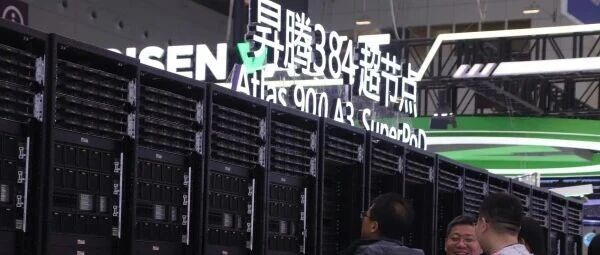
Core Viewpoint - Huawei is actively developing a self-sufficient semiconductor supply chain in China, particularly focusing on high-performance AI servers and semiconductors like Ascend, in response to U.S. sanctions since 2019 [2][6][9]. Group 1: Investment and Development - Huawei has established a fully-owned investment company "Hubble" and invested in over 60 semiconductor-related companies to align their development with Huawei's goals [2][6]. - The company is strengthening its position in the semiconductor industry through mergers and acquisitions, as well as increasing production capacity [6][9]. - A notable investment includes Huahai Chengke New Materials, which plans to acquire a leading domestic competitor with an investment of approximately 1.6 billion yuan [9]. Group 2: AI Server Capabilities - The AI server cluster "CloudMatrix384," featuring Huawei's self-developed AI semiconductor Ascend, was prominently showcased at the China International High-tech Achievements Fair [4][5]. - Huawei claims to possess the world's largest computing power, positioning itself to compete with U.S. companies like NVIDIA [5]. Group 3: Factory Construction and Collaboration - Huawei has invested 4% in Zonghui Chip Light Semiconductor Technology, which recently launched a new factory in Jiangsu with an investment of 550 million yuan [10]. - The company is also collaborating with Chinese enterprises in the development of essential semiconductor design tools, despite not directly investing in some of these firms [10]. - The Chinese government has initiated a policy fund exceeding 7 trillion yen to support semiconductor-related enterprises, emphasizing the goal of self-reliance in high-tech fields [10]. Group 4: Future Projections - China plans to invest 94 billion USD in advanced 300mm wafer semiconductor manufacturing equipment from 2026 to 2028, leading the global market [13]. - Despite the significant investments, there remains a considerable gap in technology compared to U.S. companies, with uncertainties regarding the extent of self-developed technology improvements [13].
日元会再次跌至160的历史低位吗?
日经中文网· 2025-11-29 00:33
Core Viewpoint - The Japanese yen is experiencing accelerated depreciation, raising concerns from the government and the Bank of Japan, primarily due to fiscal deterioration rather than a strong US dollar [2][8]. Group 1: Current Situation of Yen Depreciation - The yen's exchange rate against the US dollar is nearing historical lows, with rates approaching 158 yen per dollar, indicating significant depreciation pressure as the year-end approaches [2]. - The current depreciation is contrasted with a similar situation a year ago, where the yen also depreciated but without intervention from the government or the Bank of Japan [4]. Group 2: Government and Central Bank Response - The Bank of Japan, under Governor Kazuo Ueda, has expressed strong vigilance regarding the yen's depreciation, emphasizing the stability of import prices compared to previous years [6][8]. - The government has indicated a willingness to intervene in the currency market if the yen continues to depreciate rapidly, reflecting a shift in their stance compared to the previous year [9]. Group 3: Economic Implications - The current depreciation is pushing up import prices, which in turn is affecting domestic consumer prices, a situation that the government aims to avoid to prevent economic stagnation [8]. - Unlike last year, where the depreciation was primarily driven by a strong dollar, the current situation is attributed to the government's aggressive fiscal policies, raising concerns about potential inflation [8][10].

日本人住房梦渐远,房价是年收入10倍
日经中文网· 2025-11-28 08:00
Core Viewpoint - The traditional model of homeownership in Japan, based on lifetime employment and purchasing a home after marriage, is collapsing due to rising housing prices, increasing single-person households, and stagnant real wages [2][10]. Housing Market Trends - The average price of new homes in Tokyo's 23 wards reached 130.64 million yen (approximately 6.24 million RMB) in the first half of 2023, a 20% increase compared to the same period last year [7]. - The national average price-to-income ratio for new homes in Japan surpassed 10 for the first time, with Tokyo's ratio at approximately 18 [7][8]. - Prices for detached houses in the Tokyo area have also risen significantly, with the average price for new detached homes exceeding 55 million yen, up over 10 million yen from five years ago [7][10]. Policy and Regulatory Responses - The Chiyoda Ward in Tokyo has expressed concerns about the affordability crisis and requested measures to regulate property resale to curb speculative short-term flipping [4]. - The Tokyo Chiyoda District Real Estate Association acknowledged the need for measures to address speculative behavior in the housing market [4]. Historical Context and Policy Shifts - Japan's post-war housing policy aimed to encourage homeownership through favorable loans and tax incentives, which has historically supported the middle class in purchasing homes [8][10]. - The shift towards a more unstable job market and increasing single-person households has rendered the traditional homeownership model ineffective [10][11]. Alternative Housing Solutions - There is a growing need for diversified housing policies that promote the circulation of second-hand homes and address the issue of vacant properties, which number around 9 million [12][14]. - Tokyo is exploring partnerships to create affordable housing for families, referencing successful models from cities like New York and London [13][14].

TikTok日本月活用户达4200万,3年翻倍增长
日经中文网· 2025-11-28 08:00
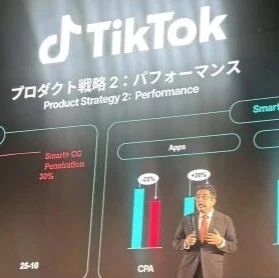
Group 1 - TikTok launched its e-commerce feature "TikTok Shop" in Japan in June, and within four months, the total transaction volume increased by 20 times [5] - As of November 27, TikTok's monthly active users (MAU) in Japan exceeded 42 million, doubling from 21.2 million in November 2022, with global users surpassing 1 billion [2] - Over 480,000 businesses are advertising on TikTok in Japan, and the platform provides marketing support services, including AI-based video production tools [4] Group 2 - TikTok is positioned at the center of three growth trends: AI, short videos, and omnichannel strategies, according to Arjun Sarwal, General Manager of TikTok for Business Japan [4]