美股研究社

Search documents
微软甩出3nm自研AI芯片!算力超10PFLOPS,干翻AWS谷歌
美股研究社· 2026-01-27 10:44
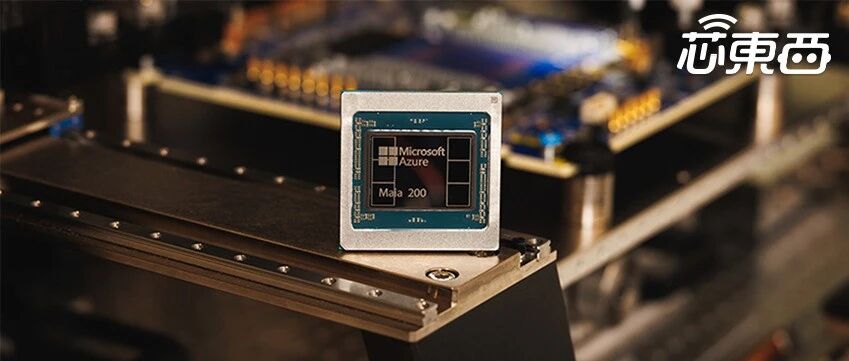
Core Viewpoint - Microsoft has announced the launch of its self-developed AI inference chip, Maia 200, claiming it to be the highest-performing self-developed chip in all large-scale data centers, aimed at significantly enhancing the economic efficiency of AI token generation [5]. Technical Specifications - Maia 200 is manufactured using TSMC's 3nm process and features over 140 billion transistors, with a memory subsystem that includes 216GB of HBM3e and a read/write speed of 7TB/s [5]. - The chip is designed for low-precision computing models, providing over 10 PFLOPS performance at FP4 precision and over 5 PFLOPS at FP8 precision, all within a 750W SoC TDP range [5]. - Its FP4 performance exceeds that of Amazon's AWS Trainium3 by more than three times, while its FP8 performance surpasses Google's TPU v7 [6]. Memory and Interconnect - The redesigned memory subsystem focuses on narrow precision data types and includes a dedicated DMA engine and on-chip SRAM, enhancing token throughput [8]. - Maia 200 offers a bidirectional bandwidth of 2.8TB/s, which is higher than AWS Trainium3's 2.56TB/s and Google's TPU v7's 1.2TB/s [9]. Performance and Efficiency - Maia 200 is the most efficient inference system deployed by Microsoft to date, with a performance improvement of 30% per dollar compared to the latest generation of hardware currently in use [10]. - The chip can run the largest models available today and is designed to support future models, including OpenAI's latest GPT-5.2 [11][12]. Integration and Development - Maia 200 integrates seamlessly with Microsoft Azure, and a software development kit (SDK) is in preview, providing tools for building and optimizing models [13]. - The architecture simplifies programming and enhances workload flexibility while reducing idle capacity, maintaining consistent performance and cost-effectiveness at cloud scale [21][22]. Deployment and Scalability - The deployment time for Maia 200 chips is halved compared to similar AI infrastructure projects, allowing AI models to run shortly after the first chips arrive [23]. - The architecture is designed for scalable performance in dense inference clusters while reducing power consumption and total cost of ownership for Azure's global clusters [22]. Future Outlook - Microsoft is positioning Maia 200 as a solution for the next generation of AI systems, aiming to set new benchmarks for performance and efficiency in critical AI workloads [28]. - The company invites developers, AI startups, and academia to explore early model and workload optimization using the new Maia 200 SDK [29].


美联储决议前瞻:“暂停”是确定,不确定的是“鹰派还是鸽派暂停”
美股研究社· 2026-01-27 10:44
Core Viewpoint - Morgan Stanley anticipates that the upcoming January FOMC meeting will maintain interest rates unchanged, focusing on the tone of the statement [2][5] Group 1: Interest Rate Outlook - The Federal Reserve is expected to keep the federal funds rate target range at 3.50%-3.75%, indicating a tactical adjustment rather than a return to a tightening cycle [2] - The statement is likely to upgrade the economic growth assessment from "moderate" to "robust" and remove references to "increased risks to employment," suggesting reduced concerns about the labor market [2] Group 2: Forward Guidance - The key aspect for investors is the forward guidance, with Morgan Stanley predicting the statement will retain language about "considering further adjustments" rather than "any adjustments," indicating a continued dovish stance [3][5] Group 3: Voting Dynamics - There is an expectation of dissenting votes, with predictions that Governor Miran will vote against the decision, advocating for a 50 basis point rate cut [4] Group 4: Economic Context - Powell is expected to justify the pause by referencing recent strong growth data, stable hiring, and a decrease in the unemployment rate to 4.375% [7] - Despite strong activity data, inflation data has not shown the expected effects from tariffs, but the Fed remains confident that inflation will decline later in the year [7] Group 5: Market Strategy - The short-term financing market remains accommodative, with repo rates normalizing below the interest on reserve balances (IORB), indicating an excess of cash in the system [9] - Morgan Stanley recommends a long position on the 2-year UST SOFR swap spread, targeting -14 basis points, based on the loose financing environment and expectations of a steepening front-end curve [10] Group 6: Currency Outlook - Morgan Stanley has revised its outlook for the foreign exchange market, now expecting stronger U.S. economic growth (GDP growth forecast for 2026 raised to 2.4%) and a delay in Fed rate cuts [12] - Despite this, the firm maintains a moderately bearish view on the U.S. dollar due to synchronized global growth and undervaluation of the Japanese yen [13] Group 7: Asset Class Focus - In the mortgage-backed securities (MBS) sector, the significant $200 billion purchase plan by GSEs has led to a substantial narrowing of MBS spreads, prompting a neutral stance from Morgan Stanley [18] - Municipal bonds are considered fundamentally sound but expensive, with low yield ratios compared to corporate bonds, raising concerns about sustainability if the Fed provides ambiguous signals [18]


Ambarella:为数据中心以外的物理人工智能赋能
美股研究社· 2026-01-26 10:27
Core Viewpoint - The article discusses the increasing demand for edge AI applications, highlighting Ambarella's role as a semiconductor manufacturer that provides solutions for real-time processing in edge devices, particularly in the context of AI and computer vision [1]. Financial Performance - Ambarella reported record revenue of $108.5 million for Q3 FY2026, representing a year-over-year growth of 31.2%. The non-GAAP gross margin was 60.9%, and non-GAAP EPS was $0.27. The company expects revenue growth for the entire fiscal year to be between 36% and 38% [4]. - The total cash, cash equivalents, and marketable securities amounted to $295.3 million. For Q4, revenue is projected to be between $97 million and $103 million, with a GAAP EPS expectation of -$0.51 [4]. Market Opportunities - The target applications for Ambarella's SoC include security cameras, robotics/drones, industrial applications, and automotive multi-stream applications. The CV7 product launch indicates a 20% reduction in power consumption compared to the previous generation [6]. - The AI market in video surveillance is projected to grow from $7 billion in 2024 to an estimated $29 billion by 2030. The overall video surveillance market is expected to increase from $73 billion in 2024 to $147 billion by 2030 [9]. - The fleet video telematics market is forecasted to grow from $1.7 billion in 2024 to $8.7 billion by 2034, indicating a rising demand for edge AI solutions [10]. - In the robotics and industrial automation sectors, the machine vision market is expected to reach $3.3 billion by 2025 and grow to $5 billion by 2030 [10]. - The global drone market is estimated to be valued at $73 billion in 2024 and could more than double to $163 billion by 2030, presenting significant opportunities for Ambarella [10]. - The automotive sector represents a long-term opportunity, potentially reaching $32 billion by 2030, with advanced driver-assistance systems (ADAS) sensors projected to grow to $102 billion [11]. Developer Zone - Ambarella has launched a Developer Zone (DevZone) to facilitate the development and deployment of edge AI applications based on its SoCs. This initiative is expected to enhance platform stickiness and provide a competitive edge [13][14]. Competitive Landscape - Ambarella competes with both high-end platform manufacturers like NVIDIA and Qualcomm, and low-cost camera SoC suppliers. The company focuses on providing high AI capabilities while maintaining strict power and thermal limits [15][16]. - Ambarella's current price-to-sales (P/S) ratio is 7.8, higher than competitors like NXP Semiconductors (5.0), Mobileye (4.5), and Qualcomm (3.9), reflecting its growth potential [23]. Institutional Interest - Institutional ownership of Ambarella has increased, with the number of funds holding AMBA shares rising from 296 to 325 over four consecutive quarters, indicating growing interest in edge AI [26]. Future Growth Potential - Analysts believe that significant growth opportunities exist in security AI, fleet video telematics, drones, and automotive sensor expansion. The new CV7 product will enable Ambarella to enter high-end multi-stream and multi-sensor systems [27][28].


Uber还有机会么?
美股研究社· 2026-01-26 10:27
Core Viewpoint - Uber is optimistic about launching autonomous ride-hailing services by 2026 in over 10 markets, aiming to maintain its competitive edge while forming full-stack partnerships, despite investor concerns about competition from Tesla and Waymo [3][4]. Group 1: Competitive Landscape - Uber has achieved over 20% returns in the past year but has underperformed compared to its industrial peers since mid-2025, facing potential long-term disruption from competitors like Tesla and Waymo [4]. - The argument for autonomous ride-hailing may not significantly impact the network economy until the end of the century, which currently provides Uber with a competitive advantage in its ride-sharing ecosystem [5]. - Analysts express concerns that if Waymo views platform ownership as key to maximizing value, the long-term sustainability of Uber's cooperative/competitive model with Waymo may be in jeopardy [5]. Group 2: Autonomous Vehicle Adoption - Analysts believe that by 2030, autonomous ride-hailing is unlikely to replace the entire ride-sharing market, with projections showing growth from 0.9% in 2026 to 7.5% [10]. - Uber's operational leverage and market leadership in many regions, including Southeast Asia, are bolstered by network effects from data and supply-demand aggregation [5][12]. Group 3: Financial Performance and Outlook - Uber's monthly active platform consumers (MAPCs) have steadily increased to 189 million, indicating the stickiness of its platform moat [12]. - Analysts are relatively optimistic about Uber's free cash flow (FCF) margin, expecting it to reach 18% by 2027, which is considered a strong profitability indicator compared to the industry median [14]. - Despite Tesla's recent peak valuations, Uber's forward P/E ratio of 20.7 is seen as attractive relative to the industry median of 22.8, suggesting a favorable risk/reward balance for investors [14][16].


AI日报丨苹果连跌八周!腾讯元宝内测“元宝派”,探索社交AI新形态
美股研究社· 2026-01-26 10:27
Group 1 - The article highlights the rapid development of artificial intelligence technology, presenting significant opportunities in the market [3] - Apple has initiated its largest promotion in history for the newly launched iPhone Air, reducing its price by 2500 yuan to attract consumers [5] - Baidu's Wenxin Assistant is launching a cash red envelope campaign for the Spring Festival, offering a total of 500 million yuan in cash rewards [6] Group 2 - Shanghai AI unicorn Jiyue Xingchen has completed a B+ round financing, raising 5 billion yuan, setting a record for single financing in the large model sector over the past year [7] - Tencent's AI assistant Yuanbao has begun internal testing of a new social AI feature called "Yuanbao Club," allowing users to create or join groups for collaborative activities [9] - Tesla has suspended its basic Autopilot system in the US and Canada to promote its more advanced Full Self-Driving technology [11] Group 3 - Intel's latest financial report disappointed the market, leading to a 17% drop in its stock price, with analysts expressing concerns over supply constraints and profit margin pressures [12] - Apple has experienced an eight-week consecutive decline in stock price, the longest streak since May 2022, attributed to rising storage chip prices impacting profit margins [14] - Meta Platforms is facing a lawsuit for patent infringement related to smart glasses technology, which could disrupt the sales of its Ray-Ban products [15]



见证历史!黄金冲破5000美元,白银涨破106
美股研究社· 2026-01-26 10:27
Core Viewpoint - The article highlights the significant rise in gold and silver prices, with gold surpassing $5000 per ounce and silver exceeding $106 per ounce, driven by macroeconomic factors such as central bank purchases, geopolitical tensions, and economic uncertainty [5][7]. Group 1: Gold Market Analysis - Gold prices have recently reached a historic high of $5000 per ounce, marking a rapid increase since it first crossed the $4000 mark just over 100 days ago [5]. - Analysts express a bullish outlook on gold, citing ongoing geopolitical tensions and concerns over stock valuations and commodity momentum as key drivers for further price increases [7]. - Market sentiment remains strong, with Wall Street showing optimism for gold's near-term prospects, although retail investor bullishness has slightly decreased [7]. Group 2: Silver Market Analysis - Silver has also seen a significant price increase, breaking the $106 per ounce barrier, supported by strong industrial demand and growing interest from retail investors [5][8]. - Analysts predict that silver could reach $120 per ounce by 2026, driven by ongoing geopolitical tensions and structural supply deficits, particularly due to demand from green technologies and AI [8]. - Despite the potential for further gains, analysts caution about the volatility of silver prices, which can fluctuate significantly, and recommend profit-taking strategies to mitigate risks [9][10].

现有路径不通?OpenAI、亚马逊考虑改变大模型训练方式
美股研究社· 2026-01-26 10:27
Core Viewpoint - The article discusses a fundamental shift in AI training methodologies, advocating for the early introduction of task-specific data in the training process to enhance efficiency and address existing model limitations, such as the "brittle brain" problem [6][8]. Group 1: Training Methodology Shift - Researchers from OpenAI, Thinking Machines Lab, and Amazon are exploring a new training model that prioritizes task-relevant data from the outset, rather than following the traditional "pre-training followed by fine-tuning" approach [6][8]. - This new methodology could lead to a market transition from a "one-size-fits-all" model to the development of specialized models tailored to specific datasets, requiring developers to be more selective about data early in the training process [6][9]. Group 2: Market Trends and Model Specialization - There are signs of market differentiation, with OpenAI routing ChatGPT queries to different models and developing specialized models like GPT-5-Codex, reflecting varying consumer needs [7][9]. - The shift towards specialized models will result in a landscape where AI capabilities are defined by the data included in early training, potentially sacrificing some abilities in favor of others, such as prioritizing coding skills over creative writing [9]. Group 3: Hardware Innovations and Investment - Hardware innovations are accelerating, with companies like Neurophos raising $110 million to develop photonic chips aimed at significantly improving AI computational efficiency [10]. - OpenAI is also enhancing its infrastructure, with its custom inference chips in the final stages of production and significant progress on its $500 billion Stargate infrastructure project [10]. Group 4: Industry Consolidation and Competitive Dynamics - The AI sector is witnessing active mergers and acquisitions, with companies like Lightning AI merging with Voltage Park and Yelp acquiring Hatch for $300 million, indicating a trend towards consolidation [11]. - Major players like Apple and Google are negotiating to enhance their AI capabilities, while regulatory discussions are evolving, with Anthropic revising its AI model guidelines to allow for more autonomy [11].

特斯拉:2026年晴空万里,但2027年的风暴可能腰斩估值
美股研究社· 2026-01-23 10:55
Core Viewpoint - Tesla has transformed from a struggling electric vehicle startup in 2015 to a major player in the S&P 500 with a market capitalization of $1.39 trillion, despite initial skepticism about its valuation [1] Group 1: Investment Perspective - Tesla's investment outlook is complex, requiring an evaluation of its various segments: automotive, energy, and future growth areas like Full Self-Driving (FSD), Robotaxi, and Optimus [2] - Analysts initially expected to be bearish on Tesla due to limited contributions from FSD and Robotaxi, but found that short- and medium-term growth targets appear achievable [2] - Despite a valuation around $435, analysts believe there is significant potential for Tesla to meet or exceed market expectations in the upcoming quarters [2][4] Group 2: Financial Performance - Tesla's automotive sales for Q3 2025 were $20.359 billion, with total revenues from sales and services reaching $27.532 billion, reflecting an 8.3% year-over-year growth [7][8] - The energy business has become a significant growth driver, with sales of $3.281 billion in Q3 2025, representing a 43.5% year-over-year increase [8][10] - The traditional automotive business, including FSD, generated $24.7 billion in revenue, accounting for 87.8% of total revenue, despite facing cyclical headwinds [8][10] Group 3: Future Growth Segments - Future business segments like Robotaxi and Optimus are still in early monetization stages and have not yet contributed to Tesla's sales [9] - Analysts project a valuation of $175 billion for Robotaxi and $522.5 billion for Optimus, indicating a significant portion of Tesla's market value is based on unproven future products [11][12] Group 4: Short-term, Medium-term, and Long-term Outlook - Short-term expectations for Q4 2025 are set at $24.75 billion in revenue, with analysts anticipating a slight beat against conservative estimates [15][18] - Medium-term projections for 2026 estimate revenues of $107.4 billion, driven by growth in energy and FSD, while traditional automotive sales need to stabilize [22][23] - Long-term growth expectations hinge on the successful rollout of Robotaxi and Optimus, with significant revenue increases required to meet future targets [24][25] Group 5: Analyst Sentiment - Analysts currently hold a "hold" rating on Tesla, leaning bullish in the short term due to potentially low expectations for upcoming earnings [4][27] - The outlook becomes increasingly uncertain as the timeline extends, with the need for substantial growth from new technologies to justify current valuations [26][27]
争夺AI制高点,谷歌和Anthropic必有一战
美股研究社· 2026-01-23 10:55
Core Viewpoint - Anthropic is aggressively seeking a $25 billion funding round to enhance its competitive edge in the AI programming tools market, where developer experience and agent capabilities are becoming crucial [5][43]. Group 1: Anthropic's Position and Strategy - Anthropic's Claude Code holds a 52% market share in the AI programming tools sector, demonstrating its dominance over competitors [5]. - The company has developed Cowork, a desktop application that allows Claude to access user files and execute complex tasks, expanding its application beyond mere programming [22][25]. - Anthropic's revenue growth is significant, with projected annual revenue increasing from $1 billion in 2025 to $15.2 billion in 2026, indicating a 15-fold growth rate [45][46]. Group 2: Google's Competitive Landscape - Google is positioned as a challenger in the AI programming space, with its Antigravity tool set to launch in late 2025, which emphasizes agent-first design [6][8]. - Antigravity's adoption rates are reportedly lower than established tools like Cursor and GitHub Copilot, indicating a struggle to gain traction in the developer community [13][14]. - Despite its resources, Google's full-stack advantages have not translated into competitive strength in the programming tools market [20][26]. Group 3: Hardware and Infrastructure - Anthropic has secured a deal to purchase nearly 1 million Google TPU v7 chips for $42 billion, which will provide over 1GW of computing capacity [30][31]. - The TPU v7 offers significant cost and performance advantages over NVIDIA GPUs, with a 30-44% reduction in total ownership costs and a nearly 10-fold performance increase compared to its predecessor [33][34]. - This partnership allows Anthropic to reduce dependency on NVIDIA and ensures a stable supply chain for its AI model training needs [38][39]. Group 4: Investment and Market Dynamics - Anthropic's valuation is projected to reach $350 billion following its upcoming funding round, a significant increase from $61.5 billion in March 2024 [43]. - The investment landscape is shifting, with firms like Sequoia Capital diversifying their bets across multiple AI companies, indicating a belief in a multi-winner scenario in the AI sector [50][52]. - The capital-intensive nature of AI development is creating high barriers to entry, with only companies capable of securing substantial funding able to compete effectively [53][54]. Group 5: Future Outlook - The competition between Google and Anthropic is characterized by different strategic focuses, with Google leveraging its infrastructure and Anthropic concentrating on developer tools [59][60]. - The battle for dominance in AI programming tools is critical, as developers are key to shaping the future of software production [61].


微软:云业务利润率是即将到来的第二财季财报的 “绊脚索”
美股研究社· 2026-01-23 10:55
Core Viewpoint - Analysts have downgraded Microsoft (MSFT) to "Hold" ahead of the Q2 FY2026 earnings report due to external pressures affecting the tech sector and concerns over cloud business margins [2][3]. Group 1: Analyst Downgrade Reasons - The downgrade is primarily driven by external pressures impacting the tech sector, particularly the software infrastructure industry, which has seen significant selling since October 2022 [3]. - Analysts express concerns over the declining gross margin for cloud services, which is expected to drop from 68% in the previous quarter to 66% in Q2 FY2026, indicating potential further downside risks [3][28]. - Increased capital expenditures (CapEx) are also a concern, as analysts believe that rising costs will negatively impact profit margins, making it unwise to buy before the earnings report [3][34]. Group 2: Market Performance and Expectations - Despite a 20% drop in Microsoft's stock since the last earnings report, analysts note that revenue forecasts have remained stable, indicating that the fundamentals of the company have not significantly changed [5][24]. - The technology sector has been underperforming, with application software and infrastructure software being the worst-performing industries [18][24]. - Analysts are closely monitoring key indicators such as profit margins and capital expenditures, particularly the guidance for cloud business margins in the upcoming earnings report [27][34]. Group 3: Financial Metrics and Valuation - The expected gross margin for Microsoft's cloud business is projected to decline, with historical margins showing a consistent downward trend [28][29]. - Capital expenditures for Q1 FY2026 were reported at $34.9 billion, with a significant portion attributed to short-term assets like GPUs and CPUs [31]. - Microsoft's forward P/E ratio stands at 28, making it one of the cheaper options among major tech companies, second only to Meta [33].