美股研究社

Search documents
AI营销的“轻故事重生意”:亚思博IPO背后的真实含金量
美股研究社· 2026-03-27 11:29
Core Viewpoint - The article emphasizes that the true value of Asibo lies not in its AI technology but in its ability to optimize advertising across multiple channels, positioning it as a service-oriented platform rather than a tech company [3][5][6]. Group 1: Company Positioning - Asibo is misclassified as an "AI advertising company"; it is more accurately described as a "cross-channel digital marketing platform" focused on optimizing ad placements across various channels [5]. - The company lacks unique traffic sources and foundational infrastructure, making its competitive edge reliant on execution efficiency and customer resources rather than technological superiority [6]. - Asibo's business model is characterized as one that relies on scale and operational efficiency rather than algorithmic monopolies, which is crucial in an industry where technology evolves rapidly [6]. Group 2: Financial Insights - Asibo's revenue of $46 million corresponds to a planned fundraising of $25 million, indicating it is a small-scale cash flow company [7]. - The growth rate of 20%-30% CAGR over the past three years suggests that Asibo has benefited from the digital marketing and overseas expansion trends, but reliance on a few major clients poses a risk to its revenue stability [8]. - The health of Asibo's profitability should be assessed through its operating cash flow rather than net profit, as many advertising tech companies face cash flow instability due to prepayment requirements [8][9]. Group 3: Market Dynamics - The advertising industry is experiencing a shift from human optimization to system optimization, which could threaten Asibo's value if it remains merely a service provider [12][14]. - The competitive landscape is crowded, with major platforms like Google and Meta enhancing their advertising systems, which could further compress the value of intermediary service providers like Asibo [13]. - Asibo's future hinges on its ability to evolve from a traditional agency model to a platform-based tool, which would require significant technological advancements and data capabilities [14][16]. Group 4: Long-term Viability - The article suggests that while Asibo is not a typical high-barrier AI company, it has the potential for growth but may struggle with high valuations due to its current business model [16][17]. - The market will ultimately favor companies that can demonstrate sustainable profitability and cash flow, as the true test of Asibo's business model will be its ability to generate free cash flow over time [17].


AI竞赛的终局不是技术,而是现金流:Anthropic的隐藏优势
美股研究社· 2026-03-27 11:29
Core Viewpoint - The investment landscape in the AI sector is shifting from a focus on technological capabilities to a more pragmatic evaluation of cash flow and profitability, indicating a transition from "tech narrative" to "business narrative" [1][2][4]. Group 1: Investment Trends - Major tech companies like Google and Amazon are investing billions into Anthropic, signaling a shift in survival logic away from OpenAI's model [2]. - The current market resembles the pre-burst internet bubble, where the focus is on sustainable business models rather than just technological prowess [2][5]. Group 2: Competitive Landscape - The AI industry has been dominated by a "arms race" mentality, but by 2026, the focus will shift from technical superiority to commercial viability [5]. - OpenAI, despite its prominence, faces challenges with high operational costs and dependency on Microsoft, which complicates its revenue model [5][6]. Group 3: Anthropic's Positioning - Anthropic has strategically focused on enterprise AI, avoiding the pitfalls of consumer applications that lead to high user acquisition costs [9]. - The partnership with Amazon provides Anthropic with structural advantages in cost control and distribution, enhancing its competitive edge [9][10]. - Anthropic emphasizes "controllable and safe" AI models, which are essential for enterprise clients, particularly in high-stakes industries [10]. Group 4: Future Outlook - For Anthropic to enter the top tier of global companies by 2030, it must establish itself as a foundational infrastructure in enterprise AI, create dependency in key industries, and reduce operational costs significantly [11][12]. - The AI industry is expected to follow a trajectory similar to early cloud computing, moving from high investment and low profit to explosive revenue growth and profit release [12]. Group 5: Conclusion - The narrative around AI is evolving from a magical solution to a focus on practical business applications, where cash flow and profitability will determine the leaders in the industry [15][16].
AI日报丨中国已是全球AI专利最大拥有国,特斯拉再度出手管理市场预期,降低电动车销量回升期待
美股研究社· 2026-03-27 11:29
Group 1 - Apple has issued rare bonuses to iPhone hardware designers to prevent them from leaving for AI startups like OpenAI, with bonuses worth hundreds of thousands of dollars in stock units, vesting over four years [5] - Meituan's CEO Wang Xing emphasized the importance of proactive strategies in the AI revolution, stating that general AI cannot reliably manage real-world service experiences, and introduced an AI assistant named "Xiaoguan" to enhance user-centered local services [6] - China's Ministry of Foreign Affairs announced that China has become the largest holder of AI patents globally, with a core industry scale exceeding 1.2 trillion RMB and over 6,200 companies, marking it as a key player in global intelligent transformation [7] Group 2 - Meta Platforms has increased its investment in a Texas data center project to $10 billion, a sixfold increase from the initial $1.5 billion, aiming to support AI model training and inference workloads by 2028 [9] - Tesla has lowered market expectations for electric vehicle sales, with analysts now projecting 1.689 million deliveries for 2026, down from previous estimates of 1.75 million [11] - Apple is preparing to open Siri to external AI assistants in its upcoming iOS 27 update, allowing integration with competitors like ChatGPT, as part of its strategy to catch up in the AI field [12] - Google has released the Gemini 3.1 Flash Live audio model, designed for real-time audio and voice interactions, achieving a score of 90.8% in the ComplexFuncBench Audio benchmark [13] - Microsoft has frozen hiring in its Azure cloud business and North American sales departments, reflecting a trend of cost control amid increased investments in AI infrastructure [14]





精准下注与野蛮生长:中国互联网巨头被误读的崛起真相
美股研究社· 2026-03-27 11:29
Core Insights - The article emphasizes that success in business is often perceived as a result of meticulous planning, but in reality, it is more about rapid experimentation and seizing opportunities in chaotic environments [1][2]. Group 1: Market Dynamics - Recent market trends show a stark contrast, with many tech giants facing growth stagnation while companies like Pinduoduo report revenue and profit exceeding expectations, demonstrating remarkable expansion despite economic uncertainties [2]. - ByteDance is restructuring to focus on core areas like e-commerce and AI, moving away from blind diversification, highlighting the importance of adaptability in a noisy market [2]. Group 2: Operational vs. Technological Drivers - The early success of ByteDance and Pinduoduo is often misattributed to technological superiority; instead, it was driven by operational strategies that prioritized user engagement and content supply [5][6]. - Both companies initially relied on simple, effective methods to capture user growth, such as Pinduoduo's group buying and social sharing strategies, rather than complex algorithms [5][6]. Group 3: The Importance of Flexibility - Successful companies exhibit a unique combination of precise judgment and high tolerance for trial and error, allowing them to adapt to market changes without being overly rigid [9][10]. - ByteDance's early product experimentation and Pinduoduo's aggressive market penetration strategies illustrate how maintaining a flexible approach can expand a company's margin for error [10][11]. Group 4: Investment Framework - Potentially successful companies often appear unrefined at first, relying on operational strategies rather than perfect products, which can be a sign of their ability to validate market demand quickly [14]. - The ability to evolve from an operational focus to a technological one is crucial for long-term success, as seen in ByteDance and Pinduoduo's transitions [14][15]. - Founders' cognitive structures, which balance precise decision-making with a tolerance for uncertainty, are critical for navigating complex environments and ensuring ongoing iteration [14][15]. Group 5: Conclusion - The essence of great companies lies in their ability to thrive amidst uncertainty, emphasizing the value of evolution over rigid planning in fast-changing markets [17][18]. - True entrepreneurship involves continuous trial and error, with a focus on precise judgment to navigate towards success, which is essential for investors to recognize in potential opportunities [18].


增长还在,但质量变了:小马智行财报里的真正信号
美股研究社· 2026-03-27 11:29
Core Viewpoint - The financial report from the company indicates a significant shift in the autonomous driving industry, moving from a focus on technology to a focus on operational efficiency and cash flow generation, particularly highlighted by the substantial growth in Robotaxi revenue [3][7][19]. Revenue Growth - The company reported a total revenue of 629 million yuan for 2025, representing a 20% year-on-year increase, which is notable in the hard tech sector [1]. - Robotaxi revenue surged by 129% year-on-year, while passenger fare revenue experienced nearly 400% growth, indicating a critical transformation in revenue sources from technology licensing to actual ride-hailing services [2][7]. Operational Efficiency - The company has achieved single-vehicle profitability in major cities like Guangzhou and Shenzhen, addressing a long-standing industry concern about the profitability of Robotaxi operations [7]. - The average daily orders per vehicle reached 25, with a daily net income of 394 yuan, suggesting that operational efficiency is nearing or surpassing that of traditional ride-hailing services [7]. Cost Reduction and Scalability - The hardware costs for vehicles are decreasing at an annual rate of over 20%, while operational efficiency is increasing exponentially, which is expected to lead to profitability as these trends converge [8]. - The company has shifted from a heavy asset model to a lighter asset model by collaborating with partners for fleet expansion, which is anticipated to improve return on invested capital (ROIC) and strengthen the balance sheet [10]. Financial Quality and Market Perception - The reported net profit of 528 million yuan in Q4 2025 was primarily driven by strategic investment gains rather than core business operations, indicating that while the company is showing signs of profitability, it is not yet fully realized in operational terms [10]. - The cash reserves of 10.593 billion yuan provide a safety net for expansion without the need for immediate financing, which is crucial in a high-interest-rate environment [11]. Future Growth and Challenges - The company aims to expand to over 20 cities by the end of 2026, with nearly half of these in international markets, which presents significant operational challenges due to varying regulations and local conditions [14]. - The introduction of Robotruck services, generating 284 million yuan in revenue, diversifies the business model and provides a more stable cash flow compared to passenger services [15]. Industry Transition - The autonomous driving sector is transitioning from a technology race to an operational competition, with a growing preference for companies that can demonstrate reliable cash flow in a high-interest-rate environment [15][19]. - The financial report signifies a pivotal moment where the company is beginning to be viewed as an operational entity rather than just a technology concept, marking a shift in investor expectations [11][19].

增长、盈利、分红同时发生:水滴走到了哪一步?
美股研究社· 2026-03-26 10:36
Core Viewpoint - The Chinese internet industry is transitioning from a growth-centric model to one focused on efficiency and cash flow, marking a significant shift in investor expectations and company operations [1][14]. Group 1: Company Transformation - Waterdrop has evolved from a "traffic-driven internet platform" to an "efficiency-driven insurance technology company," reflecting a broader trend in the internet insurance sector towards sustainable growth and profitability [2][5]. - The company reported a 43.5% year-on-year revenue growth and a 54.8% increase in net profit attributable to shareholders for the year 2025, alongside 16 consecutive quarters of profitability, indicating a robust business model [4][8]. - Waterdrop's insurance business revenue reached 3.577 billion yuan, a 51.3% increase, demonstrating a shift in product and user structure rather than mere traffic expansion [5]. Group 2: Efficiency and AI Integration - AI is deeply embedded in Waterdrop's operations, enhancing customer acquisition, underwriting, claims processing, and customer service, leading to a shift from "traffic dividends" to "efficiency dividends" [6][12]. - The introduction of AI has significantly improved operational efficiency, with AI medical insurance experts contributing to a 145% increase in premium growth and AI quality inspection enhancing productivity by 175% [6]. - Waterdrop's model combines AI with human advisors, allowing for a more scalable and efficient service delivery compared to traditional insurance intermediaries [10]. Group 3: Profitability and Valuation - Continuous profitability over 16 quarters indicates that Waterdrop is not merely a company with paper profits but possesses a stable and sustainable business model [8]. - The company's decreasing sales expense ratio alongside rising premium volumes suggests a healthy scale effect rather than mere budget cuts, indicating improved customer retention and lower customer acquisition costs [10]. - The market's current valuation may not fully reflect Waterdrop's transition to a technology-driven insurance company, potentially leading to undervaluation of its stable profit generation capabilities [11]. Group 4: Future Outlook and Industry Trends - The integration of AI into Waterdrop's operations could redefine industry efficiency boundaries, particularly in addressing traditionally underserved markets such as elderly insurance [12][13]. - Waterdrop's diversification into clinical trial services and its brand trust through Waterdrop Fund may create additional growth avenues, reinforcing its market position [13]. - The shift from a focus on user growth to operational efficiency is expected to yield superior returns, as the industry moves away from a reliance on traffic growth towards sustainable profitability [15].


贝莱德的叙事转向:从 AI 狂热到“锁死流动性”
美股研究社· 2026-03-26 10:36
Group 1 - The core viewpoint of the article suggests that the capital market is shifting from a focus on high-growth technology assets, particularly AI and chips, to more stable investments in energy, infrastructure, and skilled labor training, indicating a defensive repositioning by major financial institutions like BlackRock [2][10][14] - BlackRock's recent actions, such as tightening redemption on private credit products and shifting focus from AI to energy and infrastructure, reflect a collective instinctive response from global capital at a macroeconomic turning point [2][8][10] - The article highlights a critical physical bottleneck in the energy supply necessary for AI operations, as global data center electricity consumption is expected to double by 2026, while infrastructure development typically requires 5 to 10 years [6][12] Group 2 - The shift in BlackRock's narrative from a technology-driven bull market to recognizing supply constraints indicates a correction of past over-speculation, with a focus on the physical realities of energy supply rather than just technological advancements [4][6][12] - The limitation on redemptions in private credit markets is seen as a proactive measure to manage liquidity risks, reflecting concerns over the quality of underlying assets and potential market volatility [8][9][10] - The article posits that the current high-interest rate environment and increased macroeconomic uncertainty are driving capital to prioritize cash flow certainty and stability over speculative growth [11][12][14]


黄仁勋的“死亡观”:一个 AI 帝国掌控者的终极焦虑与权力边界
美股研究社· 2026-03-26 10:36
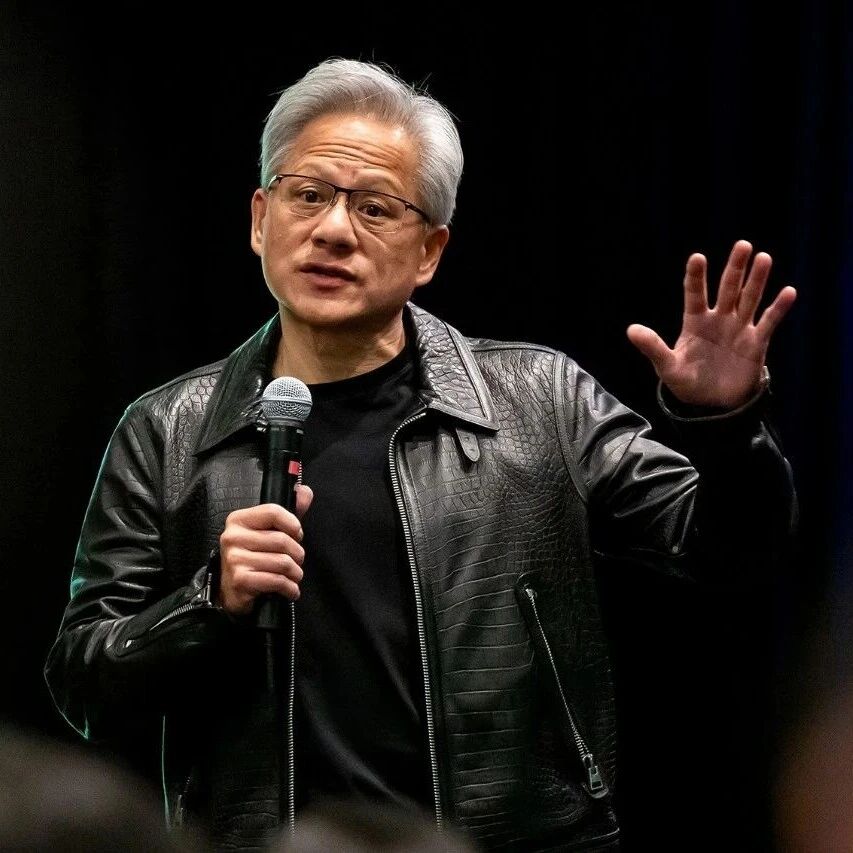
Core Viewpoint - The article discusses the evolving perception of leadership and risk in companies like NVIDIA, particularly focusing on the founder's role and the implications of their personal circumstances on corporate stability and valuation [1][13]. Group 1: Founder’s Perspective and Company Dynamics - The founder's time perspective has shifted from quarterly reports to existential concerns, indicating that the company has become a central nervous system of an era [2][3]. - Jensen Huang's remarks about death and work reflect a deep-seated anxiety about control and sustainability within a rapidly evolving AI landscape [4][5]. - NVIDIA's dominance in AI infrastructure, with over 70% of global AI training computing power relying on its architecture, positions it not just as a competitor but as a rule-definer in the industry [5][6]. Group 2: Risks and Market Implications - The core risk for NVIDIA has transitioned from technological competition to the irreplaceability of its founder, raising concerns about the company's future without Huang's leadership [6][8]. - Huang's rejection of a succession plan signals a significant disconnect with traditional corporate governance, emphasizing knowledge transfer over formal succession [7][8]. - The market's willingness to assign high valuations to NVIDIA is now challenged by the realization that its success is heavily tied to Huang's personal capabilities and health, introducing a "key person risk" into financial models [8][11]. Group 3: Broader Context and Structural Tensions - Huang's identity as a Chinese entrepreneur in a U.S. capital framework creates structural tensions, necessitating a balance between proving NVIDIA's indispensability and managing external uncertainties [10][11]. - The geopolitical landscape and increasing regulatory scrutiny on tech companies add layers of complexity to Huang's leadership and the company's stability [10][11]. - Huang's desire to "die at work" is interpreted as a rational response to the uncontrollable future, highlighting the emotional and strategic weight of his position [11][12]. Group 4: Investment Considerations - The article suggests that NVIDIA is transitioning from a technology-driven company to one defined by its power structure, with Huang becoming the most critical variable [13]. - Investors are urged to incorporate founder risk into valuation models, recognizing that the health and intentions of the founder are now essential factors in assessing the company's future [13].

营收下滑,但更值钱了?金山软件的结构性拐点
美股研究社· 2026-03-26 10:36
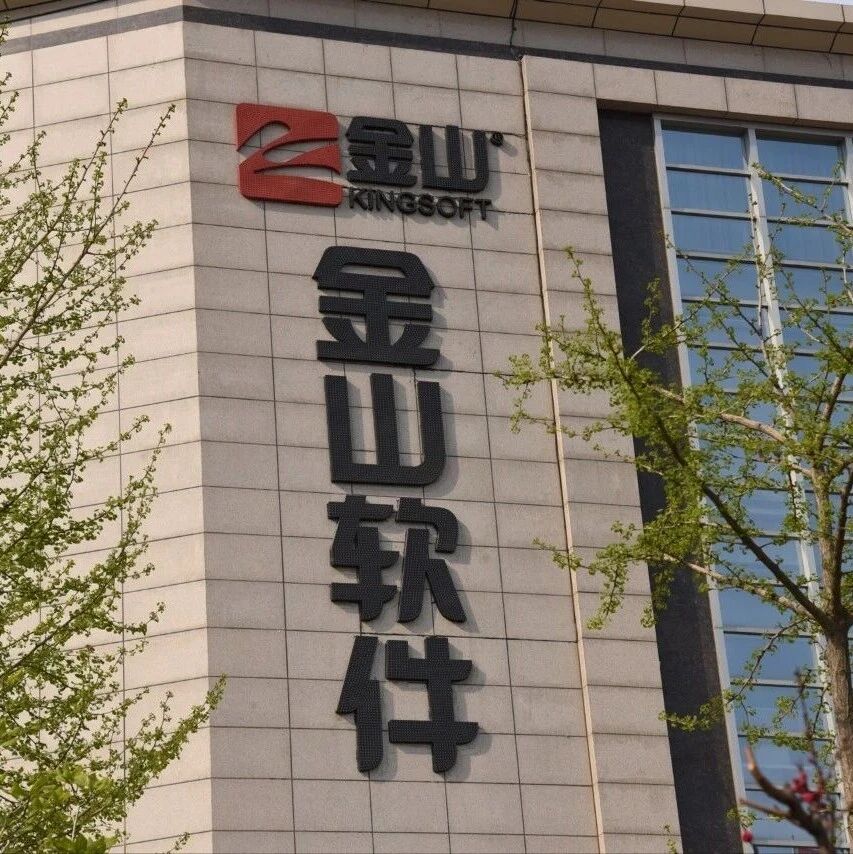
Core Viewpoint - The era of reckless growth in China's technology industry is coming to an end, with a shift towards valuing "current certainty" over "future possibilities" as the market undergoes structural adjustments [1][2]. Group 1: Company Performance - In Q4 2025, Kingsoft reported revenue of 2.618 billion yuan, a year-on-year decline of 6%. However, the revenue from office software and services reached 1.75 billion yuan, growing by 17% and accounting for 67% of total revenue, indicating a significant shift in the company's growth engine from volatile gaming to more stable office software [5][6]. - The decline in gaming revenue is attributed to a cyclical downturn in the industry, with increased competition from short video platforms and a lack of new hit games. This reflects a necessary transition as the company moves away from reliance on its gaming business [7]. - The growth in office software is driven by user expansion and improved conversion rates, particularly in the context of digitalization and AI integration. The monthly active devices for WPS continue to rise, and the conversion rate from personal to premium memberships is increasing [7][8]. Group 2: Profitability and Cash Flow - Kingsoft's profitability has historically been volatile, heavily reliant on the gaming cycle. However, as the share of office software increases, the business model is shifting towards a subscription model, which offers more stable and predictable cash flow [9][10]. - The current profit performance may not be the most critical indicator; rather, the composition of profits is essential. If profit growth stems from high-margin business increases, it could lead to a revaluation of the company [10][11]. - Kingsoft's operating cash flow remains healthy, allowing the company to maintain high R&D investments even during downturns in the gaming sector. This ability to invest counter-cyclically is crucial for navigating market fluctuations [11]. Group 3: Market Valuation and Expectations - The core contradiction in Kingsoft's recent financial report is that while revenue is declining, the quality of growth is improving. The market's valuation of Kingsoft has been anchored to gaming company metrics, but as the business structure changes, a shift towards software subscription company valuations may present a revaluation opportunity [13][15]. - Key variables to monitor include the continued improvement of average revenue per user (ARPU) in office software and the integration of AI capabilities into the product suite, which could drive new revenue streams [13][14]. - Kingsoft's transition from a high-volatility industry to a more stable but competitive sector reflects a strategic choice that may lead to long-term benefits, despite short-term challenges [15][17].

AI日报丨微软重组人力资源部门;谷歌公布应对AI记忆挑战的算法
美股研究社· 2026-03-26 10:36
Group 1 - OpenAI is supporting a new AI startup, Isara, which aims to develop software that enables AI agents to communicate and solve complex problems in industries like finance and biotechnology, with a valuation of $650 million [5] - Kuaishou's CEO revealed that the annualized revenue run rate for its AI division, Keling AI, has exceeded $300 million as of January this year, and the company is confident in achieving over 100% year-on-year revenue growth by 2026 [6] - XunTu Technology (Alpha派) completed nearly 200 million yuan in Series A financing, following over 100 million yuan in Pre-A financing just five months prior [7] Group 2 - Microsoft is restructuring its human resources department to align with evolving technology and work methods, aiming to enhance collaboration and streamline operations for better employee and customer support [9] - SentinelOne has established a long-term partnership with Google Cloud to develop and deploy AI-based cybersecurity solutions globally, integrating its endpoint detection and response tools with Google Cloud's infrastructure [10] - Google has introduced new algorithms to address memory challenges in running large language models and vector search engines, including TurboQuant, which optimizes memory usage in vector quantization [11]