美股研究社

Search documents
亚马逊的僵局:等待下一个催化剂
美股研究社· 2025-10-17 10:39
Core Viewpoint - Amazon should be a core holding in investment portfolios, and its performance should not be judged solely on short-term fluctuations [1][5][12] Market Conditions - The downgrade to "hold" was primarily due to a lack of short-term catalysts and insufficient momentum since July, with the stock showing little change in valuation [5][7] - The macro environment has shifted, with a 25 basis point reduction in U.S. interest rates, which has improved market expectations for company valuations, particularly in the tech sector [7] - Despite some positive earnings reports in Q2, uncertainties remain, particularly regarding supply chain disruptions and geopolitical issues [7][11] Business Performance - AWS growth improved slightly to 17.5% in Q2, but remains below the 20%-25% target needed for valuation re-rating [8] - Advertising business grew by 19%, indicating strong performance outside of AWS, but this alone cannot change the overall investment logic [8][11] - Other business segments, including healthcare and the Kuiper satellite project, have not yet shown significant growth or profitability [9][11] Investment Strategy - Amazon's stock is expected to continue fluctuating until significant catalysts emerge, with a tendency to oscillate around key price levels [11] - The company's long-term investment logic is supported by its scale in e-commerce, data resources, and ecosystem effects, despite current market conditions [11] - The valuation remains reasonable compared to other tech giants, and historical trends suggest that pullbacks are often good buying opportunities [11] Earnings Outlook - Amazon's earnings have consistently exceeded expectations, with projections for Q3 2025 indicating a slight increase in EPS to around $1.6 and revenue of approximately $180 billion [16] - Key metrics to watch include AWS growth, which is expected to rise to 18%, and advertising growth, anticipated to exceed 20% [16]



AI日报丨赛富时与谷歌扩大合作,前Meta高管表示AI泡沫的确存在
美股研究社· 2025-10-17 10:39
Core Insights - The article emphasizes the rapid development of artificial intelligence (AI) technology, presenting extensive opportunities in the market [2] Group 1: AI Developments - Microsoft has launched OpenAI's new multimodal video generation model, Sora 2, on Azure AI Foundry, available for public preview at a cost of $0.1 per second [4] - Former Meta executive Nick Clegg warns of a potential market correction in the AI sector, highlighting the excessive valuations and rapid trading activity, while acknowledging that the AI wave will not dissipate [6][7] Group 2: Strategic Partnerships and Innovations - Apple and Comcast are set to launch a bundled streaming service combining Apple TV and Peacock Premium for a monthly fee of $14.99 [5] - Meta has secured nearly $30 billion in financing for its data center in Louisiana, marking one of the largest private capital transactions in history, with plans to complete the project by 2029 [11] - Salesforce and Google have expanded their partnership to integrate Google's Gemini model into the Agentforce 360 platform, aiming to enhance employee productivity and customer interaction [13] Group 3: Product Innovations - Apple is preparing to launch its first touchscreen MacBook, expected to debut by late 2026 or early 2027, featuring a lightweight design and M6 series chips [9][10]



Airbnb:2025 年第三季度业绩或不及预期
美股研究社· 2025-10-17 10:39
Core Viewpoint - Airbnb is facing challenges due to a slowdown in non-traditional accommodation demand and increased competition, which may lead to underperformance in its upcoming Q3 2025 earnings report [1][4][11]. Group 1: Financial Performance - In Q2 2025, Airbnb reported a Gross Booking Value (GBV) of $23.5 billion, a year-on-year increase of 10.8% [5]. - Revenue for Q2 2025 was $3.1 billion, reflecting a 12.7% year-on-year growth [5]. - Adjusted EBITDA for Q2 2025 reached $1 billion, up 11.8% year-on-year [5]. - The company’s earnings per share (EPS) was $0.98, a 19.5% increase compared to the previous year [5]. - The average daily rate (ADR) globally was $174, showing a 2.3% year-on-year increase [5]. Group 2: Market Conditions - The North American market, which accounts for 30% of Airbnb's total bookings, is experiencing weak demand, which could have led to stronger growth if excluded [6]. - The overall travel industry indicators are mixed, with hotel demand declining by 0.4% year-on-year, while short-term rental demand has seen some growth [9][10]. Group 3: Valuation Analysis - Airbnb's current forward EV/EBITDA ratio is 14.93, which is above the industry median of 10.36 [8][9]. - The forward P/E ratio is 27.95, significantly higher than the sector median of 16.99 [8][9]. - Despite a recent decline in stock price, Airbnb's valuation remains relatively high compared to its peers, such as Expedia and Booking [9]. Group 4: Future Outlook - The market consensus is lowering expectations for Airbnb's revenue and net profit growth rates, with projected CAGR for revenue at 9.7% and for net profit at 10.9% by FY 2027 [14][15]. - The company has a healthy balance sheet with a net cash position of $9.36 billion, supported by $4.27 billion in free cash flow over the last 12 months [15]. - Stock buybacks have been implemented, with 3.1% of shares repurchased in the last 12 months, totaling 8.4% since Q2 2022 [15]. Group 5: Potential Catalysts - Analysts may adjust ratings if Airbnb can achieve higher pricing for its non-traditional accommodations and value-added services, improve domestic travel trends in North America, expand its property supply, or launch more value-added services [18].


AI掀起“债务革命”:科技公司正取代华尔街,成为新的债务之王
美股研究社· 2025-10-17 10:39
Core Viewpoint - The article discusses the structural transformation in the capital markets, highlighting that AI has overtaken banks as the largest sector in the investment-grade corporate bond market, with AI-related companies expected to account for 14% of the market by 2025, surpassing the banking sector's 11.5% [6][7]. Group 1: Debt Growth and Market Dynamics - Since 2020, the share of AI-related debt has been steadily increasing, while the banking sector's share has been declining, with AI expected to reach a historical high by 2025 [9]. - The total debt of AI-related companies has surged by $400 billion, reaching $1.2 trillion, marking a historical peak [10]. - In contrast, the total debt of the banking sector stands at $3 trillion, but its market share is gradually being eroded [11]. Group 2: Investment Grade Redefined - The capital markets are redefining what "investment grade" means, shifting the focus from who borrows the most to who borrows the most sustainably [12]. - A comparison between AI and banking sector debt reveals a significant divergence in scale, leverage, and quality, with AI's six major players having a healthier debt structure and stronger cash flows [14]. Group 3: Leverage and Risk Perception - Despite the banking sector's total debt being nearly $1.8 trillion higher than that of AI, the leverage ratio (Debt/Equity) shows a stark difference: AI's six giants have an average leverage of 0.47, while the four major banks average 2.79 [16]. - This indicates that AI companies are leveraging future cash flows for debt, whereas banks are using debt to support existing debt [16][17]. Group 4: The Shift to Computational Assets - The migration of debt structure reflects a deeper reality where computational power has become the new collateral in the economic cycle [19]. - Major tech companies like Nvidia, Microsoft, and Apple have low market value to debt ratios, indicating minimal reliance on debt expansion, and their bonds are highly sought after in the market [19][20]. Group 5: Future Implications - The appeal of AI bonds lies in their stable cash flows, high growth potential, and technological moats, distinguishing them from bank bonds [21]. - The revolution in AI debt is just beginning, with the shift in the largest weight industry in the debt market from banks to AI representing not just an asset allocation change but a rebirth of financial logic [22][24]. - Over the next decade, the safety margin for capital may shift from "collateralized financial assets" to "self-evolving intelligent assets" [25].

650万元售价,亿航智能造出了低空经济的“Model S”?
美股研究社· 2025-10-16 10:13
Core Insights - The low-altitude economy is approaching a transformative moment similar to Tesla's impact on the electric vehicle market, with significant advancements in unmanned aerial vehicles (UAVs) and commercial applications emerging [4][15]. Group 1: Market Developments - Recent developments in the low-altitude economy include the launch of EHang's VT35, XPeng's flying car demonstration in Dubai, and the introduction of Meituan's drone delivery service in Shenzhen, indicating a maturation of the domestic unmanned aerial traffic sector [3][8]. - EHang's VT35 has a design range of approximately 200 kilometers and a price of 6.5 million yuan, marking a new phase in the exploration of scalable commercial applications for urban and intercity low-altitude transportation [3][19]. Group 2: Key Transformations - Three key transformations signal the low-altitude economy's transition into a phase of value realization: 1. Commercial logic validation, with increasing orders confirming market expectations, such as EHang's delivery of 68 EH216 series aircraft and XPeng's 600-unit order for its flying car [9][12]. 2. Application scenarios expanding from logistics trials to a comprehensive traffic network, exemplified by Meituan's operational drone services and EHang's collaborative use of VT35 and EH216-S for urban and intercity transport [13]. 3. A global approach to growth, with Chinese companies like EHang and XPeng establishing international operations and partnerships, showcasing their competitive edge in technology and business models [14][25]. Group 3: Technological and Economic Implications - The eVTOL industry is experiencing breakthroughs in range and cost, with EHang's VT35 offering a range of 200 kilometers and a price significantly lower than competitors, facilitating its entry into the commercial market [19][20]. - The supportive policy environment, such as Shenzhen's financial incentives for certified eVTOL companies, enhances the industry's growth prospects and reduces operational costs for manufacturers [20][21]. - The low-altitude economy is projected to reach a market size of 5.8 trillion yuan by 2025 and potentially exceed 3.5 trillion yuan by 2035, indicating substantial growth potential across various applications beyond transportation [25][26].


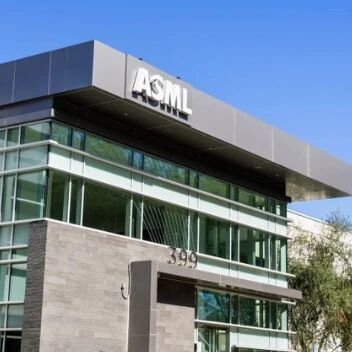
ASML:下行风险有限,上行潜力巨大
美股研究社· 2025-10-16 10:13
Core Viewpoint - ASML, as the exclusive supplier of EUV lithography equipment, is crucial for companies like TSMC and Intel in producing advanced chips for AI, smartphones, and computers. Despite its leading position, recent market sentiment has turned negative due to concerns over future orders and sales, particularly in the context of a potential "buyer monopoly" with TSMC as its primary customer [1][10]. Group 1: Market Dynamics - The global demand for wafers determines the need for semiconductor equipment, independent of production locations [1]. - ASML's dominance means any company needing DUV or EUV equipment must order from ASML, as competitors like Canon and Nikon hold negligible market shares [1]. - The demand for DUV equipment is expected to weaken in 2025 due to a return to normalcy in the Chinese market, and the transition to 2nm GAA transistor architecture will reduce the need for additional EUV layers [3]. Group 2: Order Characteristics - ASML's orders are characterized by "intermittency," with EUV equipment priced over $200 million and delivery times exceeding 12 months, limiting the customer base to 5-6 companies [4]. - The sales proportion to China dropped from 49% in the first half of 2024 to 27% by the second quarter of 2025, indicating a shift in market dynamics [4][5]. - Management anticipates that the sales proportion from China will stabilize around 25%, aligning with the order backlog structure [5]. Group 3: Customer Relationships - Concerns about ASML's reliance on TSMC are overstated, as both companies have a symbiotic relationship where their successes are interdependent [10]. - TSMC's N2 (2nm) series is projected to be its largest process node, suggesting sustained demand for EUV equipment [10]. - Despite TSMC being ASML's largest customer historically (about 30% of revenue), ASML has other EUV clients, and the demand from DRAM manufacturers will support EUV needs [11]. Group 4: Future Outlook - The recent collaboration between OpenAI and Samsung, aiming to significantly increase DRAM wafer production, highlights the growing demand for storage capacity in the AI sector [12]. - Concerns regarding Intel and Samsung's advanced process capabilities have eased due to investments from the U.S. government and partnerships with companies like Tesla [12]. - The risk-reward ratio for investing in ASML appears favorable when its dynamic P/E ratio is below 25, indicating limited downside risk and potential for significant upside once market uncertainties are resolved [12].

AMD :OpenAI 入股后市场前景如何?
美股研究社· 2025-10-16 10:13
Core Viewpoint - AMD has entered a significant partnership with OpenAI, which includes a commitment to deploy 6 GW, potentially generating hundreds of billions in revenue for AMD. OpenAI will also strategically invest in AMD through warrants to acquire 160 million shares [1][7]. Group 1: Partnership and Financial Implications - The agreement with OpenAI is expected to boost AMD's stock price and reflects strong confidence in AMD's next-generation GPUs [1]. - AMD's stock price has seen a decline since peaking at $200 in 2024, primarily due to investor concerns about its competitiveness in the GPU market against Nvidia [4]. - The stock warrants issued to OpenAI are contingent on specific milestones, including AMD's stock price reaching certain targets and OpenAI achieving necessary technological and commercial milestones [7]. Group 2: Market Position and Future Outlook - AMD's GPU sales are anticipated to grow steadily by the second half of 2025, driven by large-scale data center purchases and performance improvements in upcoming chips [5]. - Oracle's announcement of a large-scale collaboration with AMD, involving 50,000 MI450 GPUs and EPYC Venice CPUs, further validates AMD's technological capabilities and aligns with its strategic goals [9]. - The partnership with OpenAI and Oracle alleviates market concerns regarding AMD's growth stagnation in the AI sector, paving the way for potential stock price increases in the coming years [10]. Group 3: Investment Strategy - Despite recent stock price increases leading to a seemingly high valuation, AMD remains an attractive long-term investment opportunity compared to its peers like Nvidia [2][10]. - The growth in AMD's server business, continued dominance in the consumer CPU market, and breakthroughs in AI and data center markets are expected to support future stock price increases [9].


AI日报丨苹果推出搭载 M5 芯片的新款 MacBook Pro,AMD获汇丰银行看好
美股研究社· 2025-10-16 10:13
Core Insights - The article highlights the rapid development of artificial intelligence (AI) technology, presenting extensive opportunities in the market [2]. Group 1: AI Innovations - Baidu's upgraded video generation model, Wenxin Zhi Jing, achieves real-time interactive long video generation, breaking the traditional 10-second limit and allowing users to modify prompts during the creation process [4]. - Huawei launched an AI-Centric upgraded AI WAN solution at the UBBF2025, aiming to redefine user experience, computational limits, security resilience, and operational models for telecom operators [5]. Group 2: Corporate Developments - Meta Platforms Inc. is investing over $1.5 billion in a new 1GW data center in Texas to enhance its AI capabilities, with total capital expenditures for the year reaching $72 billion, including AI-related infrastructure projects [6][7]. - Apple's AI research lead, Ke Yang, is leaving for Meta, indicating a trend of notable departures from Apple's AI division [8]. Group 3: Market Analysis - HSBC upgraded Nvidia's stock rating to hold with a target price increase from $320 to $200, citing the growing potential market for AI GPUs beyond large enterprises [11][12]. - AMD's stock target price was raised from $310 to $185 by HSBC, maintaining a buy rating, with analysts highlighting the significant revenue potential from its partnership with OpenAI [14].

老乡别走!牛市还没完!标普三年飙85%,AI才刚开场!
美股研究社· 2025-10-16 10:13
以下文章来源于capitalwatch ,作者宏观分析师 时间回到 2022年10月12日 ——标普500指数在经历一年暴跌后触底反弹。 从那天算起,美股已经走过了近 三年的牛市旅程 ,累计上涨 85% ,为全球市场增添了高达 28万亿美元 的市值。 如今,投资者正迎来这轮牛市的 第四个周年纪念日 。 一个耐人寻味的问题再次被提起: capitalwatch . 我们是一个聚焦全球资本市场的高影响力财经账号。 内容由华尔街交易员与研究员共同撰写,提供市场深度解读、机构级逻辑与实时判断。 这里没有喊 单,没有套路,只有用数据和常识说话的分析。 我们希望把复杂的金融世界,讲给真正关心自己资产的人听。 来源 | capitalwatch 三年前,美股被恐慌笼罩,标普500在2022年10月12日触底。 没人料到,那天竟成为这一轮超级牛市的起点。 此后三年,标普狂飙 85%,市值暴增 28万亿美元, 我们一起经历了华尔街最疯狂的年代。 "历史上,牛市的第四年,通常意味着什么?" 历史告诉我们:第四年仍有空间 根据LPL Research与彭博的最新研究,自1950年以来,美股共有13次正式的牛市周期,其中有 7轮成功 ...

微芯科技:转型曙光已现,市场疑虑仍存
美股研究社· 2025-10-15 11:48
Core Viewpoint - Microchip Technology has undergone significant leadership changes and is currently in a transformation phase aimed at improving operational efficiency and profitability, with a focus on cash flow sustainability and debt reduction [1][20]. Leadership Changes and Initial Challenges - The long-term CEO, Steve Sanghi, retired in 2021, leading to operational pressures with a 2.1% decline in sales and a $35 million drop in profits. The new CEO faced ongoing issues, prompting Sanghi's return as interim CEO in November 2024 to lead a second transformation [1]. Recovery Signs and Analyst Optimism - Following the leadership transition, positive changes began to emerge, with a notable recovery in gross margins and earnings exceeding market expectations. Despite high market expectations leading to a 4% drop in stock price, analysts from Citi, KeyBanc, and Stifel remain optimistic about the company's growth potential [2]. Nine-Point Recovery Plan - The "Nine-Point Recovery Plan" was launched to streamline operations and enhance profitability, including closing an outdated wafer fab and reducing production at other facilities. Inventory turnover days decreased from 266 days in December to 214 days in June, indicating improved inventory management [4][5]. Financial Transformation Progress - The recovery plan has led to significant improvements, with net sales reaching $1.075 billion in the June quarter, a 10.8% year-over-year increase. Gross margins and operating profit margins have also shown recovery, with non-GAAP gross margins rising by 230 basis points to 54.3% [7][8]. New Growth Engines - Microchip Technology is not only addressing historical issues but also exploring new growth areas, particularly in aerospace and defense, which accounted for approximately 18% of revenue last year. The company is focusing on radiation-hardened FPGA solutions and components essential for AI ecosystems [10][12]. Cash Flow and Dividend Sustainability - Despite a three-year stagnation, Microchip Technology has maintained its commitment to returning cash to shareholders, having paid dividends for 92 consecutive quarters. The company now generates sufficient cash flow to cover dividend payments while focusing on debt reduction [14][15]. Valuation Insights - The transformation's value is not fully reflected in the stock price, as traditional DCF models may not capture the rapid changes. Analysts predict a fair valuation range of $75 to $90 per share based on expected earnings growth, although the company faces cyclical and financial risks [17][18]. Summary of Investment Outlook - Microchip Technology is viewed as a compound growth company rather than a high-risk investment, with potential returns of 30%-40% over the next 2-3 years. The ongoing transformation under the new CEO is seen as a positive development, despite existing risks [20].